See the monuments around you in AROpen chests in the app
Around Us is built for your phone — point your camera at the streets and discover the monuments and places around you in augmented reality.Around Us is built for your phone — chests unlock when you walk, explore and capture nearby places.
Andalusia holds a notable collection of historic gardens that reflect different periods of Spanish history. These sites combine Moorish, Christian, and modern design traditions and demonstrate the evolution of garden art on the Iberian Peninsula. From the terraced layouts of the Nasrid era to the parks of the 19th and 20th centuries, these places provide insight into the cultural influences of various ages.
Granada contains several significant examples of this garden tradition. The Generalife served as the summer residence of the Nasrid sultans and features water features, patios, and planted terraces overlooking the Alhambra. The Carmen de los Mártires combines Moorish, French, and English garden elements, while the Fundación Rodríguez-Acosta represents an example of early 20th-century garden design. Additional sites such as the Carmen de la Victoria, the Jardin de los Adarves, and the Palacio de los Córdova complete the picture of Granada's garden tradition.
Seville houses one of Spain's most important historic gardens at the Real Alcázar. The complex includes Moorish courtyards, Renaissance parterres, and modern plantings. The city also offers the Jardines de Murillo at the edge of the Alcázar grounds, the expansive María Luisa Park with its pavilions and plazas, the Jardín Americano with exotic vegetation, as well as Los Jardines de la Buhaira and La Cartuja de Sevilla. The Casa de Pilatos displays an ornate palace courtyard with plants and fountains. In Córdoba, the Alcázar de los Reyes Cristianos presents geometric gardens with water basins and cypresses, while the Palacio de Viana offers twelve different interior courtyards with varied plantings. Málaga contributes to the diversity with the Botanical Garden La Concepción and the Pedro Luis Alonso Gardens, and in Vélez de Benaudalla lies the Nasrid Garden of Vélez as another testimony to Moorish garden design.
Andalusia holds a notable collection of historic gardens that reflect different periods of Spanish history. These sites combine Moorish, Christian, and modern design traditions and demonstrate the evolution of garden art on the Iberian Peninsula. From the terraced layouts of the Nasrid era to the parks of the 19th and 20th centuries, these places provide insight into the cultural influences of various ages.
Granada contains several significant examples of this garden tradition. The Generalife served as the summer residence of the Nasrid sultans and features water features, patios, and planted terraces overlooking the Alhambra. The Carmen de los Mártires combines Moorish, French, and English garden elements, while the Fundación Rodríguez-Acosta represents an example of early 20th-century garden design. Additional sites such as the Carmen de la Victoria, the Jardin de los Adarves, and the Palacio de los Córdova complete the picture of Granada's garden tradition.
Seville houses one of Spain's most important historic gardens at the Real Alcázar. The complex includes Moorish courtyards, Renaissance parterres, and modern plantings. The city also offers the Jardines de Murillo at the edge of the Alcázar grounds, the expansive María Luisa Park with its pavilions and plazas, the Jardín Americano with exotic vegetation, as well as Los Jardines de la Buhaira and La Cartuja de Sevilla. The Casa de Pilatos displays an ornate palace courtyard with plants and fountains. In Córdoba, the Alcázar de los Reyes Cristianos presents geometric gardens with water basins and cypresses, while the Palacio de Viana offers twelve different interior courtyards with varied plantings. Málaga contributes to the diversity with the Botanical Garden La Concepción and the Pedro Luis Alonso Gardens, and in Vélez de Benaudalla lies the Nasrid Garden of Vélez as another testimony to Moorish garden design.
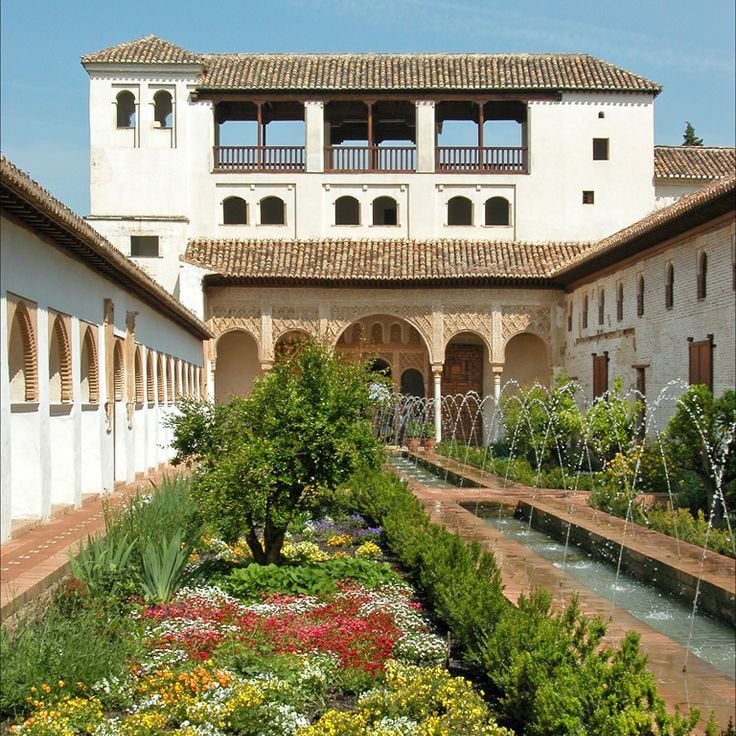
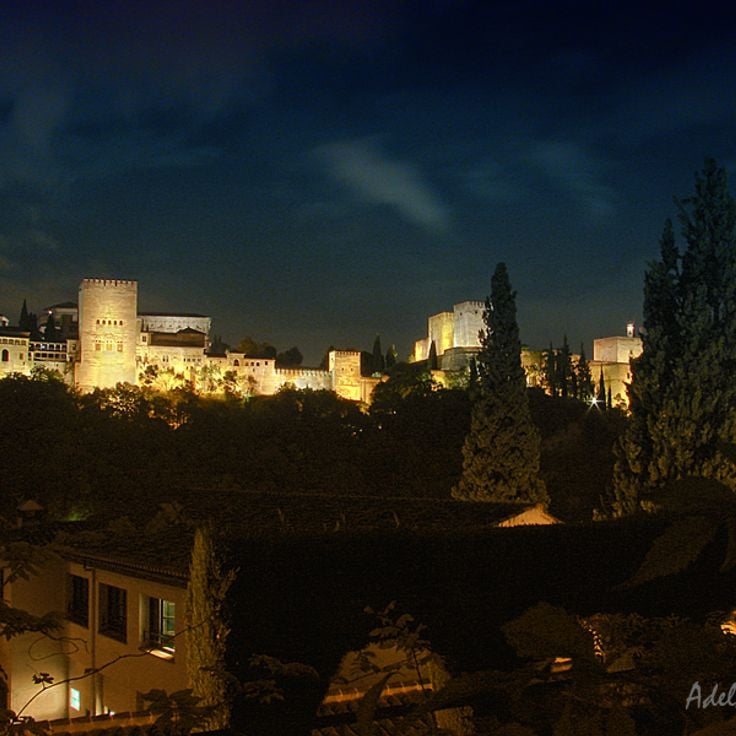
The Generalife is the former summer residence of the sultans of Granada and preserves a significant example of Moorish garden architecture from the 13th century. The terraced grounds display the traditional Islamic concept of a paradise garden with geometrically arranged water channels surrounded by cypress hedges and flowering beds. The Patio de la Acequia forms the centerpiece with its central watercourse, while pavilions with elaborate stucco decoration create resting areas among the plantings. The estate sits on the slope of Cerro del Sol and provides sight lines to the Alhambra and the surrounding gardens.
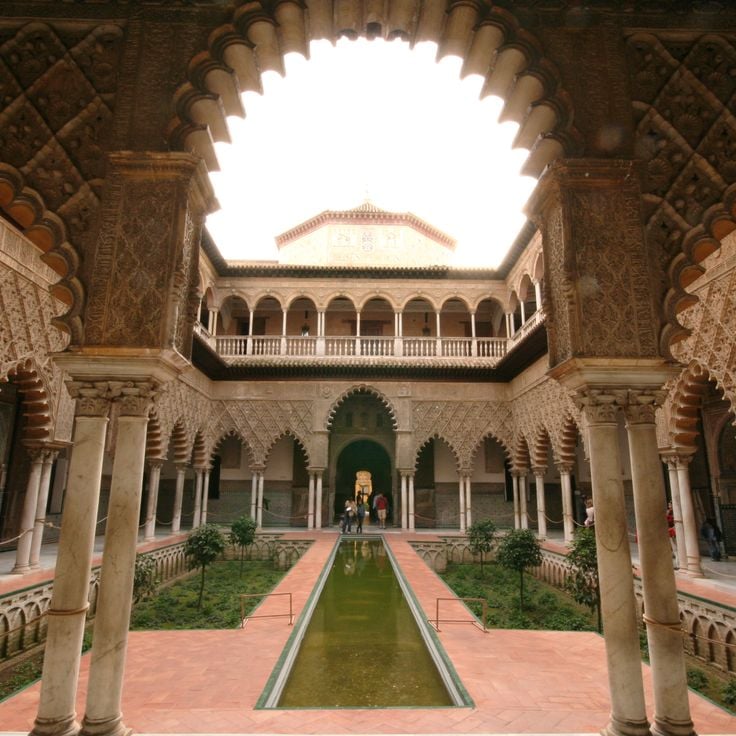
The gardens of the Real Alcázar de Sevilla combine Moorish and Christian design elements and present the development of Andalusian garden art across several centuries. These historic gardens feature water features with fountains and channels, arcaded galleries, geometric planting beds, and shaded avenues lined with palms, cypresses, and orange trees. The different garden sections were created between the Middle Ages and the Renaissance and unite various design principles from Moorish tradition and European influences.
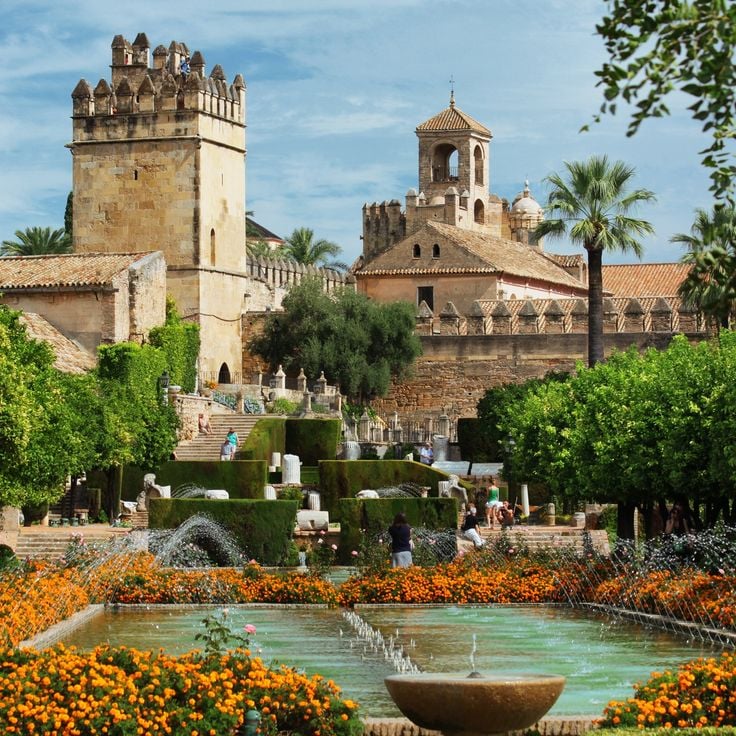
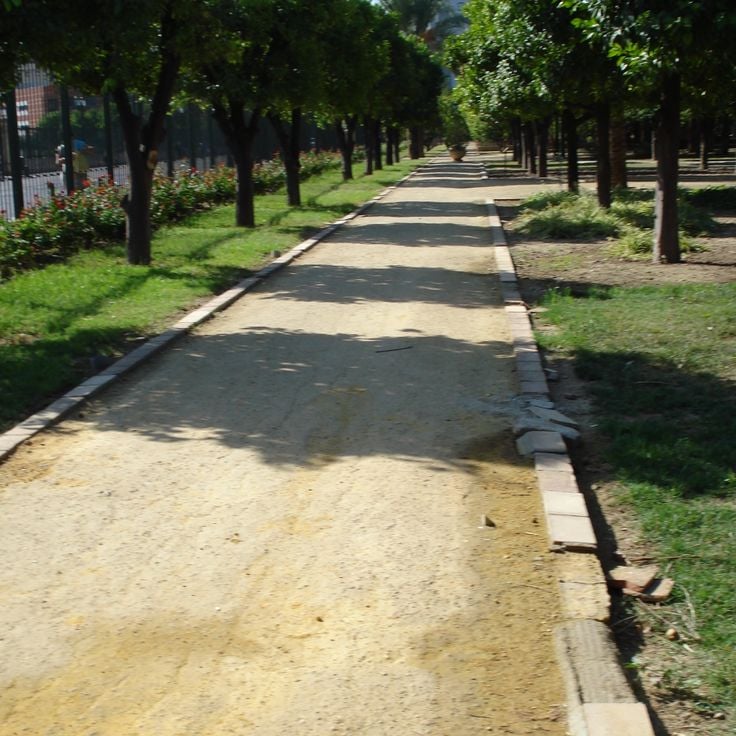
The gardens of Alcázar de los Reyes Cristianos in Córdoba extend across several terraced levels, combining Moorish design principles with Christian elements. Citrus trees grow between maintained beds, while water basins and fountains provide cooling. Stone statues of the Catholic Monarchs recall the fortress's history. The grounds demonstrate the transition from Islamic to Christian garden art in Andalusia and complement the palace's historic walls with Mediterranean vegetation, fountains, and shaded pathways.
The courtyards of the Palacio de Viana in Córdoba present various garden styles that reflect the Moorish and Christian past of Andalusia. Between historic walls grow orange trees and roses, surrounded by traditional Andalusian ceramic tiles. These green spaces form an example of the garden art that developed in the palaces of southern Spain over centuries.
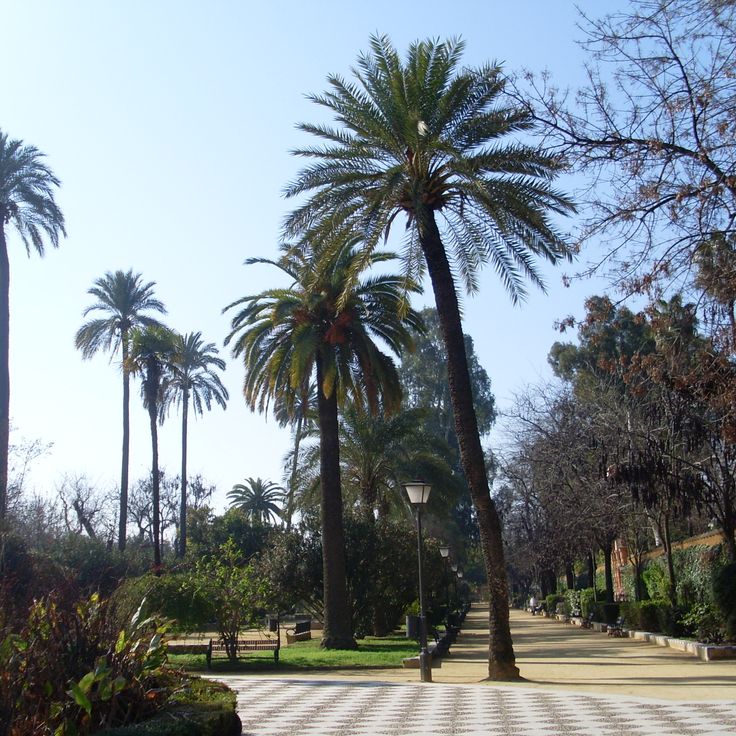
These public gardens border the historic walls of the Alcázar of Seville and preserve elements of Andalusian garden design. The Jardines de Murillo contain fountains, sculptures, and plantings of orange trees, palms, and other Mediterranean species. The site was laid out in the early 20th century on the former garden grounds of the palace and named after the Sevillian painter Bartolomé Esteban Murillo. Wide paths and shaded avenues cross the green space and connect the different areas of the gardens.
The Jardín Americano in Seville presents over 200 plant species from North and South America on its botanical grounds. The site combines greenhouses with water gardens and documents the plant diversity of the American continent. As part of Andalusia's historic garden landscape, this garden demonstrates the botanical collecting tradition that complements the Moorish and Christian garden layouts in the region's green spaces.
Carmen de los Mártires combines various garden styles on its grounds in Granada, reflecting the historical development of garden design in Andalusia. The site includes terraces with pavilions and fountains designed according to English garden architecture, along with elements of Moorish and French tradition. Ancient trees and Mediterranean plants characterize the paths through this historical garden complex, which once belonged to a Carmelite monastery and is now accessible as a public park.
The Jardines de la Buhaira combine Moorish water engineering with Renaissance geometric design and contemporary recreation areas. The garden in Seville preserves centuries-old trees and a large pond that once supplied irrigation to the surrounding lands. The grounds document the evolution of Andalusian garden culture from the Islamic period through Christian redesign to modern use as a public park, exemplifying the regional garden tradition.
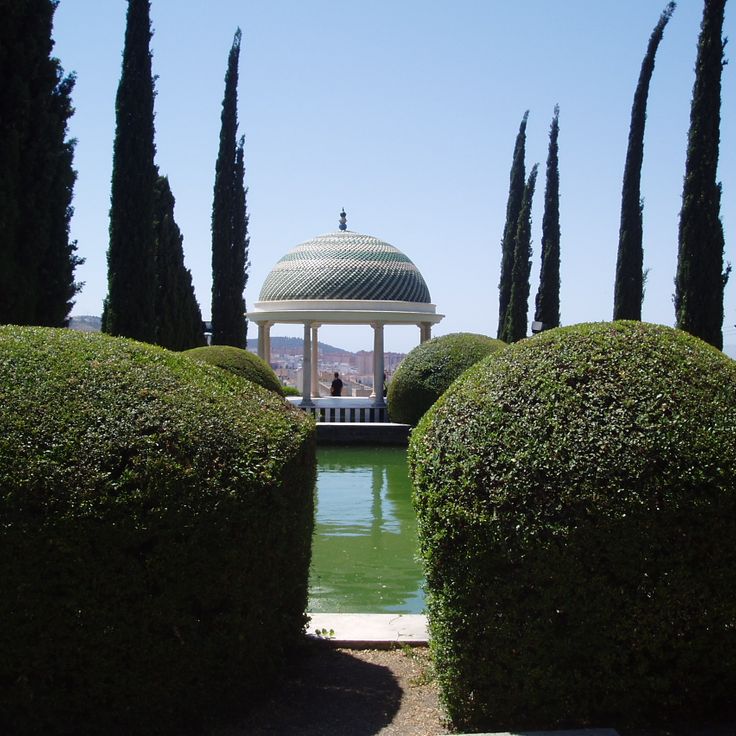
The Botanical Garden La Concepción was established in 1855 by a merchant family and now houses over 2000 tropical plant species. This historic garden covers approximately 57 acres (23 hectares) and demonstrates the 19th-century passion for botanical collecting, combining Moorish water features with English landscape architecture. Palms, bamboo, and subtropical plants thrive under Málaga's mild climate, while historic fountains and ponds traverse the garden grounds. The garden documents the exchange of exotic plants between Europe and its colonies and ranks among the significant botanical sites of Andalusia.
The Nasrid Garden of Vélez in Vélez de Benaudalla preserves 16th-century water architecture and belongs to the historic gardens of Andalusia that document Moorish horticultural art. Channels and ponds traverse the grounds following traditional irrigation principles. The system once enabled the cultivation of Mediterranean plants in this southern Spanish region. This garden demonstrates the technical knowledge of the Moorish era in water management.
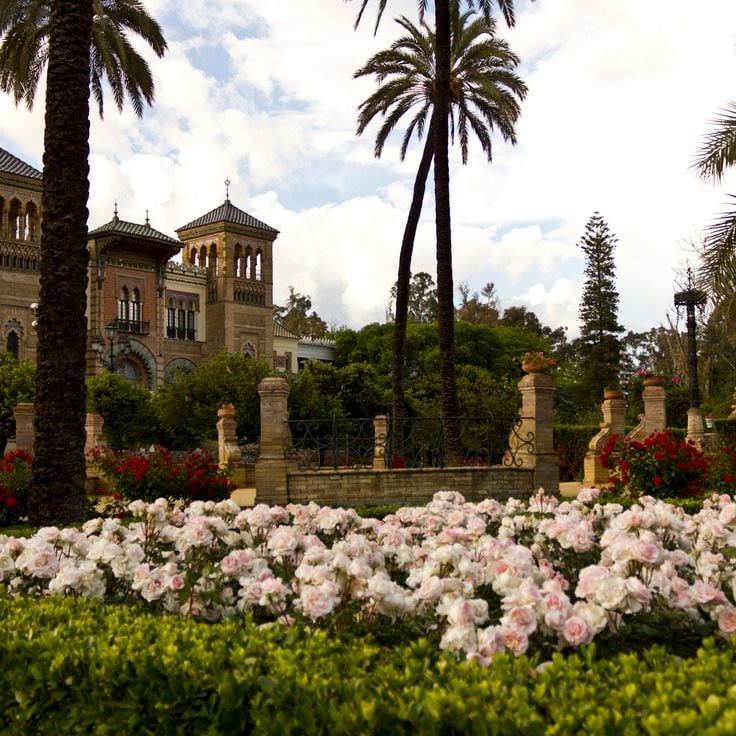
María Luisa Park was established in 1914 on 34 acres and combines Moorish garden design with architecture from the Ibero-American Exposition. This park in Seville demonstrates the evolution of Andalusian garden art through water features, pavilions, and ceramic-decorated seating. The grounds contain tree plantings that combine Mediterranean and exotic species, along with fountains and plazas that reference historical Spanish horticultural traditions.
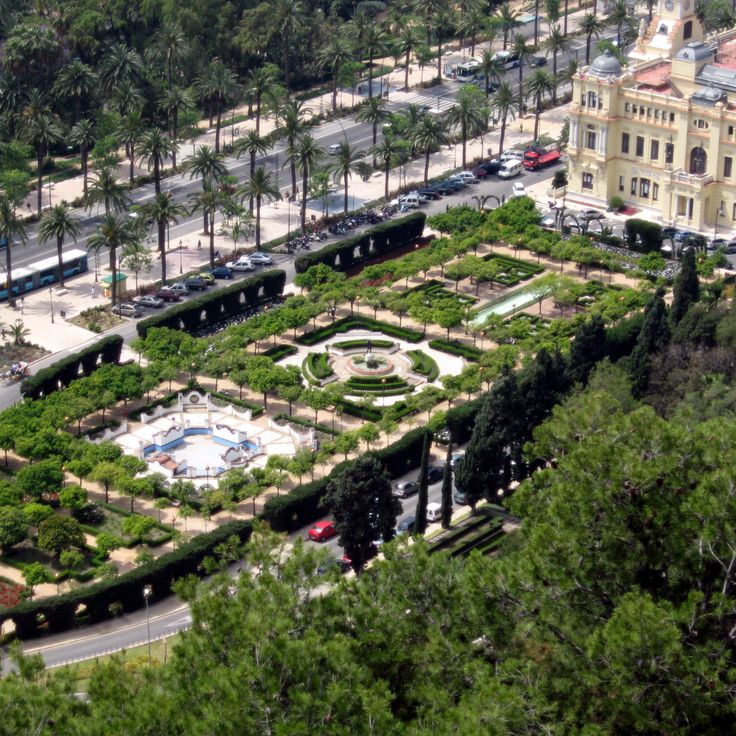
The Pedro Luis Alonso Gardens are located next to Málaga's city hall and display formal garden design with geometric beds. The gardens contain about 70 rose varieties along with typical Mediterranean plants and represent the Andalusian gardening tradition that combines Moorish and Christian influences with later developments.
The cloister gardens of La Cartuja de Sevilla date from the time when the monastery was founded as a Carthusian house in the 15th century. These courtyards with geometrically arranged beds reflect the monastic tradition in which gardens served as places of contemplation. Alongside citrus trees and Mediterranean herbs, the site includes historical ceramic works that document local craftsmanship. The gardens of La Cartuja illustrate the transition from Moorish to Christian garden art in Andalusia.
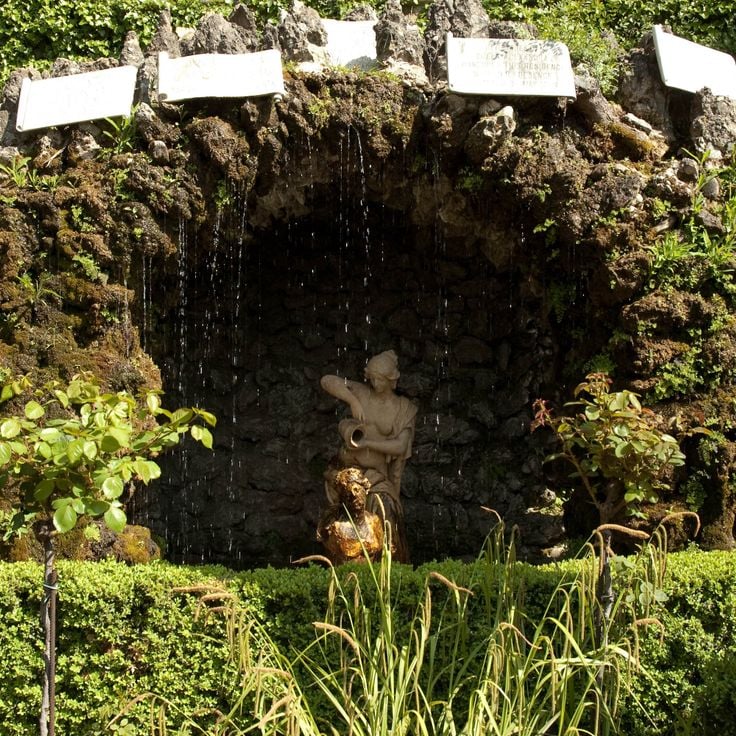
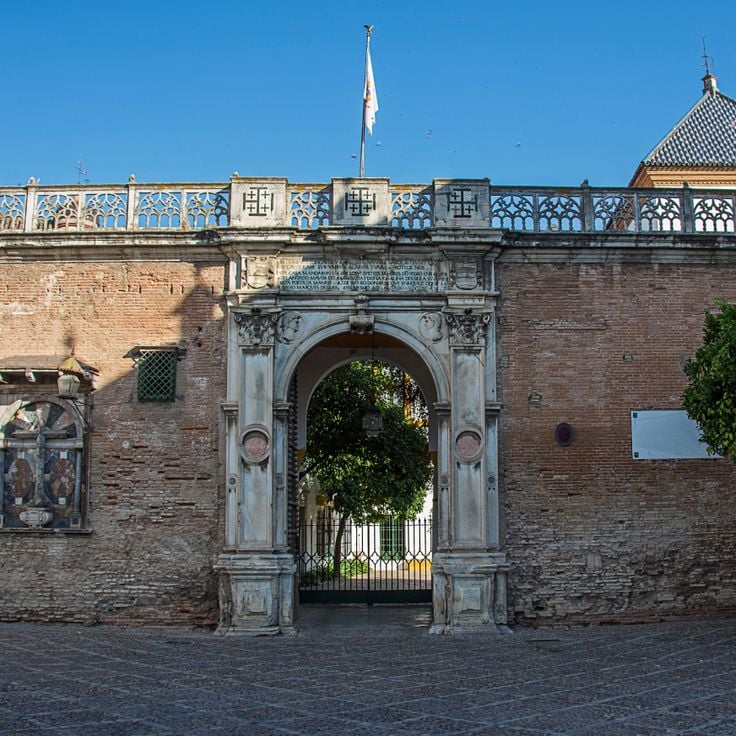
The garden at Casa de Pilatos demonstrates the blend of Moorish and Christian garden design in Seville. Dating from the 16th century, the grounds include several courtyards with fountains, citrus trees, and ceramic tile work. Orange trees, jasmine, and Mediterranean plants grow between arcade passages in traditional Andalusian planters. The water basins and geometric beds follow Moorish design principles, while marble sculptures and columns show Renaissance influences. This historic garden combines different periods of Spanish landscape design within an urban palace complex.
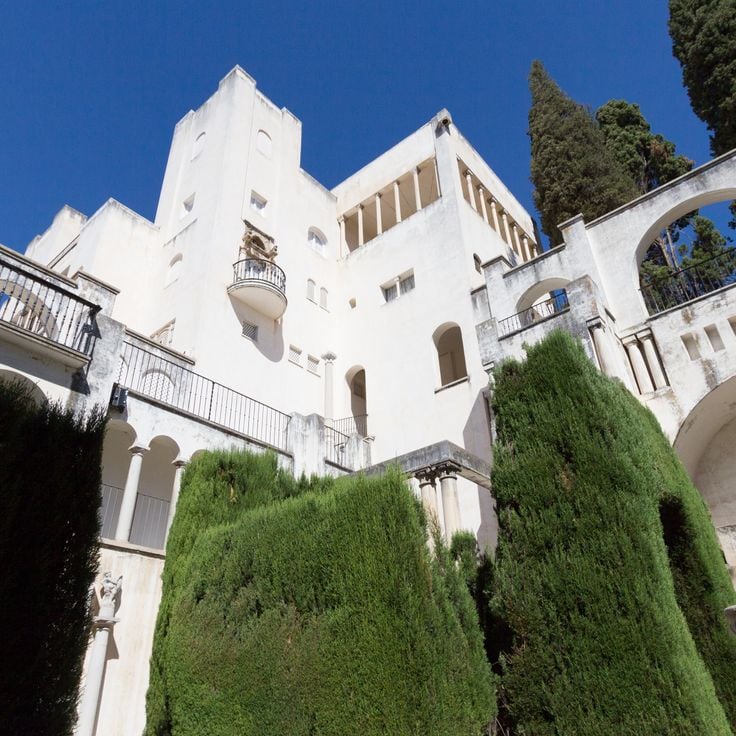
The gardens of Fundación Rodríguez-Acosta combine architecture and nature across several terraces connected by staircases and pathways. The estate was built between 1914 and 1928 following designs by painter José María Rodríguez-Acosta. The garden displays geometric patterns of trimmed hedges, fountains and sculptures among cypresses and other Mediterranean plants. From the upper terraces, expansive views extend over Granada and the Sierra Nevada mountains.
Carmen de la Victoria is a traditional garden house in Granada that extends across several terraced levels. The garden contains various fruit trees and flower beds, arranged according to Moorish garden tradition. The terraces offer a direct view of the Alhambra. The property displays typical features of Granada's carmenes, which combine residential buildings with productive gardens. The multiple levels follow the natural slope and accommodate both agricultural use and recreational spaces.
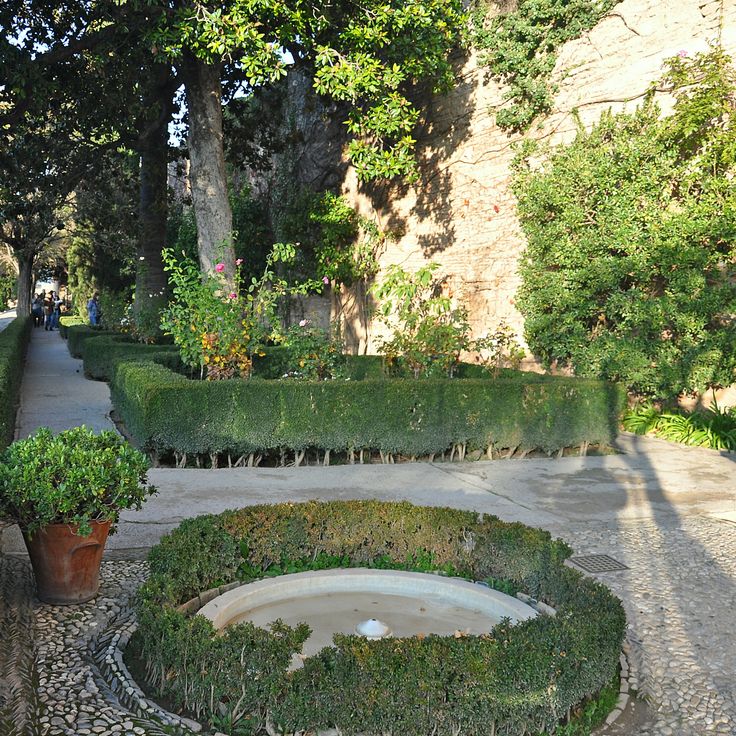
The Jardin de los Adarves sits at the foot of the Alhambra, combining Moorish garden tradition with Mediterranean vegetation. Stone pathways lead between cypresses, fountains, and flower beds to several viewpoints offering views of Granada and the surrounding Vega plain. The site displays typical elements of Andalusian garden design with water features, shade trees, and terraced areas integrated into the hillside location of the fortress architecture.
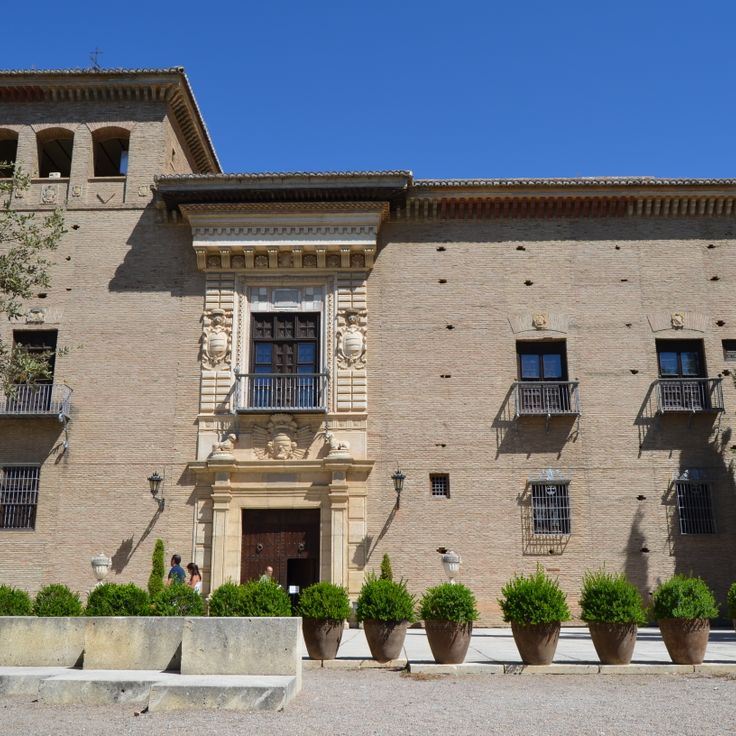
The Palacio de los Córdova combines Moorish water features with 16th-century Renaissance garden design in its courtyard. Geometric boxwood hedges divide the space into symmetrical sections, while water channels run through the grounds and feed stone fountains. This garden documents the transition from Moorish to Christian rule in Granada and demonstrates how both cultures merged their horticultural traditions in a single space. The structured plantings and engineered water system reflect the ceremonial requirements of Spanish nobility during the Golden Age.
The Generalife is the former summer residence of the sultans of Granada and preserves a significant example of Moorish garden architecture from the 13th century. The terraced grounds display the traditional Islamic concept of a paradise garden with geometrically arranged water channels surrounded by cypress hedges and flowering beds. The Patio de la Acequia forms the centerpiece with its central watercourse, while pavilions with elaborate stucco decoration create resting areas among the plantings. The estate sits on the slope of Cerro del Sol and provides sight lines to the Alhambra and the surrounding gardens.
The gardens of the Real Alcázar de Sevilla combine Moorish and Christian design elements and present the development of Andalusian garden art across several centuries. These historic gardens feature water features with fountains and channels, arcaded galleries, geometric planting beds, and shaded avenues lined with palms, cypresses, and orange trees. The different garden sections were created between the Middle Ages and the Renaissance and unite various design principles from Moorish tradition and European influences.
The gardens of Alcázar de los Reyes Cristianos in Córdoba extend across several terraced levels, combining Moorish design principles with Christian elements. Citrus trees grow between maintained beds, while water basins and fountains provide cooling. Stone statues of the Catholic Monarchs recall the fortress's history. The grounds demonstrate the transition from Islamic to Christian garden art in Andalusia and complement the palace's historic walls with Mediterranean vegetation, fountains, and shaded pathways.
The courtyards of the Palacio de Viana in Córdoba present various garden styles that reflect the Moorish and Christian past of Andalusia. Between historic walls grow orange trees and roses, surrounded by traditional Andalusian ceramic tiles. These green spaces form an example of the garden art that developed in the palaces of southern Spain over centuries.
These public gardens border the historic walls of the Alcázar of Seville and preserve elements of Andalusian garden design. The Jardines de Murillo contain fountains, sculptures, and plantings of orange trees, palms, and other Mediterranean species. The site was laid out in the early 20th century on the former garden grounds of the palace and named after the Sevillian painter Bartolomé Esteban Murillo. Wide paths and shaded avenues cross the green space and connect the different areas of the gardens.
The Jardín Americano in Seville presents over 200 plant species from North and South America on its botanical grounds. The site combines greenhouses with water gardens and documents the plant diversity of the American continent. As part of Andalusia's historic garden landscape, this garden demonstrates the botanical collecting tradition that complements the Moorish and Christian garden layouts in the region's green spaces.
Carmen de los Mártires combines various garden styles on its grounds in Granada, reflecting the historical development of garden design in Andalusia. The site includes terraces with pavilions and fountains designed according to English garden architecture, along with elements of Moorish and French tradition. Ancient trees and Mediterranean plants characterize the paths through this historical garden complex, which once belonged to a Carmelite monastery and is now accessible as a public park.
The Jardines de la Buhaira combine Moorish water engineering with Renaissance geometric design and contemporary recreation areas. The garden in Seville preserves centuries-old trees and a large pond that once supplied irrigation to the surrounding lands. The grounds document the evolution of Andalusian garden culture from the Islamic period through Christian redesign to modern use as a public park, exemplifying the regional garden tradition.
The Botanical Garden La Concepción was established in 1855 by a merchant family and now houses over 2000 tropical plant species. This historic garden covers approximately 57 acres (23 hectares) and demonstrates the 19th-century passion for botanical collecting, combining Moorish water features with English landscape architecture. Palms, bamboo, and subtropical plants thrive under Málaga's mild climate, while historic fountains and ponds traverse the garden grounds. The garden documents the exchange of exotic plants between Europe and its colonies and ranks among the significant botanical sites of Andalusia.
The Nasrid Garden of Vélez in Vélez de Benaudalla preserves 16th-century water architecture and belongs to the historic gardens of Andalusia that document Moorish horticultural art. Channels and ponds traverse the grounds following traditional irrigation principles. The system once enabled the cultivation of Mediterranean plants in this southern Spanish region. This garden demonstrates the technical knowledge of the Moorish era in water management.
María Luisa Park was established in 1914 on 34 acres and combines Moorish garden design with architecture from the Ibero-American Exposition. This park in Seville demonstrates the evolution of Andalusian garden art through water features, pavilions, and ceramic-decorated seating. The grounds contain tree plantings that combine Mediterranean and exotic species, along with fountains and plazas that reference historical Spanish horticultural traditions.
The Pedro Luis Alonso Gardens are located next to Málaga's city hall and display formal garden design with geometric beds. The gardens contain about 70 rose varieties along with typical Mediterranean plants and represent the Andalusian gardening tradition that combines Moorish and Christian influences with later developments.
The cloister gardens of La Cartuja de Sevilla date from the time when the monastery was founded as a Carthusian house in the 15th century. These courtyards with geometrically arranged beds reflect the monastic tradition in which gardens served as places of contemplation. Alongside citrus trees and Mediterranean herbs, the site includes historical ceramic works that document local craftsmanship. The gardens of La Cartuja illustrate the transition from Moorish to Christian garden art in Andalusia.
The garden at Casa de Pilatos demonstrates the blend of Moorish and Christian garden design in Seville. Dating from the 16th century, the grounds include several courtyards with fountains, citrus trees, and ceramic tile work. Orange trees, jasmine, and Mediterranean plants grow between arcade passages in traditional Andalusian planters. The water basins and geometric beds follow Moorish design principles, while marble sculptures and columns show Renaissance influences. This historic garden combines different periods of Spanish landscape design within an urban palace complex.
The gardens of Fundación Rodríguez-Acosta combine architecture and nature across several terraces connected by staircases and pathways. The estate was built between 1914 and 1928 following designs by painter José María Rodríguez-Acosta. The garden displays geometric patterns of trimmed hedges, fountains and sculptures among cypresses and other Mediterranean plants. From the upper terraces, expansive views extend over Granada and the Sierra Nevada mountains.
Carmen de la Victoria is a traditional garden house in Granada that extends across several terraced levels. The garden contains various fruit trees and flower beds, arranged according to Moorish garden tradition. The terraces offer a direct view of the Alhambra. The property displays typical features of Granada's carmenes, which combine residential buildings with productive gardens. The multiple levels follow the natural slope and accommodate both agricultural use and recreational spaces.
The Jardin de los Adarves sits at the foot of the Alhambra, combining Moorish garden tradition with Mediterranean vegetation. Stone pathways lead between cypresses, fountains, and flower beds to several viewpoints offering views of Granada and the surrounding Vega plain. The site displays typical elements of Andalusian garden design with water features, shade trees, and terraced areas integrated into the hillside location of the fortress architecture.
The Palacio de los Córdova combines Moorish water features with 16th-century Renaissance garden design in its courtyard. Geometric boxwood hedges divide the space into symmetrical sections, while water channels run through the grounds and feed stone fountains. This garden documents the transition from Moorish to Christian rule in Granada and demonstrates how both cultures merged their horticultural traditions in a single space. The structured plantings and engineered water system reflect the ceremonial requirements of Spanish nobility during the Golden Age.
The Generalife is the former summer residence of the sultans of Granada and preserves a significant example of Moorish garden architecture from the 13th century. The terraced grounds display the traditional Islamic concept of a paradise garden with geometrically arranged water channels surrounded by cypress hedges and flowering beds. The Patio de la Acequia forms the centerpiece with its central watercourse, while pavilions with elaborate stucco decoration create resting areas among the plantings. The estate sits on the slope of Cerro del Sol and provides sight lines to the Alhambra and the surrounding gardens.
The gardens of the Real Alcázar de Sevilla combine Moorish and Christian design elements and present the development of Andalusian garden art across several centuries. These historic gardens feature water features with fountains and channels, arcaded galleries, geometric planting beds, and shaded avenues lined with palms, cypresses, and orange trees. The different garden sections were created between the Middle Ages and the Renaissance and unite various design principles from Moorish tradition and European influences.
The gardens of Alcázar de los Reyes Cristianos in Córdoba extend across several terraced levels, combining Moorish design principles with Christian elements. Citrus trees grow between maintained beds, while water basins and fountains provide cooling. Stone statues of the Catholic Monarchs recall the fortress's history. The grounds demonstrate the transition from Islamic to Christian garden art in Andalusia and complement the palace's historic walls with Mediterranean vegetation, fountains, and shaded pathways.
The courtyards of the Palacio de Viana in Córdoba present various garden styles that reflect the Moorish and Christian past of Andalusia. Between historic walls grow orange trees and roses, surrounded by traditional Andalusian ceramic tiles. These green spaces form an example of the garden art that developed in the palaces of southern Spain over centuries.
These public gardens border the historic walls of the Alcázar of Seville and preserve elements of Andalusian garden design. The Jardines de Murillo contain fountains, sculptures, and plantings of orange trees, palms, and other Mediterranean species. The site was laid out in the early 20th century on the former garden grounds of the palace and named after the Sevillian painter Bartolomé Esteban Murillo. Wide paths and shaded avenues cross the green space and connect the different areas of the gardens.
The Jardín Americano in Seville presents over 200 plant species from North and South America on its botanical grounds. The site combines greenhouses with water gardens and documents the plant diversity of the American continent. As part of Andalusia's historic garden landscape, this garden demonstrates the botanical collecting tradition that complements the Moorish and Christian garden layouts in the region's green spaces.
Carmen de los Mártires combines various garden styles on its grounds in Granada, reflecting the historical development of garden design in Andalusia. The site includes terraces with pavilions and fountains designed according to English garden architecture, along with elements of Moorish and French tradition. Ancient trees and Mediterranean plants characterize the paths through this historical garden complex, which once belonged to a Carmelite monastery and is now accessible as a public park.
The Jardines de la Buhaira combine Moorish water engineering with Renaissance geometric design and contemporary recreation areas. The garden in Seville preserves centuries-old trees and a large pond that once supplied irrigation to the surrounding lands. The grounds document the evolution of Andalusian garden culture from the Islamic period through Christian redesign to modern use as a public park, exemplifying the regional garden tradition.
The Botanical Garden La Concepción was established in 1855 by a merchant family and now houses over 2000 tropical plant species. This historic garden covers approximately 57 acres (23 hectares) and demonstrates the 19th-century passion for botanical collecting, combining Moorish water features with English landscape architecture. Palms, bamboo, and subtropical plants thrive under Málaga's mild climate, while historic fountains and ponds traverse the garden grounds. The garden documents the exchange of exotic plants between Europe and its colonies and ranks among the significant botanical sites of Andalusia.
The Nasrid Garden of Vélez in Vélez de Benaudalla preserves 16th-century water architecture and belongs to the historic gardens of Andalusia that document Moorish horticultural art. Channels and ponds traverse the grounds following traditional irrigation principles. The system once enabled the cultivation of Mediterranean plants in this southern Spanish region. This garden demonstrates the technical knowledge of the Moorish era in water management.
María Luisa Park was established in 1914 on 34 acres and combines Moorish garden design with architecture from the Ibero-American Exposition. This park in Seville demonstrates the evolution of Andalusian garden art through water features, pavilions, and ceramic-decorated seating. The grounds contain tree plantings that combine Mediterranean and exotic species, along with fountains and plazas that reference historical Spanish horticultural traditions.
The Pedro Luis Alonso Gardens are located next to Málaga's city hall and display formal garden design with geometric beds. The gardens contain about 70 rose varieties along with typical Mediterranean plants and represent the Andalusian gardening tradition that combines Moorish and Christian influences with later developments.
The cloister gardens of La Cartuja de Sevilla date from the time when the monastery was founded as a Carthusian house in the 15th century. These courtyards with geometrically arranged beds reflect the monastic tradition in which gardens served as places of contemplation. Alongside citrus trees and Mediterranean herbs, the site includes historical ceramic works that document local craftsmanship. The gardens of La Cartuja illustrate the transition from Moorish to Christian garden art in Andalusia.
The garden at Casa de Pilatos demonstrates the blend of Moorish and Christian garden design in Seville. Dating from the 16th century, the grounds include several courtyards with fountains, citrus trees, and ceramic tile work. Orange trees, jasmine, and Mediterranean plants grow between arcade passages in traditional Andalusian planters. The water basins and geometric beds follow Moorish design principles, while marble sculptures and columns show Renaissance influences. This historic garden combines different periods of Spanish landscape design within an urban palace complex.
The gardens of Fundación Rodríguez-Acosta combine architecture and nature across several terraces connected by staircases and pathways. The estate was built between 1914 and 1928 following designs by painter José María Rodríguez-Acosta. The garden displays geometric patterns of trimmed hedges, fountains and sculptures among cypresses and other Mediterranean plants. From the upper terraces, expansive views extend over Granada and the Sierra Nevada mountains.
Carmen de la Victoria is a traditional garden house in Granada that extends across several terraced levels. The garden contains various fruit trees and flower beds, arranged according to Moorish garden tradition. The terraces offer a direct view of the Alhambra. The property displays typical features of Granada's carmenes, which combine residential buildings with productive gardens. The multiple levels follow the natural slope and accommodate both agricultural use and recreational spaces.
The Jardin de los Adarves sits at the foot of the Alhambra, combining Moorish garden tradition with Mediterranean vegetation. Stone pathways lead between cypresses, fountains, and flower beds to several viewpoints offering views of Granada and the surrounding Vega plain. The site displays typical elements of Andalusian garden design with water features, shade trees, and terraced areas integrated into the hillside location of the fortress architecture.
The Palacio de los Córdova combines Moorish water features with 16th-century Renaissance garden design in its courtyard. Geometric boxwood hedges divide the space into symmetrical sections, while water channels run through the grounds and feed stone fountains. This garden documents the transition from Moorish to Christian rule in Granada and demonstrates how both cultures merged their horticultural traditions in a single space. The structured plantings and engineered water system reflect the ceremonial requirements of Spanish nobility during the Golden Age.