Antiguo Monasterio de la Cartuja de Santa María de las Cuevas
Antiguo Monasterio de la Cartuja de Santa María de las Cuevas, Gothic monastery in Isla de la Cartuja, Spain
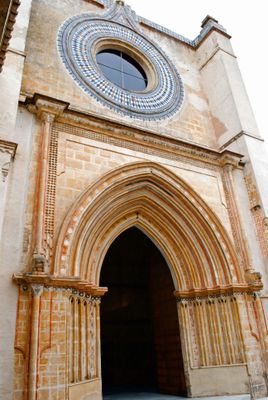
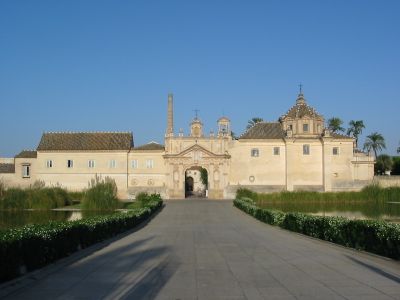
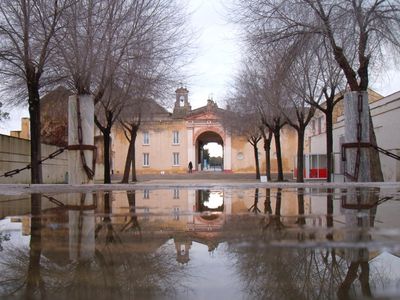
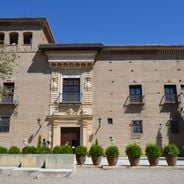
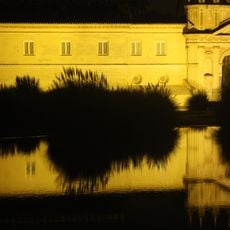
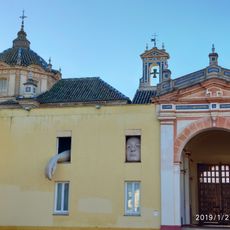
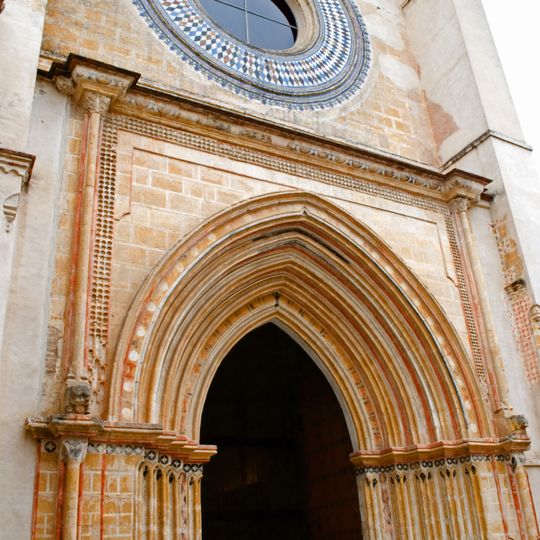
The Antigua Monasterio de la Cartuja de Santa María de las Cuevas is a monastery with Gothic architecture located on Isla de la Cartuja in Seville. It contains multiple courtyards with arcades, a chapel with ornate stonework, planted gardens with mature trees, and windows decorated with detailed patterns.
The monastery was founded in the late 14th century and housed Carthusian monks for over four centuries. Its religious use ended in the early 1800s when the site was converted into a ceramics workshop.
The name refers to the Carthusian monks who once lived here and followed their contemplative way of life. Visitors can sense how these monks structured their days around prayer and work in the surviving spaces.
The grounds are quite large with multiple buildings, so allow time to explore without rushing. Visitors should plan for a leisurely pace to experience the courtyards, gardens, and exhibition spaces at their own speed.
This place has a strong connection to Christopher Columbus, who prepared his second voyage to the Americas here. After his death, his remains were temporarily kept in one of the monastery's chapels.
Location: Seville
Inception: 1398
Founders: Gonzalo Mena Roelas
Architectural style: Gothic architecture
Part of: Seville old town
Website: http://caac.es
GPS coordinates: 37.39781,-6.00765
Latest update: December 6, 2025 16:02
Seville reveals its story through the marks of many years. The Cathedral and its Giralda tower show the change from Gothic to baroque. The Royal Alcázar mixes Islamic designs with gardens shaded by orange trees. Walking through the streets, you move from the narrow alleys of Santa Cruz to the open views of Plaza de España, built in the early 20th century with channels and colorful tiles. Maria Luisa Park gives a break under the Mediterranean trees, not far from the Metropol Parasol with its modern wooden shapes that stand out against the old buildings. Along the Guadalquivir River, the Torre del Oro hints at how important the river was in medieval times. The Triana Bridge connects the city center to the pottery and sailor neighborhoods. Places like the Fine Arts Museum and the Hospital de los Venerables open doors to spaces where art and architecture meet. Each spot tells a different part of the story, with no one dominating.
Andalusia holds a notable collection of historic gardens that reflect different periods of Spanish history. These sites combine Moorish, Christian, and modern design traditions and demonstrate the evolution of garden art on the Iberian Peninsula. From the terraced layouts of the Nasrid era to the parks of the 19th and 20th centuries, these places provide insight into the cultural influences of various ages. Granada contains several significant examples of this garden tradition. The Generalife served as the summer residence of the Nasrid sultans and features water features, patios, and planted terraces overlooking the Alhambra. The Carmen de los Mártires combines Moorish, French, and English garden elements, while the Fundación Rodríguez-Acosta represents an example of early 20th-century garden design. Additional sites such as the Carmen de la Victoria, the Jardin de los Adarves, and the Palacio de los Córdova complete the picture of Granada's garden tradition. Seville houses one of Spain's most important historic gardens at the Real Alcázar. The complex includes Moorish courtyards, Renaissance parterres, and modern plantings. The city also offers the Jardines de Murillo at the edge of the Alcázar grounds, the expansive María Luisa Park with its pavilions and plazas, the Jardín Americano with exotic vegetation, as well as Los Jardines de la Buhaira and La Cartuja de Sevilla. The Casa de Pilatos displays an ornate palace courtyard with plants and fountains. In Córdoba, the Alcázar de los Reyes Cristianos presents geometric gardens with water basins and cypresses, while the Palacio de Viana offers twelve different interior courtyards with varied plantings. Málaga contributes to the diversity with the Botanical Garden La Concepción and the Pedro Luis Alonso Gardens, and in Vélez de Benaudalla lies the Nasrid Garden of Vélez as another testimony to Moorish garden design.
Museo de Bellas Artes de Sevilla
879 m
Auditorio Rocío Jurado
466 m
Iglesia de San Lorenzo, Sevilla
960 m
Seville-Plaza de Armas railway station
817 m
Centro Andaluz de Arte Contemporáneo
26 m
CaixaForum Sevilla
682 m
Pabellón de la Navegación (Sevilla)
368 m
Chile Pavilion of Expo 1992
637 m
Iglesia de San Vicente
836 m
Puente del Cristo de la Expiración
840 m
Tower Schindler
504 m
Jardín Americano
198 m
Palacio de los Condes de Santa Coloma
956 m
Cuartel del Carmen
693 m
World Trade Center Seville
409 m
Torre Mapfre
682 m
Torre Banesto
859 m
Iglesia del Convento de la Asunción
900 m
Puente Alfonso XII
832 m
Museo de Arte Contemporáneo
184 m
Palacio de los Condes de Casa Galindo
862 m
Edificio de viviendas
550 m
Pabellón de Finlandia de la Expo 92
997 m
Jardines del Guadalquivir
808 m
Edificio de viviendas
913 m
Pabellón de la Red Eléctrica Española Para la Exposición Universal de 1992
762 m
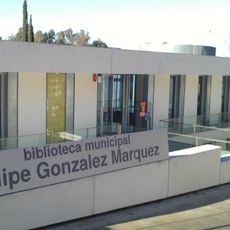
Biblioteca Pública Municipal - Felipe González
560 m
Pabellón de la Navegación de la Expo 92
401 mVisited this place? Tap the stars to rate it and share your experience / photos with the community! Try now! You can cancel it anytime.
Discover hidden gems everywhere you go!
From secret cafés to breathtaking viewpoints, skip the crowded tourist spots and find places that match your style. Our app makes it easy with voice search, smart filtering, route optimization, and insider tips from travelers worldwide. Download now for the complete mobile experience.
A unique approach to discovering new places❞
— Le Figaro
All the places worth exploring❞
— France Info
A tailor-made excursion in just a few clicks❞
— 20 Minutes