See the monuments around you in AROpen chests in the app
Around Us is built for your phone — point your camera at the streets and discover the monuments and places around you in augmented reality.Around Us is built for your phone — chests unlock when you walk, explore and capture nearby places.
Cultural routes in Paris: museums, historic districts and secret gardens
This cultural route, highly diverse, explores Paris beyond its usual landmarks, revealing a city of art collections, green spaces, and varied architecture. The itinerary includes the Musée Marmottan Monet, which houses more than 300 paintings by the artist, squares like Parc Monceau with its columns and 18th-century pavilions, and urban ensembles such as Place des Vosges, completed in 1612 under Henri IV. The circuit also passes through Île Saint-Louis, where mansions line the quays since the 17th century, and crosses the Marais district, with its narrow streets filled with galleries and museums inside historic aristocratic houses.
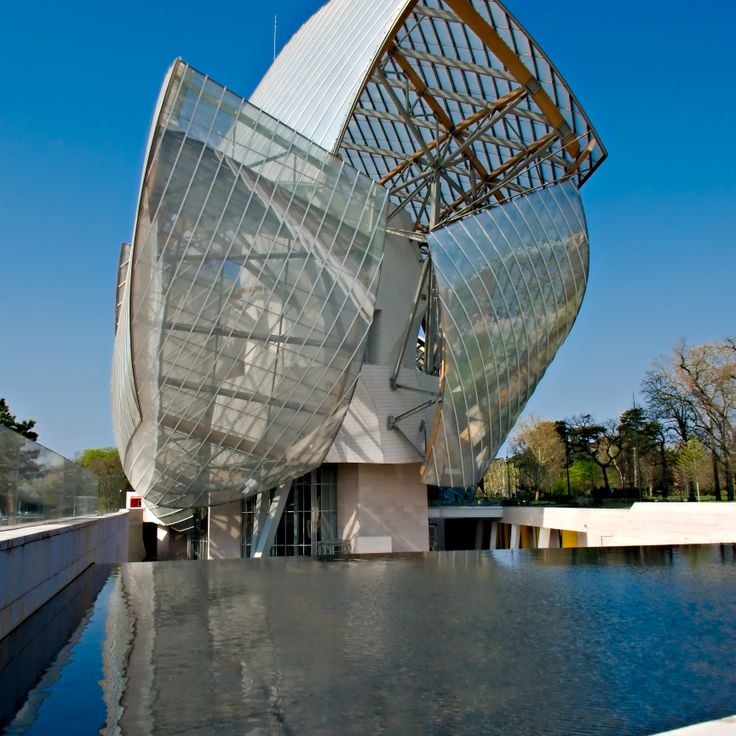
The route extends to the Fondation Louis Vuitton in the Bois de Boulogne, a glass and steel building designed by Frank Gehry, opened in 2014. Other stops include lesser-visited spots such as Coulée verte René-Dumont, a 4.7 km planted promenade on an old railway, and Parc de Bercy with its three themed gardens. This circuit allows visitors to see different facets of Paris, from the catacombs under the 14th arrondissement to the colorful facades of rue Crémieux, from the flower market on Île de la Cité to César's large-scale sculpture in La Défense.
Cultural routes in Paris: museums, historic districts and secret gardens
This cultural route, highly diverse, explores Paris beyond its usual landmarks, revealing a city of art collections, green spaces, and varied architecture. The itinerary includes the Musée Marmottan Monet, which houses more than 300 paintings by the artist, squares like Parc Monceau with its columns and 18th-century pavilions, and urban ensembles such as Place des Vosges, completed in 1612 under Henri IV. The circuit also passes through Île Saint-Louis, where mansions line the quays since the 17th century, and crosses the Marais district, with its narrow streets filled with galleries and museums inside historic aristocratic houses.
The route extends to the Fondation Louis Vuitton in the Bois de Boulogne, a glass and steel building designed by Frank Gehry, opened in 2014. Other stops include lesser-visited spots such as Coulée verte René-Dumont, a 4.7 km planted promenade on an old railway, and Parc de Bercy with its three themed gardens. This circuit allows visitors to see different facets of Paris, from the catacombs under the 14th arrondissement to the colorful facades of rue Crémieux, from the flower market on Île de la Cité to César's large-scale sculpture in La Défense.
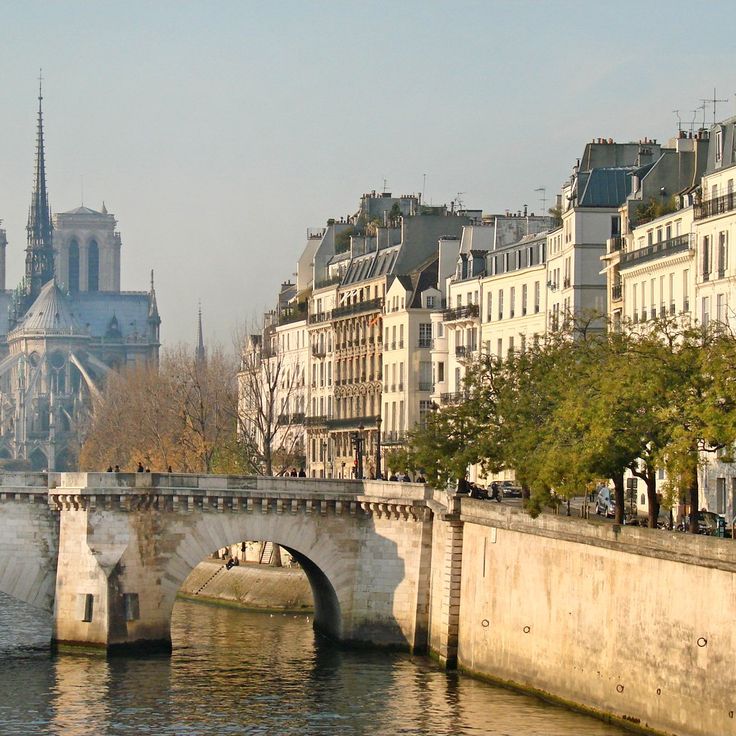
Île Saint-Louis was formed in the 17th century by joining two smaller islands and developed under Louis XIII as a residential area. The urban layout includes townhouses from this period, some retaining their original façade organization. The quays are lined with multi-story buildings housing ground-floor shops and restaurants. The island sits between the Right and Left Banks of the Seine and is accessible by five bridges, including Pont Saint-Louis connecting to the neighboring Île de la Cité. Narrow streets contain craft businesses and small retail shops. The island covers roughly 27 acres (11 hectares) and is bisected by Rue Saint-Louis-en-l'Île, the main commercial street.
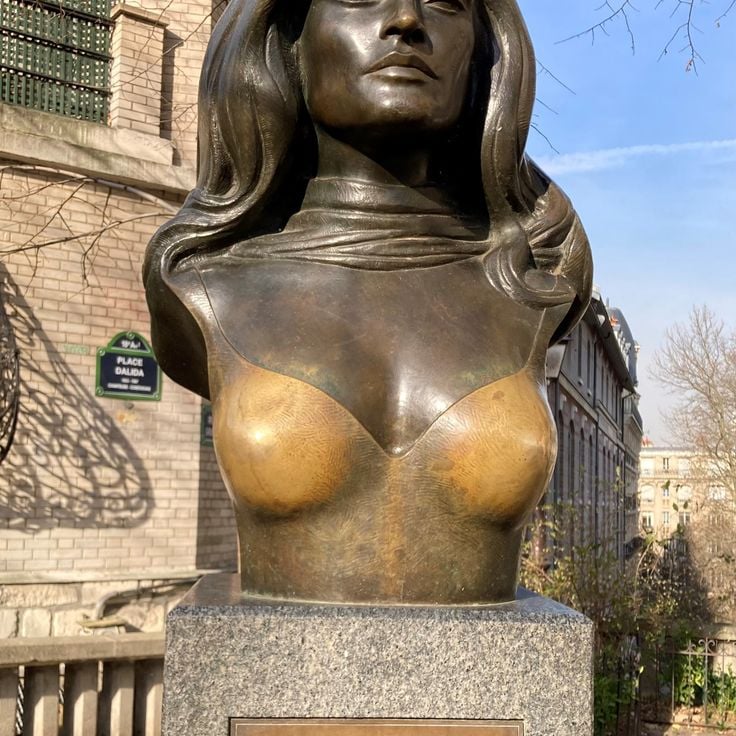
This small square in Montmartre holds a bronze statue of French-Italian singer Dalida, who died in 1987 and lived in this neighborhood between 1962 and 1987. The 7-foot (2-meter) bust was created by sculptor Aslan in December 1997 and shows the artist in one of her characteristic poses. The square sits at the intersection of several stairways and lanes and offers a broad view over the northern districts of Paris. Visitors come here to touch the statue – a gesture that according to local tradition brings good luck – and to rest on the surrounding benches.
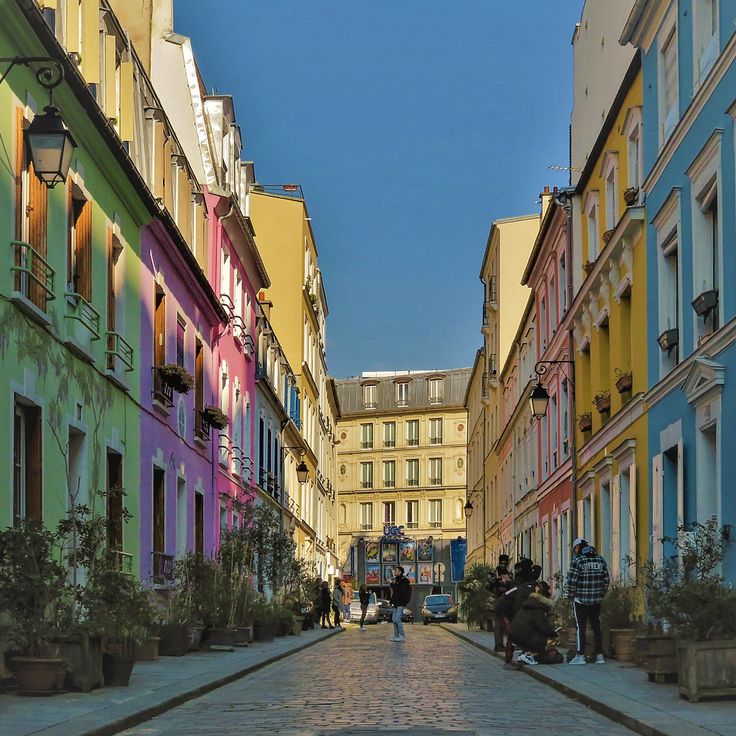
Rue Crémieux is a 475-foot pedestrian street in the 12th arrondissement distinguished by its colorful house facades in pastel shades of pink, yellow, blue and green. The two-story residential buildings date from the 19th century and were originally constructed for railway workers from the nearby Gare de Lyon. The street maintains its village-like character with shutters, window boxes and cobblestone walkways running between Rue de Bercy and Rue de Lyon.
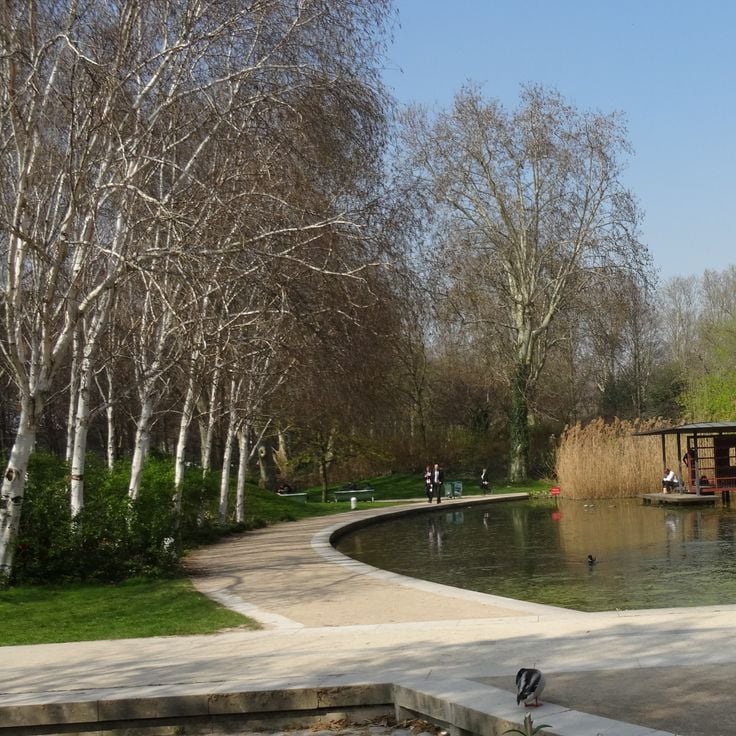
Parc de Bercy sits on the site of former wine warehouses and was developed in the 1990s. The 35-acre park divides into three themed gardens: the romantic garden with a pond and waterfowl, the flower garden featuring seasonal plantings, and the meadow garden. Several buildings from the historic wine warehouse complex remain and now house the Musée des Arts Forains. The park preserves about 2,000 feet (600 meters) of old railway tracks once used for wine barrel delivery, along with stairs and paving from the warehouse era. The grounds also include a small vineyard planted with regional grape varieties, referencing the commercial past of the district.
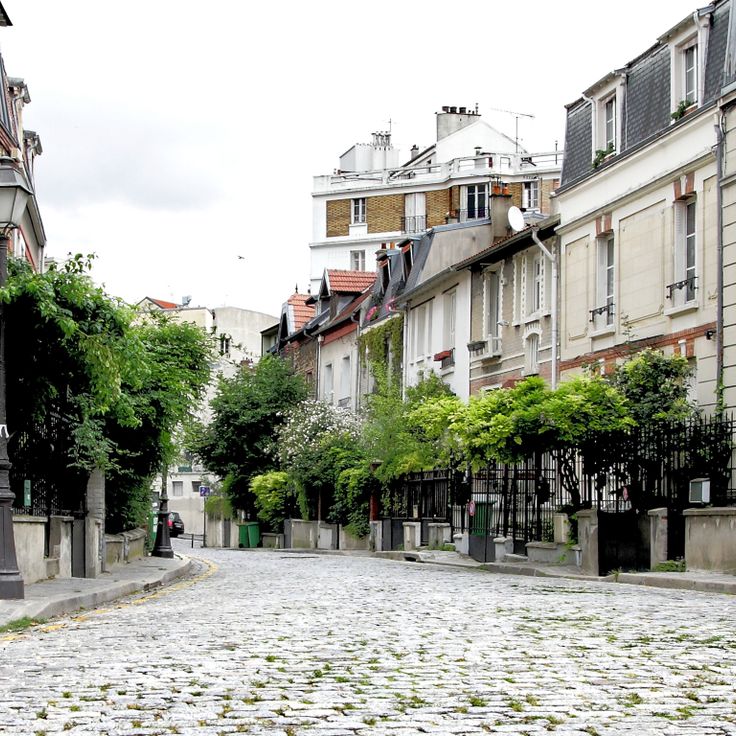
La Campagne à Paris comprises 92 single-family homes built between 1907 and 1926 on a hilltop in the 20th arrondissement. This residential development arose from the cooperative Le Paris-Jardins initiative, replacing former quarries with a network of cobblestone lanes and flower gardens. The architecture blends Norman, Alsatian, and English cottage styles across a 15,000-square-foot (1,400-square-meter) quarter sheltered from urban traffic. The settlement received historic landmark status in 1993 and represents one of the few preserved garden city projects in pre-war Paris.
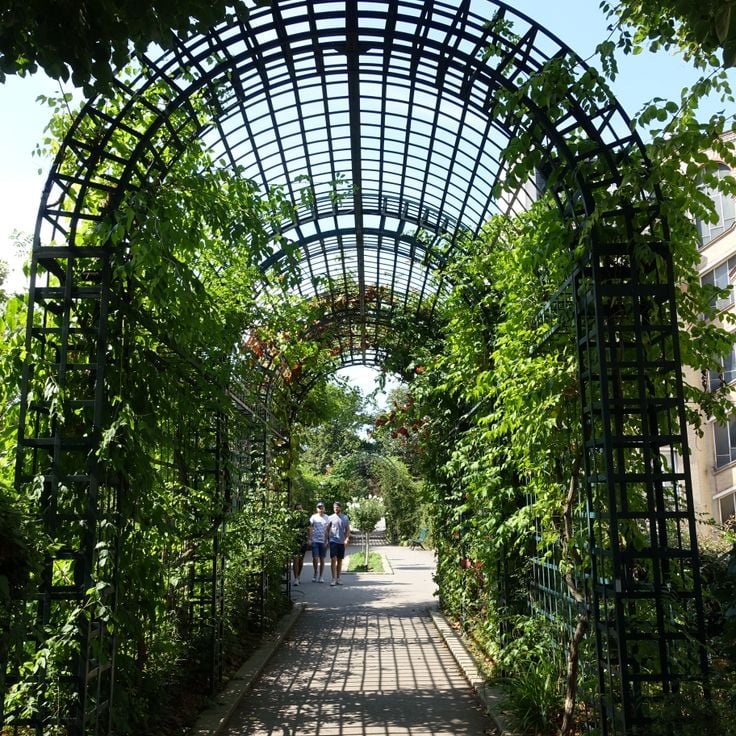
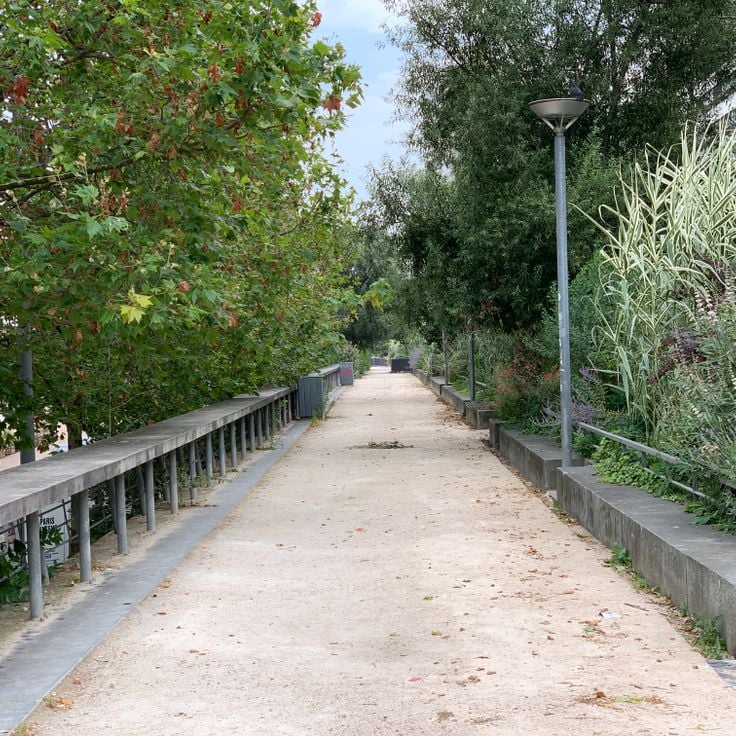
The Coulée verte René-Dumont extends 2.9 miles (4.7 km) along a former railway line converted into a planted walkway in 1988. The route runs from the Bastille quarter through the 12th arrondissement, partly elevated about 30 feet (10 meters) on the Viaduc des Arts, beneath which craftsmen's workshops and studios now occupy the arches. Along this green corridor, roses, lavender, and bamboo grow between metal and wooden railings. Further sections continue at ground level through gardens and narrow passages to the Périphérique ring road. This park served as the model for New York's High Line and provides a quiet route away from streets through several neighborhoods, with views of building facades and courtyards.
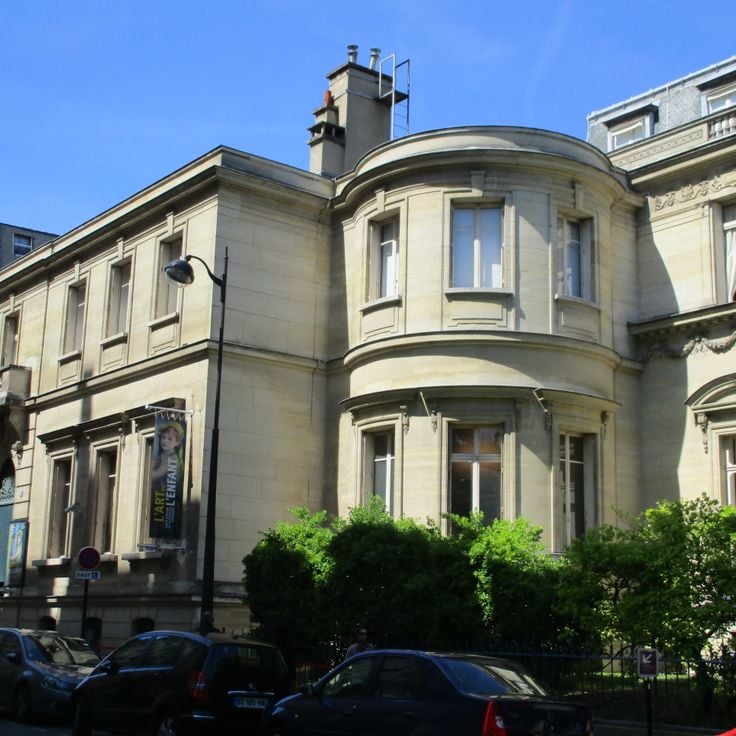
The Musée Marmottan Monet holds the largest collection of Claude Monet paintings in the world, with over 300 works by the artist. The museum owns the famous painting "Impression, Sunrise" from 1872, which gave Impressionism its name, along with studies from Giverny and the water lilies series painted between 1914 and 1926. The collections also include works by Berthe Morisot, Pierre-Auguste Renoir and Camille Pissarro, as well as illuminated manuscripts and furniture from the First Empire. The museum occupies a 19th-century hunting lodge in the 16th arrondissement, near the Bois de Boulogne, and was bequeathed to the Institut de France in 1932 by the art historian Paul Marmottan.
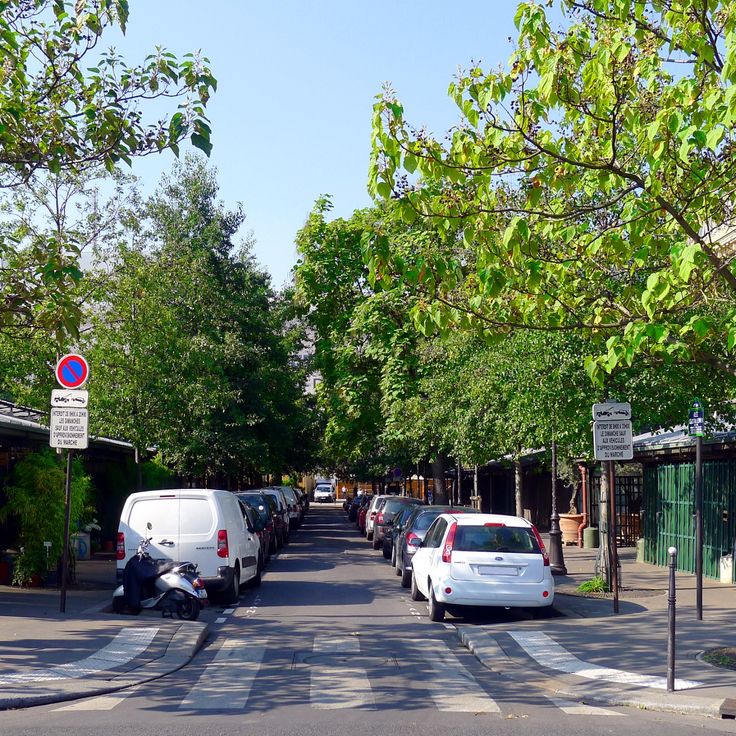
The Marché aux Fleurs Reine Elizabeth II is a flower market on the Île de la Cité that has operated since 1808, selling potted plants, cut flowers and gardening supplies daily except Mondays. This market extends along Place Louis Lépine between the Palais de Justice and the Prefecture, displaying its wares under cast-iron pavilions from the 19th century. On Sundays, the market transforms into a bird market with cages and supplies for pet owners. The stalls are run by vendors who sell seedlings for Parisian balconies, orchids and seasonal blooms. The market has carried the name of the British Queen since 2014 and stands a short walk from Notre-Dame in the historic center of Paris.
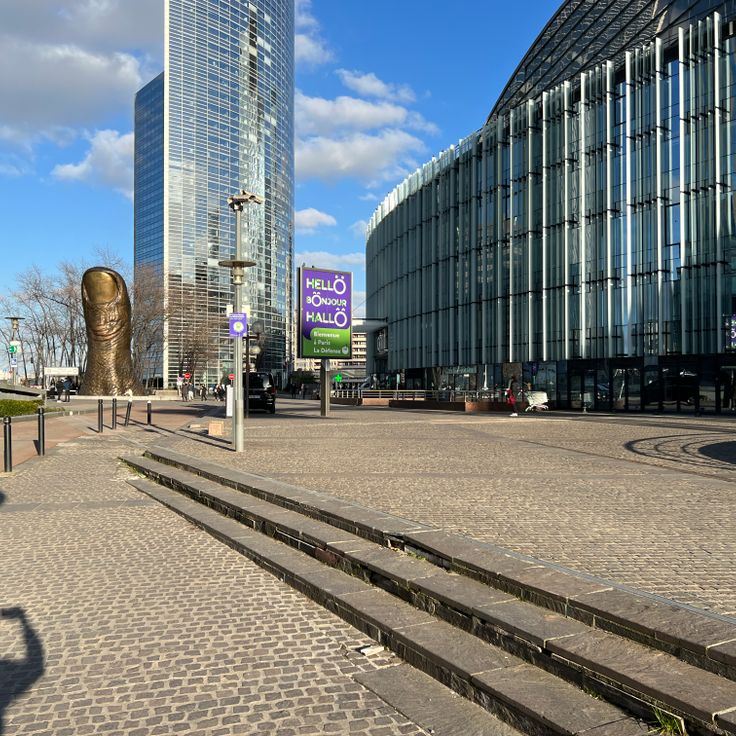
This monumental bronze sculpture by César Baldaccini was created in 1965 and depicts a 12-meter (39-foot) tall thumb cast from the artist's own thumb. The sculpture stands on the esplanade of La Défense and belongs to a series of similar works César produced in various sizes. The piece illustrates the artist's interest in enlarging everyday body parts and translating them into monumental form. The thumb was cast in bronze and weighs several tons. The sculpture fits into the architectural ensemble of La Défense, where modern office towers and contemporary artworks define the district.
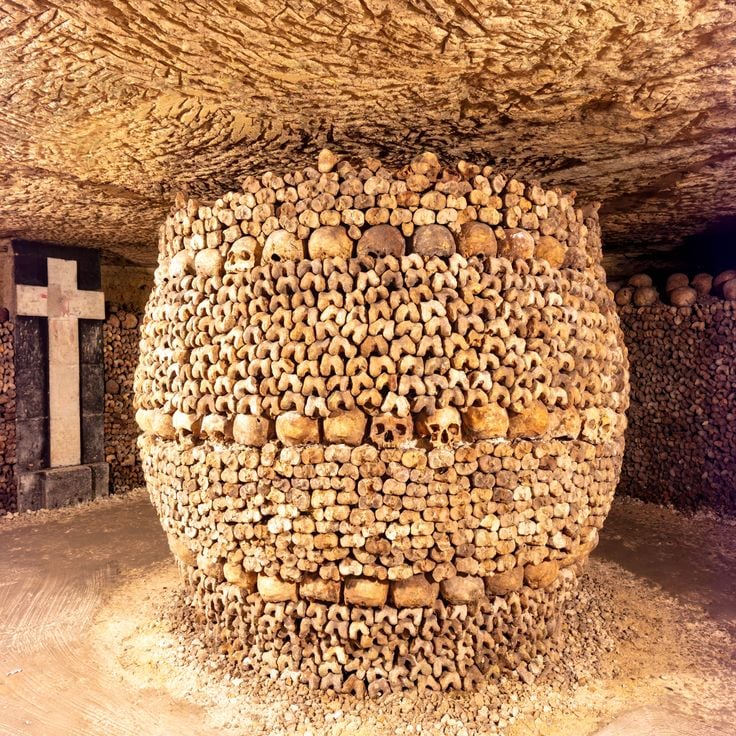
The Catacombs of Paris were established starting in 1785, when the city's cemeteries became overcrowded and authorities transferred remains to abandoned quarries beneath the 14th arrondissement. These underground galleries extend roughly 1 mile and contain the skeletons of more than 6 million people, arranged systematically in walls and decorative patterns. The circuit leads through tunnels approximately 65 feet (20 meters) below street level, where inscriptions and sculptural arrangements of bones and skulls document the former ossuary. This network remains as a historical artifact of urban planning and as an unusual record of 18th-century burial practices.
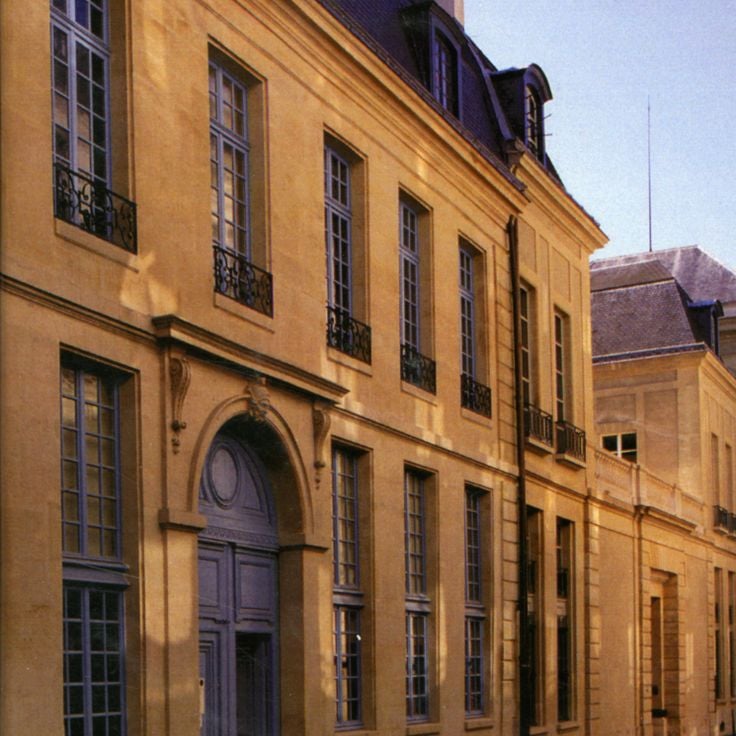
The Musée de la Chasse et de la Nature occupies a 17th-century private mansion in the Marais and displays hunting weapons, taxidermied wildlife and contemporary artworks exploring the relationship between humans and nature. Founded in 1967, the museum preserves a collection of firearms, crossbows and edged weapons spanning several centuries, alongside mounted specimens of bears, wolves and birds of prey presented in period salons with wood paneling and stucco ceilings. The exhibition extends through two adjoining townhouses, the Hôtel de Guénégaud and the Hôtel de Mongelas, and includes modern installations that examine human interactions with the animal world alongside historical objects.
The Fondation Louis Vuitton provides a modern counterpoint to the historical art collections along this route, presenting contemporary works in a 2014 building on the edge of the Bois de Boulogne. Designed by Frank Gehry, the glass and steel structure spans 120,000 square feet (11,000 square meters) of exhibition space across multiple levels. The institution displays its permanent collection alongside rotating exhibitions of international artists from the 20th and 21st centuries. The building's twelve curved glass sails sit within a reflecting pool that mirrors the construction and alters the perception of space.
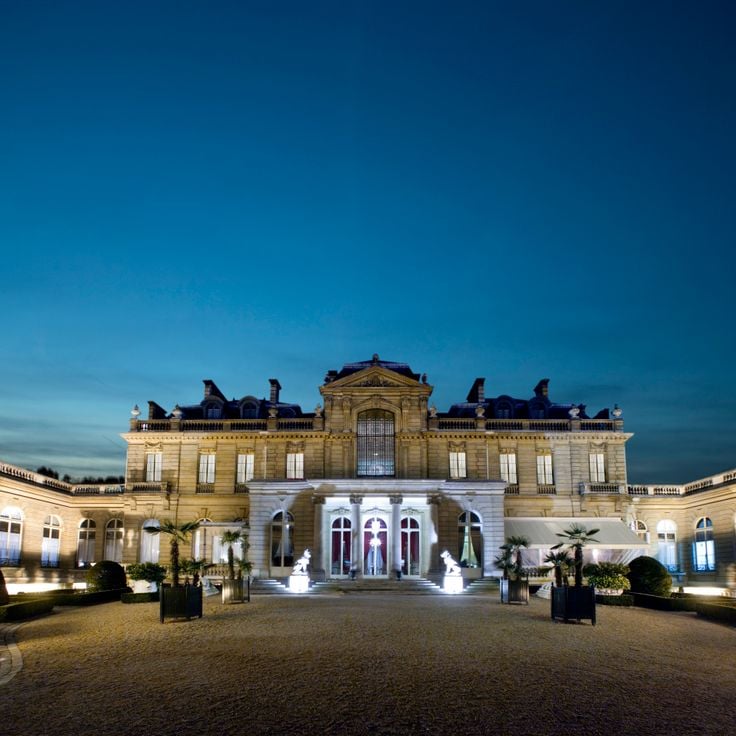
This 19th-century mansion houses a collection of European painting and sculpture assembled by Édouard André and Nélie Jacquemart, bequeathed to the Institut de France in 1913. The Musée Jacquemart-André preserves works by Botticelli, Mantegna, Uccello and Tiepolo alongside French 18th-century furniture and decorative arts. The winter garden with its double staircase and the Italian Renaissance gallery display the collection within the original rooms of the residence. Located in the 8th arrondissement, this museum offers insight into the domestic life of Paris's upper class during the late 1800s and presents art in a setting that reflects the tastes and collecting practices of the period.
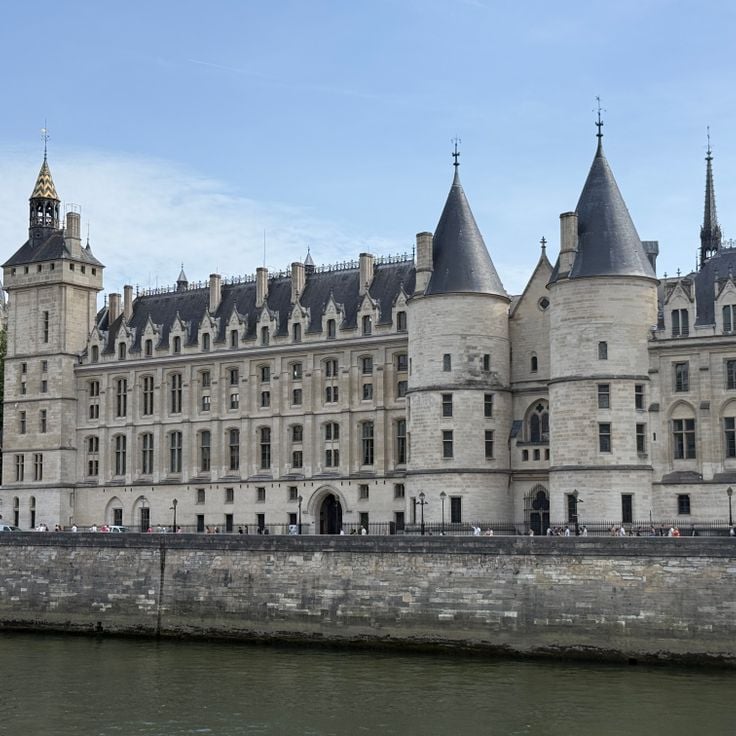
The Conciergerie is the oldest surviving part of the medieval Palais de la Cité, built in the 14th century under Philip IV and later used as a prison. During the French Revolution, more than 2,700 people were held here, including Marie Antoinette, who was imprisoned in a ground-floor cell in 1793 before being taken to the guillotine. The Gothic Salle des Gens d'Armes, one of the largest medieval halls in Europe, spans 19,000 square feet (1,800 square meters) with vaulted ceilings and massive columns. The building stands on the northern bank of the Seine on Île de la Cité and traces the evolution of royal power and the history of justice in France from the Middle Ages through the Revolution.
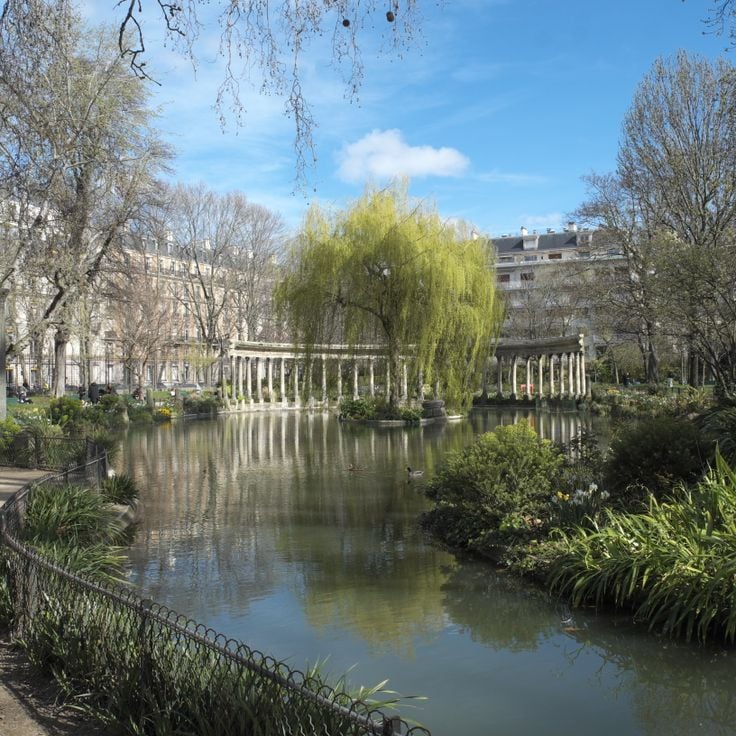
Parc Monceau, an 18th-century English-style garden in the 8th arrondissement, covers 20 acres (8.2 hectares) and preserves decorative features commissioned by the Duke of Chartres beginning in 1778. The park contains a 17th-century Corinthian colonnade originally from the Chapel of the Valois at Saint-Denis, a rotunda designed by Claude-Nicolas Ledoux in 1784, and several statues of French figures including Chopin and Maupassant. Pathways redesigned by Baron Haussmann from 1860 connect lawns, ponds and exotic trees, including plane trees over 200 years old. The park serves as a starting point for this cultural route linking Parisian collections and historic urban spaces.
The Marais is a historic district in the 3rd and 4th arrondissements where medieval street patterns remain intact. The neighborhood holds numerous museums within former aristocratic mansions from the 17th century, including the Musée Carnavalet dedicated to Parisian history and the Musée Picasso on Rue de Thorigny. Its streets concentrate art galleries, kosher bakeries along Rue des Rosiers, and boutiques set in doorways dating from the reign of Louis XIII. The Marais combines its aristocratic past with a diverse present, featuring restaurants serving traditional French and Middle Eastern cuisine alongside theaters and bars lining the narrow lanes.
This elevated green corridor extends 4.7 miles (7.6 kilometers) along a former railway viaduct through the 12th arrondissement, creating a planted walkway opened in 1993. The Promenade Plantée runs from Place de la Bastille to Porte de Saint-Mandé, crossing over viaducts, through tunnels and between residential buildings. The western section sits atop the Viaduc des Arts, a brick railway viaduct from 1859, with craft workshops now occupying the arches below. Bamboo, roses and various climbing plants grow along the route, and several access points connect the promenade to surrounding streets.
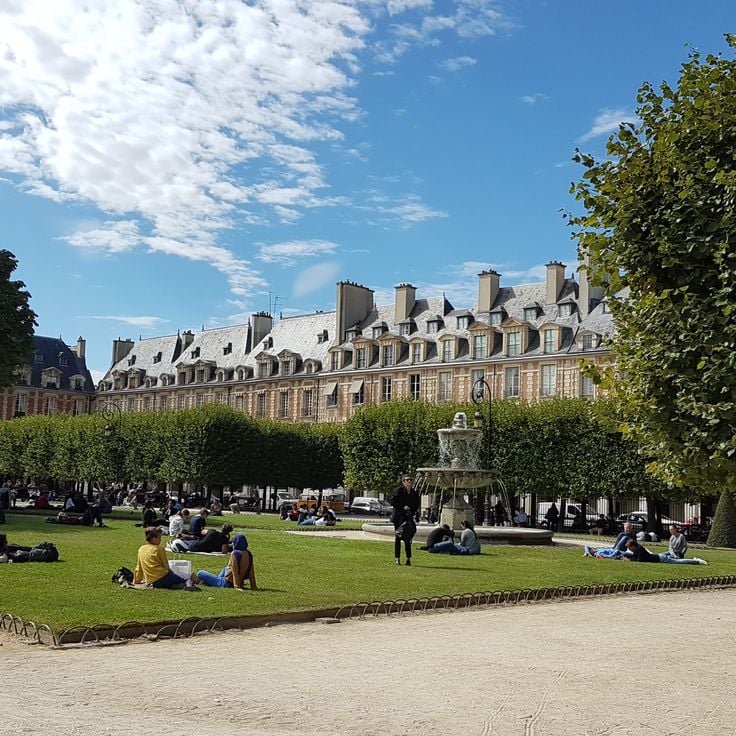
This monumental square was built between 1605 and 1612 under Henry IV as the first planned public square in Paris. The Place des Vosges forms a perfect square measuring 459 feet (140 meters) on each side, bordered by 36 pavilions constructed of red brick walls with cut stone facades. The buildings stand on continuous arcade galleries that create a covered walkway extending approximately 1,545 feet (470 meters) around the perimeter. The residences now house galleries, antique shops and apartments, while the central garden with its lawns, linden trees and four fountains provides a public space that has remained largely unchanged for more than four centuries. Victor Hugo lived in house number 6 from 1832 to 1848, now preserved as a museum.
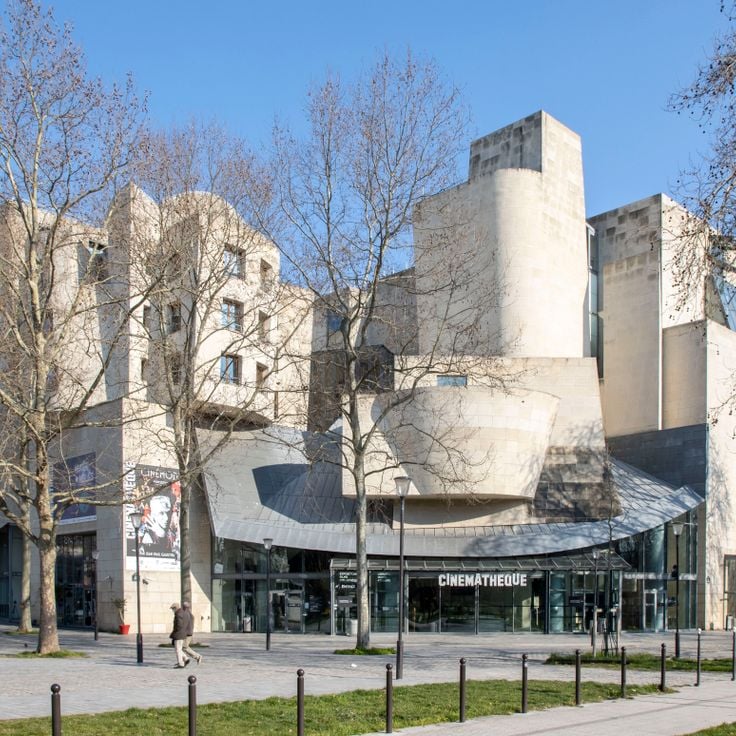
The Cinémathèque Française preserves more than 40,000 films and millions of documents related to cinema history. This institution holds an extensive collection of posters, photographs, costumes and film equipment that document the evolution of cinema since its beginnings. The building in Parc de Bercy, designed by Frank Gehry and opened in 2005, houses screening rooms, exhibition spaces and a museum that regularly presents thematic exhibitions on directors, actors and cinematic movements. The archives include works from all periods and countries and provide access to rare prints and restored versions, making the Cinémathèque an important center for film research and preservation.
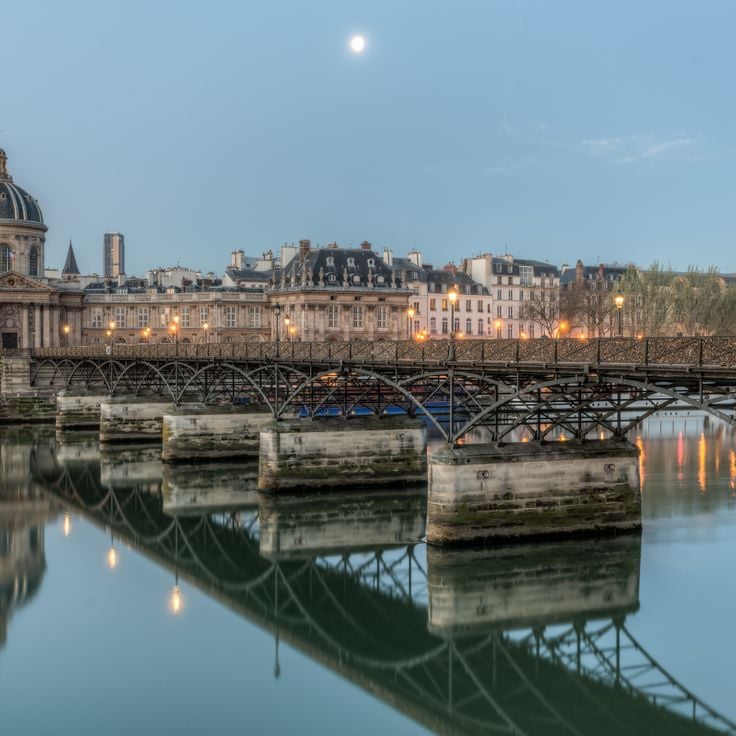
This pedestrian bridge across the Seine connects the Institut de France on the left bank with the Louvre on the right bank. The Pont des Arts was completed in 1804 under Napoleon Bonaparte as Paris's first metal bridge and named after the adjacent Palais des Arts, the former name of the Louvre. The current structure dates from 1984, following the collapse of the original bridge in 1979 after several collisions with barges. The bridge extends 155 meters (509 feet) and offers views from its nine arches of the Île de la Cité, Notre-Dame Cathedral and the Seine riverbanks. Street artists and portrait painters regularly work on the wooden deck, while the bridge serves as a connection between the museum and the academic institutions of the left bank.
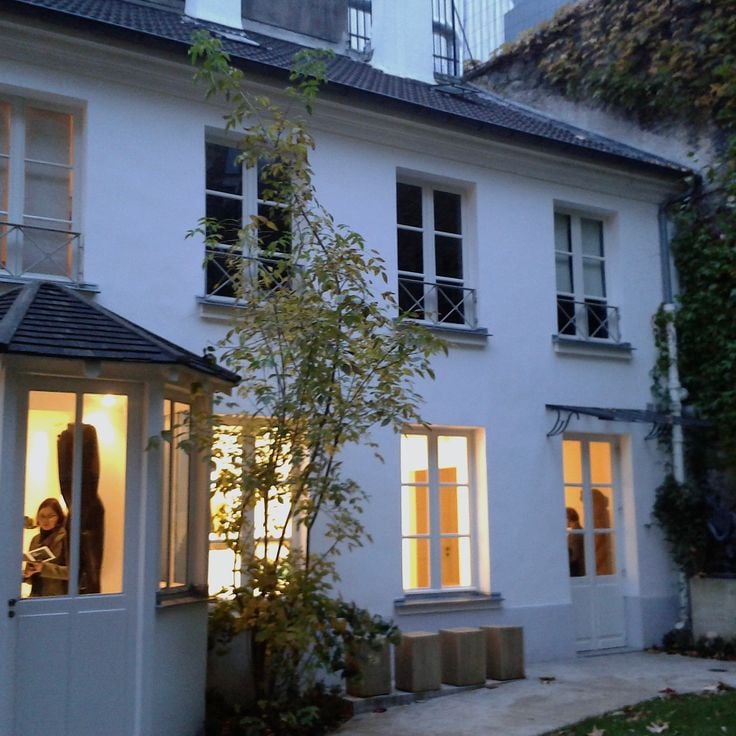
The Musée Zadkine in the 6th arrondissement preserves the studio and home of Russian-French sculptor Ossip Zadkine, who worked here from 1928 until his death in 1967. The collection includes around 300 sculptures in bronze, wood and stone, along with drawings and tapestries spanning his entire career. The museum opens onto a garden displaying monumental works, surrounded by an early 20th-century studio structure. Exhibition space extends through several rooms documenting the artist's creative process and his contribution to 20th-century modern sculpture. Zadkine's expressionist style and cubist influences appear throughout groups of works from different periods.
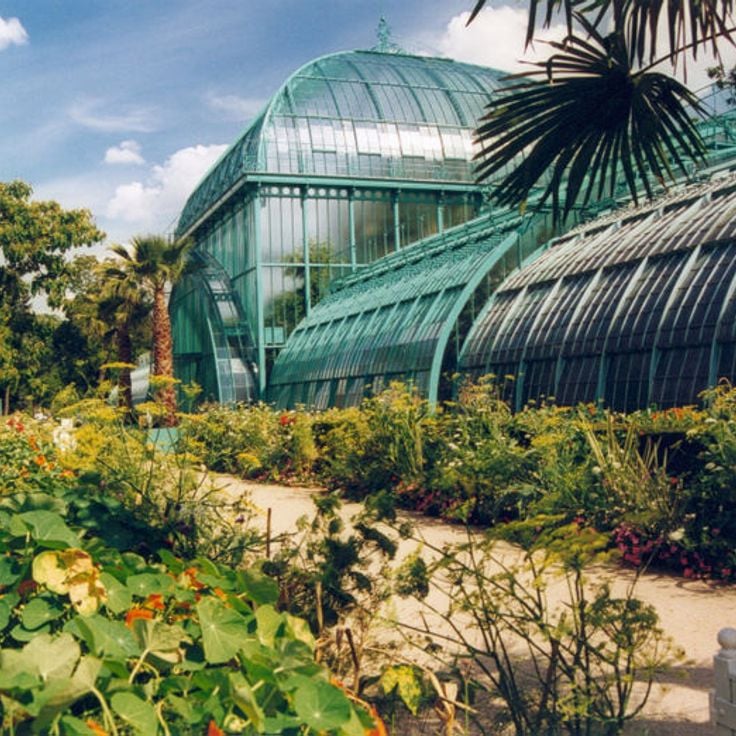
The Jardin des Serres d'Auteuil in the 16th arrondissement contains five greenhouses from the late 19th century displaying tropical and Mediterranean plant collections. The site covers 15 acres (6 hectares) and opened in 1898, with metalwork greenhouse structures designed by Jean-Camille Formigé. The grounds include a palm garden, an azalea house, and a French garden with formal beds. This botanical garden is managed by the Paris municipal administration and displays more than 100,000 plants.
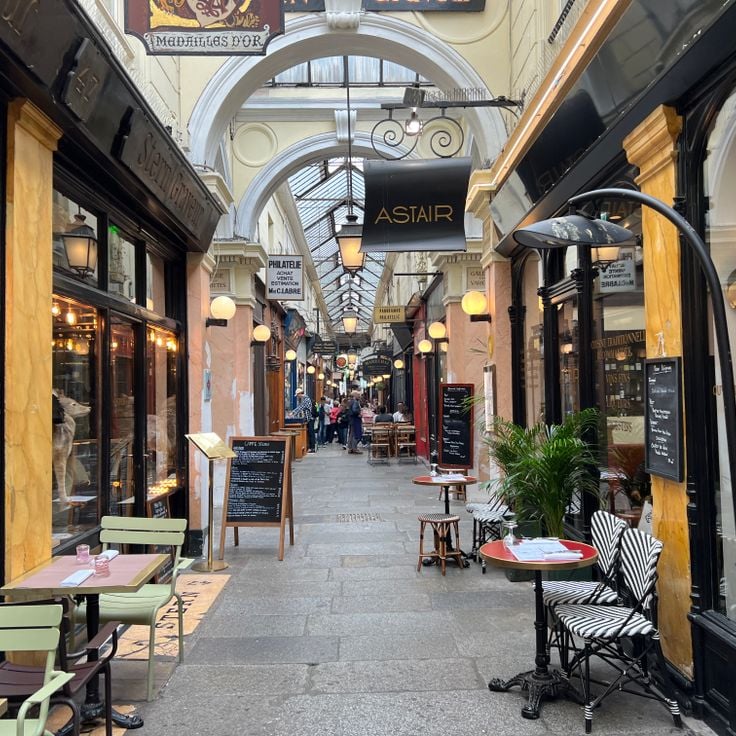
The Passage des Panoramas has linked Rue Saint-Marc to Boulevard Montmartre in the 2nd arrondissement since 1800, making it one of the city's oldest covered passages. The iron and glass structure from the 19th century now houses restaurants, stamp dealers and shops in historic storefronts.
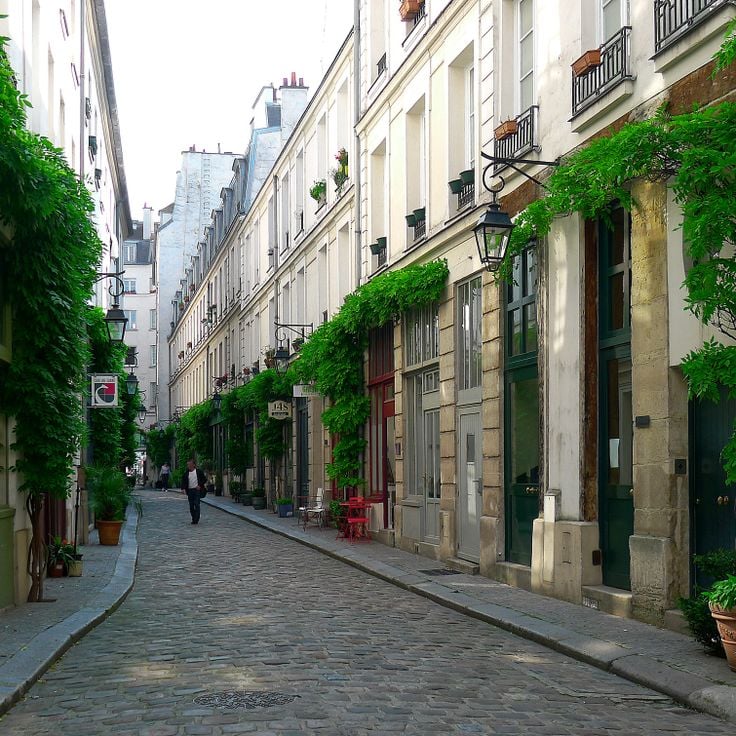
This private passageway connects Rue de la Roquette to Rue Daval in the Bastille district and runs through several interior courtyards where workshops and studios have operated since the 19th century. Cour Damoye is not open to the public, but its architecture of exposed brick and cobblestones can be seen from outside. The passage developed during the industrial expansion of the area and still shows the urban structure typical of eastern Paris in the 19th century. The adjacent streets concentrate furniture workshops and design studios that continue the traditional use of these courtyards.
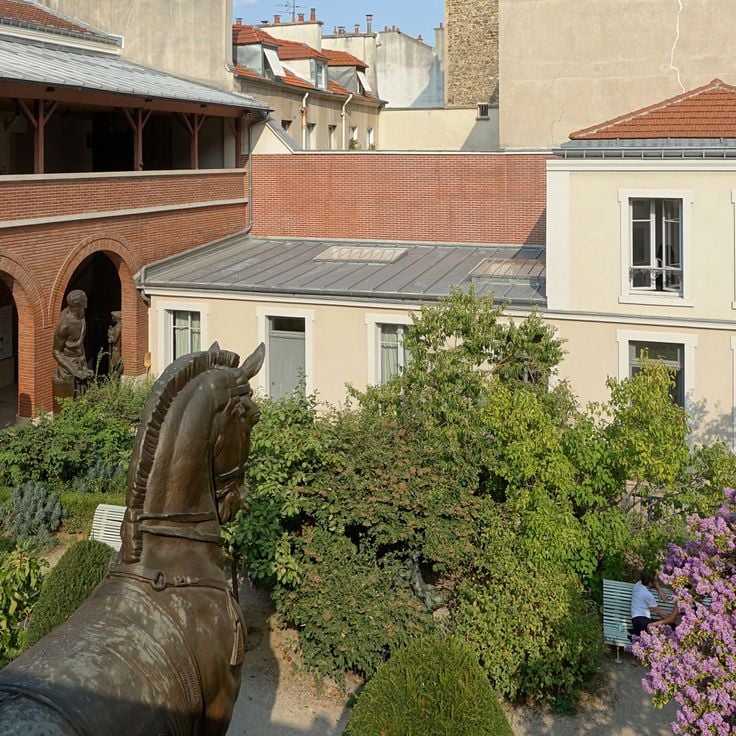
The Musée Bourdelle preserves the workshop and home of sculptor Antoine Bourdelle, who worked here from 1885 until his death in 1929. The museum displays over 500 sculptures, paintings and drawings by the artist in the original studio spaces and modern extensions. The collection includes large-scale works such as the bronze reliefs for the Théâtre des Champs-Élysées and personal belongings that document Bourdelle's artistic development. The courtyard with its bronze statues and sculpture garden complement the permanent exhibition in the Montparnasse quarter.
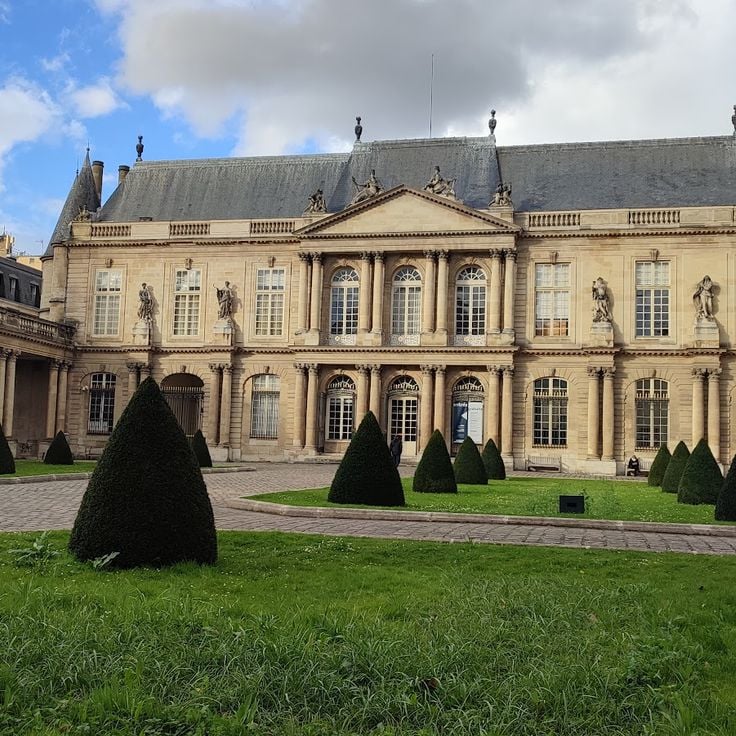
This garden sits within the courtyard of the National Archives complex on Rue des Francs-Bourgeois. The green space extends between the historic buildings of the 18th-century Hôtel de Soubise and provides a quiet area with mature trees and maintained lawns. Access is through the archive entrance gates, where visitors can take a break from the Marais district among the classical facades.
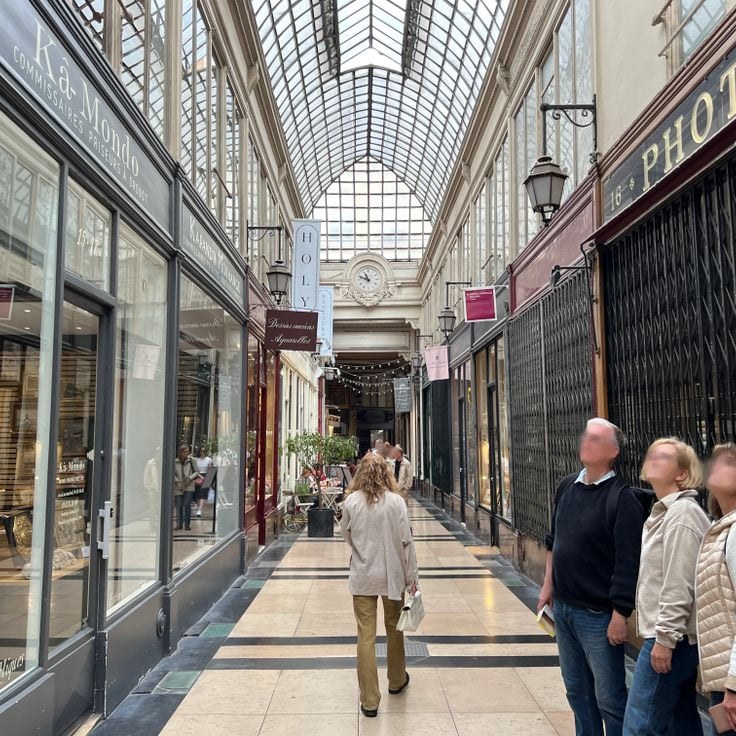
This covered passageway in the 9th arrondissement opened in 1847, connecting Rue de la Grange-Batelière with Rue du Faubourg-Montmartre. The passage extends 262 feet (75 meters) and houses antique dealers, bookshops and collectors' stores beneath a glass roof that admits natural light. The Passage Verdeau forms part of a connected network of 19th-century shopping arcades alongside the neighboring Passages Jouffroy and des Panoramas.
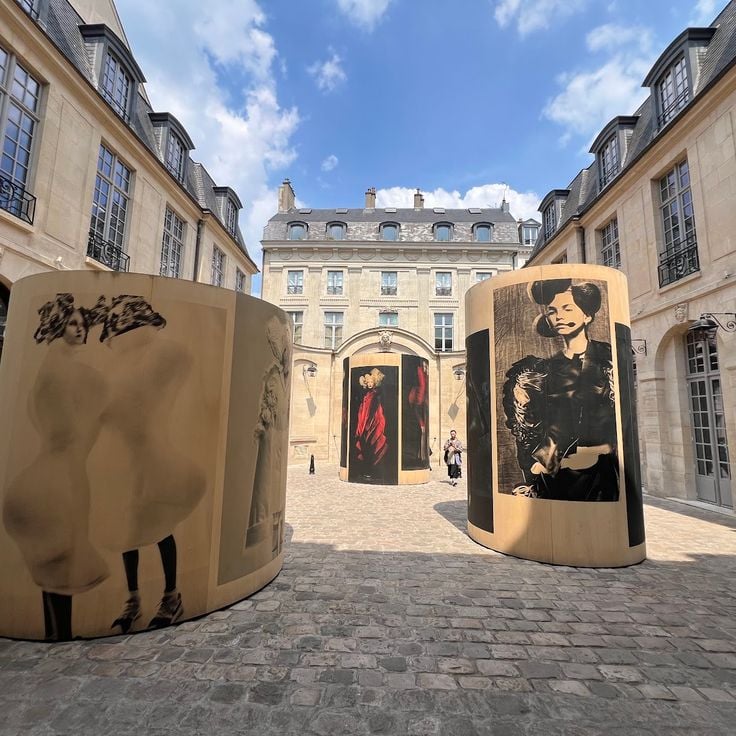
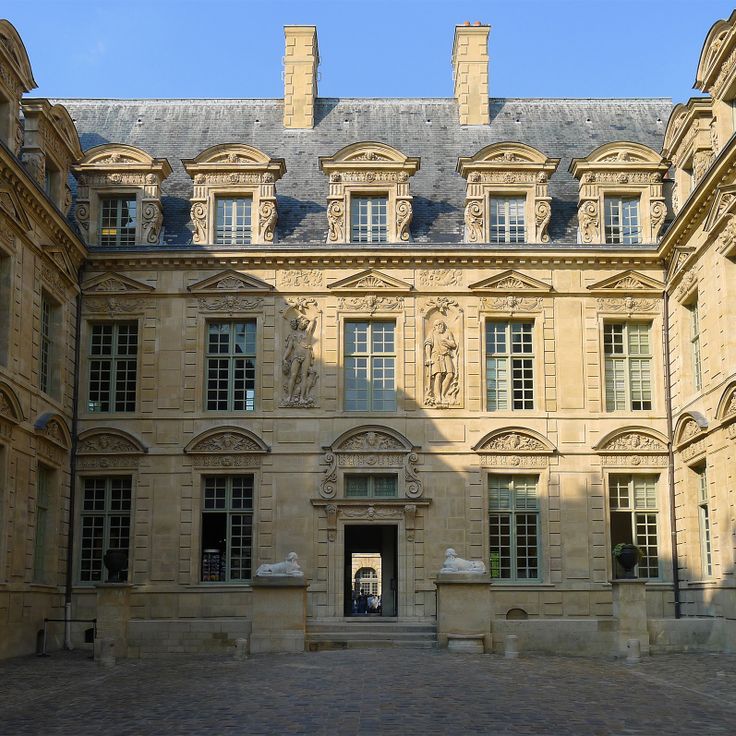
The Hôtel de Sully in the Marais was built between 1625 and 1630 to designs by architect Jean Androuet du Cerceau for the financier Mesme Gallet, then acquired in 1634 by Maximilien de Béthune, Duke of Sully. This townhouse displays the typical structure of 17th-century Parisian aristocratic architecture with its rectangular main building, two side wings, and an inner courtyard lined with arcades. The facades carry sculptures of the four seasons and the elements, executed by sculptors of French classicism. An orangery garden connects the building to the Place des Vosges through a covered passage. Since 1967, the property has housed the Centre des Monuments Nationaux, the state administration for French historic monuments.
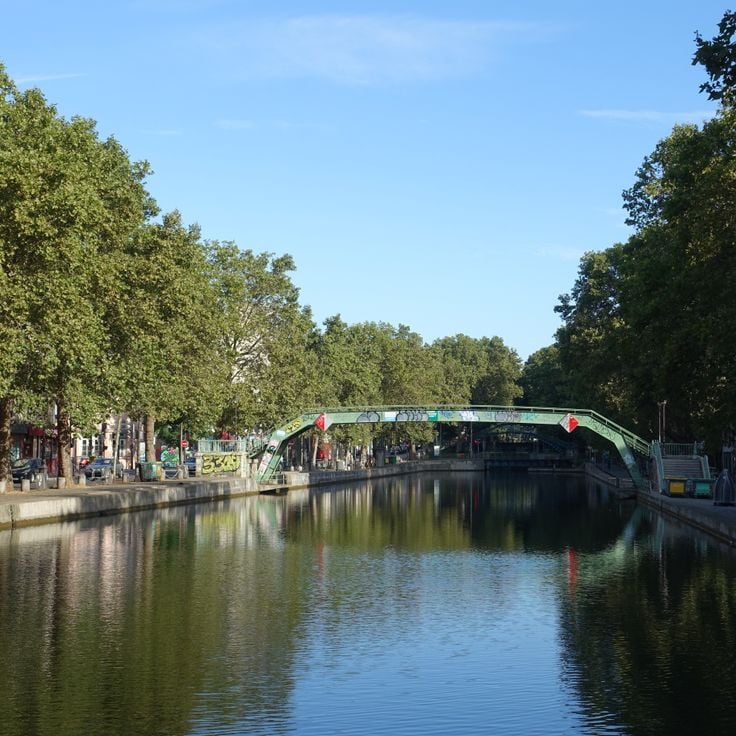
This historic canal connects the Bassin de la Villette to the Seine over a distance of 2.8 miles (4.5 km), running through the 10th and 11th arrondissements of Paris. The waterway was built between 1805 and 1825 under Napoleon Bonaparte to supply the city with drinking water and facilitate navigation. Canal Saint-Martin features nine locks and several rotating metal footbridges that connect its banks. Approximately half of its length runs underground between Bastille and Rue du Faubourg du Temple. The banks are lined with chestnut trees and have attracted visitors since the 1990s who walk along the water or stop at nearby shops and cafes.
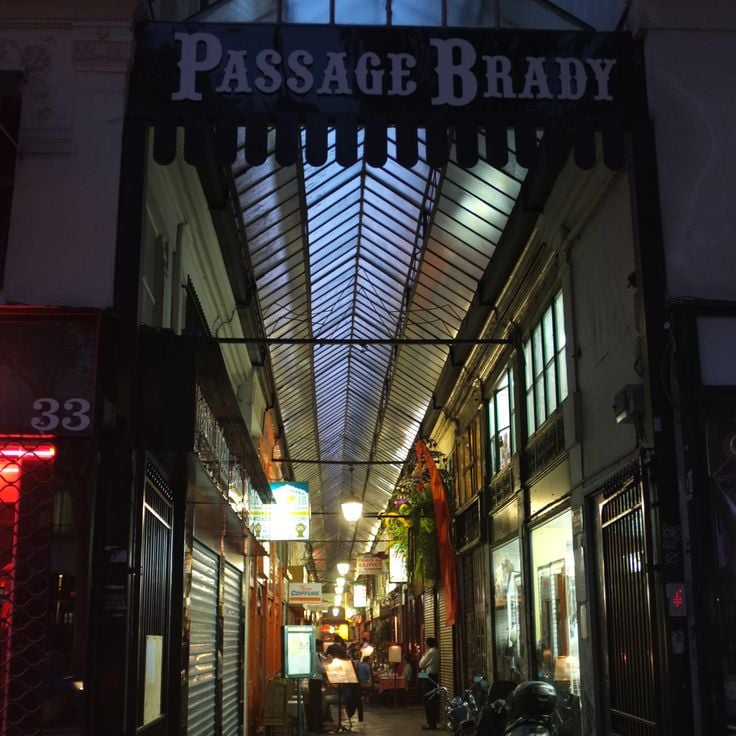
This covered passage in the 10th arrondissement connects Rue du Faubourg Saint-Denis with Rue du Faubourg Saint-Martin and opened in 1828. The Passage Brady extends 710 feet (216 meters) and has housed numerous Indian and Pakistani restaurants and shops since the 1970s, selling spices, fabrics and South Asian groceries. The glass roof protects visitors from rain while the characteristic scents of curry and tandoori waft through the arcade.
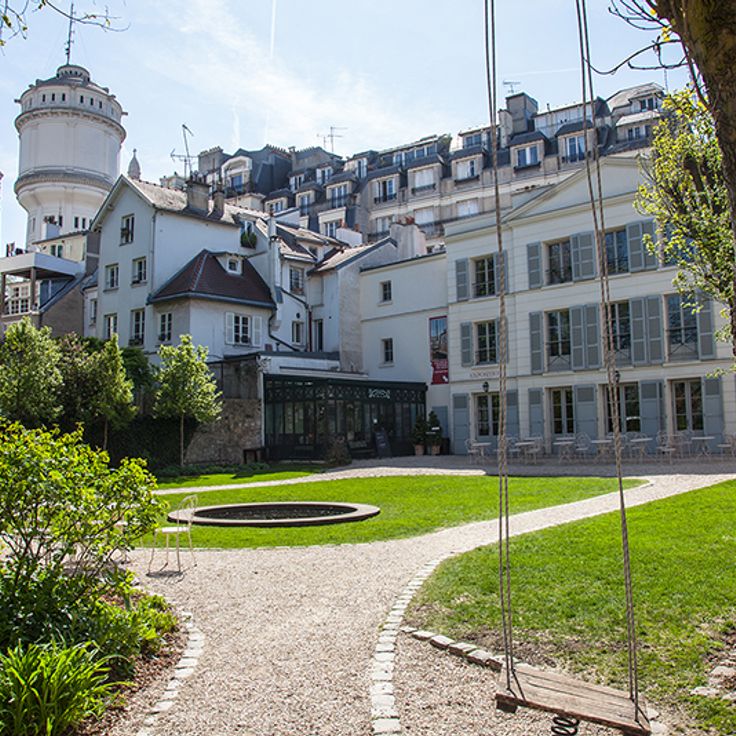
The museum presents the history of Montmartre through paintings, posters and photographs housed in one of the neighborhood's oldest buildings. The main house dates from the 17th century and provided studios for artists including Renoir and Suzanne Valadon during the 19th century. Collections document the artistic and social evolution of the hill from the 1800s to the present, with emphasis on the Belle Époque and the cabaret era. The route includes the studios of former residents and the Renoir Gardens, designed after one of the artist's paintings. Located on Rue Cortot, the museum offers insight into historic Montmartre through its setting.
Île Saint-Louis was formed in the 17th century by joining two smaller islands and developed under Louis XIII as a residential area. The urban layout includes townhouses from this period, some retaining their original façade organization. The quays are lined with multi-story buildings housing ground-floor shops and restaurants. The island sits between the Right and Left Banks of the Seine and is accessible by five bridges, including Pont Saint-Louis connecting to the neighboring Île de la Cité. Narrow streets contain craft businesses and small retail shops. The island covers roughly 27 acres (11 hectares) and is bisected by Rue Saint-Louis-en-l'Île, the main commercial street.
This small square in Montmartre holds a bronze statue of French-Italian singer Dalida, who died in 1987 and lived in this neighborhood between 1962 and 1987. The 7-foot (2-meter) bust was created by sculptor Aslan in December 1997 and shows the artist in one of her characteristic poses. The square sits at the intersection of several stairways and lanes and offers a broad view over the northern districts of Paris. Visitors come here to touch the statue – a gesture that according to local tradition brings good luck – and to rest on the surrounding benches.
Rue Crémieux is a 475-foot pedestrian street in the 12th arrondissement distinguished by its colorful house facades in pastel shades of pink, yellow, blue and green. The two-story residential buildings date from the 19th century and were originally constructed for railway workers from the nearby Gare de Lyon. The street maintains its village-like character with shutters, window boxes and cobblestone walkways running between Rue de Bercy and Rue de Lyon.
Parc de Bercy sits on the site of former wine warehouses and was developed in the 1990s. The 35-acre park divides into three themed gardens: the romantic garden with a pond and waterfowl, the flower garden featuring seasonal plantings, and the meadow garden. Several buildings from the historic wine warehouse complex remain and now house the Musée des Arts Forains. The park preserves about 2,000 feet (600 meters) of old railway tracks once used for wine barrel delivery, along with stairs and paving from the warehouse era. The grounds also include a small vineyard planted with regional grape varieties, referencing the commercial past of the district.
La Campagne à Paris comprises 92 single-family homes built between 1907 and 1926 on a hilltop in the 20th arrondissement. This residential development arose from the cooperative Le Paris-Jardins initiative, replacing former quarries with a network of cobblestone lanes and flower gardens. The architecture blends Norman, Alsatian, and English cottage styles across a 15,000-square-foot (1,400-square-meter) quarter sheltered from urban traffic. The settlement received historic landmark status in 1993 and represents one of the few preserved garden city projects in pre-war Paris.
The Coulée verte René-Dumont extends 2.9 miles (4.7 km) along a former railway line converted into a planted walkway in 1988. The route runs from the Bastille quarter through the 12th arrondissement, partly elevated about 30 feet (10 meters) on the Viaduc des Arts, beneath which craftsmen's workshops and studios now occupy the arches. Along this green corridor, roses, lavender, and bamboo grow between metal and wooden railings. Further sections continue at ground level through gardens and narrow passages to the Périphérique ring road. This park served as the model for New York's High Line and provides a quiet route away from streets through several neighborhoods, with views of building facades and courtyards.
The Musée Marmottan Monet holds the largest collection of Claude Monet paintings in the world, with over 300 works by the artist. The museum owns the famous painting "Impression, Sunrise" from 1872, which gave Impressionism its name, along with studies from Giverny and the water lilies series painted between 1914 and 1926. The collections also include works by Berthe Morisot, Pierre-Auguste Renoir and Camille Pissarro, as well as illuminated manuscripts and furniture from the First Empire. The museum occupies a 19th-century hunting lodge in the 16th arrondissement, near the Bois de Boulogne, and was bequeathed to the Institut de France in 1932 by the art historian Paul Marmottan.
The Marché aux Fleurs Reine Elizabeth II is a flower market on the Île de la Cité that has operated since 1808, selling potted plants, cut flowers and gardening supplies daily except Mondays. This market extends along Place Louis Lépine between the Palais de Justice and the Prefecture, displaying its wares under cast-iron pavilions from the 19th century. On Sundays, the market transforms into a bird market with cages and supplies for pet owners. The stalls are run by vendors who sell seedlings for Parisian balconies, orchids and seasonal blooms. The market has carried the name of the British Queen since 2014 and stands a short walk from Notre-Dame in the historic center of Paris.
This monumental bronze sculpture by César Baldaccini was created in 1965 and depicts a 12-meter (39-foot) tall thumb cast from the artist's own thumb. The sculpture stands on the esplanade of La Défense and belongs to a series of similar works César produced in various sizes. The piece illustrates the artist's interest in enlarging everyday body parts and translating them into monumental form. The thumb was cast in bronze and weighs several tons. The sculpture fits into the architectural ensemble of La Défense, where modern office towers and contemporary artworks define the district.
The Catacombs of Paris were established starting in 1785, when the city's cemeteries became overcrowded and authorities transferred remains to abandoned quarries beneath the 14th arrondissement. These underground galleries extend roughly 1 mile and contain the skeletons of more than 6 million people, arranged systematically in walls and decorative patterns. The circuit leads through tunnels approximately 65 feet (20 meters) below street level, where inscriptions and sculptural arrangements of bones and skulls document the former ossuary. This network remains as a historical artifact of urban planning and as an unusual record of 18th-century burial practices.
The Musée de la Chasse et de la Nature occupies a 17th-century private mansion in the Marais and displays hunting weapons, taxidermied wildlife and contemporary artworks exploring the relationship between humans and nature. Founded in 1967, the museum preserves a collection of firearms, crossbows and edged weapons spanning several centuries, alongside mounted specimens of bears, wolves and birds of prey presented in period salons with wood paneling and stucco ceilings. The exhibition extends through two adjoining townhouses, the Hôtel de Guénégaud and the Hôtel de Mongelas, and includes modern installations that examine human interactions with the animal world alongside historical objects.
The Fondation Louis Vuitton provides a modern counterpoint to the historical art collections along this route, presenting contemporary works in a 2014 building on the edge of the Bois de Boulogne. Designed by Frank Gehry, the glass and steel structure spans 120,000 square feet (11,000 square meters) of exhibition space across multiple levels. The institution displays its permanent collection alongside rotating exhibitions of international artists from the 20th and 21st centuries. The building's twelve curved glass sails sit within a reflecting pool that mirrors the construction and alters the perception of space.
This 19th-century mansion houses a collection of European painting and sculpture assembled by Édouard André and Nélie Jacquemart, bequeathed to the Institut de France in 1913. The Musée Jacquemart-André preserves works by Botticelli, Mantegna, Uccello and Tiepolo alongside French 18th-century furniture and decorative arts. The winter garden with its double staircase and the Italian Renaissance gallery display the collection within the original rooms of the residence. Located in the 8th arrondissement, this museum offers insight into the domestic life of Paris's upper class during the late 1800s and presents art in a setting that reflects the tastes and collecting practices of the period.
The Conciergerie is the oldest surviving part of the medieval Palais de la Cité, built in the 14th century under Philip IV and later used as a prison. During the French Revolution, more than 2,700 people were held here, including Marie Antoinette, who was imprisoned in a ground-floor cell in 1793 before being taken to the guillotine. The Gothic Salle des Gens d'Armes, one of the largest medieval halls in Europe, spans 19,000 square feet (1,800 square meters) with vaulted ceilings and massive columns. The building stands on the northern bank of the Seine on Île de la Cité and traces the evolution of royal power and the history of justice in France from the Middle Ages through the Revolution.
Parc Monceau, an 18th-century English-style garden in the 8th arrondissement, covers 20 acres (8.2 hectares) and preserves decorative features commissioned by the Duke of Chartres beginning in 1778. The park contains a 17th-century Corinthian colonnade originally from the Chapel of the Valois at Saint-Denis, a rotunda designed by Claude-Nicolas Ledoux in 1784, and several statues of French figures including Chopin and Maupassant. Pathways redesigned by Baron Haussmann from 1860 connect lawns, ponds and exotic trees, including plane trees over 200 years old. The park serves as a starting point for this cultural route linking Parisian collections and historic urban spaces.
The Marais is a historic district in the 3rd and 4th arrondissements where medieval street patterns remain intact. The neighborhood holds numerous museums within former aristocratic mansions from the 17th century, including the Musée Carnavalet dedicated to Parisian history and the Musée Picasso on Rue de Thorigny. Its streets concentrate art galleries, kosher bakeries along Rue des Rosiers, and boutiques set in doorways dating from the reign of Louis XIII. The Marais combines its aristocratic past with a diverse present, featuring restaurants serving traditional French and Middle Eastern cuisine alongside theaters and bars lining the narrow lanes.
This elevated green corridor extends 4.7 miles (7.6 kilometers) along a former railway viaduct through the 12th arrondissement, creating a planted walkway opened in 1993. The Promenade Plantée runs from Place de la Bastille to Porte de Saint-Mandé, crossing over viaducts, through tunnels and between residential buildings. The western section sits atop the Viaduc des Arts, a brick railway viaduct from 1859, with craft workshops now occupying the arches below. Bamboo, roses and various climbing plants grow along the route, and several access points connect the promenade to surrounding streets.
This monumental square was built between 1605 and 1612 under Henry IV as the first planned public square in Paris. The Place des Vosges forms a perfect square measuring 459 feet (140 meters) on each side, bordered by 36 pavilions constructed of red brick walls with cut stone facades. The buildings stand on continuous arcade galleries that create a covered walkway extending approximately 1,545 feet (470 meters) around the perimeter. The residences now house galleries, antique shops and apartments, while the central garden with its lawns, linden trees and four fountains provides a public space that has remained largely unchanged for more than four centuries. Victor Hugo lived in house number 6 from 1832 to 1848, now preserved as a museum.
The Cinémathèque Française preserves more than 40,000 films and millions of documents related to cinema history. This institution holds an extensive collection of posters, photographs, costumes and film equipment that document the evolution of cinema since its beginnings. The building in Parc de Bercy, designed by Frank Gehry and opened in 2005, houses screening rooms, exhibition spaces and a museum that regularly presents thematic exhibitions on directors, actors and cinematic movements. The archives include works from all periods and countries and provide access to rare prints and restored versions, making the Cinémathèque an important center for film research and preservation.
This pedestrian bridge across the Seine connects the Institut de France on the left bank with the Louvre on the right bank. The Pont des Arts was completed in 1804 under Napoleon Bonaparte as Paris's first metal bridge and named after the adjacent Palais des Arts, the former name of the Louvre. The current structure dates from 1984, following the collapse of the original bridge in 1979 after several collisions with barges. The bridge extends 155 meters (509 feet) and offers views from its nine arches of the Île de la Cité, Notre-Dame Cathedral and the Seine riverbanks. Street artists and portrait painters regularly work on the wooden deck, while the bridge serves as a connection between the museum and the academic institutions of the left bank.
The Musée Zadkine in the 6th arrondissement preserves the studio and home of Russian-French sculptor Ossip Zadkine, who worked here from 1928 until his death in 1967. The collection includes around 300 sculptures in bronze, wood and stone, along with drawings and tapestries spanning his entire career. The museum opens onto a garden displaying monumental works, surrounded by an early 20th-century studio structure. Exhibition space extends through several rooms documenting the artist's creative process and his contribution to 20th-century modern sculpture. Zadkine's expressionist style and cubist influences appear throughout groups of works from different periods.
The Jardin des Serres d'Auteuil in the 16th arrondissement contains five greenhouses from the late 19th century displaying tropical and Mediterranean plant collections. The site covers 15 acres (6 hectares) and opened in 1898, with metalwork greenhouse structures designed by Jean-Camille Formigé. The grounds include a palm garden, an azalea house, and a French garden with formal beds. This botanical garden is managed by the Paris municipal administration and displays more than 100,000 plants.
The Passage des Panoramas has linked Rue Saint-Marc to Boulevard Montmartre in the 2nd arrondissement since 1800, making it one of the city's oldest covered passages. The iron and glass structure from the 19th century now houses restaurants, stamp dealers and shops in historic storefronts.
This private passageway connects Rue de la Roquette to Rue Daval in the Bastille district and runs through several interior courtyards where workshops and studios have operated since the 19th century. Cour Damoye is not open to the public, but its architecture of exposed brick and cobblestones can be seen from outside. The passage developed during the industrial expansion of the area and still shows the urban structure typical of eastern Paris in the 19th century. The adjacent streets concentrate furniture workshops and design studios that continue the traditional use of these courtyards.
The Musée Bourdelle preserves the workshop and home of sculptor Antoine Bourdelle, who worked here from 1885 until his death in 1929. The museum displays over 500 sculptures, paintings and drawings by the artist in the original studio spaces and modern extensions. The collection includes large-scale works such as the bronze reliefs for the Théâtre des Champs-Élysées and personal belongings that document Bourdelle's artistic development. The courtyard with its bronze statues and sculpture garden complement the permanent exhibition in the Montparnasse quarter.
This garden sits within the courtyard of the National Archives complex on Rue des Francs-Bourgeois. The green space extends between the historic buildings of the 18th-century Hôtel de Soubise and provides a quiet area with mature trees and maintained lawns. Access is through the archive entrance gates, where visitors can take a break from the Marais district among the classical facades.
This covered passageway in the 9th arrondissement opened in 1847, connecting Rue de la Grange-Batelière with Rue du Faubourg-Montmartre. The passage extends 262 feet (75 meters) and houses antique dealers, bookshops and collectors' stores beneath a glass roof that admits natural light. The Passage Verdeau forms part of a connected network of 19th-century shopping arcades alongside the neighboring Passages Jouffroy and des Panoramas.
The Hôtel de Sully in the Marais was built between 1625 and 1630 to designs by architect Jean Androuet du Cerceau for the financier Mesme Gallet, then acquired in 1634 by Maximilien de Béthune, Duke of Sully. This townhouse displays the typical structure of 17th-century Parisian aristocratic architecture with its rectangular main building, two side wings, and an inner courtyard lined with arcades. The facades carry sculptures of the four seasons and the elements, executed by sculptors of French classicism. An orangery garden connects the building to the Place des Vosges through a covered passage. Since 1967, the property has housed the Centre des Monuments Nationaux, the state administration for French historic monuments.
This historic canal connects the Bassin de la Villette to the Seine over a distance of 2.8 miles (4.5 km), running through the 10th and 11th arrondissements of Paris. The waterway was built between 1805 and 1825 under Napoleon Bonaparte to supply the city with drinking water and facilitate navigation. Canal Saint-Martin features nine locks and several rotating metal footbridges that connect its banks. Approximately half of its length runs underground between Bastille and Rue du Faubourg du Temple. The banks are lined with chestnut trees and have attracted visitors since the 1990s who walk along the water or stop at nearby shops and cafes.
This covered passage in the 10th arrondissement connects Rue du Faubourg Saint-Denis with Rue du Faubourg Saint-Martin and opened in 1828. The Passage Brady extends 710 feet (216 meters) and has housed numerous Indian and Pakistani restaurants and shops since the 1970s, selling spices, fabrics and South Asian groceries. The glass roof protects visitors from rain while the characteristic scents of curry and tandoori waft through the arcade.
The museum presents the history of Montmartre through paintings, posters and photographs housed in one of the neighborhood's oldest buildings. The main house dates from the 17th century and provided studios for artists including Renoir and Suzanne Valadon during the 19th century. Collections document the artistic and social evolution of the hill from the 1800s to the present, with emphasis on the Belle Époque and the cabaret era. The route includes the studios of former residents and the Renoir Gardens, designed after one of the artist's paintings. Located on Rue Cortot, the museum offers insight into historic Montmartre through its setting.
Île Saint-Louis was formed in the 17th century by joining two smaller islands and developed under Louis XIII as a residential area. The urban layout includes townhouses from this period, some retaining their original façade organization. The quays are lined with multi-story buildings housing ground-floor shops and restaurants. The island sits between the Right and Left Banks of the Seine and is accessible by five bridges, including Pont Saint-Louis connecting to the neighboring Île de la Cité. Narrow streets contain craft businesses and small retail shops. The island covers roughly 27 acres (11 hectares) and is bisected by Rue Saint-Louis-en-l'Île, the main commercial street.
This small square in Montmartre holds a bronze statue of French-Italian singer Dalida, who died in 1987 and lived in this neighborhood between 1962 and 1987. The 7-foot (2-meter) bust was created by sculptor Aslan in December 1997 and shows the artist in one of her characteristic poses. The square sits at the intersection of several stairways and lanes and offers a broad view over the northern districts of Paris. Visitors come here to touch the statue – a gesture that according to local tradition brings good luck – and to rest on the surrounding benches.
Rue Crémieux is a 475-foot pedestrian street in the 12th arrondissement distinguished by its colorful house facades in pastel shades of pink, yellow, blue and green. The two-story residential buildings date from the 19th century and were originally constructed for railway workers from the nearby Gare de Lyon. The street maintains its village-like character with shutters, window boxes and cobblestone walkways running between Rue de Bercy and Rue de Lyon.
Parc de Bercy sits on the site of former wine warehouses and was developed in the 1990s. The 35-acre park divides into three themed gardens: the romantic garden with a pond and waterfowl, the flower garden featuring seasonal plantings, and the meadow garden. Several buildings from the historic wine warehouse complex remain and now house the Musée des Arts Forains. The park preserves about 2,000 feet (600 meters) of old railway tracks once used for wine barrel delivery, along with stairs and paving from the warehouse era. The grounds also include a small vineyard planted with regional grape varieties, referencing the commercial past of the district.
La Campagne à Paris comprises 92 single-family homes built between 1907 and 1926 on a hilltop in the 20th arrondissement. This residential development arose from the cooperative Le Paris-Jardins initiative, replacing former quarries with a network of cobblestone lanes and flower gardens. The architecture blends Norman, Alsatian, and English cottage styles across a 15,000-square-foot (1,400-square-meter) quarter sheltered from urban traffic. The settlement received historic landmark status in 1993 and represents one of the few preserved garden city projects in pre-war Paris.
The Coulée verte René-Dumont extends 2.9 miles (4.7 km) along a former railway line converted into a planted walkway in 1988. The route runs from the Bastille quarter through the 12th arrondissement, partly elevated about 30 feet (10 meters) on the Viaduc des Arts, beneath which craftsmen's workshops and studios now occupy the arches. Along this green corridor, roses, lavender, and bamboo grow between metal and wooden railings. Further sections continue at ground level through gardens and narrow passages to the Périphérique ring road. This park served as the model for New York's High Line and provides a quiet route away from streets through several neighborhoods, with views of building facades and courtyards.
The Musée Marmottan Monet holds the largest collection of Claude Monet paintings in the world, with over 300 works by the artist. The museum owns the famous painting "Impression, Sunrise" from 1872, which gave Impressionism its name, along with studies from Giverny and the water lilies series painted between 1914 and 1926. The collections also include works by Berthe Morisot, Pierre-Auguste Renoir and Camille Pissarro, as well as illuminated manuscripts and furniture from the First Empire. The museum occupies a 19th-century hunting lodge in the 16th arrondissement, near the Bois de Boulogne, and was bequeathed to the Institut de France in 1932 by the art historian Paul Marmottan.
The Marché aux Fleurs Reine Elizabeth II is a flower market on the Île de la Cité that has operated since 1808, selling potted plants, cut flowers and gardening supplies daily except Mondays. This market extends along Place Louis Lépine between the Palais de Justice and the Prefecture, displaying its wares under cast-iron pavilions from the 19th century. On Sundays, the market transforms into a bird market with cages and supplies for pet owners. The stalls are run by vendors who sell seedlings for Parisian balconies, orchids and seasonal blooms. The market has carried the name of the British Queen since 2014 and stands a short walk from Notre-Dame in the historic center of Paris.
This monumental bronze sculpture by César Baldaccini was created in 1965 and depicts a 12-meter (39-foot) tall thumb cast from the artist's own thumb. The sculpture stands on the esplanade of La Défense and belongs to a series of similar works César produced in various sizes. The piece illustrates the artist's interest in enlarging everyday body parts and translating them into monumental form. The thumb was cast in bronze and weighs several tons. The sculpture fits into the architectural ensemble of La Défense, where modern office towers and contemporary artworks define the district.
The Catacombs of Paris were established starting in 1785, when the city's cemeteries became overcrowded and authorities transferred remains to abandoned quarries beneath the 14th arrondissement. These underground galleries extend roughly 1 mile and contain the skeletons of more than 6 million people, arranged systematically in walls and decorative patterns. The circuit leads through tunnels approximately 65 feet (20 meters) below street level, where inscriptions and sculptural arrangements of bones and skulls document the former ossuary. This network remains as a historical artifact of urban planning and as an unusual record of 18th-century burial practices.
The Musée de la Chasse et de la Nature occupies a 17th-century private mansion in the Marais and displays hunting weapons, taxidermied wildlife and contemporary artworks exploring the relationship between humans and nature. Founded in 1967, the museum preserves a collection of firearms, crossbows and edged weapons spanning several centuries, alongside mounted specimens of bears, wolves and birds of prey presented in period salons with wood paneling and stucco ceilings. The exhibition extends through two adjoining townhouses, the Hôtel de Guénégaud and the Hôtel de Mongelas, and includes modern installations that examine human interactions with the animal world alongside historical objects.
The Fondation Louis Vuitton provides a modern counterpoint to the historical art collections along this route, presenting contemporary works in a 2014 building on the edge of the Bois de Boulogne. Designed by Frank Gehry, the glass and steel structure spans 120,000 square feet (11,000 square meters) of exhibition space across multiple levels. The institution displays its permanent collection alongside rotating exhibitions of international artists from the 20th and 21st centuries. The building's twelve curved glass sails sit within a reflecting pool that mirrors the construction and alters the perception of space.
This 19th-century mansion houses a collection of European painting and sculpture assembled by Édouard André and Nélie Jacquemart, bequeathed to the Institut de France in 1913. The Musée Jacquemart-André preserves works by Botticelli, Mantegna, Uccello and Tiepolo alongside French 18th-century furniture and decorative arts. The winter garden with its double staircase and the Italian Renaissance gallery display the collection within the original rooms of the residence. Located in the 8th arrondissement, this museum offers insight into the domestic life of Paris's upper class during the late 1800s and presents art in a setting that reflects the tastes and collecting practices of the period.
The Conciergerie is the oldest surviving part of the medieval Palais de la Cité, built in the 14th century under Philip IV and later used as a prison. During the French Revolution, more than 2,700 people were held here, including Marie Antoinette, who was imprisoned in a ground-floor cell in 1793 before being taken to the guillotine. The Gothic Salle des Gens d'Armes, one of the largest medieval halls in Europe, spans 19,000 square feet (1,800 square meters) with vaulted ceilings and massive columns. The building stands on the northern bank of the Seine on Île de la Cité and traces the evolution of royal power and the history of justice in France from the Middle Ages through the Revolution.
Parc Monceau, an 18th-century English-style garden in the 8th arrondissement, covers 20 acres (8.2 hectares) and preserves decorative features commissioned by the Duke of Chartres beginning in 1778. The park contains a 17th-century Corinthian colonnade originally from the Chapel of the Valois at Saint-Denis, a rotunda designed by Claude-Nicolas Ledoux in 1784, and several statues of French figures including Chopin and Maupassant. Pathways redesigned by Baron Haussmann from 1860 connect lawns, ponds and exotic trees, including plane trees over 200 years old. The park serves as a starting point for this cultural route linking Parisian collections and historic urban spaces.
The Marais is a historic district in the 3rd and 4th arrondissements where medieval street patterns remain intact. The neighborhood holds numerous museums within former aristocratic mansions from the 17th century, including the Musée Carnavalet dedicated to Parisian history and the Musée Picasso on Rue de Thorigny. Its streets concentrate art galleries, kosher bakeries along Rue des Rosiers, and boutiques set in doorways dating from the reign of Louis XIII. The Marais combines its aristocratic past with a diverse present, featuring restaurants serving traditional French and Middle Eastern cuisine alongside theaters and bars lining the narrow lanes.
This elevated green corridor extends 4.7 miles (7.6 kilometers) along a former railway viaduct through the 12th arrondissement, creating a planted walkway opened in 1993. The Promenade Plantée runs from Place de la Bastille to Porte de Saint-Mandé, crossing over viaducts, through tunnels and between residential buildings. The western section sits atop the Viaduc des Arts, a brick railway viaduct from 1859, with craft workshops now occupying the arches below. Bamboo, roses and various climbing plants grow along the route, and several access points connect the promenade to surrounding streets.
This monumental square was built between 1605 and 1612 under Henry IV as the first planned public square in Paris. The Place des Vosges forms a perfect square measuring 459 feet (140 meters) on each side, bordered by 36 pavilions constructed of red brick walls with cut stone facades. The buildings stand on continuous arcade galleries that create a covered walkway extending approximately 1,545 feet (470 meters) around the perimeter. The residences now house galleries, antique shops and apartments, while the central garden with its lawns, linden trees and four fountains provides a public space that has remained largely unchanged for more than four centuries. Victor Hugo lived in house number 6 from 1832 to 1848, now preserved as a museum.
The Cinémathèque Française preserves more than 40,000 films and millions of documents related to cinema history. This institution holds an extensive collection of posters, photographs, costumes and film equipment that document the evolution of cinema since its beginnings. The building in Parc de Bercy, designed by Frank Gehry and opened in 2005, houses screening rooms, exhibition spaces and a museum that regularly presents thematic exhibitions on directors, actors and cinematic movements. The archives include works from all periods and countries and provide access to rare prints and restored versions, making the Cinémathèque an important center for film research and preservation.
This pedestrian bridge across the Seine connects the Institut de France on the left bank with the Louvre on the right bank. The Pont des Arts was completed in 1804 under Napoleon Bonaparte as Paris's first metal bridge and named after the adjacent Palais des Arts, the former name of the Louvre. The current structure dates from 1984, following the collapse of the original bridge in 1979 after several collisions with barges. The bridge extends 155 meters (509 feet) and offers views from its nine arches of the Île de la Cité, Notre-Dame Cathedral and the Seine riverbanks. Street artists and portrait painters regularly work on the wooden deck, while the bridge serves as a connection between the museum and the academic institutions of the left bank.
The Musée Zadkine in the 6th arrondissement preserves the studio and home of Russian-French sculptor Ossip Zadkine, who worked here from 1928 until his death in 1967. The collection includes around 300 sculptures in bronze, wood and stone, along with drawings and tapestries spanning his entire career. The museum opens onto a garden displaying monumental works, surrounded by an early 20th-century studio structure. Exhibition space extends through several rooms documenting the artist's creative process and his contribution to 20th-century modern sculpture. Zadkine's expressionist style and cubist influences appear throughout groups of works from different periods.
The Jardin des Serres d'Auteuil in the 16th arrondissement contains five greenhouses from the late 19th century displaying tropical and Mediterranean plant collections. The site covers 15 acres (6 hectares) and opened in 1898, with metalwork greenhouse structures designed by Jean-Camille Formigé. The grounds include a palm garden, an azalea house, and a French garden with formal beds. This botanical garden is managed by the Paris municipal administration and displays more than 100,000 plants.
The Passage des Panoramas has linked Rue Saint-Marc to Boulevard Montmartre in the 2nd arrondissement since 1800, making it one of the city's oldest covered passages. The iron and glass structure from the 19th century now houses restaurants, stamp dealers and shops in historic storefronts.
This private passageway connects Rue de la Roquette to Rue Daval in the Bastille district and runs through several interior courtyards where workshops and studios have operated since the 19th century. Cour Damoye is not open to the public, but its architecture of exposed brick and cobblestones can be seen from outside. The passage developed during the industrial expansion of the area and still shows the urban structure typical of eastern Paris in the 19th century. The adjacent streets concentrate furniture workshops and design studios that continue the traditional use of these courtyards.
The Musée Bourdelle preserves the workshop and home of sculptor Antoine Bourdelle, who worked here from 1885 until his death in 1929. The museum displays over 500 sculptures, paintings and drawings by the artist in the original studio spaces and modern extensions. The collection includes large-scale works such as the bronze reliefs for the Théâtre des Champs-Élysées and personal belongings that document Bourdelle's artistic development. The courtyard with its bronze statues and sculpture garden complement the permanent exhibition in the Montparnasse quarter.
This garden sits within the courtyard of the National Archives complex on Rue des Francs-Bourgeois. The green space extends between the historic buildings of the 18th-century Hôtel de Soubise and provides a quiet area with mature trees and maintained lawns. Access is through the archive entrance gates, where visitors can take a break from the Marais district among the classical facades.
This covered passageway in the 9th arrondissement opened in 1847, connecting Rue de la Grange-Batelière with Rue du Faubourg-Montmartre. The passage extends 262 feet (75 meters) and houses antique dealers, bookshops and collectors' stores beneath a glass roof that admits natural light. The Passage Verdeau forms part of a connected network of 19th-century shopping arcades alongside the neighboring Passages Jouffroy and des Panoramas.
The Hôtel de Sully in the Marais was built between 1625 and 1630 to designs by architect Jean Androuet du Cerceau for the financier Mesme Gallet, then acquired in 1634 by Maximilien de Béthune, Duke of Sully. This townhouse displays the typical structure of 17th-century Parisian aristocratic architecture with its rectangular main building, two side wings, and an inner courtyard lined with arcades. The facades carry sculptures of the four seasons and the elements, executed by sculptors of French classicism. An orangery garden connects the building to the Place des Vosges through a covered passage. Since 1967, the property has housed the Centre des Monuments Nationaux, the state administration for French historic monuments.
This historic canal connects the Bassin de la Villette to the Seine over a distance of 2.8 miles (4.5 km), running through the 10th and 11th arrondissements of Paris. The waterway was built between 1805 and 1825 under Napoleon Bonaparte to supply the city with drinking water and facilitate navigation. Canal Saint-Martin features nine locks and several rotating metal footbridges that connect its banks. Approximately half of its length runs underground between Bastille and Rue du Faubourg du Temple. The banks are lined with chestnut trees and have attracted visitors since the 1990s who walk along the water or stop at nearby shops and cafes.
This covered passage in the 10th arrondissement connects Rue du Faubourg Saint-Denis with Rue du Faubourg Saint-Martin and opened in 1828. The Passage Brady extends 710 feet (216 meters) and has housed numerous Indian and Pakistani restaurants and shops since the 1970s, selling spices, fabrics and South Asian groceries. The glass roof protects visitors from rain while the characteristic scents of curry and tandoori waft through the arcade.
The museum presents the history of Montmartre through paintings, posters and photographs housed in one of the neighborhood's oldest buildings. The main house dates from the 17th century and provided studios for artists including Renoir and Suzanne Valadon during the 19th century. Collections document the artistic and social evolution of the hill from the 1800s to the present, with emphasis on the Belle Époque and the cabaret era. The route includes the studios of former residents and the Renoir Gardens, designed after one of the artist's paintings. Located on Rue Cortot, the museum offers insight into historic Montmartre through its setting.