Parc Monceau, English garden in 8th arrondissement, France
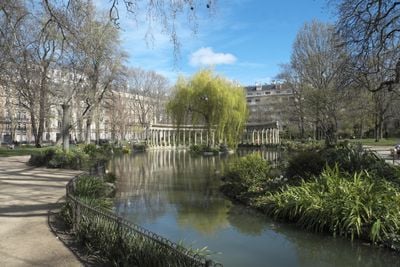
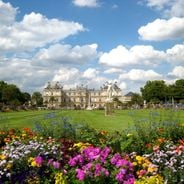
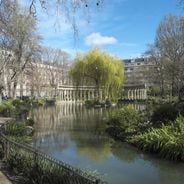
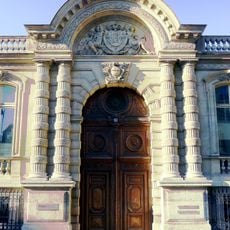
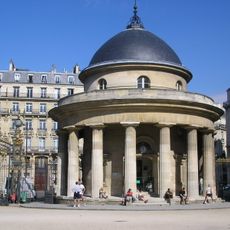
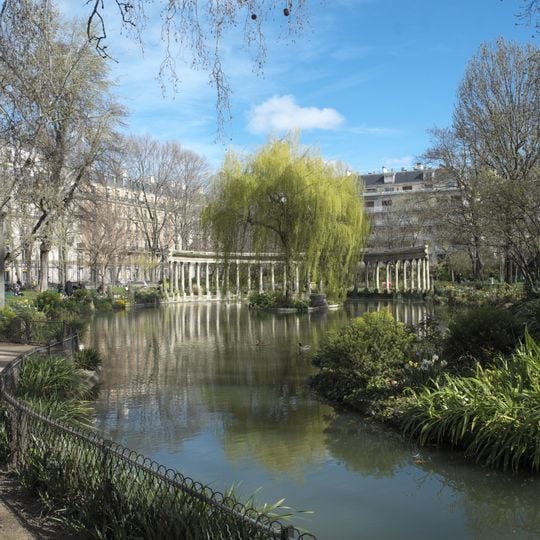
Parc Monceau is an English garden in Paris's 8th arrondissement featuring winding paths that surround a central oval pond, with a colonnade of Corinthian columns called the Naumachie beside it. The layout encourages leisurely exploration, as visitors continually encounter fresh views and tucked-away corners throughout their walk.
Philippe d'Orléans, Duke of Chartres, began buying the land in 1769 and in 1778 hired Louis Carrogis Carmontelle to design an Anglo-Chinese garden inspired by Stowe House. Finished in 1779, it held follies including an Egyptian pyramid, a Roman colonnade and a Tartar tent. Thomas Blaikie remodelled parts from 1781, and the Duke was guillotined in 1793.
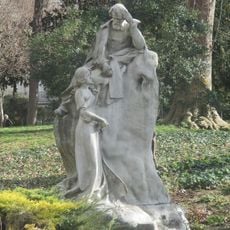
The marble statues scattered among the groves include Guy de Maupassant by Raoul Verlet, Chopin by Froment-Meurice, and Gounod and Musset by Antonin Mercié, along with Ambroise Thomas by Falguière and Édouard Pailleron by Bernstamm. The Corinthian colonnade around the Naumachie basin came from the Rotonde des Valois, the tomb Catherine de' Medici had built for her husband in 1559 and demolished in 1719; Carmontelle salvaged the columns for the park.
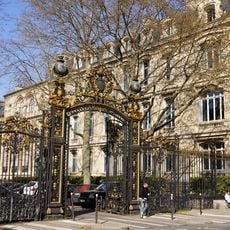
Parc Monceau is served by metro line 2 at Monceau station and by RATP bus lines 30 and 84. A full circuit of the perimeter measures about 1,050 metres, or 1,000 metres if you skirt the children's play area. The main entrances face Boulevard de Courcelles, Boulevard Malesherbes and Place Rio-de-Janeiro.
In 1797, inventor André-Jacques Garnerin made the first successful silk parachute descent from a hot air balloon directly over these grounds. This daring aerial feat took place here and marked an early moment in the history of aviation experimentation in the city.
The community of curious travelers
AroundUs brings together thousands of curated places, local tips, and hidden gems, enriched daily by 93,359 contributors worldwide.