See the monuments around you in AROpen chests in the app
Around Us is built for your phone — point your camera at the streets and discover the monuments and places around you in augmented reality.Around Us is built for your phone — chests unlock when you walk, explore and capture nearby places.
Rouen offers a rich architectural heritage with buildings spanning medieval, Renaissance, and modern periods. The Notre-Dame Cathedral, a Gothic structure from the 13th century, rises above the historic center. The old town is filled with narrow streets lined by timber houses with carved beams and colored facades. The Gros Horloge, a 14th-century astronomical clock tower, spans a busy shopping street and connects medieval architecture to the daily life of the city.
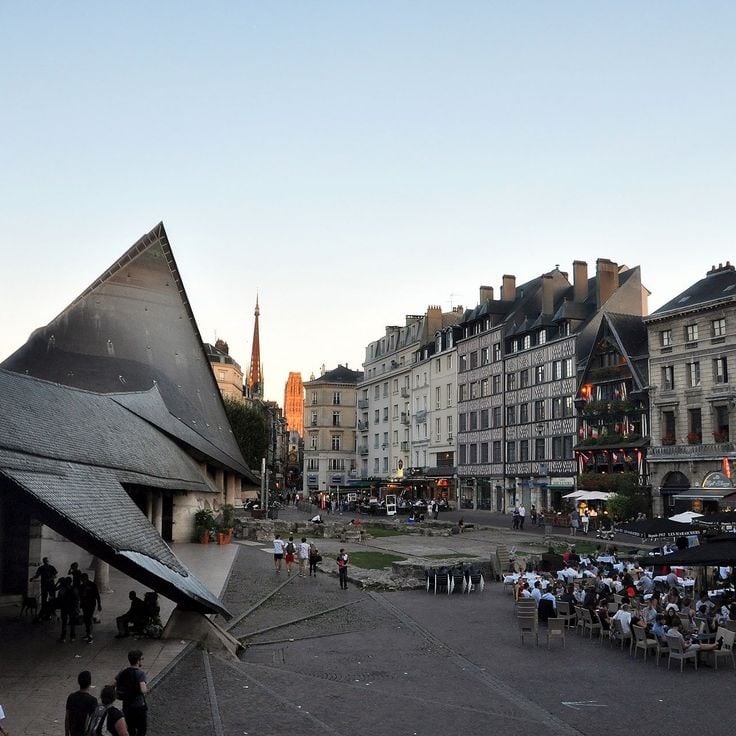
The Place du Vieux-Marché marks the site where Joan of Arc was executed. Today, a modern church with curved forms and colorful stained glass stands there. The Rue du Gros-Horloge and Rue Saint-Romain lead through the old quarter with its shops and cafés. The Church of Saint-Maclou displays Gothic detailing, while the Aître Saint-Maclou, a former plague cemetery, is now a quiet courtyard with wooden galleries. The Jardin des Plantes offers wide green spaces and greenhouses on the edge of the city. From the Côte Sainte-Catherine on the other side of the Seine, there are wide views over the rooftops and church spires of the city.
Rouen offers a rich architectural heritage with buildings spanning medieval, Renaissance, and modern periods. The Notre-Dame Cathedral, a Gothic structure from the 13th century, rises above the historic center. The old town is filled with narrow streets lined by timber houses with carved beams and colored facades. The Gros Horloge, a 14th-century astronomical clock tower, spans a busy shopping street and connects medieval architecture to the daily life of the city.
The Place du Vieux-Marché marks the site where Joan of Arc was executed. Today, a modern church with curved forms and colorful stained glass stands there. The Rue du Gros-Horloge and Rue Saint-Romain lead through the old quarter with its shops and cafés. The Church of Saint-Maclou displays Gothic detailing, while the Aître Saint-Maclou, a former plague cemetery, is now a quiet courtyard with wooden galleries. The Jardin des Plantes offers wide green spaces and greenhouses on the edge of the city. From the Côte Sainte-Catherine on the other side of the Seine, there are wide views over the rooftops and church spires of the city.
This cathedral stands in the heart of Rouen and draws photographers with its thirteenth century Gothic facade. The two western towers frame the carved portal, while stained glass windows filter light into the interior. The cast iron spire rises 151 meters (about 495 feet) into the sky and serves as a landmark above the medieval streets. The western front displays different construction phases, with sculptures that carry weather patina. Morning light picks out details in the stone facade, while the interior reveals tall vaulting and narrow columns. The square in front of the cathedral offers space to capture the towers from a distance, and side streets allow angles on buttresses and tracery.
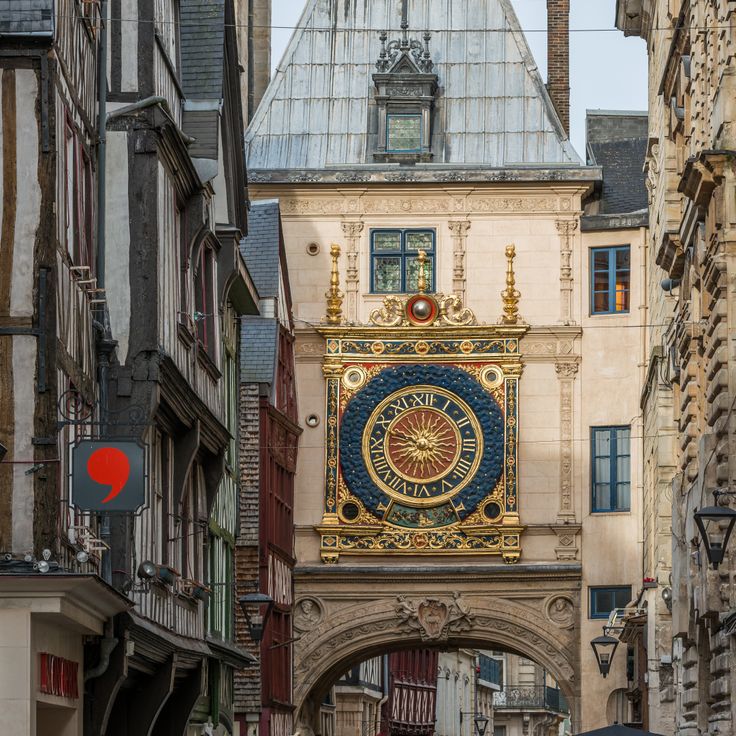
The Gros Horloge is a fourteenth century astronomical clock that combines Gothic mechanics with Renaissance decoration. Its dial shows hours, lunar phases and weekdays on an ornate facade above an archway in the old town. The gilded hands move across a blue background, surrounded by allegorical figures and lamb symbols. Visitors can climb the tower and see the clockwork mechanism. The arch below connects two of the main streets in Rouen and sees many people pass through daily.
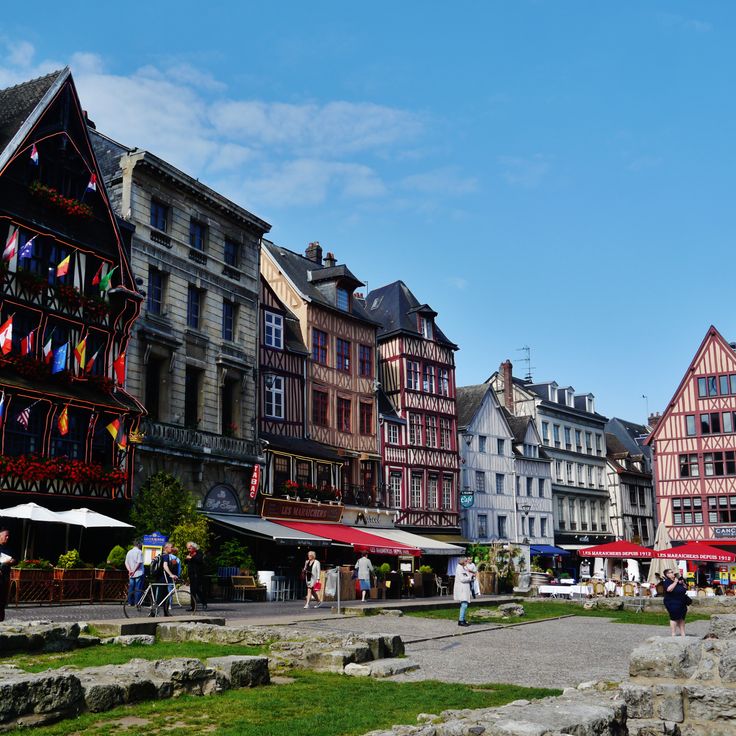
The Place du Vieux-Marché in Rouen is a medieval market square with timber-framed buildings where Joan of Arc was executed in 1431. A modern church with curved forms and colorful stained glass now marks the execution site. This square connects the medieval history of the city with contemporary architecture and serves as a central photography location in Rouen, where history and present day meet.
This church from the fifteenth century shows detailed stonework on its five gabled portals and has carved wooden doors. The facade presents Gothic architecture with reliefs and sculptures depicting religious scenes. Inside you find high vaults and colored glass windows that filter the light. The building stands in the narrow streets of the medieval quarter and belongs to the important photography subjects in Rouen, where late Gothic construction remains visible.
The Aître Saint-Maclou in Rouen is a former medieval plague cemetery that now serves as a courtyard within the historic city. Wooden galleries surround the space and feature carved ornaments displaying skulls and death-related symbols on their columns and beams. This location offers a peaceful refuge in the heart of the old quarter, preserving the memory of its past as a burial ground during times of plague.
This stone tower from the 13th century was part of the former castle of Rouen. The walls once enclosed the dungeon where Joan of Arc was interrogated and threatened in 1431, weeks before her execution at the Place du Vieux-Marché. The cylindrical structure shows medieval military architecture with thick walls and narrow openings. It stands alone today in a small park after the rest of the castle was demolished in the 19th century. The tower remains a memorial to the story of the French heroine and to the medieval fortification style of the city.
The Pont Gustave-Flaubert is a modern bridge in Rouen completed in 2008. Its defining feature is the central platform that lifts vertically to allow large ships to pass beneath. It spans the Seine and offers photography opportunities through its contemporary engineering, standing in contrast to the medieval and Renaissance architecture throughout the city's historic center.
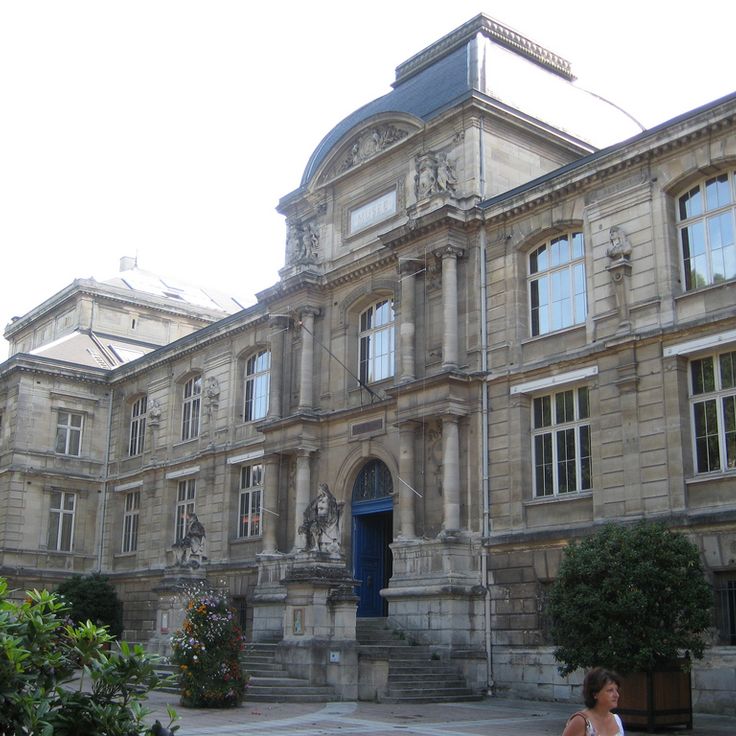
This museum occupies a restored palace and displays French paintings and sculptures from the 15th through the 21st centuries. The collections include works from the Renaissance, Baroque, and Impressionist periods. The rooms preserve historic elements with moldings and high ceilings. Visitors find paintings by Monet, Caravaggio, and Delacroix. The interior courtyards offer quiet corners between the galleries. The building stands near the Seine and the city center.
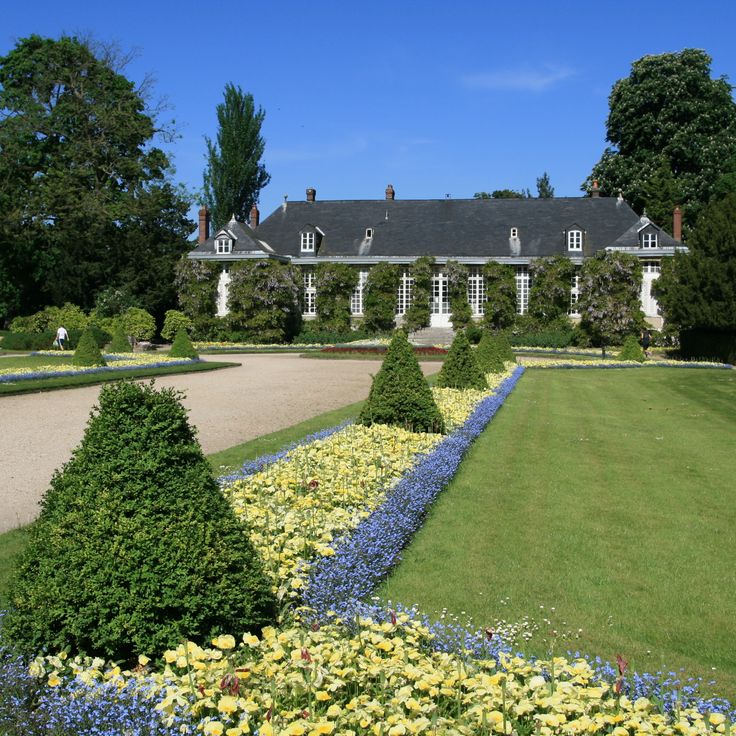
This botanical garden in Rouen sits near the Seine and gathers over 600 plant species across grounds once used by an apothecaries' guild. The beds follow thematic groupings: medicinal herbs, rose varieties, perennials and shrubs from different climates. Greenhouses shelter tropical species that need protection during cool Norman winters. Old trees shade gravel paths, families rest on benches between flowering borders. In spring tulips and daffodils open, in summer roses scent the air, in autumn maple leaves turn color. Students come to sketch, retirees read newspapers, children run across lawns. The mood stays quiet even when the city hums around the perimeter.
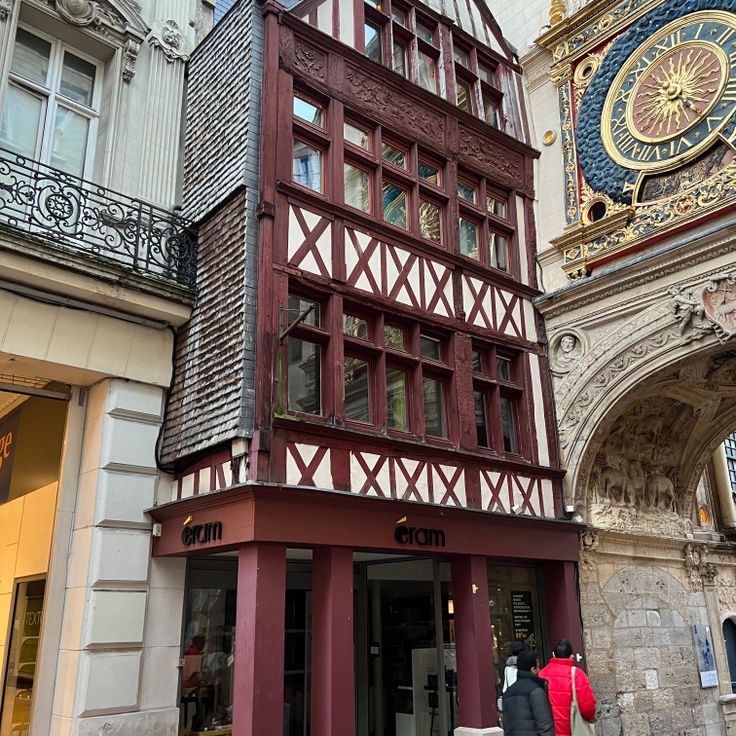
This pedestrian street runs through the historic heart of Rouen and offers one of the most photographed paths in the city, leading to the 14th-century astronomical clock. The Renaissance arch spans the road and connects Notre-Dame Cathedral to the Old Market. Medieval timber houses line the way. The golden clock face shows lunar phases and days of the week. The street opens onto small squares on both sides. Shops and cafés occupy the ground floors of the old houses. Tourists and locals meet here at all hours of the day.
This museum uses digital media and interactive presentations to tell the story of Joan of Arc's trial through historical documents. The exhibition guides visitors through the rooms of the former archbishop's palace, where the historic trial took place. Audiovisual installations present archival material and reconstruct the events of the 15th century. The museum connects history with contemporary technology and offers a different view of Rouen's most famous historical figure.
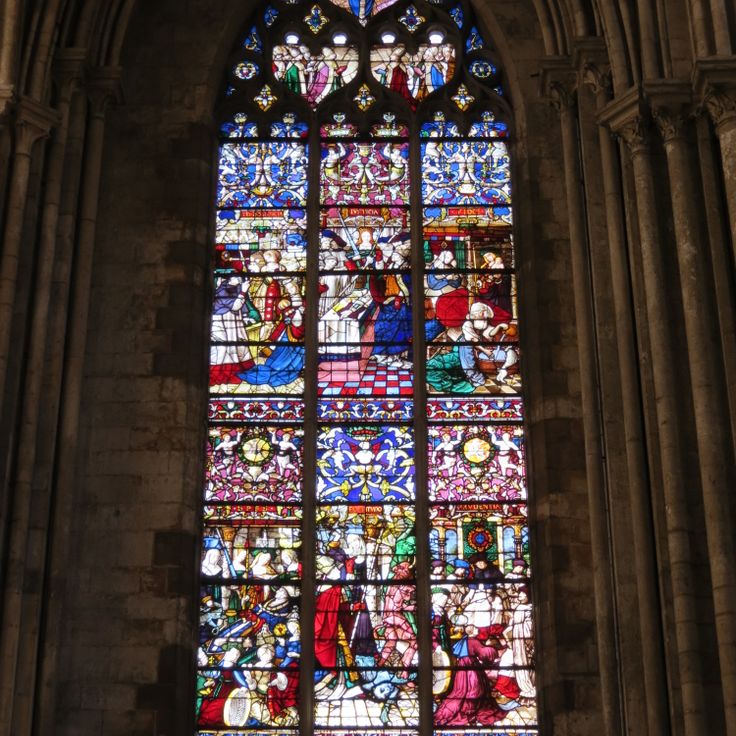
This church was built in 1979 on the square where Joan of Arc was executed in 1431. The building shows a modern design with curved lines and a roof that recalls flames. Inside, you will find stained glass windows from the 16th century, brought here from the destroyed Saint-Vincent church. The windows show biblical scenes in bright colors. The square outside is surrounded by timber houses and hosts a regular market with stalls set up throughout the space.
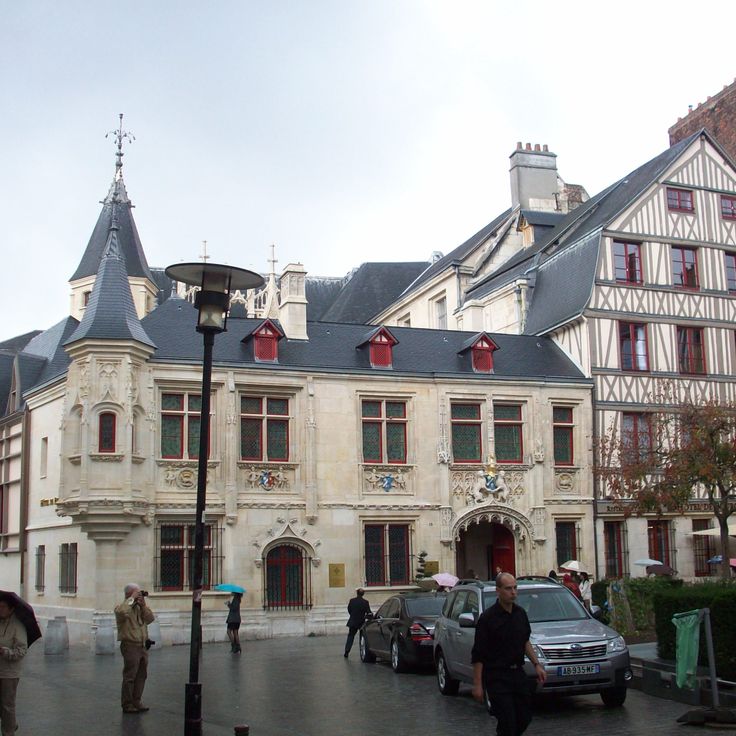
This stone mansion from the 15th century shows carved decorations on its facade and features an interior courtyard with Gothic ornaments. The building stands as one of the significant examples of late medieval architecture in Rouen, and it creates a photogenic contrast between the public street view and the quieter courtyard that sits behind the walls.
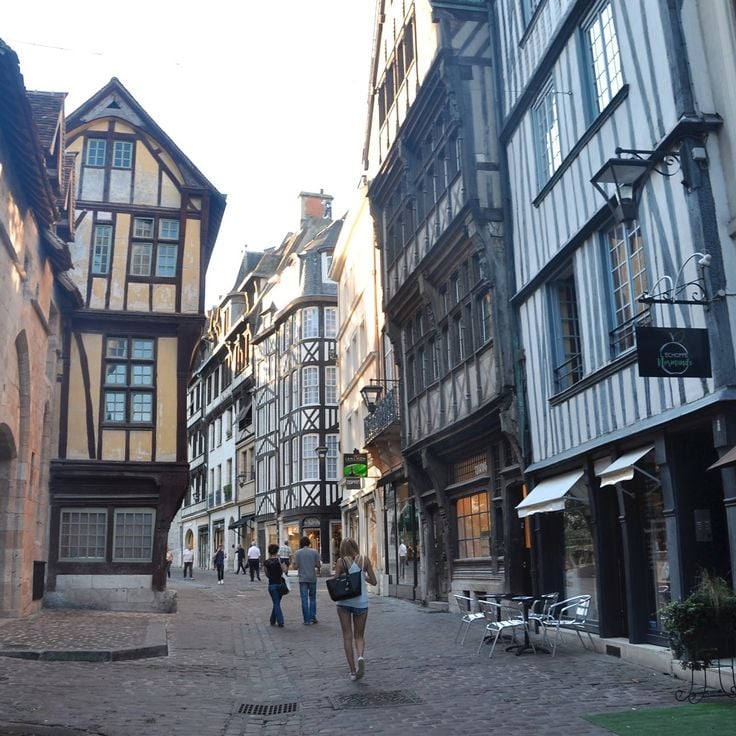
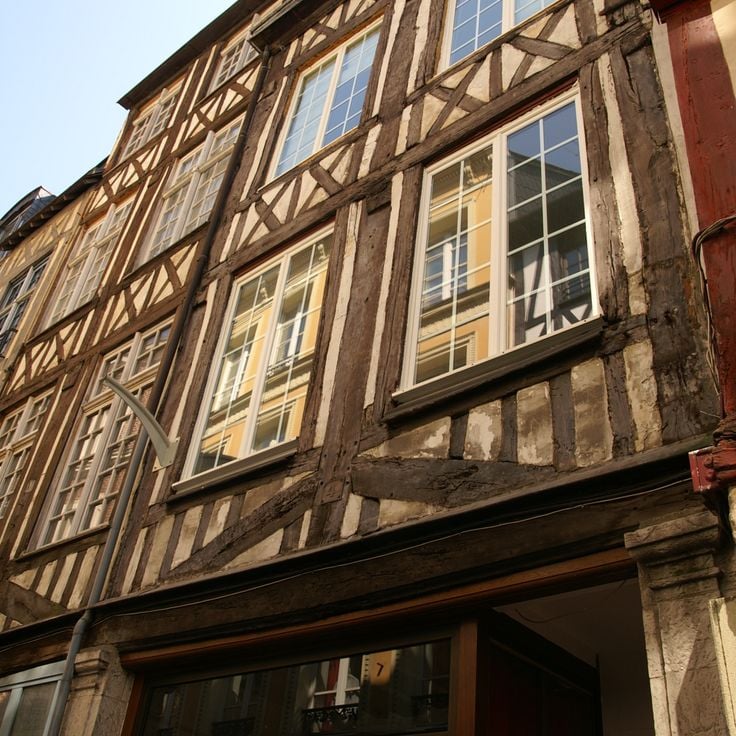
This medieval street displays timber houses from the 16th century with original wood carvings and preserved architectural details. Rue Saint-Romain connects to the cathedral and belongs among the lanes where Rouen's characteristic building style remains visible. The narrow passage runs between successive facades, each building showing its own ornaments and beam constructions.
This medieval street in Rouen follows a narrow canal crossed by stone bridges. Old houses stand on both sides of the waterway, their facades showing traces of past centuries. The canal flows quietly through the street where dyers and tanners once worked. Today the small bridges connect both banks and create a pleasant setting for photography. Rue Eau-de-Robec belongs to the well-preserved quarters of the city and shows the historical face of Rouen beyond its major monuments.
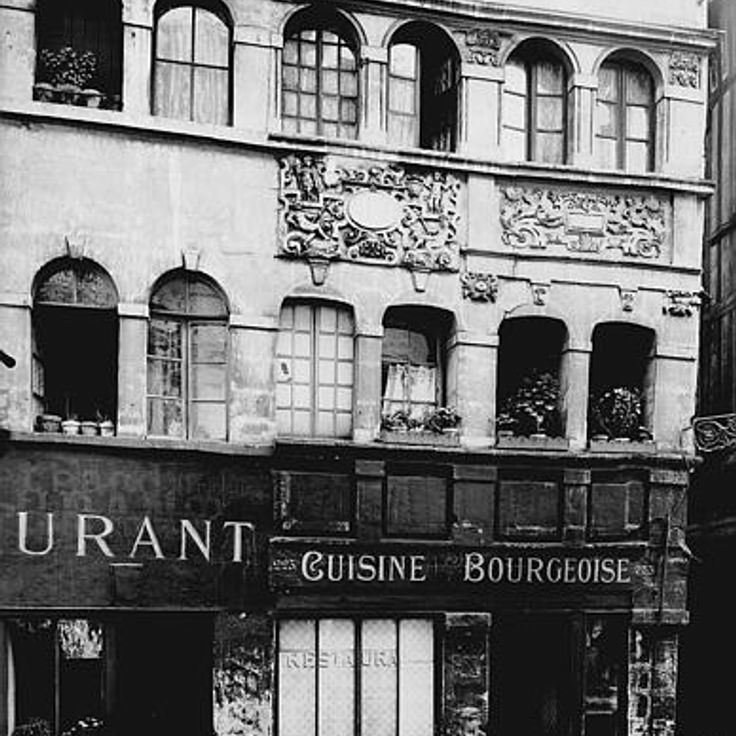
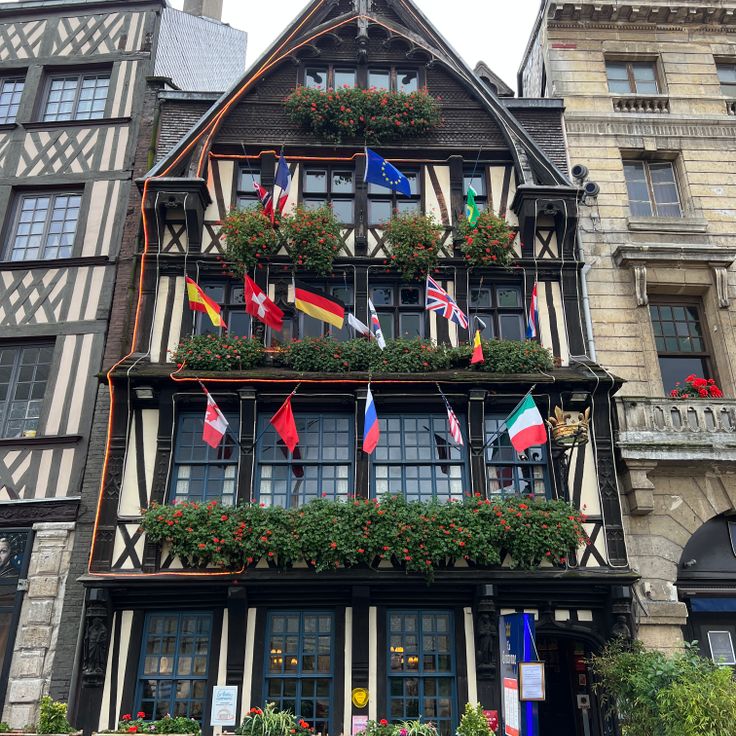
This restaurant in Rouen has been operating since 1345 and features stone walls, wooden beams, and traditional French culinary presentations in its dining rooms. The historic architecture provides a setting where medieval construction meets the atmosphere of an active restaurant that has welcomed guests for centuries.
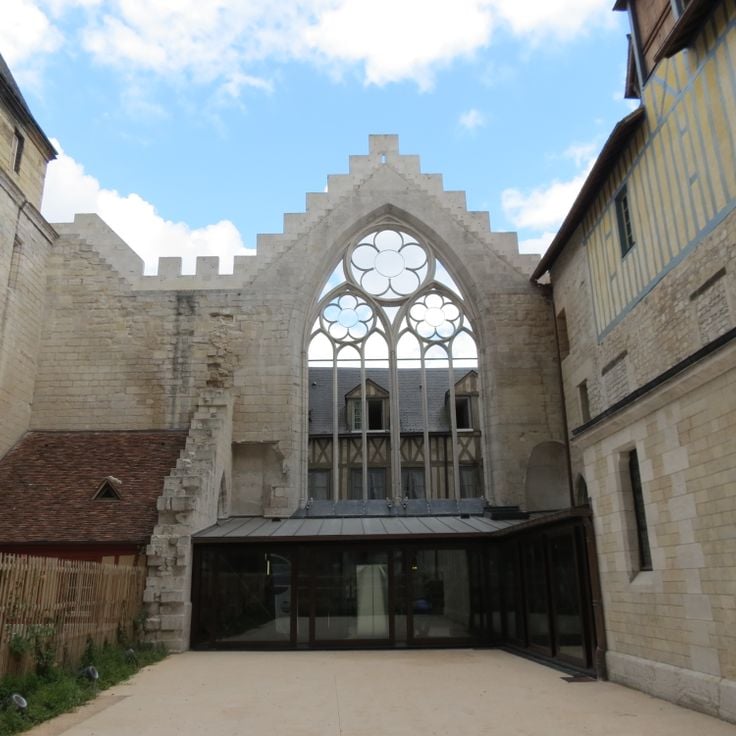
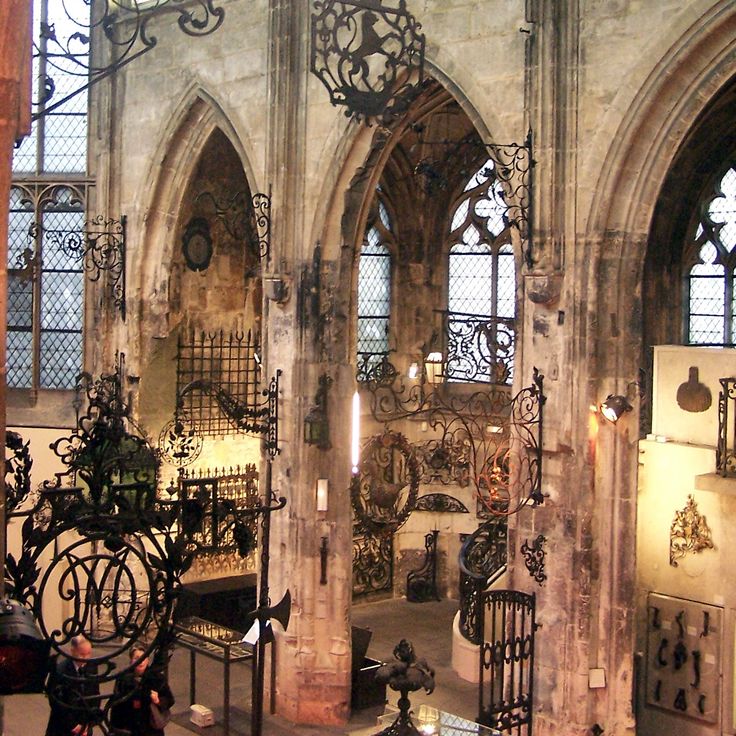
The Museum Le Secq des Tournelles occupies a former church and displays more than 14,000 iron objects. This collection includes pieces from the Middle Ages to the 20th century, with signs, locks, tools, and decorative ironwork. The exhibition presents the history of metalworking and the craft of forging iron. The church architecture provides the setting for the many objects arranged throughout the space.
Rue Damiette runs through the historic center and shows its timber houses from the 16th century along a narrow lane. Antique shops line up and open their doors to courtyards and small squares. The buildings lean slightly toward each other, their upper floors jutting over the street. In the morning, light falls through the roofs and draws shadows on the wooden beams and cobblestones. This street connects the major monuments of the city with the quieter corners of old Rouen and works well for architectural shots and street scenes.
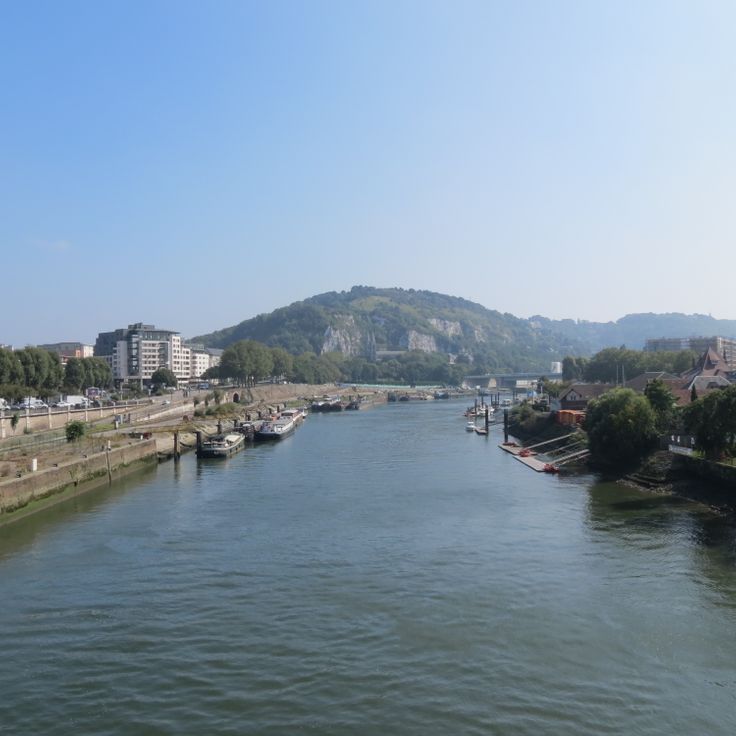
Côte Sainte-Catherine sits 151 meters above sea level and offers a wide view over Rouen. From this hill you overlook the cathedral towers, the Seine, and the medieval quarters of the city. The climb follows a winding road through wooded terrain. Once at the top you see the entire city silhouette, especially the Gothic church spires and the river bend. On clear days the view reaches into the Norman countryside beyond the city.
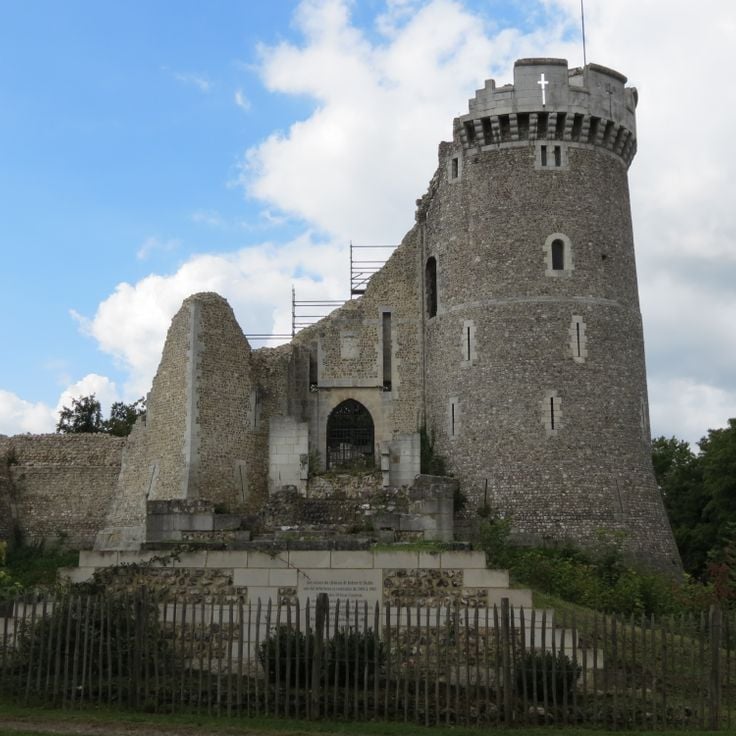
This fortress from the 11th and 12th centuries stands on a hill overlooking the Seine Valley. The stone walls and Gothic structures blend into the landscape, offering a contrast to the more modern parts of Rouen below. From here, the view opens over the river and the surrounding forests. The site feels quiet and removed, with ruins that tell of past times when the structure was inhabited. Visitors come here to take in the view and explore the old walls. The place connects history with nature and provides a setting for photographs that capture both architectural details and the expanse of the landscape.
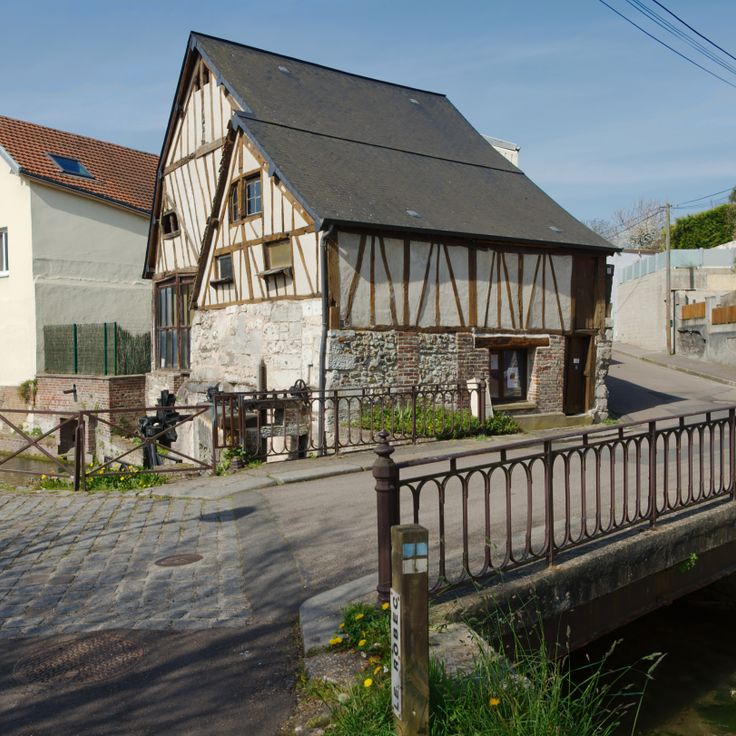
This water mill on the Robec River dates from the 16th century and rests on stone pillars above the water. The timber structure still shows the original wheel mechanism that once ground grain. Surrounded by half-timbered houses in the old town, this mill fits into the medieval cityscape of Rouen and offers a subject for architectural photography with historical details and reflections in the river.
This school from 1593 shows Gothic stone architecture with a cloister courtyard and a garden filled with medicinal plants from medieval tradition. The place works well for photographs of historical facades, courtyards with arcades, and old plant collections that document Rouen as a city of heritage and garden culture.
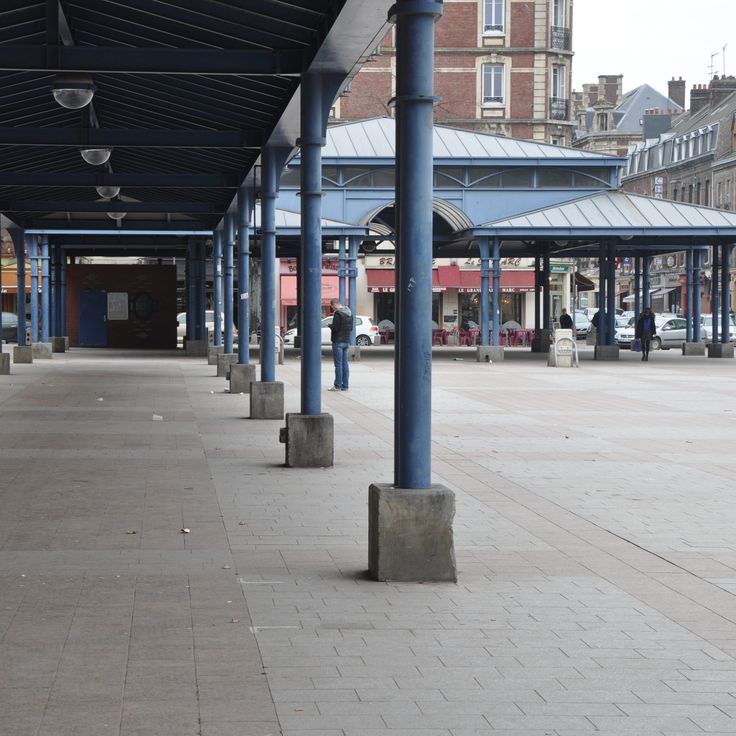
Saint Marc Square in Rouen brings together market vendors selling fresh produce, flowers, and local goods with the architectural frame of 15th-century stone buildings. This square sits within the medieval center and serves as a meeting point for locals buying their daily supplies. Stalls line the open space while shoppers move between them, examining vegetables, fruits, and handmade products. The surrounding stone facades show traces of centuries past, with narrow windows and heavy walls typical of the period. Light filters into the square throughout the day, changing the mood and highlighting different textures. The market operates regularly, creating movement and color against the historic backdrop. Photographers find here a chance to capture everyday life set within the old city, where commerce and history occupy the same space.
This narrow passage runs between medieval buildings and houses craft workshops as well as small stores. The stone arches and wooden beams date from the 14th century and form one of the oldest routes through Rouen. Visitors find quiet corners away from the larger streets, where the timber frames of houses lean over narrow walkways and light filters through old windows. For photography, this location offers characteristic details of construction typical of the old town.
This stone building from the 12th century displays Hebrew inscriptions in its walls and stands as the oldest remaining Jewish monument in Western Europe, documenting the medieval history of Rouen and offering a rare view into Jewish life during that period.
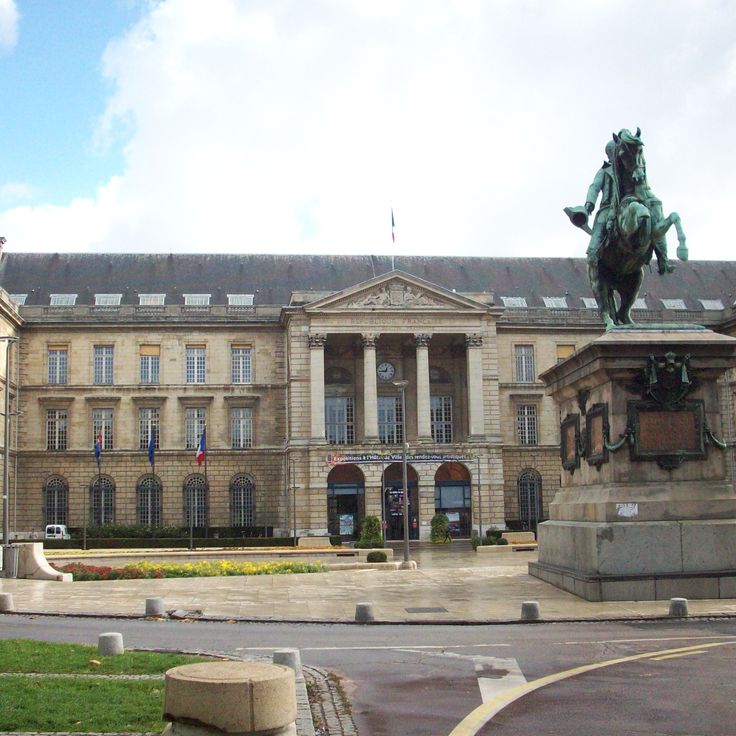
This town hall from the 19th century stands as a municipal building in the Neo-Renaissance style and belongs to the representative architecture of Rouen. The symmetrical facade shapes the cityscape, while formal gardens surround the building. Stone decorations adorn the outer walls, and behind the tall windows are the offices of the city administration. The structure dates from the 1800s and represents the architectural approach of that time, when public buildings were meant to express power and order.
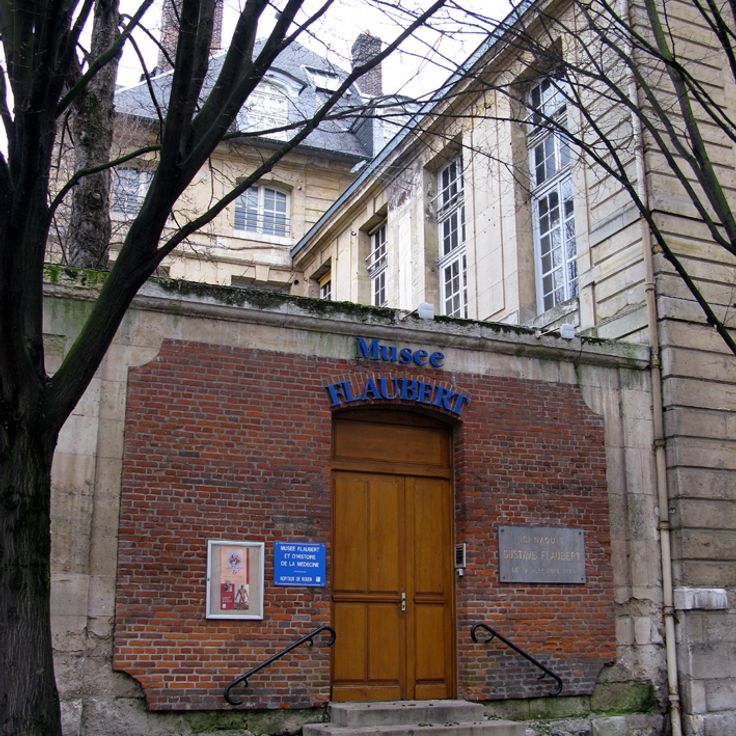
This museum occupies an 18th-century house where Gustave Flaubert was born in 1821. His father directed the surgical hospital here. The rooms display medical instruments, anatomical preparations and documents on the history of medicine in Rouen. Personal items belonging to the writer recall his childhood spent among operating rooms and wards. The garden borders the old hospital chapel.
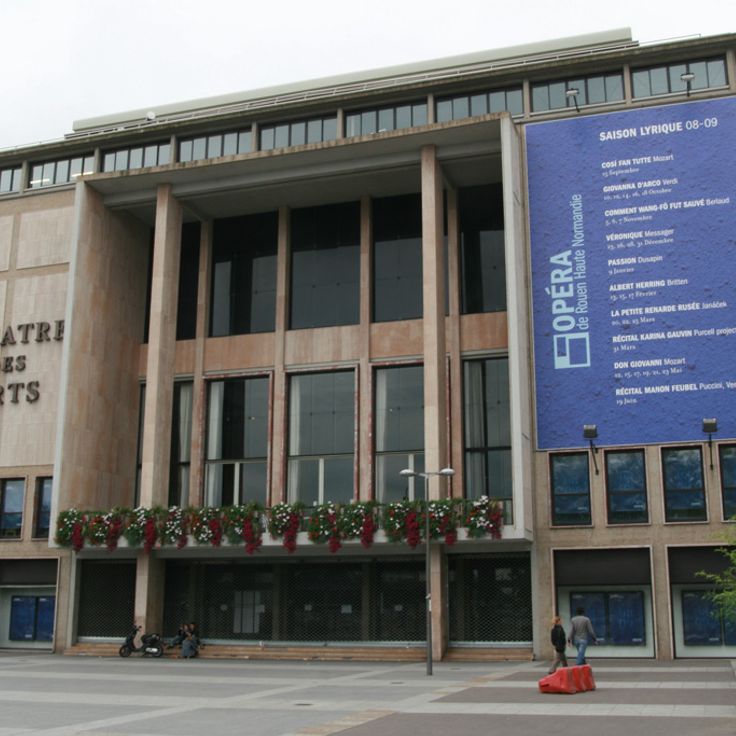
This theater built in 1776 shapes the cultural life of the city with its classical architecture. The opera house was rebuilt after a fire in the 19th century and now displays red velvet seats, gilding on balconies and boxes, and crystal chandeliers. The facade combines columns and arches, while stucco and ornamental details decorate the walls and ceilings inside. The house regularly hosts performances of opera, ballet, and classical concerts. The forecourt opens onto the city and makes the building a landmark in central Rouen. For photographers, the interior with its historical furnishings and the illuminated exterior at night offer good subjects.
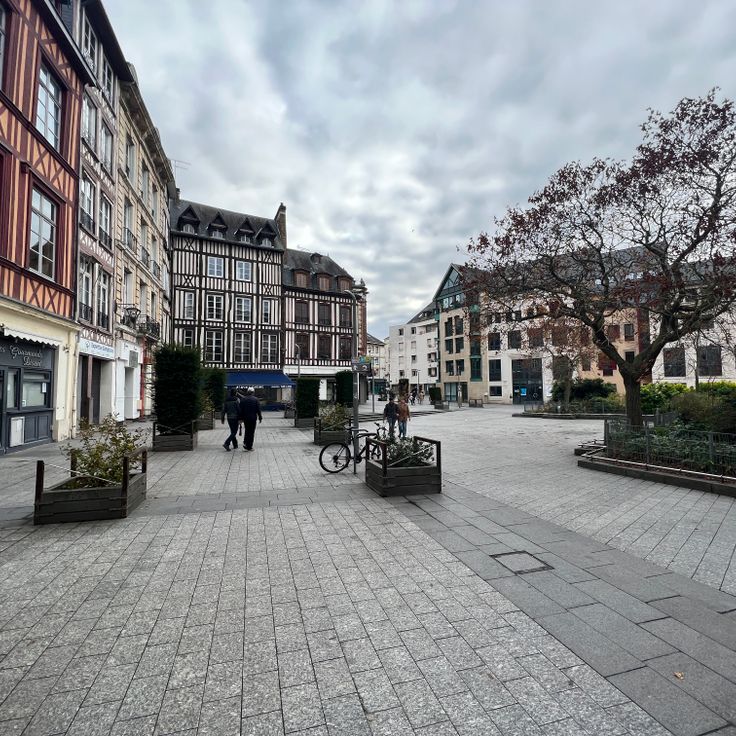
This medieval square from the 15th century is surrounded by timber-framed houses with exposed wooden beams that show traditional Norman construction. The stone paving and narrow streets recall the time when Rouen was an important trading center. The square takes its name from the Maid of Orleans and sits close to where she was held captive.
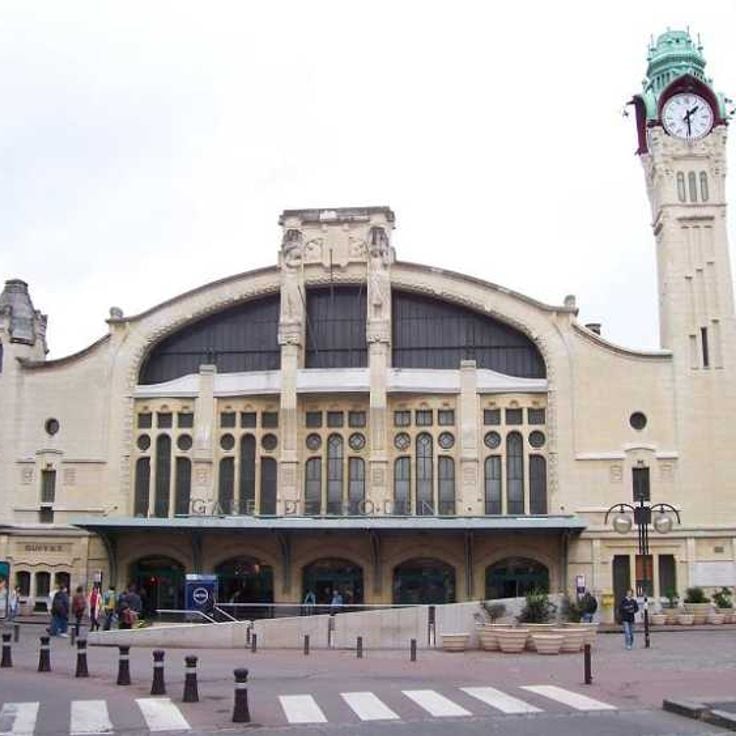
This station opened in 1928 and serves as the main arrival point for travelers reaching Rouen. The facade shows decorative stonework and large glass windows in Art Nouveau style. Inside, tall ceilings and broad halls recall the era between the wars. Photographers find clean lines, geometric patterns, and light filtering through the windows. The medieval streets of the old town are a short walk from here.
This museum occupies the birthplace of the 17th-century French playwright. The rooms display personal belongings, manuscripts, and documents from the life of Pierre Corneille. The building dates from 1606 and sits in the historic center of Rouen, close to the medieval timber houses and Gothic churches that make this city interesting for photographers.
This cathedral stands in the heart of Rouen and draws photographers with its thirteenth century Gothic facade. The two western towers frame the carved portal, while stained glass windows filter light into the interior. The cast iron spire rises 151 meters (about 495 feet) into the sky and serves as a landmark above the medieval streets. The western front displays different construction phases, with sculptures that carry weather patina. Morning light picks out details in the stone facade, while the interior reveals tall vaulting and narrow columns. The square in front of the cathedral offers space to capture the towers from a distance, and side streets allow angles on buttresses and tracery.
The Gros Horloge is a fourteenth century astronomical clock that combines Gothic mechanics with Renaissance decoration. Its dial shows hours, lunar phases and weekdays on an ornate facade above an archway in the old town. The gilded hands move across a blue background, surrounded by allegorical figures and lamb symbols. Visitors can climb the tower and see the clockwork mechanism. The arch below connects two of the main streets in Rouen and sees many people pass through daily.
The Place du Vieux-Marché in Rouen is a medieval market square with timber-framed buildings where Joan of Arc was executed in 1431. A modern church with curved forms and colorful stained glass now marks the execution site. This square connects the medieval history of the city with contemporary architecture and serves as a central photography location in Rouen, where history and present day meet.
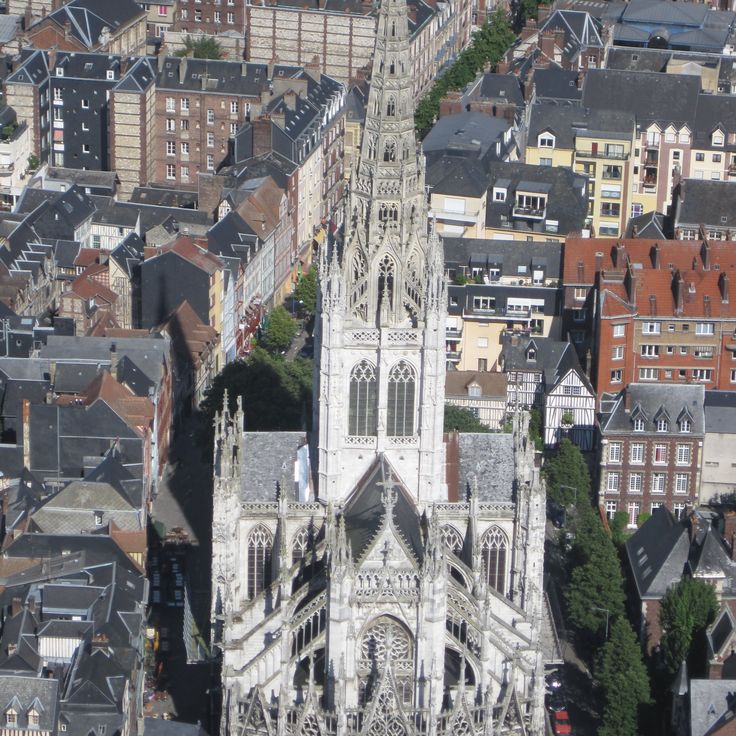
This church from the fifteenth century shows detailed stonework on its five gabled portals and has carved wooden doors. The facade presents Gothic architecture with reliefs and sculptures depicting religious scenes. Inside you find high vaults and colored glass windows that filter the light. The building stands in the narrow streets of the medieval quarter and belongs to the important photography subjects in Rouen, where late Gothic construction remains visible.
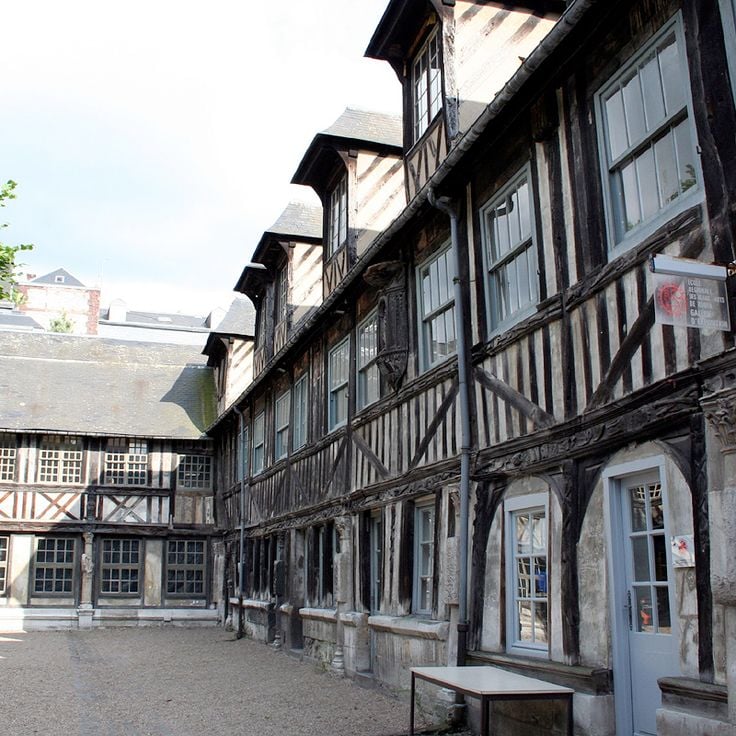
The Aître Saint-Maclou in Rouen is a former medieval plague cemetery that now serves as a courtyard within the historic city. Wooden galleries surround the space and feature carved ornaments displaying skulls and death-related symbols on their columns and beams. This location offers a peaceful refuge in the heart of the old quarter, preserving the memory of its past as a burial ground during times of plague.
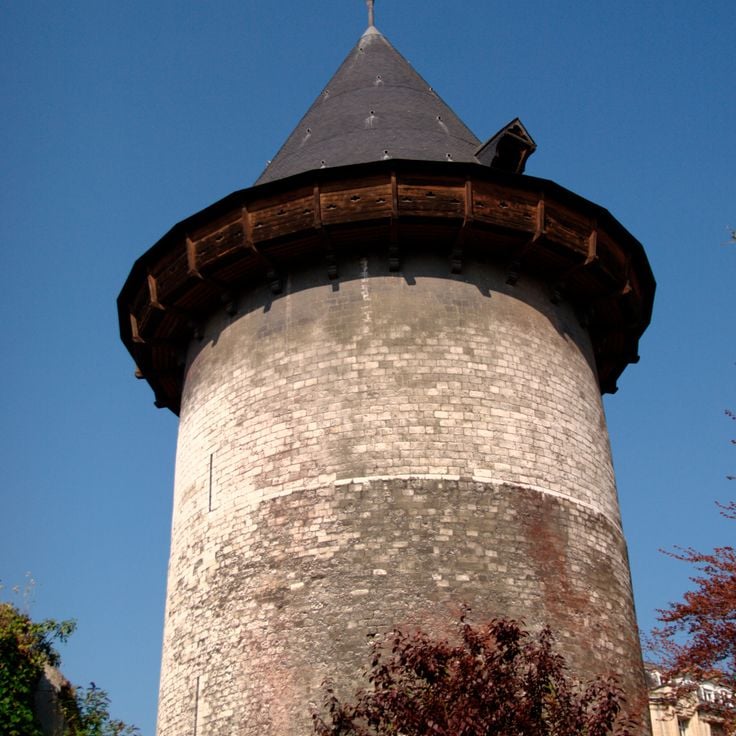
This stone tower from the 13th century was part of the former castle of Rouen. The walls once enclosed the dungeon where Joan of Arc was interrogated and threatened in 1431, weeks before her execution at the Place du Vieux-Marché. The cylindrical structure shows medieval military architecture with thick walls and narrow openings. It stands alone today in a small park after the rest of the castle was demolished in the 19th century. The tower remains a memorial to the story of the French heroine and to the medieval fortification style of the city.
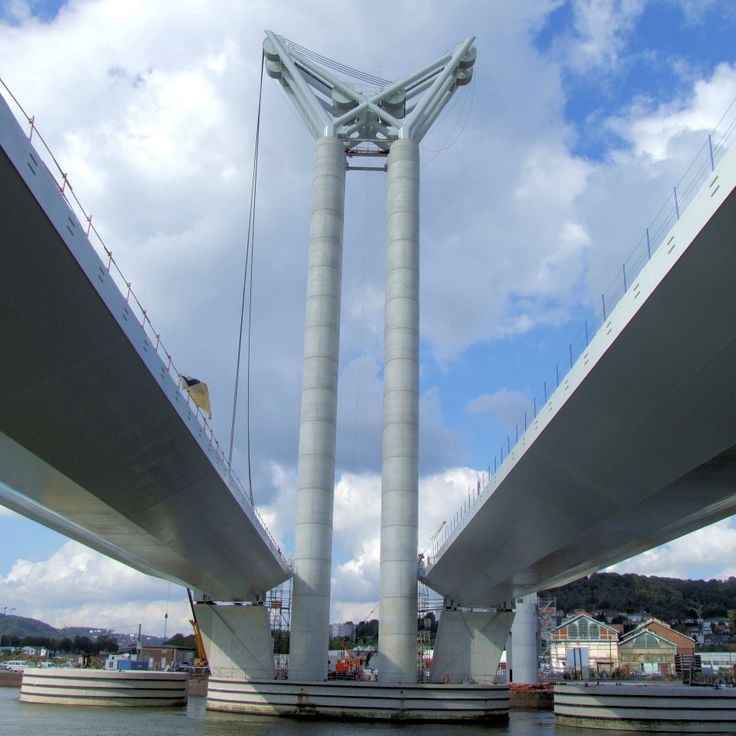
The Pont Gustave-Flaubert is a modern bridge in Rouen completed in 2008. Its defining feature is the central platform that lifts vertically to allow large ships to pass beneath. It spans the Seine and offers photography opportunities through its contemporary engineering, standing in contrast to the medieval and Renaissance architecture throughout the city's historic center.
This museum occupies a restored palace and displays French paintings and sculptures from the 15th through the 21st centuries. The collections include works from the Renaissance, Baroque, and Impressionist periods. The rooms preserve historic elements with moldings and high ceilings. Visitors find paintings by Monet, Caravaggio, and Delacroix. The interior courtyards offer quiet corners between the galleries. The building stands near the Seine and the city center.
This botanical garden in Rouen sits near the Seine and gathers over 600 plant species across grounds once used by an apothecaries' guild. The beds follow thematic groupings: medicinal herbs, rose varieties, perennials and shrubs from different climates. Greenhouses shelter tropical species that need protection during cool Norman winters. Old trees shade gravel paths, families rest on benches between flowering borders. In spring tulips and daffodils open, in summer roses scent the air, in autumn maple leaves turn color. Students come to sketch, retirees read newspapers, children run across lawns. The mood stays quiet even when the city hums around the perimeter.
This pedestrian street runs through the historic heart of Rouen and offers one of the most photographed paths in the city, leading to the 14th-century astronomical clock. The Renaissance arch spans the road and connects Notre-Dame Cathedral to the Old Market. Medieval timber houses line the way. The golden clock face shows lunar phases and days of the week. The street opens onto small squares on both sides. Shops and cafés occupy the ground floors of the old houses. Tourists and locals meet here at all hours of the day.
This museum uses digital media and interactive presentations to tell the story of Joan of Arc's trial through historical documents. The exhibition guides visitors through the rooms of the former archbishop's palace, where the historic trial took place. Audiovisual installations present archival material and reconstruct the events of the 15th century. The museum connects history with contemporary technology and offers a different view of Rouen's most famous historical figure.
This church was built in 1979 on the square where Joan of Arc was executed in 1431. The building shows a modern design with curved lines and a roof that recalls flames. Inside, you will find stained glass windows from the 16th century, brought here from the destroyed Saint-Vincent church. The windows show biblical scenes in bright colors. The square outside is surrounded by timber houses and hosts a regular market with stalls set up throughout the space.
This stone mansion from the 15th century shows carved decorations on its facade and features an interior courtyard with Gothic ornaments. The building stands as one of the significant examples of late medieval architecture in Rouen, and it creates a photogenic contrast between the public street view and the quieter courtyard that sits behind the walls.
This medieval street displays timber houses from the 16th century with original wood carvings and preserved architectural details. Rue Saint-Romain connects to the cathedral and belongs among the lanes where Rouen's characteristic building style remains visible. The narrow passage runs between successive facades, each building showing its own ornaments and beam constructions.
This medieval street in Rouen follows a narrow canal crossed by stone bridges. Old houses stand on both sides of the waterway, their facades showing traces of past centuries. The canal flows quietly through the street where dyers and tanners once worked. Today the small bridges connect both banks and create a pleasant setting for photography. Rue Eau-de-Robec belongs to the well-preserved quarters of the city and shows the historical face of Rouen beyond its major monuments.
This restaurant in Rouen has been operating since 1345 and features stone walls, wooden beams, and traditional French culinary presentations in its dining rooms. The historic architecture provides a setting where medieval construction meets the atmosphere of an active restaurant that has welcomed guests for centuries.
The Museum Le Secq des Tournelles occupies a former church and displays more than 14,000 iron objects. This collection includes pieces from the Middle Ages to the 20th century, with signs, locks, tools, and decorative ironwork. The exhibition presents the history of metalworking and the craft of forging iron. The church architecture provides the setting for the many objects arranged throughout the space.
Rue Damiette runs through the historic center and shows its timber houses from the 16th century along a narrow lane. Antique shops line up and open their doors to courtyards and small squares. The buildings lean slightly toward each other, their upper floors jutting over the street. In the morning, light falls through the roofs and draws shadows on the wooden beams and cobblestones. This street connects the major monuments of the city with the quieter corners of old Rouen and works well for architectural shots and street scenes.
Côte Sainte-Catherine sits 151 meters above sea level and offers a wide view over Rouen. From this hill you overlook the cathedral towers, the Seine, and the medieval quarters of the city. The climb follows a winding road through wooded terrain. Once at the top you see the entire city silhouette, especially the Gothic church spires and the river bend. On clear days the view reaches into the Norman countryside beyond the city.
This fortress from the 11th and 12th centuries stands on a hill overlooking the Seine Valley. The stone walls and Gothic structures blend into the landscape, offering a contrast to the more modern parts of Rouen below. From here, the view opens over the river and the surrounding forests. The site feels quiet and removed, with ruins that tell of past times when the structure was inhabited. Visitors come here to take in the view and explore the old walls. The place connects history with nature and provides a setting for photographs that capture both architectural details and the expanse of the landscape.
This water mill on the Robec River dates from the 16th century and rests on stone pillars above the water. The timber structure still shows the original wheel mechanism that once ground grain. Surrounded by half-timbered houses in the old town, this mill fits into the medieval cityscape of Rouen and offers a subject for architectural photography with historical details and reflections in the river.
This school from 1593 shows Gothic stone architecture with a cloister courtyard and a garden filled with medicinal plants from medieval tradition. The place works well for photographs of historical facades, courtyards with arcades, and old plant collections that document Rouen as a city of heritage and garden culture.
Saint Marc Square in Rouen brings together market vendors selling fresh produce, flowers, and local goods with the architectural frame of 15th-century stone buildings. This square sits within the medieval center and serves as a meeting point for locals buying their daily supplies. Stalls line the open space while shoppers move between them, examining vegetables, fruits, and handmade products. The surrounding stone facades show traces of centuries past, with narrow windows and heavy walls typical of the period. Light filters into the square throughout the day, changing the mood and highlighting different textures. The market operates regularly, creating movement and color against the historic backdrop. Photographers find here a chance to capture everyday life set within the old city, where commerce and history occupy the same space.
This narrow passage runs between medieval buildings and houses craft workshops as well as small stores. The stone arches and wooden beams date from the 14th century and form one of the oldest routes through Rouen. Visitors find quiet corners away from the larger streets, where the timber frames of houses lean over narrow walkways and light filters through old windows. For photography, this location offers characteristic details of construction typical of the old town.
This stone building from the 12th century displays Hebrew inscriptions in its walls and stands as the oldest remaining Jewish monument in Western Europe, documenting the medieval history of Rouen and offering a rare view into Jewish life during that period.
This town hall from the 19th century stands as a municipal building in the Neo-Renaissance style and belongs to the representative architecture of Rouen. The symmetrical facade shapes the cityscape, while formal gardens surround the building. Stone decorations adorn the outer walls, and behind the tall windows are the offices of the city administration. The structure dates from the 1800s and represents the architectural approach of that time, when public buildings were meant to express power and order.
This museum occupies an 18th-century house where Gustave Flaubert was born in 1821. His father directed the surgical hospital here. The rooms display medical instruments, anatomical preparations and documents on the history of medicine in Rouen. Personal items belonging to the writer recall his childhood spent among operating rooms and wards. The garden borders the old hospital chapel.
This theater built in 1776 shapes the cultural life of the city with its classical architecture. The opera house was rebuilt after a fire in the 19th century and now displays red velvet seats, gilding on balconies and boxes, and crystal chandeliers. The facade combines columns and arches, while stucco and ornamental details decorate the walls and ceilings inside. The house regularly hosts performances of opera, ballet, and classical concerts. The forecourt opens onto the city and makes the building a landmark in central Rouen. For photographers, the interior with its historical furnishings and the illuminated exterior at night offer good subjects.
This medieval square from the 15th century is surrounded by timber-framed houses with exposed wooden beams that show traditional Norman construction. The stone paving and narrow streets recall the time when Rouen was an important trading center. The square takes its name from the Maid of Orleans and sits close to where she was held captive.
This station opened in 1928 and serves as the main arrival point for travelers reaching Rouen. The facade shows decorative stonework and large glass windows in Art Nouveau style. Inside, tall ceilings and broad halls recall the era between the wars. Photographers find clean lines, geometric patterns, and light filtering through the windows. The medieval streets of the old town are a short walk from here.
This museum occupies the birthplace of the 17th-century French playwright. The rooms display personal belongings, manuscripts, and documents from the life of Pierre Corneille. The building dates from 1606 and sits in the historic center of Rouen, close to the medieval timber houses and Gothic churches that make this city interesting for photographers.
This cathedral stands in the heart of Rouen and draws photographers with its thirteenth century Gothic facade. The two western towers frame the carved portal, while stained glass windows filter light into the interior. The cast iron spire rises 151 meters (about 495 feet) into the sky and serves as a landmark above the medieval streets. The western front displays different construction phases, with sculptures that carry weather patina. Morning light picks out details in the stone facade, while the interior reveals tall vaulting and narrow columns. The square in front of the cathedral offers space to capture the towers from a distance, and side streets allow angles on buttresses and tracery.
The Gros Horloge is a fourteenth century astronomical clock that combines Gothic mechanics with Renaissance decoration. Its dial shows hours, lunar phases and weekdays on an ornate facade above an archway in the old town. The gilded hands move across a blue background, surrounded by allegorical figures and lamb symbols. Visitors can climb the tower and see the clockwork mechanism. The arch below connects two of the main streets in Rouen and sees many people pass through daily.
The Place du Vieux-Marché in Rouen is a medieval market square with timber-framed buildings where Joan of Arc was executed in 1431. A modern church with curved forms and colorful stained glass now marks the execution site. This square connects the medieval history of the city with contemporary architecture and serves as a central photography location in Rouen, where history and present day meet.
This church from the fifteenth century shows detailed stonework on its five gabled portals and has carved wooden doors. The facade presents Gothic architecture with reliefs and sculptures depicting religious scenes. Inside you find high vaults and colored glass windows that filter the light. The building stands in the narrow streets of the medieval quarter and belongs to the important photography subjects in Rouen, where late Gothic construction remains visible.
The Aître Saint-Maclou in Rouen is a former medieval plague cemetery that now serves as a courtyard within the historic city. Wooden galleries surround the space and feature carved ornaments displaying skulls and death-related symbols on their columns and beams. This location offers a peaceful refuge in the heart of the old quarter, preserving the memory of its past as a burial ground during times of plague.
This stone tower from the 13th century was part of the former castle of Rouen. The walls once enclosed the dungeon where Joan of Arc was interrogated and threatened in 1431, weeks before her execution at the Place du Vieux-Marché. The cylindrical structure shows medieval military architecture with thick walls and narrow openings. It stands alone today in a small park after the rest of the castle was demolished in the 19th century. The tower remains a memorial to the story of the French heroine and to the medieval fortification style of the city.
The Pont Gustave-Flaubert is a modern bridge in Rouen completed in 2008. Its defining feature is the central platform that lifts vertically to allow large ships to pass beneath. It spans the Seine and offers photography opportunities through its contemporary engineering, standing in contrast to the medieval and Renaissance architecture throughout the city's historic center.
This museum occupies a restored palace and displays French paintings and sculptures from the 15th through the 21st centuries. The collections include works from the Renaissance, Baroque, and Impressionist periods. The rooms preserve historic elements with moldings and high ceilings. Visitors find paintings by Monet, Caravaggio, and Delacroix. The interior courtyards offer quiet corners between the galleries. The building stands near the Seine and the city center.
This botanical garden in Rouen sits near the Seine and gathers over 600 plant species across grounds once used by an apothecaries' guild. The beds follow thematic groupings: medicinal herbs, rose varieties, perennials and shrubs from different climates. Greenhouses shelter tropical species that need protection during cool Norman winters. Old trees shade gravel paths, families rest on benches between flowering borders. In spring tulips and daffodils open, in summer roses scent the air, in autumn maple leaves turn color. Students come to sketch, retirees read newspapers, children run across lawns. The mood stays quiet even when the city hums around the perimeter.
This pedestrian street runs through the historic heart of Rouen and offers one of the most photographed paths in the city, leading to the 14th-century astronomical clock. The Renaissance arch spans the road and connects Notre-Dame Cathedral to the Old Market. Medieval timber houses line the way. The golden clock face shows lunar phases and days of the week. The street opens onto small squares on both sides. Shops and cafés occupy the ground floors of the old houses. Tourists and locals meet here at all hours of the day.
This museum uses digital media and interactive presentations to tell the story of Joan of Arc's trial through historical documents. The exhibition guides visitors through the rooms of the former archbishop's palace, where the historic trial took place. Audiovisual installations present archival material and reconstruct the events of the 15th century. The museum connects history with contemporary technology and offers a different view of Rouen's most famous historical figure.
This church was built in 1979 on the square where Joan of Arc was executed in 1431. The building shows a modern design with curved lines and a roof that recalls flames. Inside, you will find stained glass windows from the 16th century, brought here from the destroyed Saint-Vincent church. The windows show biblical scenes in bright colors. The square outside is surrounded by timber houses and hosts a regular market with stalls set up throughout the space.
This stone mansion from the 15th century shows carved decorations on its facade and features an interior courtyard with Gothic ornaments. The building stands as one of the significant examples of late medieval architecture in Rouen, and it creates a photogenic contrast between the public street view and the quieter courtyard that sits behind the walls.
This medieval street displays timber houses from the 16th century with original wood carvings and preserved architectural details. Rue Saint-Romain connects to the cathedral and belongs among the lanes where Rouen's characteristic building style remains visible. The narrow passage runs between successive facades, each building showing its own ornaments and beam constructions.
This medieval street in Rouen follows a narrow canal crossed by stone bridges. Old houses stand on both sides of the waterway, their facades showing traces of past centuries. The canal flows quietly through the street where dyers and tanners once worked. Today the small bridges connect both banks and create a pleasant setting for photography. Rue Eau-de-Robec belongs to the well-preserved quarters of the city and shows the historical face of Rouen beyond its major monuments.
This restaurant in Rouen has been operating since 1345 and features stone walls, wooden beams, and traditional French culinary presentations in its dining rooms. The historic architecture provides a setting where medieval construction meets the atmosphere of an active restaurant that has welcomed guests for centuries.
The Museum Le Secq des Tournelles occupies a former church and displays more than 14,000 iron objects. This collection includes pieces from the Middle Ages to the 20th century, with signs, locks, tools, and decorative ironwork. The exhibition presents the history of metalworking and the craft of forging iron. The church architecture provides the setting for the many objects arranged throughout the space.
Rue Damiette runs through the historic center and shows its timber houses from the 16th century along a narrow lane. Antique shops line up and open their doors to courtyards and small squares. The buildings lean slightly toward each other, their upper floors jutting over the street. In the morning, light falls through the roofs and draws shadows on the wooden beams and cobblestones. This street connects the major monuments of the city with the quieter corners of old Rouen and works well for architectural shots and street scenes.
Côte Sainte-Catherine sits 151 meters above sea level and offers a wide view over Rouen. From this hill you overlook the cathedral towers, the Seine, and the medieval quarters of the city. The climb follows a winding road through wooded terrain. Once at the top you see the entire city silhouette, especially the Gothic church spires and the river bend. On clear days the view reaches into the Norman countryside beyond the city.
This fortress from the 11th and 12th centuries stands on a hill overlooking the Seine Valley. The stone walls and Gothic structures blend into the landscape, offering a contrast to the more modern parts of Rouen below. From here, the view opens over the river and the surrounding forests. The site feels quiet and removed, with ruins that tell of past times when the structure was inhabited. Visitors come here to take in the view and explore the old walls. The place connects history with nature and provides a setting for photographs that capture both architectural details and the expanse of the landscape.
This water mill on the Robec River dates from the 16th century and rests on stone pillars above the water. The timber structure still shows the original wheel mechanism that once ground grain. Surrounded by half-timbered houses in the old town, this mill fits into the medieval cityscape of Rouen and offers a subject for architectural photography with historical details and reflections in the river.
This school from 1593 shows Gothic stone architecture with a cloister courtyard and a garden filled with medicinal plants from medieval tradition. The place works well for photographs of historical facades, courtyards with arcades, and old plant collections that document Rouen as a city of heritage and garden culture.
Saint Marc Square in Rouen brings together market vendors selling fresh produce, flowers, and local goods with the architectural frame of 15th-century stone buildings. This square sits within the medieval center and serves as a meeting point for locals buying their daily supplies. Stalls line the open space while shoppers move between them, examining vegetables, fruits, and handmade products. The surrounding stone facades show traces of centuries past, with narrow windows and heavy walls typical of the period. Light filters into the square throughout the day, changing the mood and highlighting different textures. The market operates regularly, creating movement and color against the historic backdrop. Photographers find here a chance to capture everyday life set within the old city, where commerce and history occupy the same space.
This narrow passage runs between medieval buildings and houses craft workshops as well as small stores. The stone arches and wooden beams date from the 14th century and form one of the oldest routes through Rouen. Visitors find quiet corners away from the larger streets, where the timber frames of houses lean over narrow walkways and light filters through old windows. For photography, this location offers characteristic details of construction typical of the old town.
This stone building from the 12th century displays Hebrew inscriptions in its walls and stands as the oldest remaining Jewish monument in Western Europe, documenting the medieval history of Rouen and offering a rare view into Jewish life during that period.
This town hall from the 19th century stands as a municipal building in the Neo-Renaissance style and belongs to the representative architecture of Rouen. The symmetrical facade shapes the cityscape, while formal gardens surround the building. Stone decorations adorn the outer walls, and behind the tall windows are the offices of the city administration. The structure dates from the 1800s and represents the architectural approach of that time, when public buildings were meant to express power and order.
This museum occupies an 18th-century house where Gustave Flaubert was born in 1821. His father directed the surgical hospital here. The rooms display medical instruments, anatomical preparations and documents on the history of medicine in Rouen. Personal items belonging to the writer recall his childhood spent among operating rooms and wards. The garden borders the old hospital chapel.
This theater built in 1776 shapes the cultural life of the city with its classical architecture. The opera house was rebuilt after a fire in the 19th century and now displays red velvet seats, gilding on balconies and boxes, and crystal chandeliers. The facade combines columns and arches, while stucco and ornamental details decorate the walls and ceilings inside. The house regularly hosts performances of opera, ballet, and classical concerts. The forecourt opens onto the city and makes the building a landmark in central Rouen. For photographers, the interior with its historical furnishings and the illuminated exterior at night offer good subjects.
This medieval square from the 15th century is surrounded by timber-framed houses with exposed wooden beams that show traditional Norman construction. The stone paving and narrow streets recall the time when Rouen was an important trading center. The square takes its name from the Maid of Orleans and sits close to where she was held captive.
This station opened in 1928 and serves as the main arrival point for travelers reaching Rouen. The facade shows decorative stonework and large glass windows in Art Nouveau style. Inside, tall ceilings and broad halls recall the era between the wars. Photographers find clean lines, geometric patterns, and light filtering through the windows. The medieval streets of the old town are a short walk from here.
This museum occupies the birthplace of the 17th-century French playwright. The rooms display personal belongings, manuscripts, and documents from the life of Pierre Corneille. The building dates from 1606 and sits in the historic center of Rouen, close to the medieval timber houses and Gothic churches that make this city interesting for photographers.