See the monuments around you in AROpen chests in the app
Around Us is built for your phone — point your camera at the streets and discover the monuments and places around you in augmented reality.Around Us is built for your phone — chests unlock when you walk, explore and capture nearby places.
Cafés of Paris: iconic addresses, listed interiors, and literary venues
Paris has several dozen historic cafés that have endured centuries, retaining their original decor and unique character. These establishments, some over three hundred years old, have hosted generations of artists, writers, and thinkers, making them places for creation and intellectual discussion. Their listed facades, velvet benches, and antique mirrors today testify to an era when cafés served as important social and cultural hubs.
Le Procope, founded in 1686, remains the oldest operating café in Paris and has welcomed figures such as Voltaire, Diderot, and revolutionary leaders. On Boulevard Saint-Germain, Café de Flore and Les Deux Magots have marked 20th-century literary history by hosting Sartre, Beauvoir, and Hemingway. In Montparnasse, La Rotonde gathered Picasso and Modigliani in the 1910s, while La Closerie des Lilas became a meeting point for American writers of the lost generation. More recent but equally storied, Café de la Paix near the Opera and Angelina on Rue de Rivoli continue the tradition of grand Parisian establishments where visitors come for both the decor and the cuisine.
Cafés of Paris: iconic addresses, listed interiors, and literary venues
Paris has several dozen historic cafés that have endured centuries, retaining their original decor and unique character. These establishments, some over three hundred years old, have hosted generations of artists, writers, and thinkers, making them places for creation and intellectual discussion. Their listed facades, velvet benches, and antique mirrors today testify to an era when cafés served as important social and cultural hubs.
Le Procope, founded in 1686, remains the oldest operating café in Paris and has welcomed figures such as Voltaire, Diderot, and revolutionary leaders. On Boulevard Saint-Germain, Café de Flore and Les Deux Magots have marked 20th-century literary history by hosting Sartre, Beauvoir, and Hemingway. In Montparnasse, La Rotonde gathered Picasso and Modigliani in the 1910s, while La Closerie des Lilas became a meeting point for American writers of the lost generation. More recent but equally storied, Café de la Paix near the Opera and Angelina on Rue de Rivoli continue the tradition of grand Parisian establishments where visitors come for both the decor and the cuisine.
Café de la Paix opened in 1862 on Place de l'Opéra and has welcomed figures from the arts and politics since the Second Empire. Architect Charles Garnier designed the interior alongside the neighboring Opéra Garnier, reflected in gilded stucco work, painted ceilings and tall mirrors. The second-floor dining room preserves its Napoleon III furnishings with red velvet benches and crystal chandeliers. Guests included Émile Zola, Guy de Maupassant and Oscar Wilde, while political figures used the establishment for diplomatic meetings. The café sits between Opéra Garnier and Boulevard des Capucines, continuing to draw visitors seeking historic dining in a protected setting.
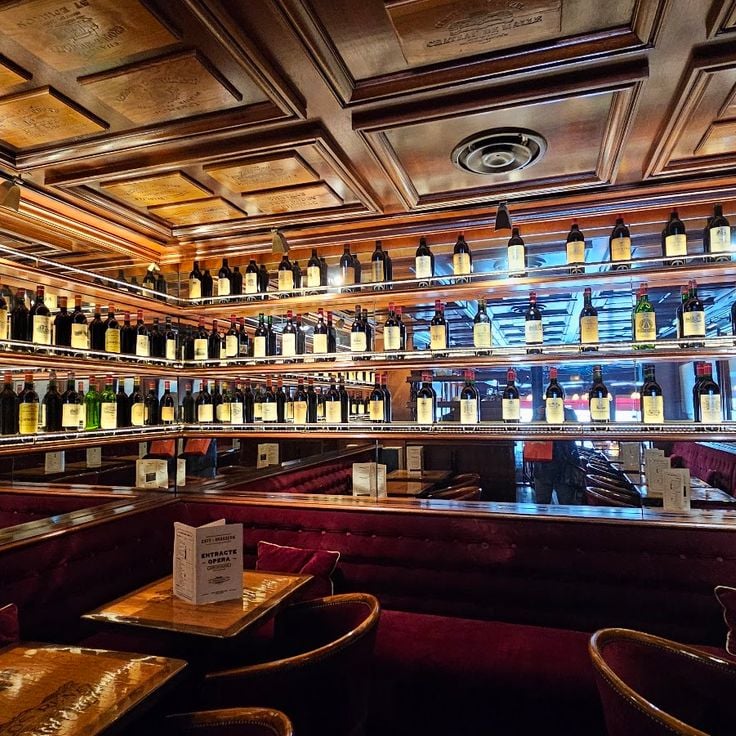
This traditional establishment in the Palais Royal district sits within easy reach of several theaters and has drawn actors and theatergoers for decades. The name references the intermissions between acts, when audiences step out from performances. The interior preserves the character of a classic Parisian bistro with typical elements from the first half of the twentieth century. Many guests stop by before or after shows to discuss the plays they have seen over a glass of wine or a quick dinner. The location makes L'Entracte a practical meeting point for anyone experiencing the theatrical life of the French capital.
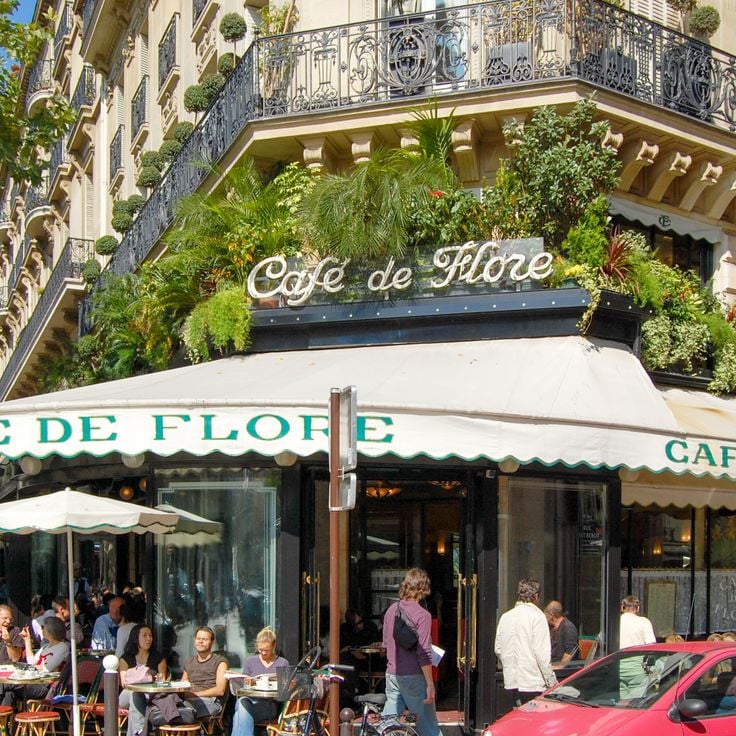
The Café de Flore on Boulevard Saint-Germain opened in 1887 and became a hub for French intellectuals during the first half of the 20th century. Jean-Paul Sartre and Simone de Beauvoir spent countless hours here writing and discussing ideas, along with Albert Camus, Boris Vian and other existentialist thinkers. The interior, with its red leather banquettes, mahogany tables and Art Deco elements, has remained largely unchanged for decades. This establishment represents an important chapter in French intellectual history and today attracts both those interested in its literary past and guests looking to dine or have coffee at one of the most recognized cafés in Paris.
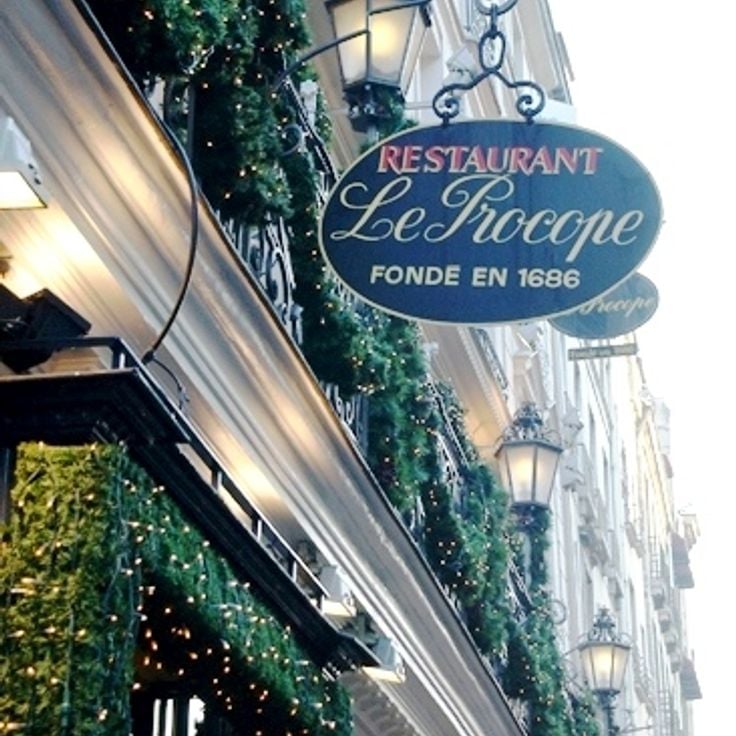
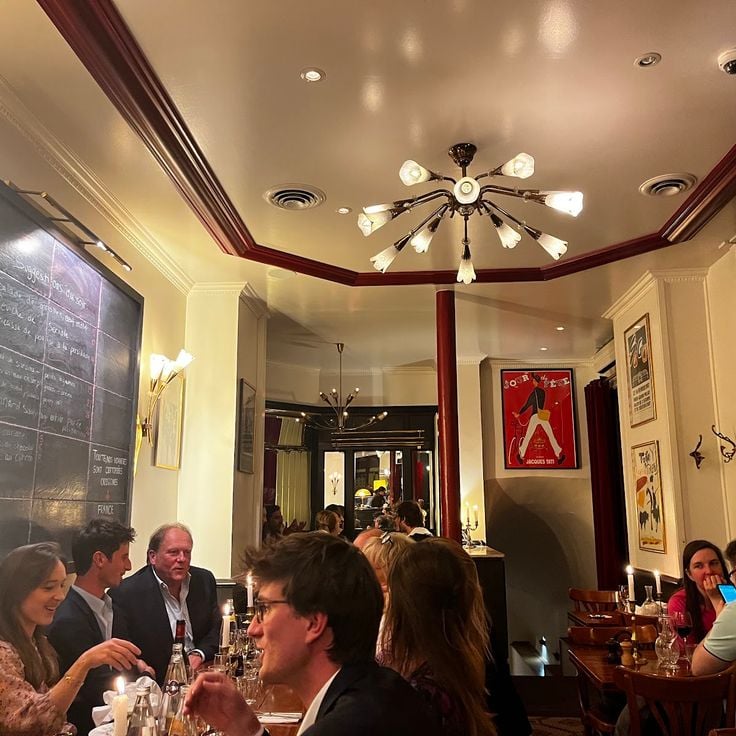
Le Procope was founded in 1686 by Francesco Procopio on Rue de l'Ancienne Comédie and stands as the oldest continuously operating café in Paris. Voltaire reportedly drank up to forty cups of coffee mixed with chocolate here daily, while Diderot and d'Alembert worked on the Encyclopédie. During the Revolution, Danton, Marat and Robespierre gathered in these rooms, which still preserve their eighteenth-century furnishings. The restaurant serves classic French cuisine in an interior featuring wood paneling, antique mirrors and historical memorabilia, including Voltaire's writing desk and Napoleon Bonaparte's bicorne hat.
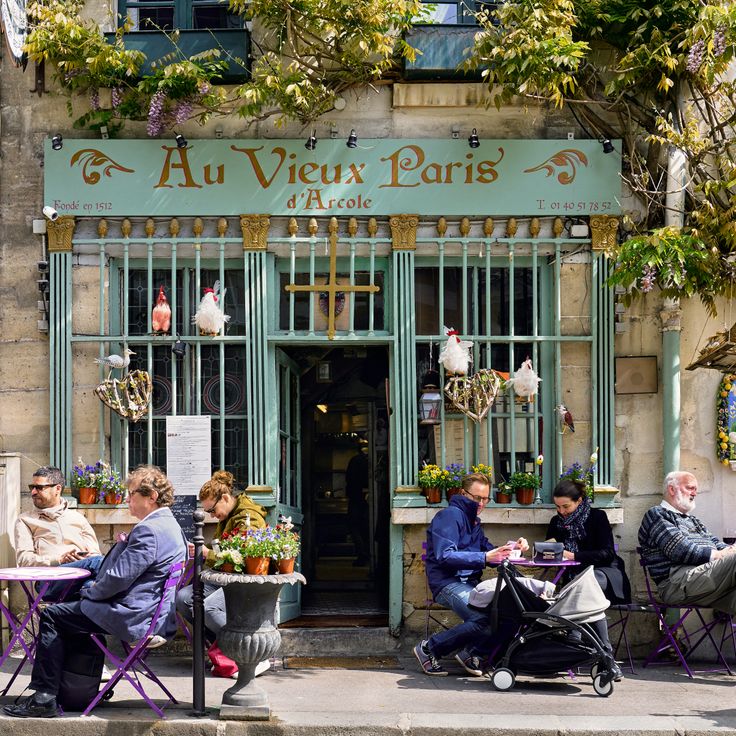
Au vieux Paris d'Arcole stands on Rue Chanoinesse on the Île de la Cité, its facade covered in wisteria and climbing plants that preserve the appearance of a medieval Parisian cafe. The establishment offers a planted terrace in the fourth arrondissement, where ecclesiastical and civic buildings from the medieval city plan have remained for centuries. The vegetated front and historic surroundings make this cafe a witness to the old building fabric of the Île de la Cité, distinct from the more modern establishments of the Rive Gauche.
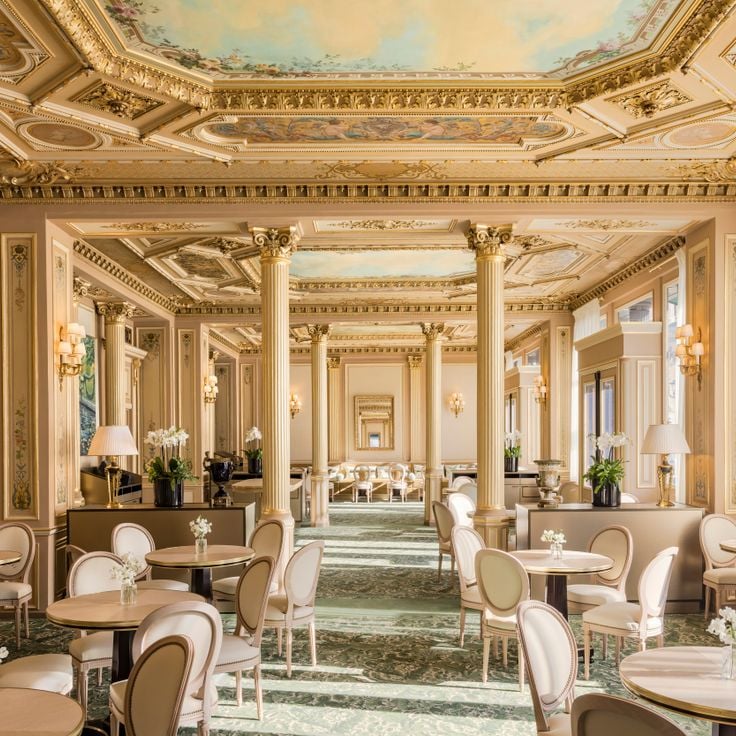
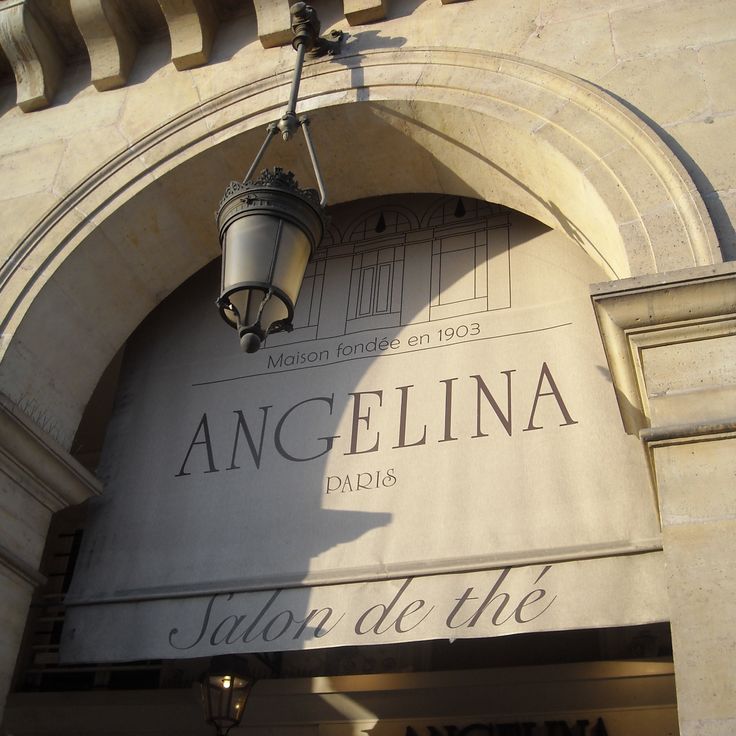
This tea room was founded in 1903 by Antoine Rumpelmeyer on Rue de Rivoli and has become a fixture in Parisian cultural history. The Belle Époque interior, decorated with gilding, mirrors and murals, has remained largely unchanged for over a century. The establishment gained fame for its African-style hot chocolate, prepared according to the original 1903 recipe and among the most ordered beverages in the city. The pastry selection features classic French cakes and tarts, including the Mont-Blanc with chestnut cream, which has been on the menu since the founding. Angelina sits steps from the Louvre and draws daily queues of visitors seeking to experience the historical setting and traditional pastry craftsmanship.
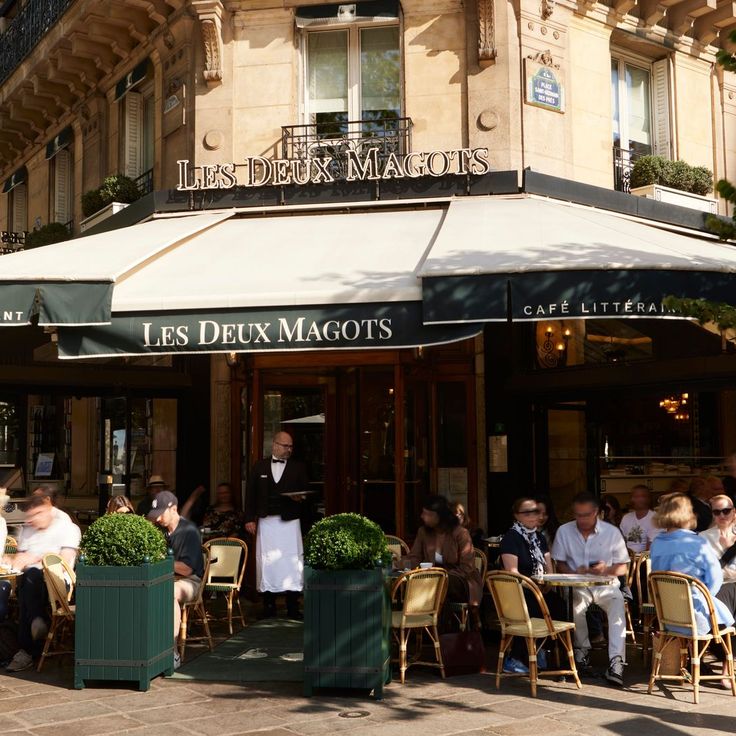
This literary café on the Place Saint-Germain-des-Prés opened in 1884 and became a meeting point for writers including Sartre, Beauvoir and Hemingway. Les Deux Magots takes its name from two Chinese wooden figures that still decorate the main room and has awarded its own annual literary prize since 1933. The red benches, mahogany paneling and terrace overlooking the Saint-Germain-des-Prés church continue to draw authors, publishers and visitors following in the footsteps of the existentialist movement. The establishment operates daily from early morning until late evening, serving classic French cuisine alongside the traditional coffee specialties the house has offered for more than a century.
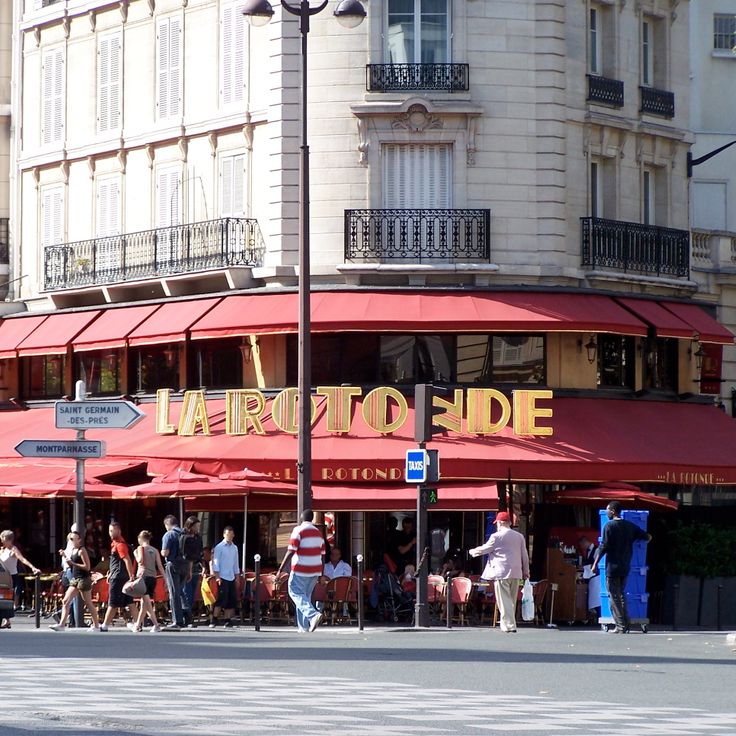
La Rotonde at the Carrefour Vavin in Montparnasse opened in 1911 and quickly became a gathering place for the international artistic community. This café welcomed painters such as Picasso and Modigliani, along with writers who met here to exchange ideas and discuss their work. Its large windows faced the boulevard where the neighborhood's nightlife unfolded. The establishment stands as one of the cafés that shaped Montparnasse's artistic life during the first decades of the twentieth century.
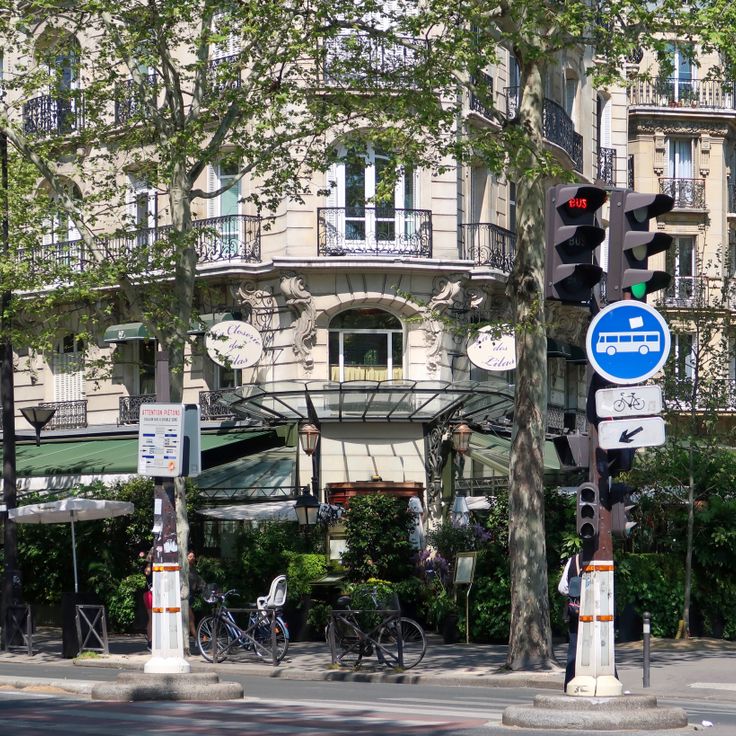
La Closerie des Lilas opened in the mid nineteenth century and became a regular gathering place for American writers during the 1920s. Ernest Hemingway drafted portions of The Sun Also Rises at this cafe, and F. Scott Fitzgerald, Ezra Pound and other members of the Lost Generation spent considerable time here. The establishment maintains its original location on Boulevard du Montparnasse near the Luxembourg Gardens, where it continues to operate as both a restaurant and bar.
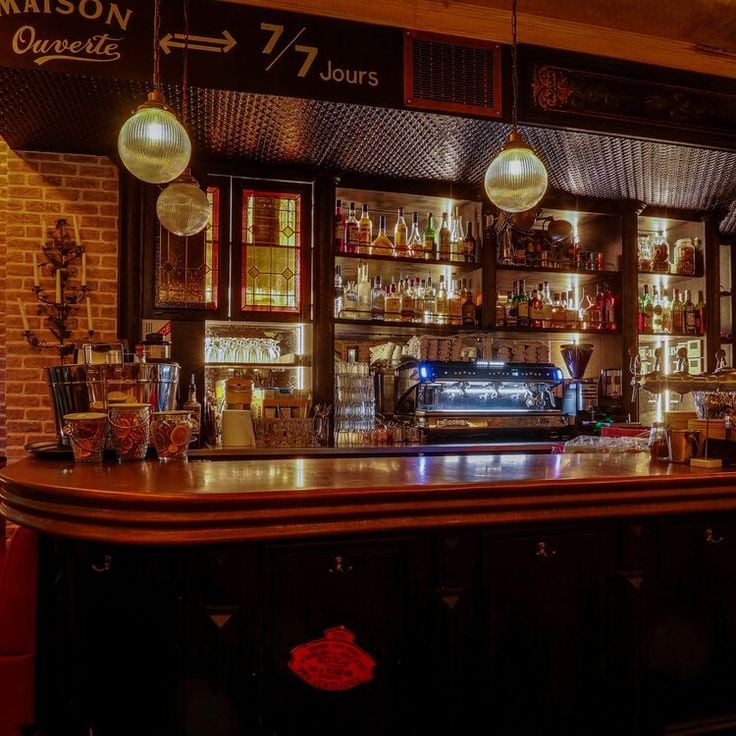
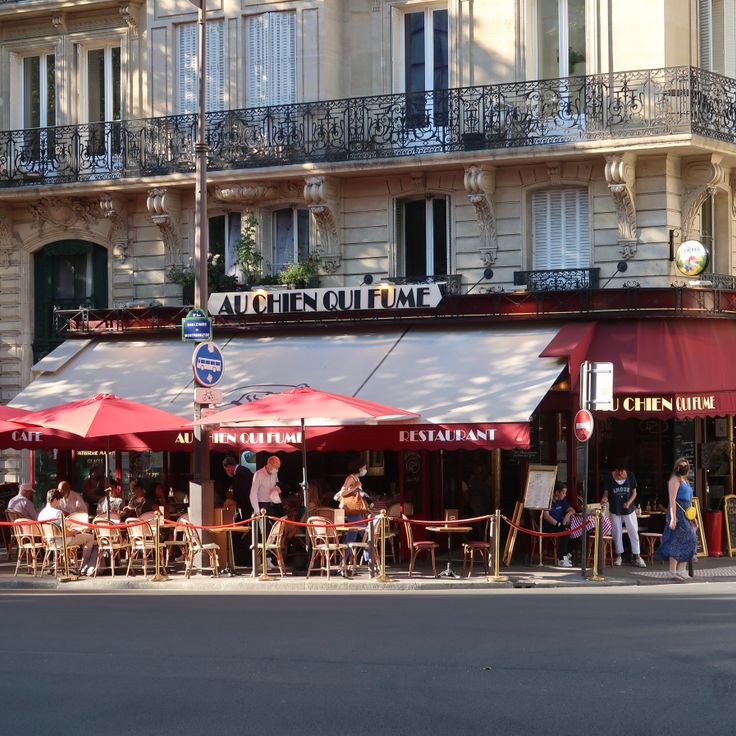
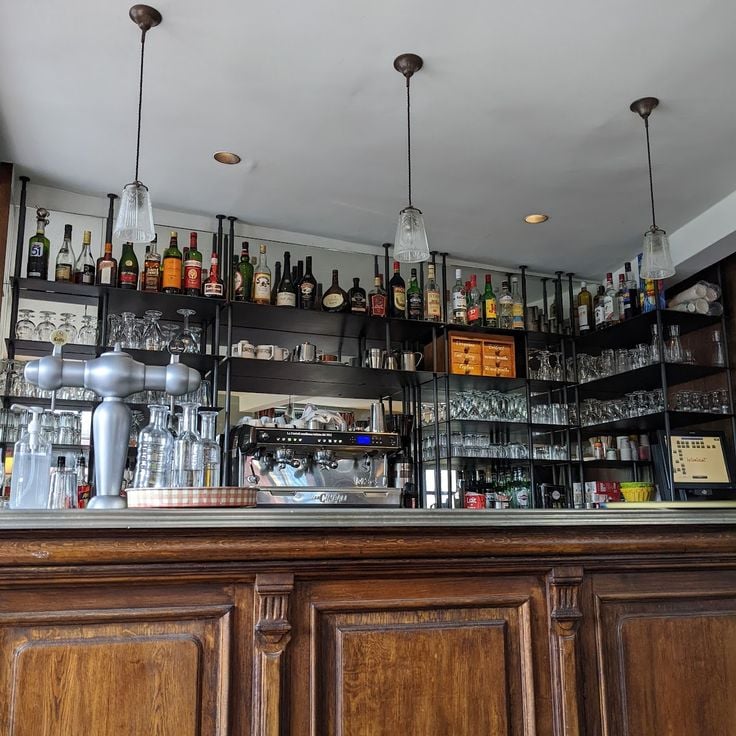
Au Chien qui fume ranks among the oldest operating establishments in the Les Halles district, dating back to the 1740s. The name refers to a pipe-smoking dog that appeared on historical signage. The wooden counter features medallions depicting dogs, recalling the nineteenth-century interior. Located steps from the Forum des Halles, this establishment has maintained its traditional character over the decades as the surrounding market district underwent extensive transformation.
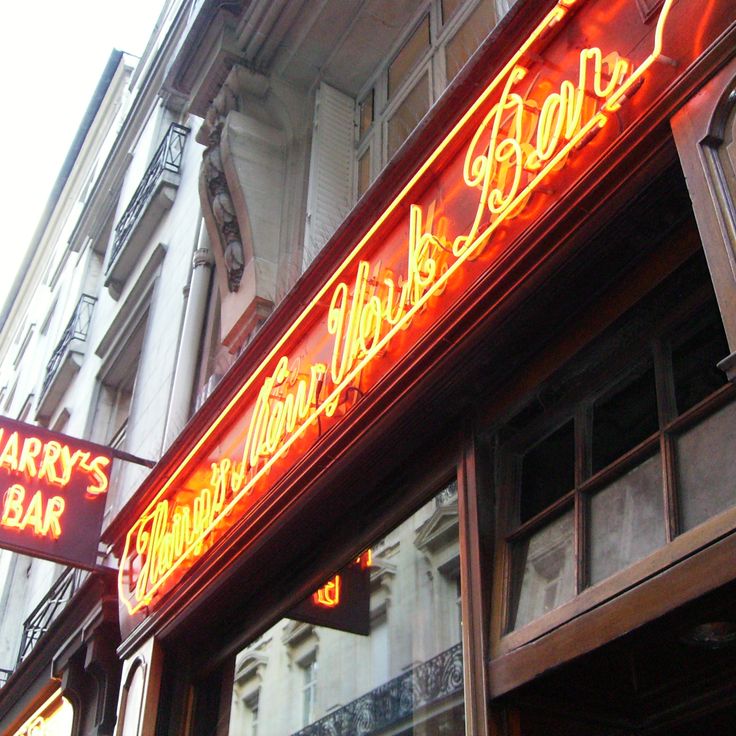
Harry's New York Bar opened in 1911 on Rue Daunou and claims to have invented the Bloody Mary and the Side Car. This American establishment drew numerous writers during the interwar period, including Ernest Hemingway and F. Scott Fitzgerald, and maintains its original dark wood interior and early twentieth-century New York club atmosphere.
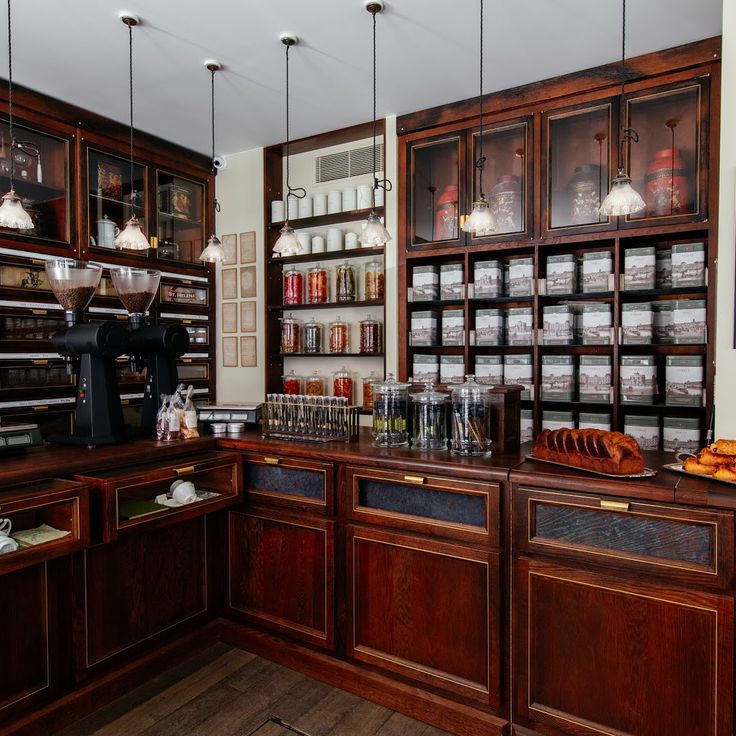
This traditional coffee house has operated its own roasting facility since 1880 and ranks among the last authentic coffee roasters in central Paris. The Verlet family has run the business for four generations and supplies numerous restaurants and hotels across the city with freshly roasted beans. The wooden fixtures date back to the founding period and give the shop an authentic character. Visitors can sample different coffee varieties at the wooden counter and receive expert guidance. The café offers no seating but focuses on selling beans and preparing coffee to go. Its location on Rue Saint-Honoré makes Verlet an institution for connoisseurs who value traditional roasting methods.
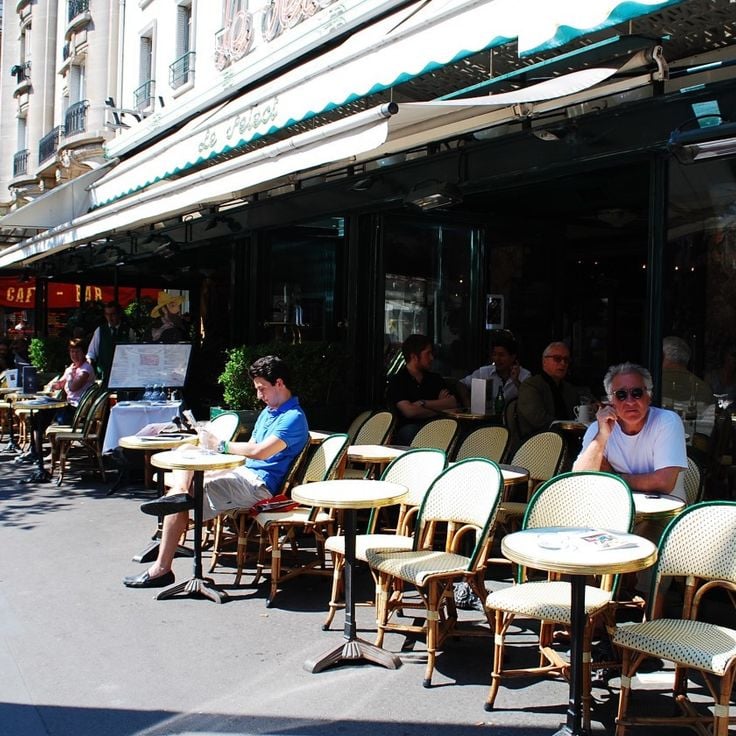
Le Select opened in 1925 in Montparnasse as an American bar and became a gathering place for American writers in interwar Paris. Ernest Hemingway, Henry Miller and other Lost Generation authors met here regularly. The establishment stands on Boulevard du Montparnasse and has retained its original 1920s interior. The terrace extends along the sidewalk and offers around one hundred seats. Inside, the wood paneling, mirrors and red leather banquettes reflect the era when Montparnasse served as the literary center of the city.
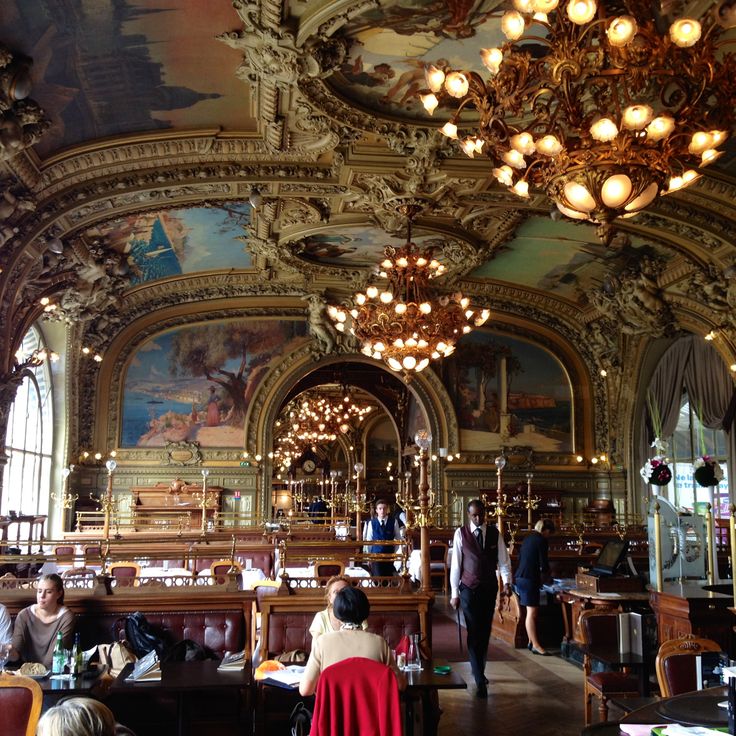
Le Train bleu is a restaurant located on the second floor of Gare de Lyon that has welcomed travelers and Parisians since 1901. The dining rooms feature forty-three frescoes painted by over thirty artists between 1900 and 1902, depicting landscapes and cities served by the Paris-Lyon-Méditerranée railway company. These painted compositions showcase French and Mediterranean geography from Marseille to Nice and Monaco, illustrating the tourism promotion methods of that era. The gilded stucco work, wood paneling and crystal chandeliers create a representative Belle Époque setting that received historic monument status in 1972. The restaurant now serves an international clientele drawn by both its cuisine and its preserved interior.
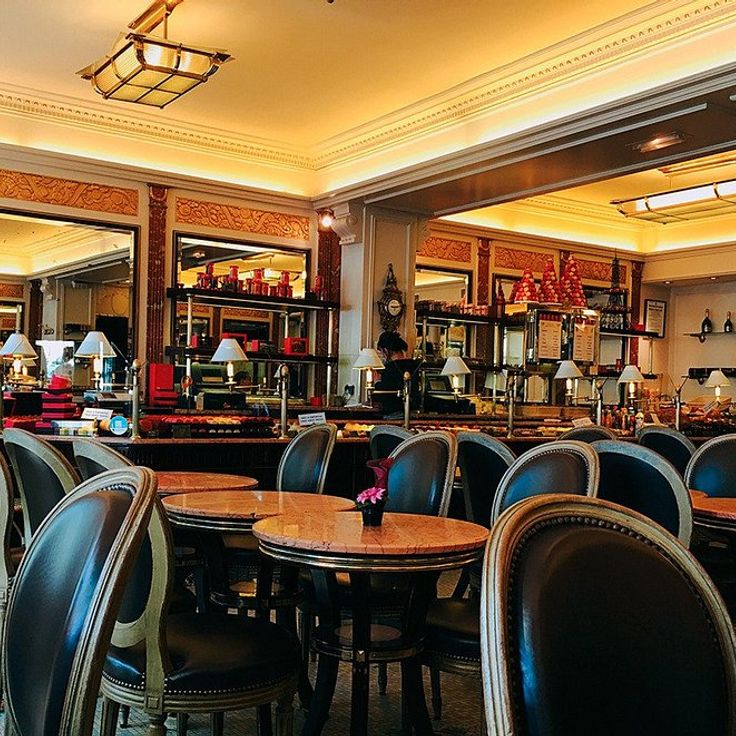
Carette was established in 1927 as a patisserie and tea room specializing in classic Parisian macarons and traditional pastries. The establishment faces the Trocadéro gardens and combines the artisanal tradition of French pastry making with a location that has drawn locals and visitors for decades. The display cases present daily batches of viennoiseries and colorful macarons made according to original recipes. The salon offers seating with views of the gardens and preserves an interior that recalls the tea rooms of the interwar period, while the kitchen focuses on classic French patisserie.
Le Consulat has served as a gathering place for artists and painters who shaped the Montmartre district since the early 1900s. The traditional bistro on Rue Norvins maintains its historic character and recalls the era when Montmartre represented the artistic center of Paris. With its distinctive green facade and sidewalk tables, this establishment embodies the classic Parisian café that provided refuge for generations of painters and bohemians. The location at the corner of two streets made this spot a popular subject for postcards and paintings.
Au Rocher de Cancale opened in 1846 on Rue Montorgueil and belongs to the historic Parisian restaurants that specialized in seafood. The establishment appears in several novels by Honoré de Balzac, who described it as a typical meeting place for nineteenth-century Parisian society. The facade and parts of the interior reflect the original design from when the Les Halles district served as the city's food trade center. Today the restaurant welcomes guests in a setting that recalls the gastronomic tradition of historic Parisian oyster houses.
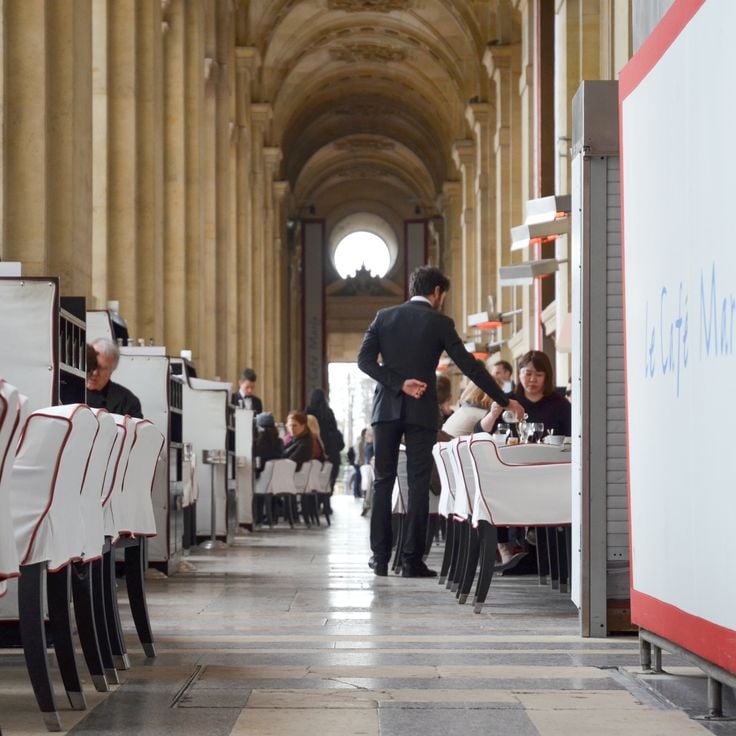
Le Café Marly has occupied a section of the Louvre's Richelieu wing since 1999, serving museum visitors and Parisians in dining rooms that overlook the glass pyramid and main courtyard. The vaulted ceilings of the former royal palace form the backdrop for a menu that pairs French classics with contemporary preparations. The interior extends through several rooms with tall windows facing the Cour Napoléon. The arcade terrace provides direct views of Ieoh Ming Pei's pyramid structure. The café operates daily from morning through late evening, drawing an international crowd that stops in after touring the museum or before events at the Louvre.
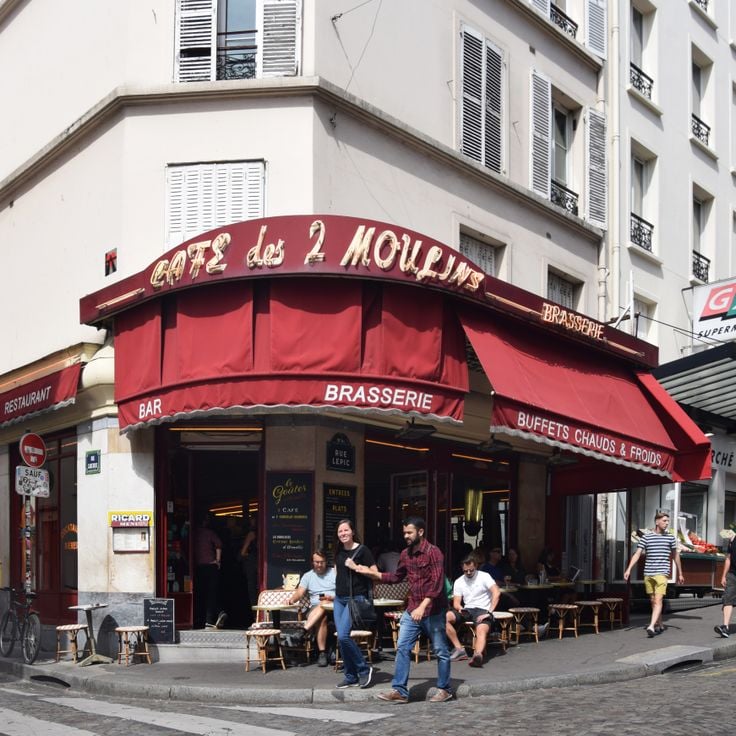
Café des Deux Moulins is a neighborhood bistro on Rue Lepic in Montmartre that gained international recognition as a filming location for the 2001 French film Amélie. The establishment maintains its function as a traditional Parisian café while attracting visitors from around the world who have come to rediscover the film's settings over the past two decades. The interior with its dark red facade and authentic furnishings has changed little since the filming and continues to serve classic French bistro fare. The café sits at the base of Montmartre hill in a residential area among traditional shops and street markets.
The café at the Museum of Romantic Life occupies the paved courtyard of a nineteenth-century townhouse that stands apart from the main boulevards of Paris. Visitors can settle here after touring the collections for pastries and hot beverages served under the trees that shade the courtyard. The setting complements the historic character of the building, once home to the painter Ary Scheffer and now dedicated to George Sand and her contemporaries.
Le Café 1902 occupies the interior courtyard of the Petit Palais, offering visitors a place to eat surrounded by the building's original architectural features and garden plantings. Named after the year the palace was completed, this establishment allows museum guests to take a break within the historic structure built for the 1900 World's Fair, which now houses the city's fine arts collections. The courtyard setting provides a practical dining option for those exploring the permanent and temporary exhibitions in this early twentieth-century building.
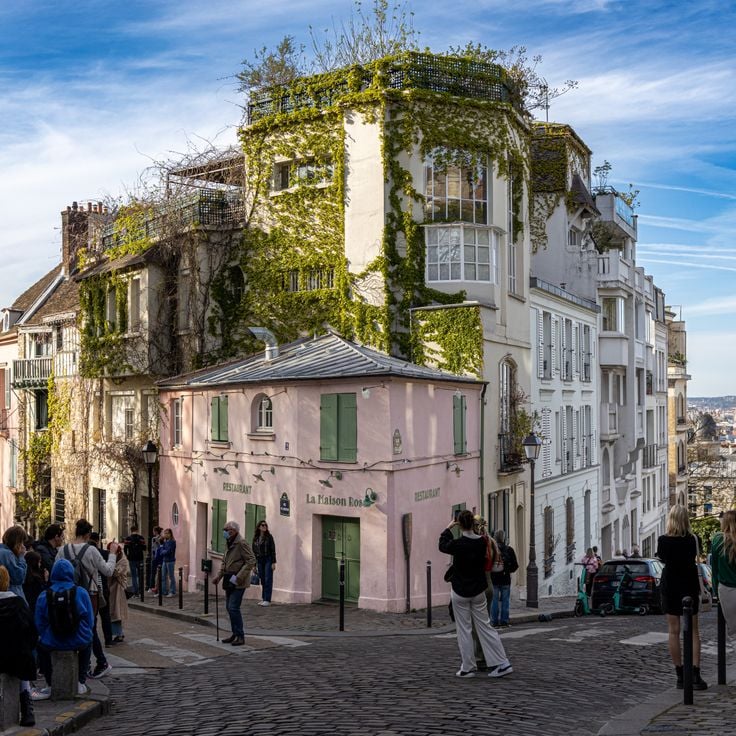
La Maison Rose is a traditional Montmartre restaurant immortalized in Maurice Utrillo's paintings, distinguished by its pink facade and green shutters for over a century. The 1905 establishment on Place du Tertre attracted artists including Picasso, Apollinaire and Suzanne Valadon, who valued its proximity to the neighborhood's artistic community. The pink facade appears in several of Utrillo's canvases from the 1910s and 1920s, making the restaurant one of Montmartre's most photographed buildings. Today La Maison Rose serves French cuisine at sidewalk tables and in an interior preserving wood paneling and antique mirrors from its early decades.
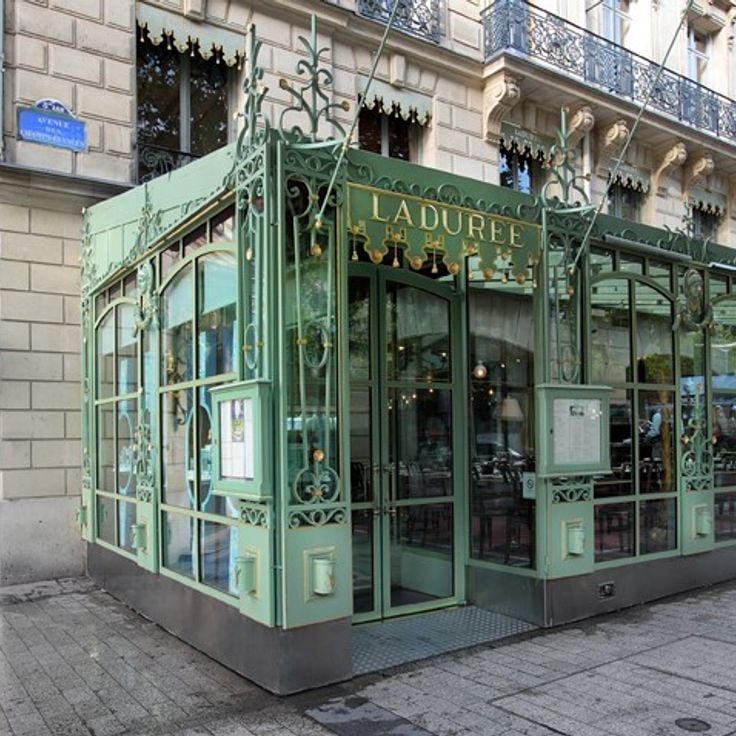
Founded in 1862, Ladurée established itself as one of the major Parisian pastry houses and developed the modern macaron in its present form. The original location on Rue Royale preserves its historical interior with gilded decorations, ceiling paintings and green wall panels from the late nineteenth century. The patisserie has served Parisian families and international visitors for over 160 years with pastries, cakes and the signature macarons in more than twenty flavors. Beyond the historical salon de thé on the upper floor, the business now operates several locations in Paris and other cities.
Café du Louvre opened in 1903 in the Opéra district as a classic Parisian brasserie and ranks among the historic addresses that shaped the social life of the Belle Époque. The establishment sits along the boulevard and maintains the tradition of these venues where theatergoers, artists and business people gathered for decades. The menu features French classics, and the terrace offers views of the street scene and surrounding theaters.
Café de la Paix opened in 1862 on Place de l'Opéra and has welcomed figures from the arts and politics since the Second Empire. Architect Charles Garnier designed the interior alongside the neighboring Opéra Garnier, reflected in gilded stucco work, painted ceilings and tall mirrors. The second-floor dining room preserves its Napoleon III furnishings with red velvet benches and crystal chandeliers. Guests included Émile Zola, Guy de Maupassant and Oscar Wilde, while political figures used the establishment for diplomatic meetings. The café sits between Opéra Garnier and Boulevard des Capucines, continuing to draw visitors seeking historic dining in a protected setting.
This traditional establishment in the Palais Royal district sits within easy reach of several theaters and has drawn actors and theatergoers for decades. The name references the intermissions between acts, when audiences step out from performances. The interior preserves the character of a classic Parisian bistro with typical elements from the first half of the twentieth century. Many guests stop by before or after shows to discuss the plays they have seen over a glass of wine or a quick dinner. The location makes L'Entracte a practical meeting point for anyone experiencing the theatrical life of the French capital.
The Café de Flore on Boulevard Saint-Germain opened in 1887 and became a hub for French intellectuals during the first half of the 20th century. Jean-Paul Sartre and Simone de Beauvoir spent countless hours here writing and discussing ideas, along with Albert Camus, Boris Vian and other existentialist thinkers. The interior, with its red leather banquettes, mahogany tables and Art Deco elements, has remained largely unchanged for decades. This establishment represents an important chapter in French intellectual history and today attracts both those interested in its literary past and guests looking to dine or have coffee at one of the most recognized cafés in Paris.
Le Procope was founded in 1686 by Francesco Procopio on Rue de l'Ancienne Comédie and stands as the oldest continuously operating café in Paris. Voltaire reportedly drank up to forty cups of coffee mixed with chocolate here daily, while Diderot and d'Alembert worked on the Encyclopédie. During the Revolution, Danton, Marat and Robespierre gathered in these rooms, which still preserve their eighteenth-century furnishings. The restaurant serves classic French cuisine in an interior featuring wood paneling, antique mirrors and historical memorabilia, including Voltaire's writing desk and Napoleon Bonaparte's bicorne hat.
Au vieux Paris d'Arcole stands on Rue Chanoinesse on the Île de la Cité, its facade covered in wisteria and climbing plants that preserve the appearance of a medieval Parisian cafe. The establishment offers a planted terrace in the fourth arrondissement, where ecclesiastical and civic buildings from the medieval city plan have remained for centuries. The vegetated front and historic surroundings make this cafe a witness to the old building fabric of the Île de la Cité, distinct from the more modern establishments of the Rive Gauche.
This tea room was founded in 1903 by Antoine Rumpelmeyer on Rue de Rivoli and has become a fixture in Parisian cultural history. The Belle Époque interior, decorated with gilding, mirrors and murals, has remained largely unchanged for over a century. The establishment gained fame for its African-style hot chocolate, prepared according to the original 1903 recipe and among the most ordered beverages in the city. The pastry selection features classic French cakes and tarts, including the Mont-Blanc with chestnut cream, which has been on the menu since the founding. Angelina sits steps from the Louvre and draws daily queues of visitors seeking to experience the historical setting and traditional pastry craftsmanship.
This literary café on the Place Saint-Germain-des-Prés opened in 1884 and became a meeting point for writers including Sartre, Beauvoir and Hemingway. Les Deux Magots takes its name from two Chinese wooden figures that still decorate the main room and has awarded its own annual literary prize since 1933. The red benches, mahogany paneling and terrace overlooking the Saint-Germain-des-Prés church continue to draw authors, publishers and visitors following in the footsteps of the existentialist movement. The establishment operates daily from early morning until late evening, serving classic French cuisine alongside the traditional coffee specialties the house has offered for more than a century.
La Rotonde at the Carrefour Vavin in Montparnasse opened in 1911 and quickly became a gathering place for the international artistic community. This café welcomed painters such as Picasso and Modigliani, along with writers who met here to exchange ideas and discuss their work. Its large windows faced the boulevard where the neighborhood's nightlife unfolded. The establishment stands as one of the cafés that shaped Montparnasse's artistic life during the first decades of the twentieth century.
La Closerie des Lilas opened in the mid nineteenth century and became a regular gathering place for American writers during the 1920s. Ernest Hemingway drafted portions of The Sun Also Rises at this cafe, and F. Scott Fitzgerald, Ezra Pound and other members of the Lost Generation spent considerable time here. The establishment maintains its original location on Boulevard du Montparnasse near the Luxembourg Gardens, where it continues to operate as both a restaurant and bar.
Au Chien qui fume ranks among the oldest operating establishments in the Les Halles district, dating back to the 1740s. The name refers to a pipe-smoking dog that appeared on historical signage. The wooden counter features medallions depicting dogs, recalling the nineteenth-century interior. Located steps from the Forum des Halles, this establishment has maintained its traditional character over the decades as the surrounding market district underwent extensive transformation.
Harry's New York Bar opened in 1911 on Rue Daunou and claims to have invented the Bloody Mary and the Side Car. This American establishment drew numerous writers during the interwar period, including Ernest Hemingway and F. Scott Fitzgerald, and maintains its original dark wood interior and early twentieth-century New York club atmosphere.
This traditional coffee house has operated its own roasting facility since 1880 and ranks among the last authentic coffee roasters in central Paris. The Verlet family has run the business for four generations and supplies numerous restaurants and hotels across the city with freshly roasted beans. The wooden fixtures date back to the founding period and give the shop an authentic character. Visitors can sample different coffee varieties at the wooden counter and receive expert guidance. The café offers no seating but focuses on selling beans and preparing coffee to go. Its location on Rue Saint-Honoré makes Verlet an institution for connoisseurs who value traditional roasting methods.
Le Select opened in 1925 in Montparnasse as an American bar and became a gathering place for American writers in interwar Paris. Ernest Hemingway, Henry Miller and other Lost Generation authors met here regularly. The establishment stands on Boulevard du Montparnasse and has retained its original 1920s interior. The terrace extends along the sidewalk and offers around one hundred seats. Inside, the wood paneling, mirrors and red leather banquettes reflect the era when Montparnasse served as the literary center of the city.
Le Train bleu is a restaurant located on the second floor of Gare de Lyon that has welcomed travelers and Parisians since 1901. The dining rooms feature forty-three frescoes painted by over thirty artists between 1900 and 1902, depicting landscapes and cities served by the Paris-Lyon-Méditerranée railway company. These painted compositions showcase French and Mediterranean geography from Marseille to Nice and Monaco, illustrating the tourism promotion methods of that era. The gilded stucco work, wood paneling and crystal chandeliers create a representative Belle Époque setting that received historic monument status in 1972. The restaurant now serves an international clientele drawn by both its cuisine and its preserved interior.
Carette was established in 1927 as a patisserie and tea room specializing in classic Parisian macarons and traditional pastries. The establishment faces the Trocadéro gardens and combines the artisanal tradition of French pastry making with a location that has drawn locals and visitors for decades. The display cases present daily batches of viennoiseries and colorful macarons made according to original recipes. The salon offers seating with views of the gardens and preserves an interior that recalls the tea rooms of the interwar period, while the kitchen focuses on classic French patisserie.
Le Consulat has served as a gathering place for artists and painters who shaped the Montmartre district since the early 1900s. The traditional bistro on Rue Norvins maintains its historic character and recalls the era when Montmartre represented the artistic center of Paris. With its distinctive green facade and sidewalk tables, this establishment embodies the classic Parisian café that provided refuge for generations of painters and bohemians. The location at the corner of two streets made this spot a popular subject for postcards and paintings.
Au Rocher de Cancale opened in 1846 on Rue Montorgueil and belongs to the historic Parisian restaurants that specialized in seafood. The establishment appears in several novels by Honoré de Balzac, who described it as a typical meeting place for nineteenth-century Parisian society. The facade and parts of the interior reflect the original design from when the Les Halles district served as the city's food trade center. Today the restaurant welcomes guests in a setting that recalls the gastronomic tradition of historic Parisian oyster houses.
Le Café Marly has occupied a section of the Louvre's Richelieu wing since 1999, serving museum visitors and Parisians in dining rooms that overlook the glass pyramid and main courtyard. The vaulted ceilings of the former royal palace form the backdrop for a menu that pairs French classics with contemporary preparations. The interior extends through several rooms with tall windows facing the Cour Napoléon. The arcade terrace provides direct views of Ieoh Ming Pei's pyramid structure. The café operates daily from morning through late evening, drawing an international crowd that stops in after touring the museum or before events at the Louvre.
Café des Deux Moulins is a neighborhood bistro on Rue Lepic in Montmartre that gained international recognition as a filming location for the 2001 French film Amélie. The establishment maintains its function as a traditional Parisian café while attracting visitors from around the world who have come to rediscover the film's settings over the past two decades. The interior with its dark red facade and authentic furnishings has changed little since the filming and continues to serve classic French bistro fare. The café sits at the base of Montmartre hill in a residential area among traditional shops and street markets.
The café at the Museum of Romantic Life occupies the paved courtyard of a nineteenth-century townhouse that stands apart from the main boulevards of Paris. Visitors can settle here after touring the collections for pastries and hot beverages served under the trees that shade the courtyard. The setting complements the historic character of the building, once home to the painter Ary Scheffer and now dedicated to George Sand and her contemporaries.
Le Café 1902 occupies the interior courtyard of the Petit Palais, offering visitors a place to eat surrounded by the building's original architectural features and garden plantings. Named after the year the palace was completed, this establishment allows museum guests to take a break within the historic structure built for the 1900 World's Fair, which now houses the city's fine arts collections. The courtyard setting provides a practical dining option for those exploring the permanent and temporary exhibitions in this early twentieth-century building.
La Maison Rose is a traditional Montmartre restaurant immortalized in Maurice Utrillo's paintings, distinguished by its pink facade and green shutters for over a century. The 1905 establishment on Place du Tertre attracted artists including Picasso, Apollinaire and Suzanne Valadon, who valued its proximity to the neighborhood's artistic community. The pink facade appears in several of Utrillo's canvases from the 1910s and 1920s, making the restaurant one of Montmartre's most photographed buildings. Today La Maison Rose serves French cuisine at sidewalk tables and in an interior preserving wood paneling and antique mirrors from its early decades.
Founded in 1862, Ladurée established itself as one of the major Parisian pastry houses and developed the modern macaron in its present form. The original location on Rue Royale preserves its historical interior with gilded decorations, ceiling paintings and green wall panels from the late nineteenth century. The patisserie has served Parisian families and international visitors for over 160 years with pastries, cakes and the signature macarons in more than twenty flavors. Beyond the historical salon de thé on the upper floor, the business now operates several locations in Paris and other cities.
Café du Louvre opened in 1903 in the Opéra district as a classic Parisian brasserie and ranks among the historic addresses that shaped the social life of the Belle Époque. The establishment sits along the boulevard and maintains the tradition of these venues where theatergoers, artists and business people gathered for decades. The menu features French classics, and the terrace offers views of the street scene and surrounding theaters.
Café de la Paix opened in 1862 on Place de l'Opéra and has welcomed figures from the arts and politics since the Second Empire. Architect Charles Garnier designed the interior alongside the neighboring Opéra Garnier, reflected in gilded stucco work, painted ceilings and tall mirrors. The second-floor dining room preserves its Napoleon III furnishings with red velvet benches and crystal chandeliers. Guests included Émile Zola, Guy de Maupassant and Oscar Wilde, while political figures used the establishment for diplomatic meetings. The café sits between Opéra Garnier and Boulevard des Capucines, continuing to draw visitors seeking historic dining in a protected setting.
This traditional establishment in the Palais Royal district sits within easy reach of several theaters and has drawn actors and theatergoers for decades. The name references the intermissions between acts, when audiences step out from performances. The interior preserves the character of a classic Parisian bistro with typical elements from the first half of the twentieth century. Many guests stop by before or after shows to discuss the plays they have seen over a glass of wine or a quick dinner. The location makes L'Entracte a practical meeting point for anyone experiencing the theatrical life of the French capital.
The Café de Flore on Boulevard Saint-Germain opened in 1887 and became a hub for French intellectuals during the first half of the 20th century. Jean-Paul Sartre and Simone de Beauvoir spent countless hours here writing and discussing ideas, along with Albert Camus, Boris Vian and other existentialist thinkers. The interior, with its red leather banquettes, mahogany tables and Art Deco elements, has remained largely unchanged for decades. This establishment represents an important chapter in French intellectual history and today attracts both those interested in its literary past and guests looking to dine or have coffee at one of the most recognized cafés in Paris.
Le Procope was founded in 1686 by Francesco Procopio on Rue de l'Ancienne Comédie and stands as the oldest continuously operating café in Paris. Voltaire reportedly drank up to forty cups of coffee mixed with chocolate here daily, while Diderot and d'Alembert worked on the Encyclopédie. During the Revolution, Danton, Marat and Robespierre gathered in these rooms, which still preserve their eighteenth-century furnishings. The restaurant serves classic French cuisine in an interior featuring wood paneling, antique mirrors and historical memorabilia, including Voltaire's writing desk and Napoleon Bonaparte's bicorne hat.
Au vieux Paris d'Arcole stands on Rue Chanoinesse on the Île de la Cité, its facade covered in wisteria and climbing plants that preserve the appearance of a medieval Parisian cafe. The establishment offers a planted terrace in the fourth arrondissement, where ecclesiastical and civic buildings from the medieval city plan have remained for centuries. The vegetated front and historic surroundings make this cafe a witness to the old building fabric of the Île de la Cité, distinct from the more modern establishments of the Rive Gauche.
This tea room was founded in 1903 by Antoine Rumpelmeyer on Rue de Rivoli and has become a fixture in Parisian cultural history. The Belle Époque interior, decorated with gilding, mirrors and murals, has remained largely unchanged for over a century. The establishment gained fame for its African-style hot chocolate, prepared according to the original 1903 recipe and among the most ordered beverages in the city. The pastry selection features classic French cakes and tarts, including the Mont-Blanc with chestnut cream, which has been on the menu since the founding. Angelina sits steps from the Louvre and draws daily queues of visitors seeking to experience the historical setting and traditional pastry craftsmanship.
This literary café on the Place Saint-Germain-des-Prés opened in 1884 and became a meeting point for writers including Sartre, Beauvoir and Hemingway. Les Deux Magots takes its name from two Chinese wooden figures that still decorate the main room and has awarded its own annual literary prize since 1933. The red benches, mahogany paneling and terrace overlooking the Saint-Germain-des-Prés church continue to draw authors, publishers and visitors following in the footsteps of the existentialist movement. The establishment operates daily from early morning until late evening, serving classic French cuisine alongside the traditional coffee specialties the house has offered for more than a century.
La Rotonde at the Carrefour Vavin in Montparnasse opened in 1911 and quickly became a gathering place for the international artistic community. This café welcomed painters such as Picasso and Modigliani, along with writers who met here to exchange ideas and discuss their work. Its large windows faced the boulevard where the neighborhood's nightlife unfolded. The establishment stands as one of the cafés that shaped Montparnasse's artistic life during the first decades of the twentieth century.
La Closerie des Lilas opened in the mid nineteenth century and became a regular gathering place for American writers during the 1920s. Ernest Hemingway drafted portions of The Sun Also Rises at this cafe, and F. Scott Fitzgerald, Ezra Pound and other members of the Lost Generation spent considerable time here. The establishment maintains its original location on Boulevard du Montparnasse near the Luxembourg Gardens, where it continues to operate as both a restaurant and bar.
Au Chien qui fume ranks among the oldest operating establishments in the Les Halles district, dating back to the 1740s. The name refers to a pipe-smoking dog that appeared on historical signage. The wooden counter features medallions depicting dogs, recalling the nineteenth-century interior. Located steps from the Forum des Halles, this establishment has maintained its traditional character over the decades as the surrounding market district underwent extensive transformation.
Harry's New York Bar opened in 1911 on Rue Daunou and claims to have invented the Bloody Mary and the Side Car. This American establishment drew numerous writers during the interwar period, including Ernest Hemingway and F. Scott Fitzgerald, and maintains its original dark wood interior and early twentieth-century New York club atmosphere.
This traditional coffee house has operated its own roasting facility since 1880 and ranks among the last authentic coffee roasters in central Paris. The Verlet family has run the business for four generations and supplies numerous restaurants and hotels across the city with freshly roasted beans. The wooden fixtures date back to the founding period and give the shop an authentic character. Visitors can sample different coffee varieties at the wooden counter and receive expert guidance. The café offers no seating but focuses on selling beans and preparing coffee to go. Its location on Rue Saint-Honoré makes Verlet an institution for connoisseurs who value traditional roasting methods.
Le Select opened in 1925 in Montparnasse as an American bar and became a gathering place for American writers in interwar Paris. Ernest Hemingway, Henry Miller and other Lost Generation authors met here regularly. The establishment stands on Boulevard du Montparnasse and has retained its original 1920s interior. The terrace extends along the sidewalk and offers around one hundred seats. Inside, the wood paneling, mirrors and red leather banquettes reflect the era when Montparnasse served as the literary center of the city.
Le Train bleu is a restaurant located on the second floor of Gare de Lyon that has welcomed travelers and Parisians since 1901. The dining rooms feature forty-three frescoes painted by over thirty artists between 1900 and 1902, depicting landscapes and cities served by the Paris-Lyon-Méditerranée railway company. These painted compositions showcase French and Mediterranean geography from Marseille to Nice and Monaco, illustrating the tourism promotion methods of that era. The gilded stucco work, wood paneling and crystal chandeliers create a representative Belle Époque setting that received historic monument status in 1972. The restaurant now serves an international clientele drawn by both its cuisine and its preserved interior.
Carette was established in 1927 as a patisserie and tea room specializing in classic Parisian macarons and traditional pastries. The establishment faces the Trocadéro gardens and combines the artisanal tradition of French pastry making with a location that has drawn locals and visitors for decades. The display cases present daily batches of viennoiseries and colorful macarons made according to original recipes. The salon offers seating with views of the gardens and preserves an interior that recalls the tea rooms of the interwar period, while the kitchen focuses on classic French patisserie.
Le Consulat has served as a gathering place for artists and painters who shaped the Montmartre district since the early 1900s. The traditional bistro on Rue Norvins maintains its historic character and recalls the era when Montmartre represented the artistic center of Paris. With its distinctive green facade and sidewalk tables, this establishment embodies the classic Parisian café that provided refuge for generations of painters and bohemians. The location at the corner of two streets made this spot a popular subject for postcards and paintings.
Au Rocher de Cancale opened in 1846 on Rue Montorgueil and belongs to the historic Parisian restaurants that specialized in seafood. The establishment appears in several novels by Honoré de Balzac, who described it as a typical meeting place for nineteenth-century Parisian society. The facade and parts of the interior reflect the original design from when the Les Halles district served as the city's food trade center. Today the restaurant welcomes guests in a setting that recalls the gastronomic tradition of historic Parisian oyster houses.
Le Café Marly has occupied a section of the Louvre's Richelieu wing since 1999, serving museum visitors and Parisians in dining rooms that overlook the glass pyramid and main courtyard. The vaulted ceilings of the former royal palace form the backdrop for a menu that pairs French classics with contemporary preparations. The interior extends through several rooms with tall windows facing the Cour Napoléon. The arcade terrace provides direct views of Ieoh Ming Pei's pyramid structure. The café operates daily from morning through late evening, drawing an international crowd that stops in after touring the museum or before events at the Louvre.
Café des Deux Moulins is a neighborhood bistro on Rue Lepic in Montmartre that gained international recognition as a filming location for the 2001 French film Amélie. The establishment maintains its function as a traditional Parisian café while attracting visitors from around the world who have come to rediscover the film's settings over the past two decades. The interior with its dark red facade and authentic furnishings has changed little since the filming and continues to serve classic French bistro fare. The café sits at the base of Montmartre hill in a residential area among traditional shops and street markets.
The café at the Museum of Romantic Life occupies the paved courtyard of a nineteenth-century townhouse that stands apart from the main boulevards of Paris. Visitors can settle here after touring the collections for pastries and hot beverages served under the trees that shade the courtyard. The setting complements the historic character of the building, once home to the painter Ary Scheffer and now dedicated to George Sand and her contemporaries.
Le Café 1902 occupies the interior courtyard of the Petit Palais, offering visitors a place to eat surrounded by the building's original architectural features and garden plantings. Named after the year the palace was completed, this establishment allows museum guests to take a break within the historic structure built for the 1900 World's Fair, which now houses the city's fine arts collections. The courtyard setting provides a practical dining option for those exploring the permanent and temporary exhibitions in this early twentieth-century building.
La Maison Rose is a traditional Montmartre restaurant immortalized in Maurice Utrillo's paintings, distinguished by its pink facade and green shutters for over a century. The 1905 establishment on Place du Tertre attracted artists including Picasso, Apollinaire and Suzanne Valadon, who valued its proximity to the neighborhood's artistic community. The pink facade appears in several of Utrillo's canvases from the 1910s and 1920s, making the restaurant one of Montmartre's most photographed buildings. Today La Maison Rose serves French cuisine at sidewalk tables and in an interior preserving wood paneling and antique mirrors from its early decades.
Founded in 1862, Ladurée established itself as one of the major Parisian pastry houses and developed the modern macaron in its present form. The original location on Rue Royale preserves its historical interior with gilded decorations, ceiling paintings and green wall panels from the late nineteenth century. The patisserie has served Parisian families and international visitors for over 160 years with pastries, cakes and the signature macarons in more than twenty flavors. Beyond the historical salon de thé on the upper floor, the business now operates several locations in Paris and other cities.
Café du Louvre opened in 1903 in the Opéra district as a classic Parisian brasserie and ranks among the historic addresses that shaped the social life of the Belle Époque. The establishment sits along the boulevard and maintains the tradition of these venues where theatergoers, artists and business people gathered for decades. The menu features French classics, and the terrace offers views of the street scene and surrounding theaters.