See the monuments around you in AROpen chests in the app
Around Us is built for your phone — point your camera at the streets and discover the monuments and places around you in augmented reality.Around Us is built for your phone — chests unlock when you walk, explore and capture nearby places.
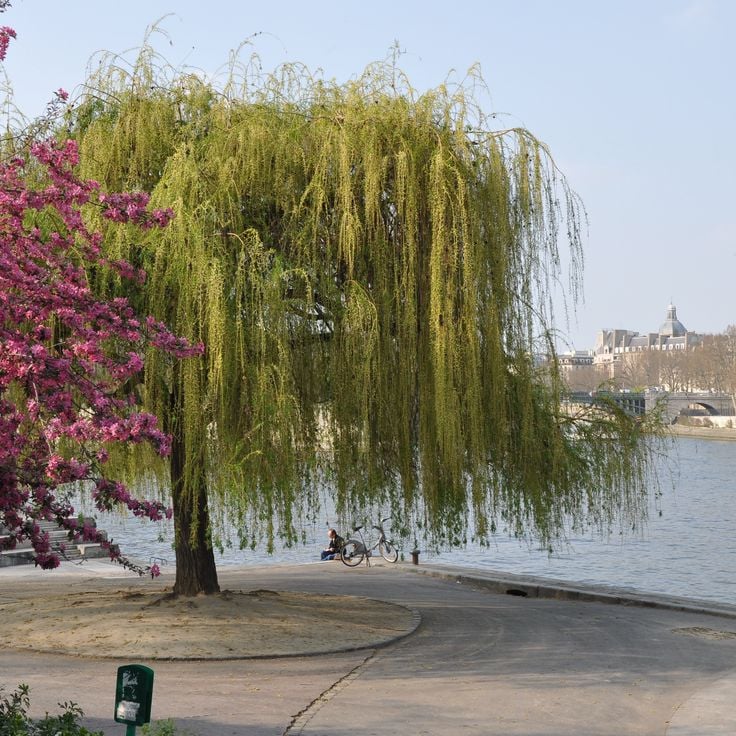
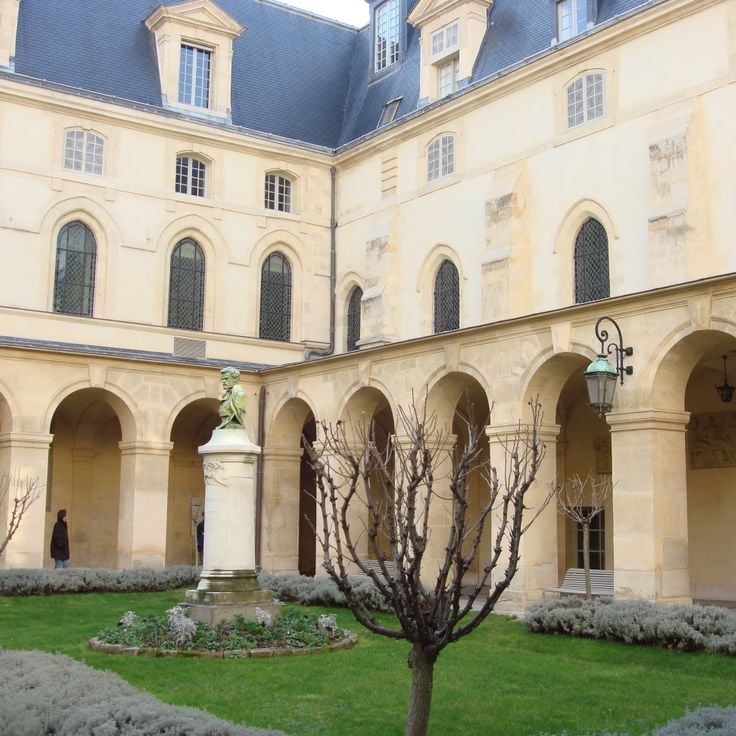
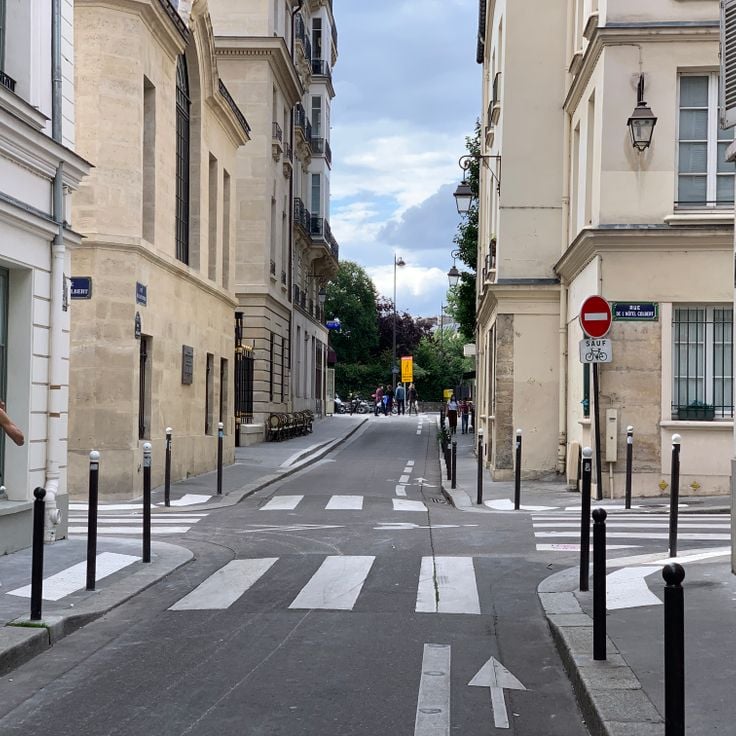
The Latin Quarter is one of the oldest parts of Paris and preserves traces from over two thousand years of history. Roman remains like the Arènes de Lutèce recall the ancient settlement of Lutetia, while medieval churches such as Saint-Étienne-du-Mont and Saint-Julien-le-Pauvre document the religious past. The Sorbonne and the Collège de France have made the district a center of learning since the Middle Ages, and institutions like the Bibliothèque Sainte-Geneviève continue this academic tradition. The Musée de l'Histoire de la Médecine traces the development of medicine, the Musée Curie honors the scientific discoveries of Marie and Pierre Curie, and the Musée des Arts du Moyen Âge displays medieval art within the ruins of Roman baths.
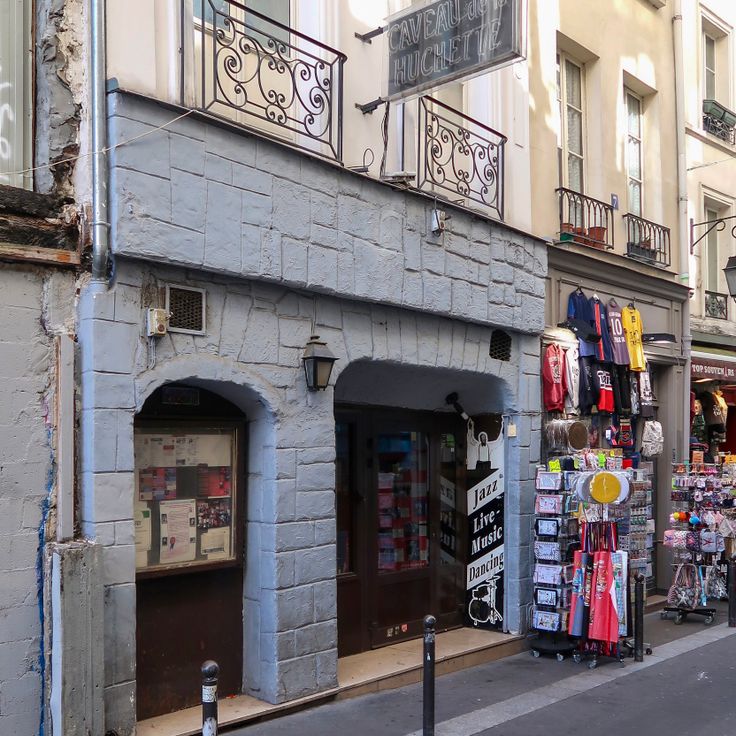
Narrow streets lead to squares like Place de la Contrescarpe and Place de l'Estrapade, where locals gather in cafés and markets. The Marché de la Rue Mouffetard is one of the city's oldest street markets and offers fresh produce daily. Literary and artistic traces appear at the Maison de Serge Gainsbourg, the historic jazz cellar Le Caveau de la Huchette, and cafés like Le Procope, which has welcomed writers and thinkers since the 17th century. The Jardin des Plantes combines botanical collections with the Musée de Minéralogie, while the Square René-Viviani provides a quiet view of Notre-Dame with its ancient tree. The Grande Mosquée de Paris and the Institut du Monde Arabe add North African and Arab perspectives to the cultural offerings.
The Latin Quarter is one of the oldest parts of Paris and preserves traces from over two thousand years of history. Roman remains like the Arènes de Lutèce recall the ancient settlement of Lutetia, while medieval churches such as Saint-Étienne-du-Mont and Saint-Julien-le-Pauvre document the religious past. The Sorbonne and the Collège de France have made the district a center of learning since the Middle Ages, and institutions like the Bibliothèque Sainte-Geneviève continue this academic tradition. The Musée de l'Histoire de la Médecine traces the development of medicine, the Musée Curie honors the scientific discoveries of Marie and Pierre Curie, and the Musée des Arts du Moyen Âge displays medieval art within the ruins of Roman baths.
Narrow streets lead to squares like Place de la Contrescarpe and Place de l'Estrapade, where locals gather in cafés and markets. The Marché de la Rue Mouffetard is one of the city's oldest street markets and offers fresh produce daily. Literary and artistic traces appear at the Maison de Serge Gainsbourg, the historic jazz cellar Le Caveau de la Huchette, and cafés like Le Procope, which has welcomed writers and thinkers since the 17th century. The Jardin des Plantes combines botanical collections with the Musée de Minéralogie, while the Square René-Viviani provides a quiet view of Notre-Dame with its ancient tree. The Grande Mosquée de Paris and the Institut du Monde Arabe add North African and Arab perspectives to the cultural offerings.
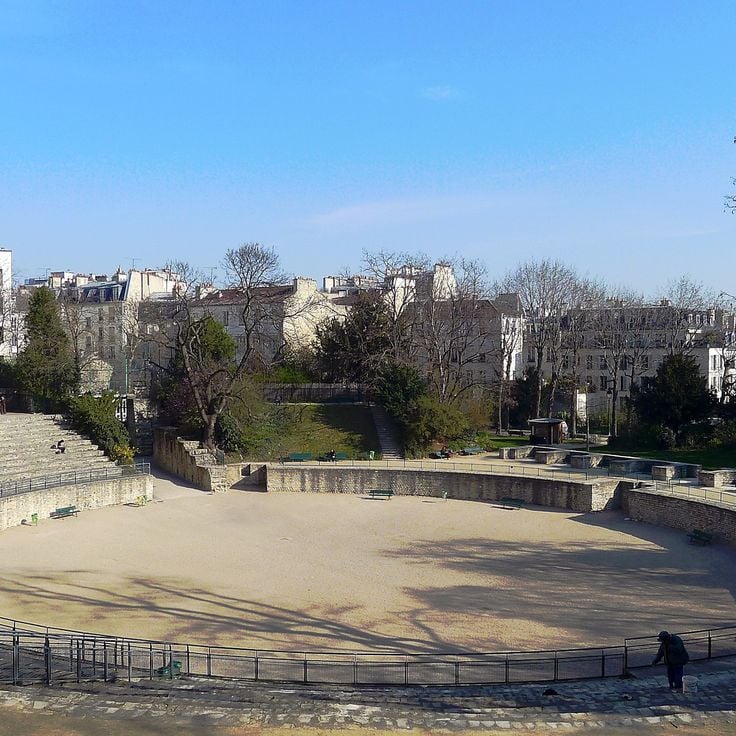
This first-century Roman amphitheater once held 15,000 spectators and ranks among the oldest surviving structures in Paris. The Arènes de Lutèce were rediscovered and restored in the 19th century after lying buried beneath later construction for centuries. Today the site serves as a public square where locals play pétanque and visitors can trace the Roman origins of the Latin Quarter among the ancient stone tiers.
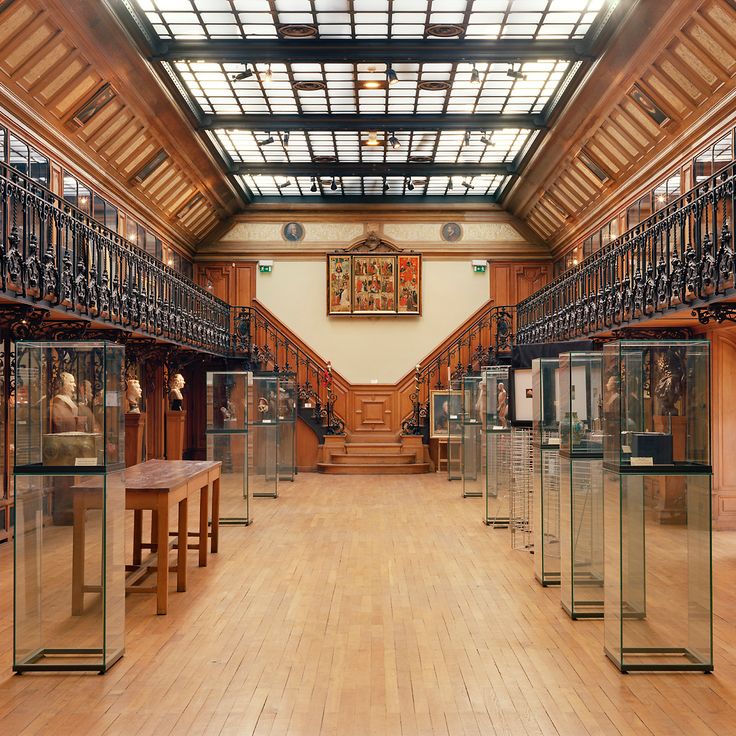
This museum displays over 1,500 historical medical objects spanning from the Middle Ages to the 20th century, presented in the Paris Descartes University premises. Surgical tools, anatomical models and medical equipment document the development of medicine across five centuries. The collection occupies an 18th-century building in the Latin Quarter, where academic tradition meets medical history.
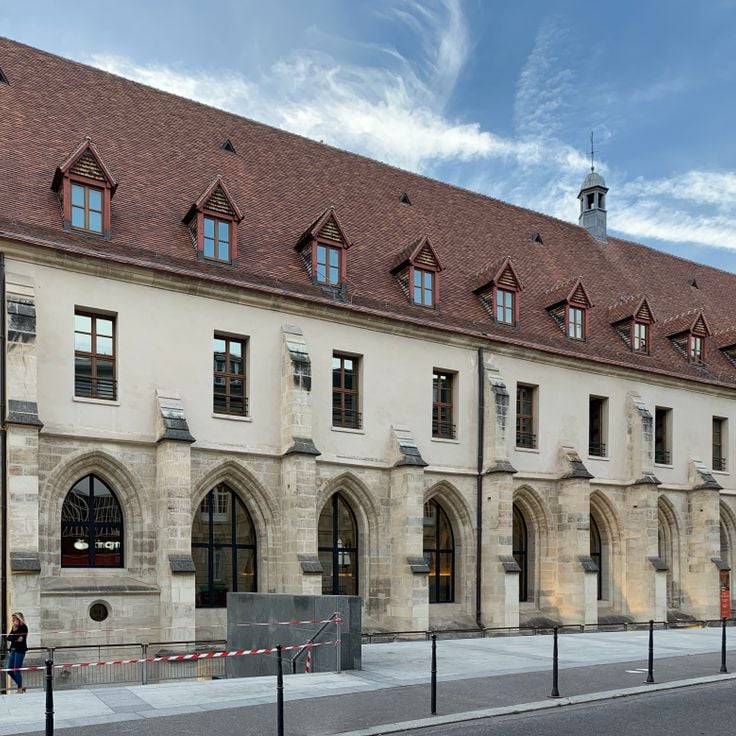
This 13th-century Gothic building originally served as a Cistercian college and features an impressive vaulted hall supported by rows of columns. The Collège des Bernardins now houses a cultural center that hosts exhibitions, concerts and conferences. The restored architecture reflects its monastic past while modern facilities accommodate contemporary cultural events.
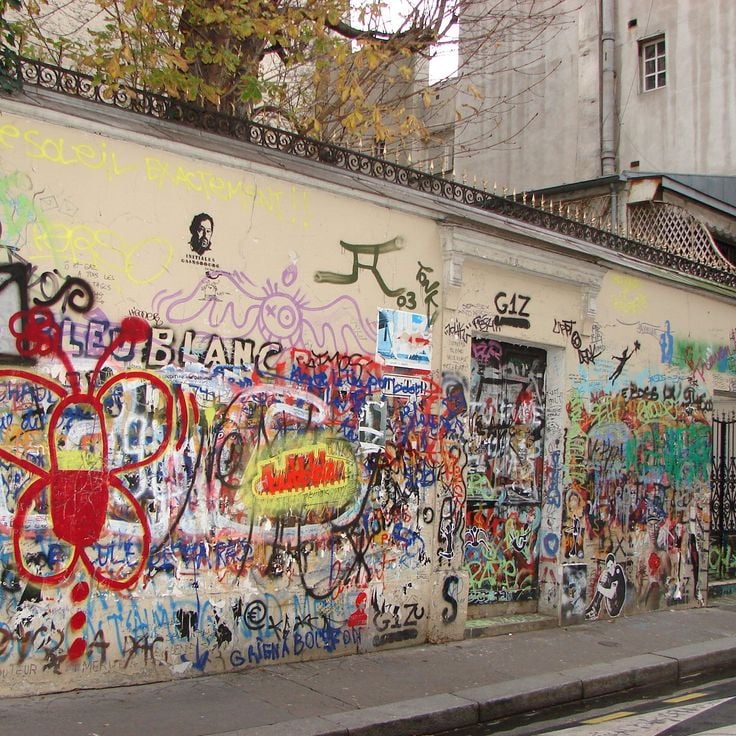
The house served as the musician's residence from 1969 until his death in 1991. The exterior walls are covered with graffiti left by fans over decades. Inside, personal belongings, furniture and memorabilia from his life remain preserved. The building sits in the historic Latin Quarter, where Roman ruins meet academic institutions. The street itself has become a pilgrimage site for admirers of his music and artistic legacy.
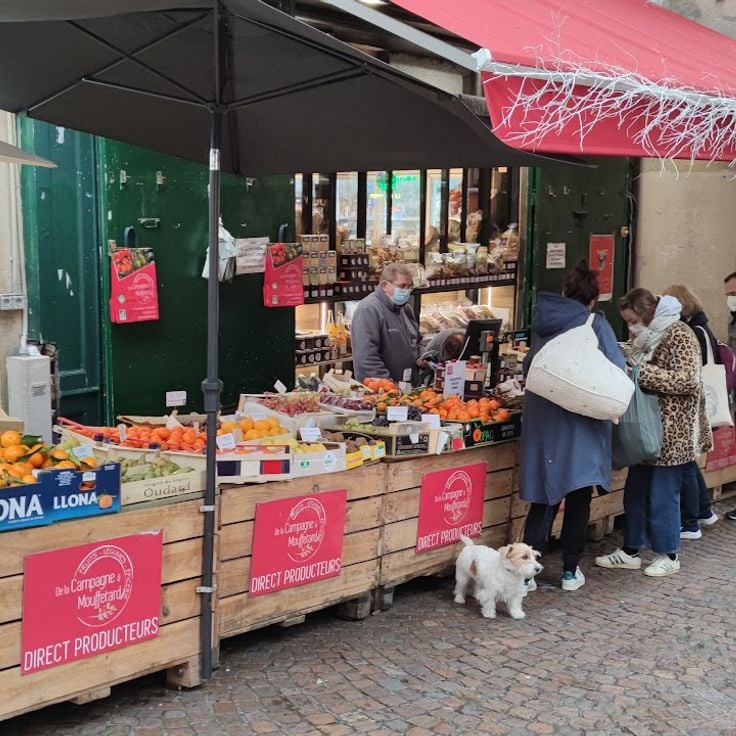
The market runs along this medieval street, where vendors offer fresh produce, vegetables, cheese, wine and prepared dishes from morning until evening. The stalls line the narrow lane and maintain a trading tradition that has supplied the academic quarter for centuries.
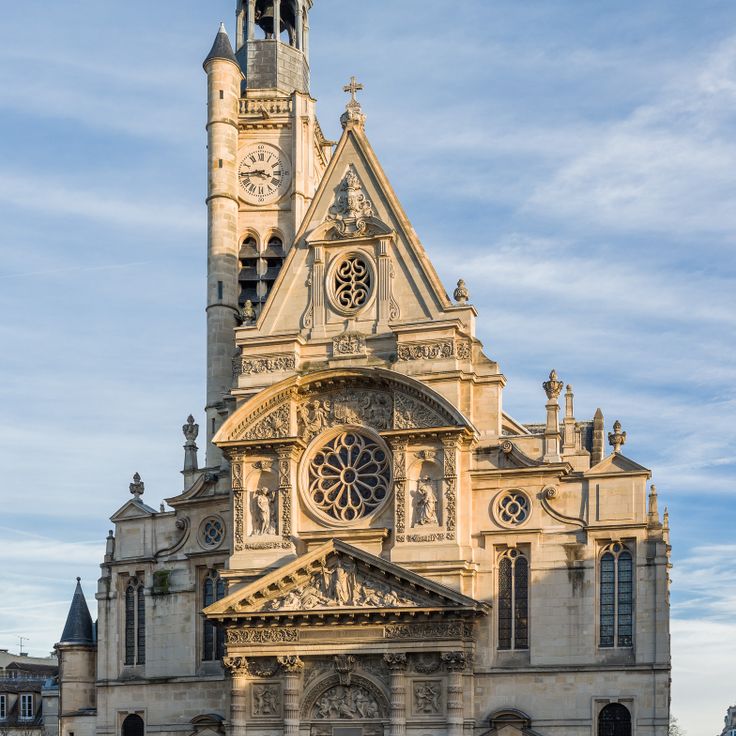
This 16th-century church combines Gothic and Renaissance architecture and preserves a stone rood screen along with the relics of Saint Genevieve, the patron saint of Paris. It stands on the site of earlier religious structures and displays several construction phases visible in the facade and interior. The intricately carved choir stalls and historic stained glass windows are among the notable furnishings.
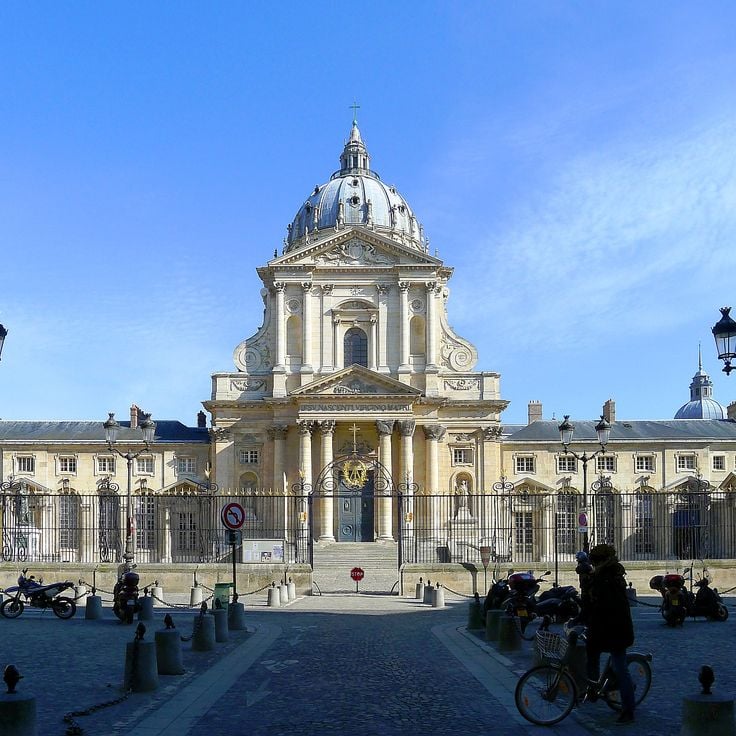
The Sorbonne combines medieval academic roots with later architectural additions. Founded in 1253, this campus evolved into the intellectual center of the Latin Quarter and contains a large lecture hall with wall frescoes and a 17th-century domed chapel, reflecting the architectural heritage of this historic university.
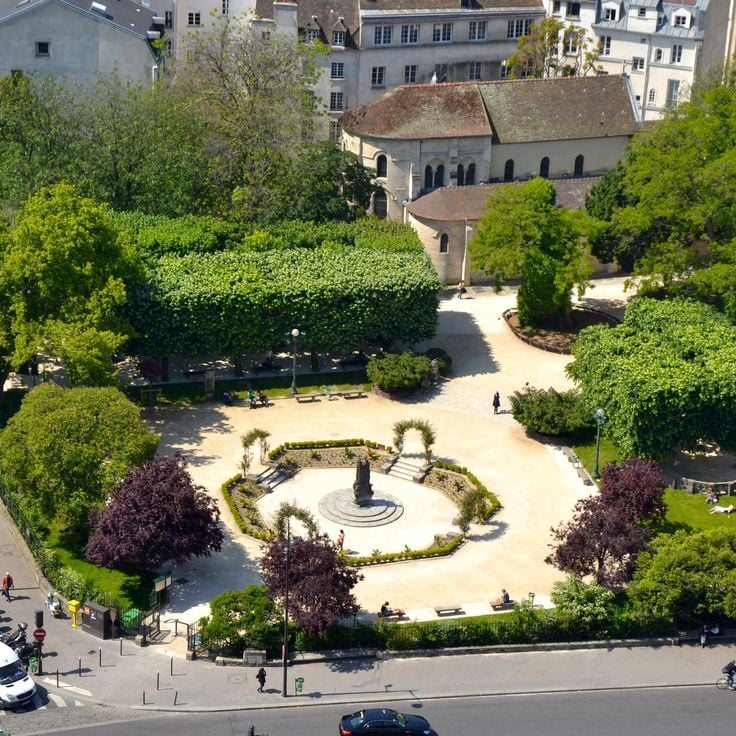
This public garden contains a black locust tree planted in 1601, stone benches and a fountain next to the church of Saint-Julien-le-Pauvre. Square René-Viviani offers views of Notre-Dame and preserves one of the oldest trees in Paris.
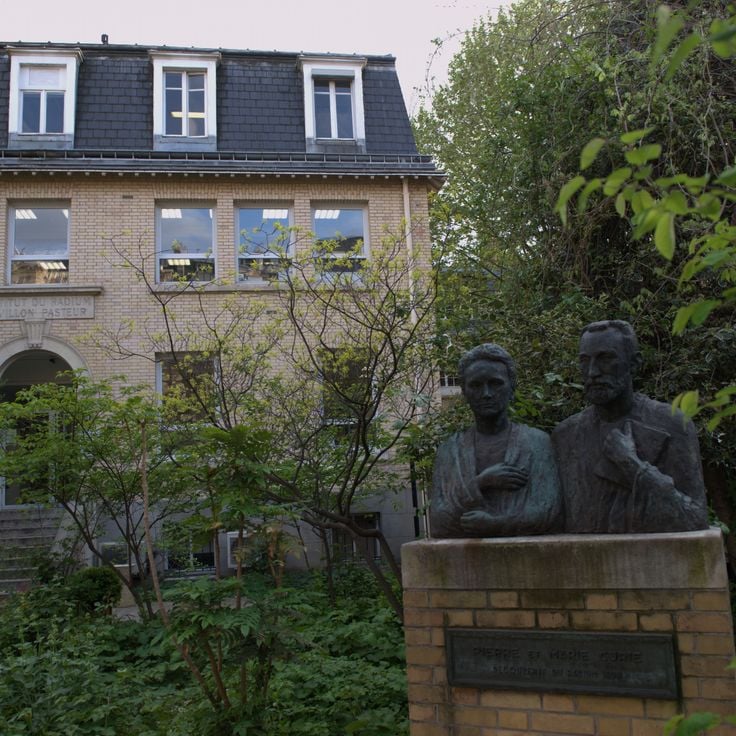
The museum displays scientific instruments, personal belongings and laboratories that belonged to Marie Curie, documenting her discoveries on radioactivity. The collection features original apparatus from her research work, which earned her the distinction of becoming the first woman to win a Nobel Prize. In the rooms of the former Radium Institute, visitors can trace how the scientist achieved groundbreaking results under modest working conditions.
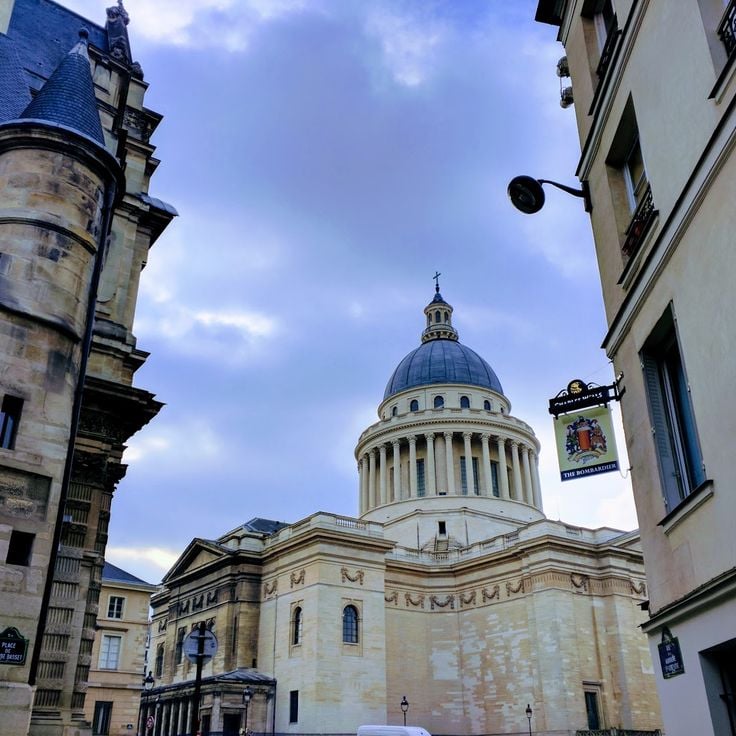
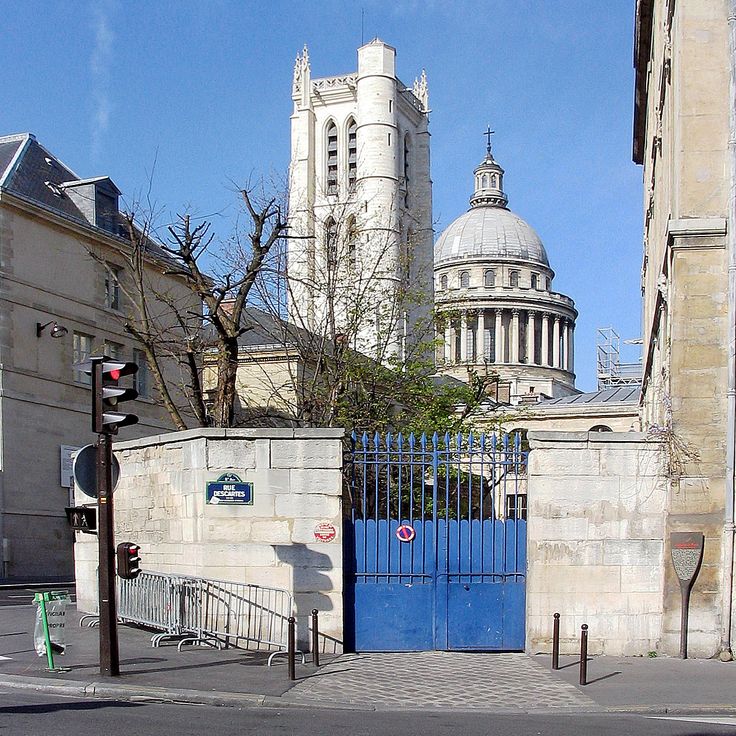
The Montagne Sainte-Geneviève rises above the Latin Quarter and has served as the city's academic center since medieval times. The Panthéon stands at its summit, while the Sorbonne's buildings spread along its slopes. Various points on this historic hill offer views across the rooftops of Paris.
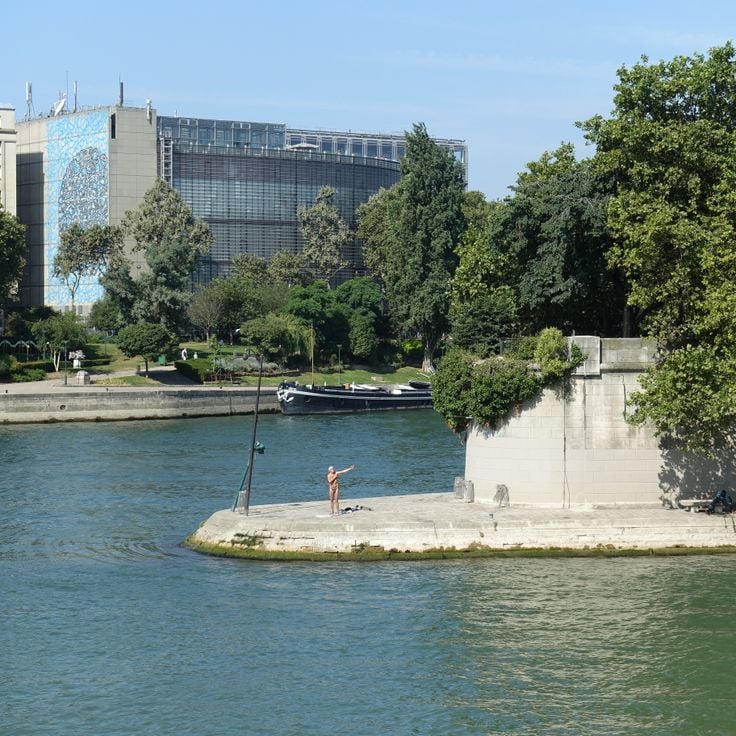
The Institut du Monde Arabe presents Arab art and culture in a modern building at the edge of the 5th arrondissement. The south facade by architect Jean Nouvel features metal screens with geometric patterns inspired by traditional mashrabiya that respond to changing light conditions. The museum presents rotating exhibitions covering history, crafts and contemporary art from Arab countries. Upper floors offer views across the Seine valley toward historic Paris to the north.
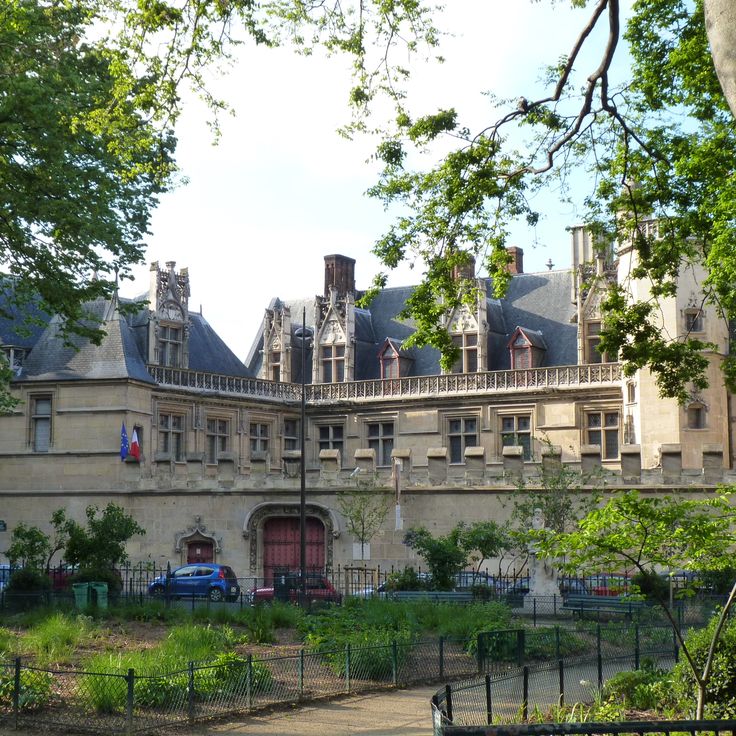
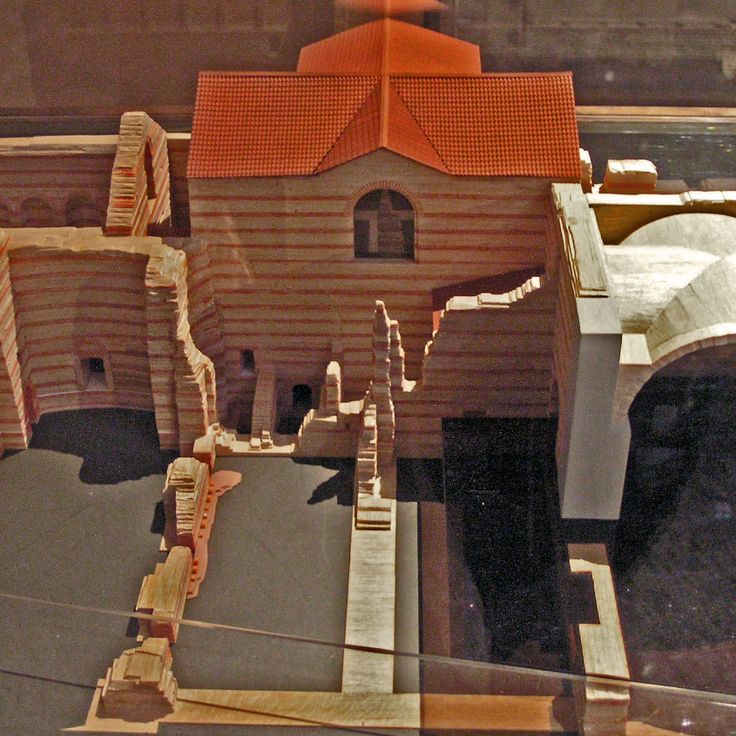
The museum occupies the 15th-century Hôtel de Cluny, built on the remains of Roman thermal baths in the Latin Quarter. The collection includes medieval sculptures, stained glass, goldwork and illuminated manuscripts from across Europe. The tapestry series "The Lady and the Unicorn" ranks among the museum's most significant holdings.
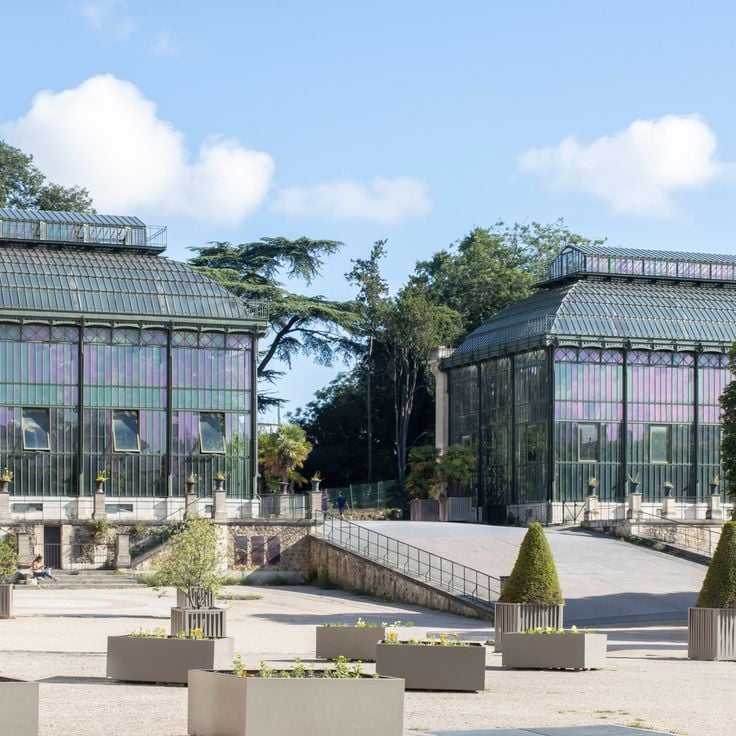
The Jardin des Plantes contains approximately ten thousand plant species, a natural history museum and four galleries holding scientific collections. This botanical garden links public green space with research facilities and illustrates the Latin Quarter's long academic tradition. Visitors find systematically arranged beds, glasshouses with tropical species and zoological displays that present evolution and biodiversity.
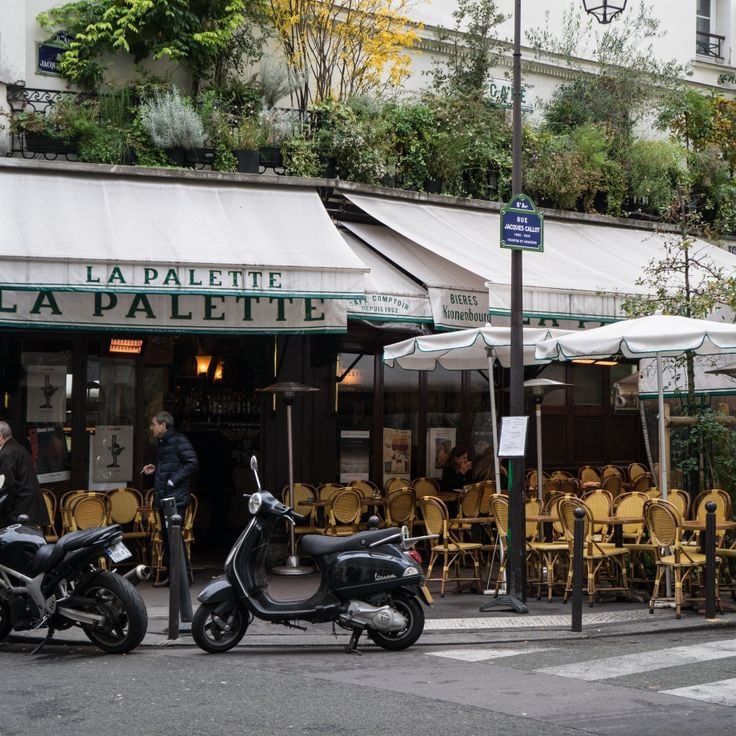
This 19th-century café preserves its original interior and served as a gathering place for artists and writers who shaped the intellectual life of the Latin Quarter. The wood paneling, brass lamps and marble tables convey the character of an era when the neighborhood's cafés functioned as centers of literary and artistic debate.
This neoclassical building housed the École Polytechnique from 1805 to 1976, one of France's most important engineering schools. The institution was founded in 1794 during the Revolution and moved to this location in the Latin Quarter, where generations of engineers, scientists and civil servants received their training. The facade with its columns and symmetrical proportions reflects the architectural ideals of the early 19th century. After the school relocated to Palaiseau, the premises now serve France's Ministry of Education.
This jazz club occupies a 16th-century vaulted cellar and ranks among the city's most recognized venues. The low stone arches and intimate setting create a space where jazz has been performed since the 1940s. Located in the heart of the Latin Quarter, the club has drawn generations of musicians and audiences. The historic architecture blends with the enduring jazz tradition of Paris.
The Parc de Sculptures de la Seine displays 20 metal sculptures by French and international artists created between 1950 and 1980. This open-air collection of modern art sits along the Seine riverbank in the Latin Quarter, adding a contemporary dimension to the area's historical legacy. The sculptures are distributed along the promenade, offering a contrast to the Roman ruins and medieval churches nearby.
This state secondary school from the 18th century occupies a former Benedictine monastery and took its current name during the French Revolution. The building combines elements from different periods, including the medieval Clovis Tower and neoclassical teaching spaces. The expansive inner courtyard with its gardens has served as the center of the academic community in the Latin Quarter for over two centuries.
Rue des Libraires is a cobbled medieval street lined with old and independent bookshops that has served as a center of the book trade since the 13th century. The street preserves its historic layout with narrow passages connecting the academic institutions of the Latin Quarter. Merchants have sold new and used books here for centuries to students, professors and collectors. The shops offer specialized collections across various fields, from theological texts to scientific treatises. Its location between universities makes it a meeting point for intellectual exchange.
The ruins of the Roman baths date from the 2nd century and include preserved vaults, friezes and a frigidarium room standing 46 feet (14 meters) high. The thermal complex demonstrates the architectural tradition of Roman bathing facilities with rooms for cold, warm and hot baths, heating systems and changing areas.
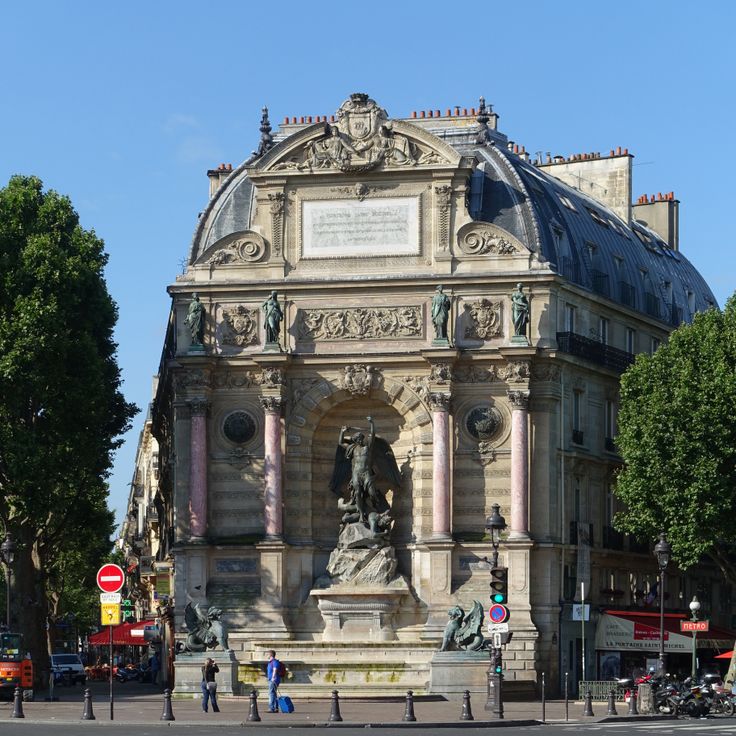
This monumental fountain from 1860 depicts Archangel Michael battling the devil. The structure rises 85 feet (26 meters) and marks the transition from Boulevard Saint-Michel into the Latin Quarter. Architect Gabriel Davioud designed the monument for Baron Haussmann during the extensive Paris renovation. Bronze and stone sculptures adorn the multi-tiered facade, with water flowing from the central basin into lower pools below.
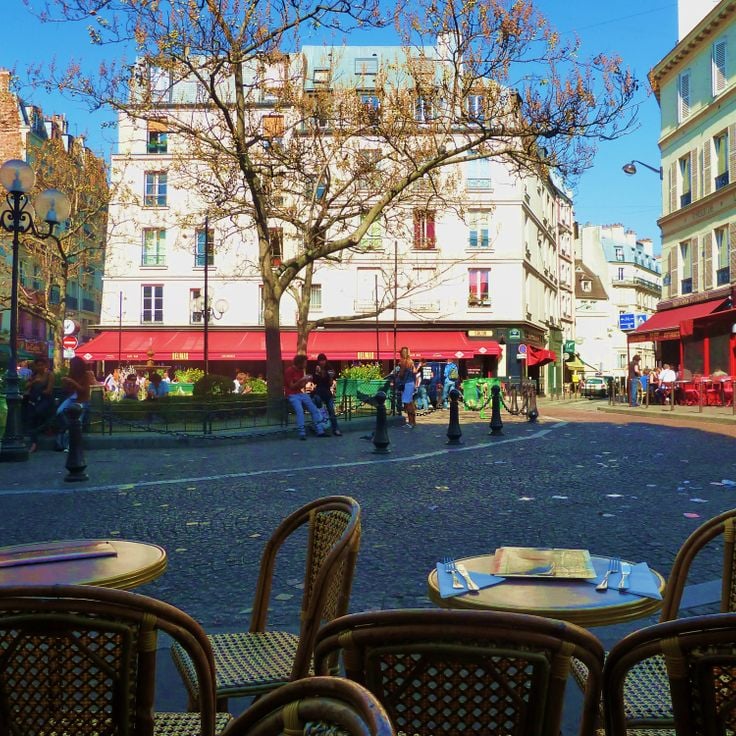
This circular square in the Latin Quarter features a central fountain surrounded by restaurants. The Place de la Contrescarpe serves as a gathering point for students and locals who settle on the terraces or linger on the surrounding benches. The proximity to the Sorbonne makes this square a lively center of academic life, where university tradition blends with the daily rhythms of neighborhood residents.
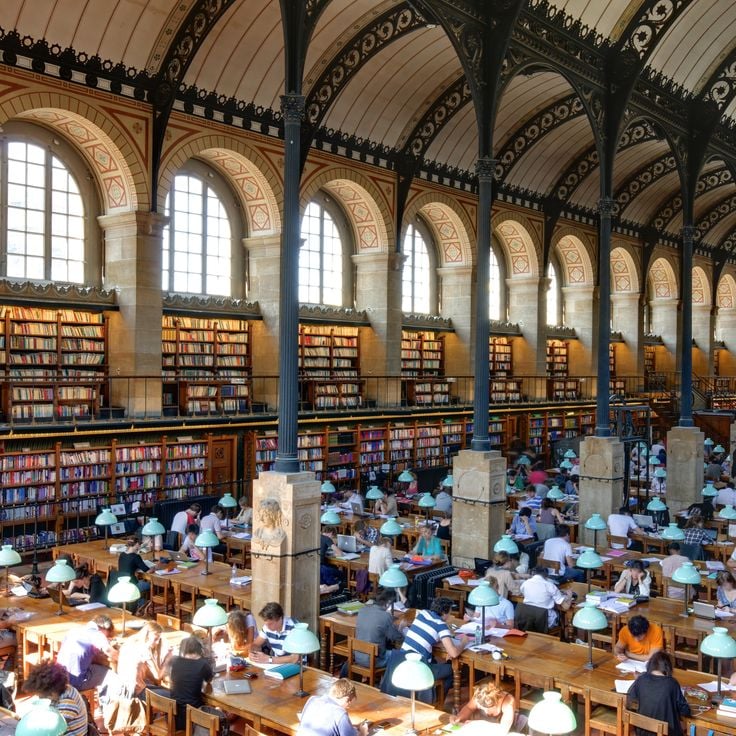
The Bibliothèque Sainte-Geneviève opened in 1850 in the Latin Quarter and has served the academic tradition of the Sorbonne and Collège de France since its founding. Designed by Henri Labrouste, the main reading room extends 279 feet (85 meters) and features an exposed metal framework that was pioneering for its time. The library holds more than two million volumes and ranks among the notable historical institutions of the district.
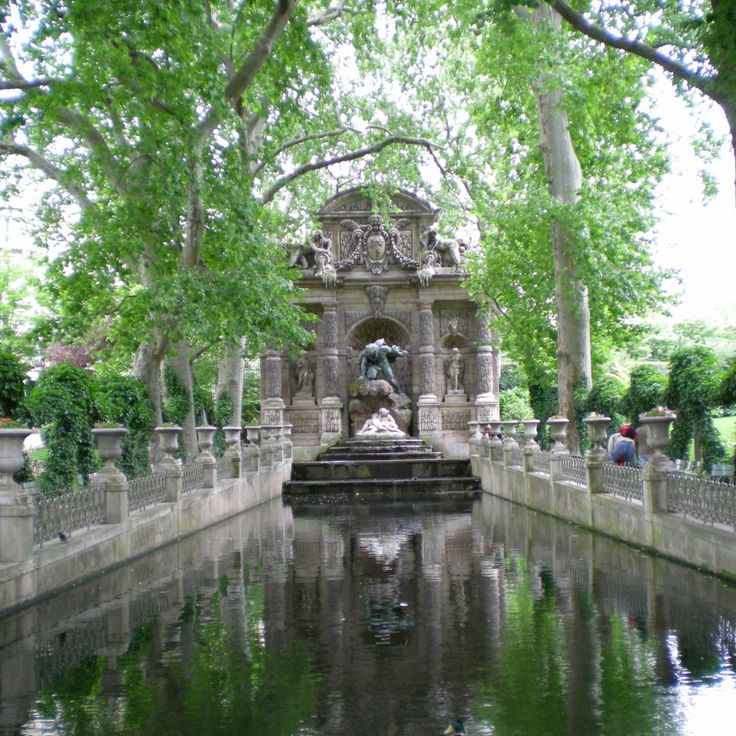
The Medici Fountain, built in 1630, decorates the Jardin du Luxembourg with mythological stone figures. The long water basin reflects the architecture and depicts Polyphemus watching Acis and Galatea. This Italian-style grotto connects the academic history of the Quartier Latin with the gardens of the Palais du Luxembourg.
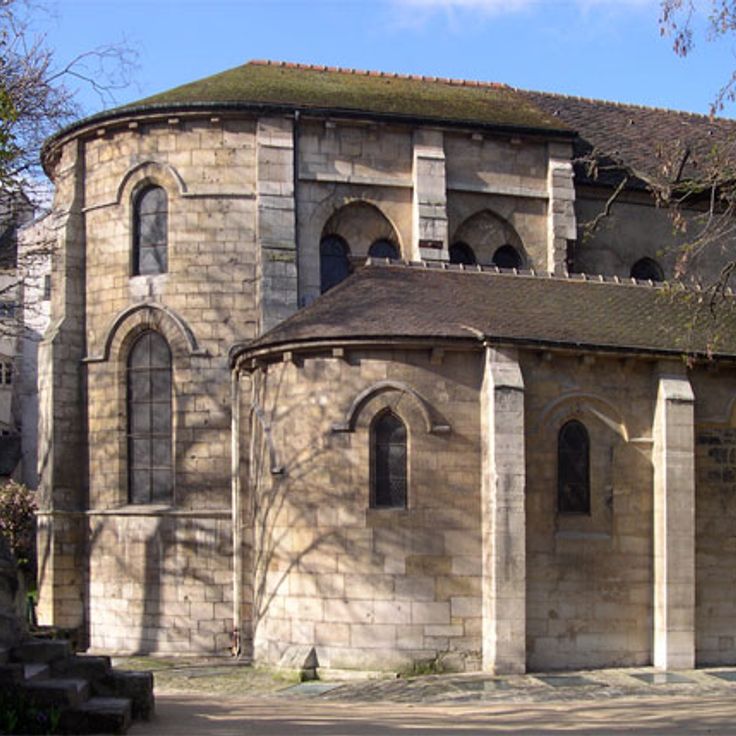
This Romanesque church from the 12th century ranks among the oldest in the Latin Quarter and retains essential structural elements from its founding period, including characteristic rounded arches and carved capitals in the choir. The building has served the Greek Orthodox community since 1889 and houses a wooden iconostasis along with liturgical artworks. Regular classical music concerts take advantage of the distinctive acoustics of the space.
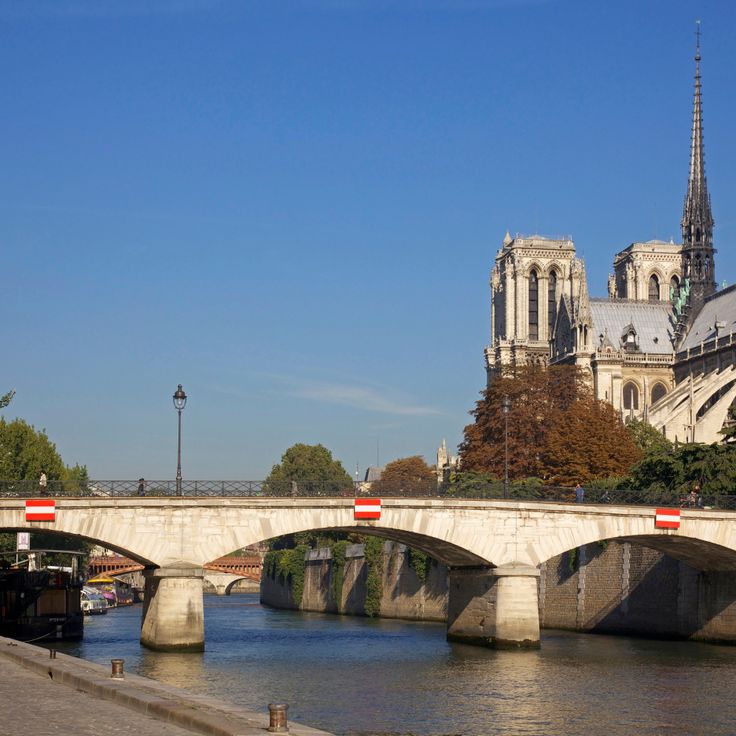
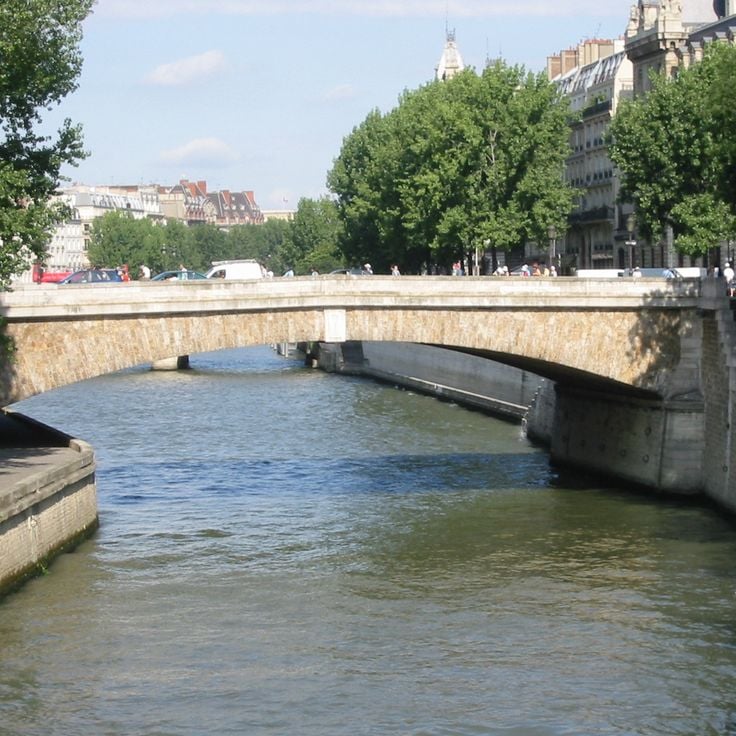
This stone bridge connects the Île de la Cité to the Left Bank of the Seine, following the path of a crossing that existed in Roman Paris. The current structure dates from the 19th century and bears the name of a Paris archbishop, providing direct access from the medieval center of the city to the Latin Quarter. Pedestrians and vehicles cross the river here between historic neighborhoods.
This baroque church was built between 1645 and 1667 and displays French architecture with a large dome. The Val-de-Grâce stands among the significant religious buildings in the Latin Quarter and was commissioned by Queen Anne of Austria. The church combines classical French construction with baroque elements and sits beside a former convent that now houses a military hospital.
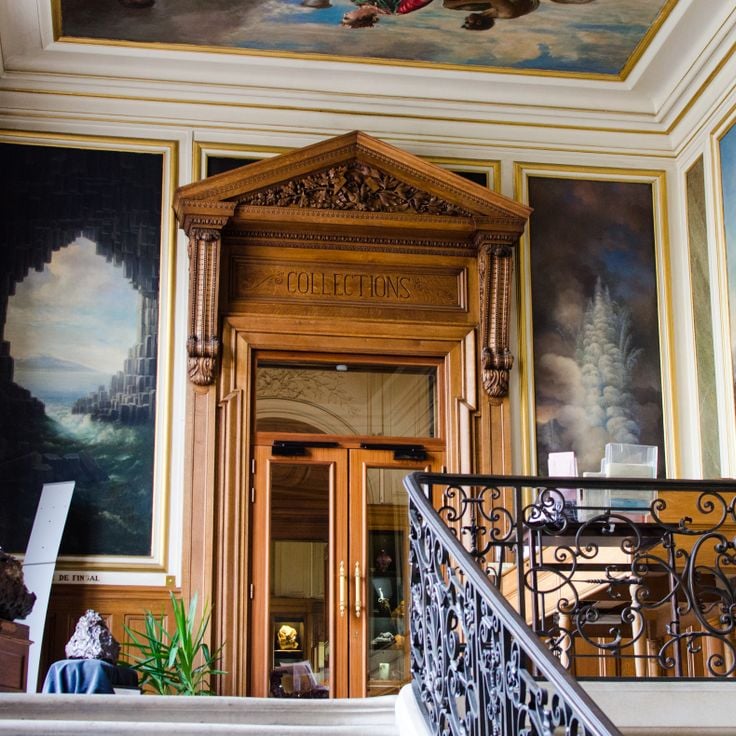
This museum displays around 100,000 minerals and 3,500 gems in historic wooden cases at the Mines ParisTech engineering school. The collection ranks among the most significant mineralogical holdings in Europe and includes specimens from all continents.
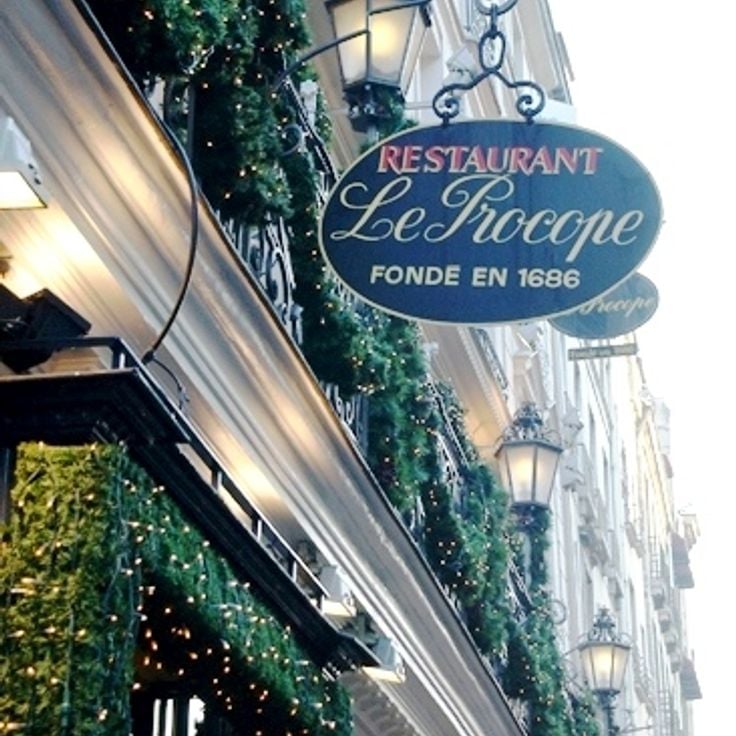
Le Procope opened in 1686 and became a gathering place for intellectuals, with Benjamin Franklin and Voltaire among its regular diners. The restaurant in the Latin Quarter ranks among the oldest continuously operating establishments in Paris, preserving its 17th and 18th century interior. Guests sit at the same tables where Enlightenment philosophers and later revolutionaries once debated. Today the establishment serves traditional French cuisine in a room lined with portraits and documents of historical figures.
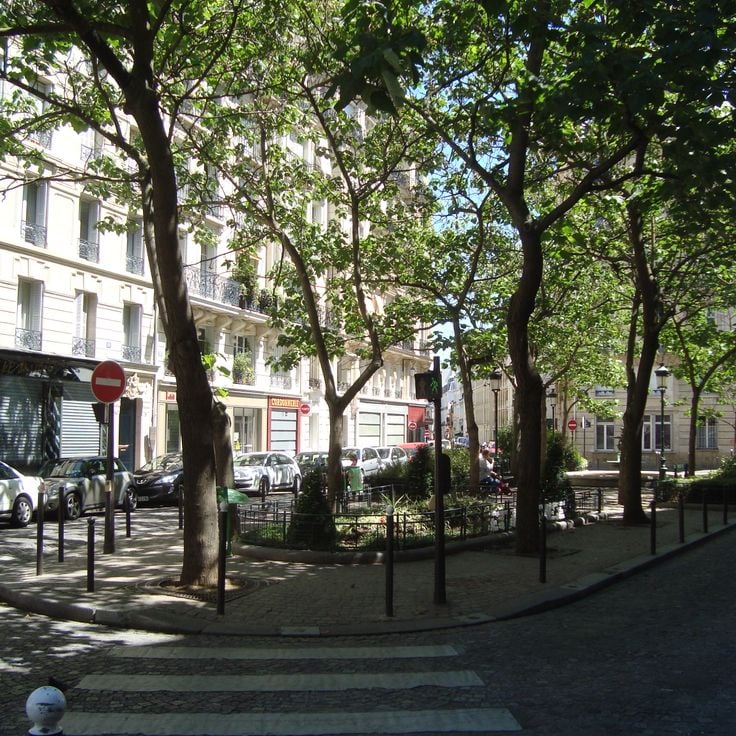
This square takes its name from a medieval torture device and now hosts several cafés. Place de l'Estrapade sits in the heart of the Latin Quarter and serves as a quiet meeting point between the universities and historical sites of the neighborhood. Trees line the oval square, providing shade in summer, while the surrounding building facades from the 18th and 19th centuries display typical Parisian architecture. Residents and students gather here at the sidewalk cafés, which invite visitors to linger.
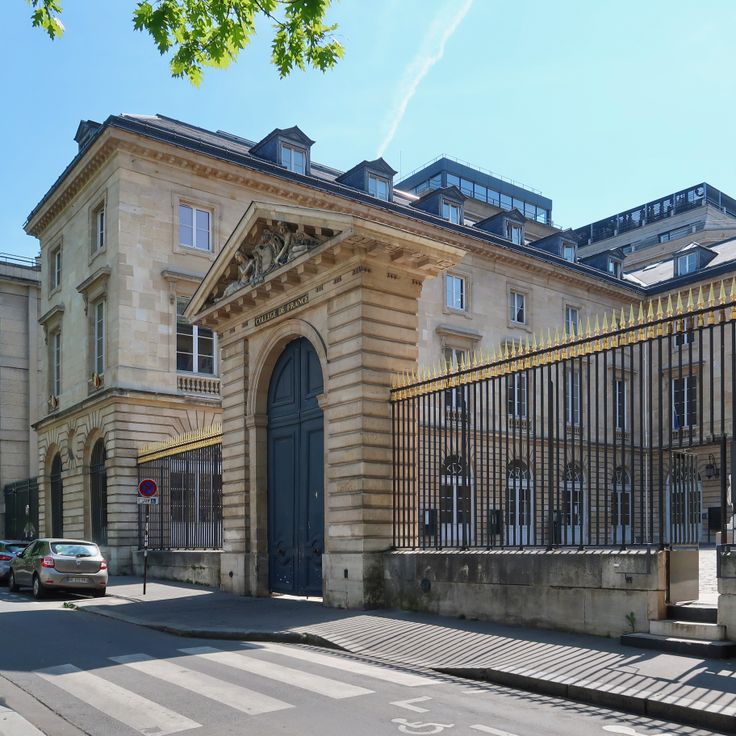
The Collège de France was founded in 1530 and offers public lectures in sciences, literature and the arts. This institution in the Latin Quarter continues the academic tradition of the neighborhood and complements the nearby Sorbonne as a center of scholarship. The lectures are open to all and require no enrollment, reflecting the humanist ideal of free access to knowledge. The building on Place Marcelin Berthelot houses several chairs held by leading researchers.
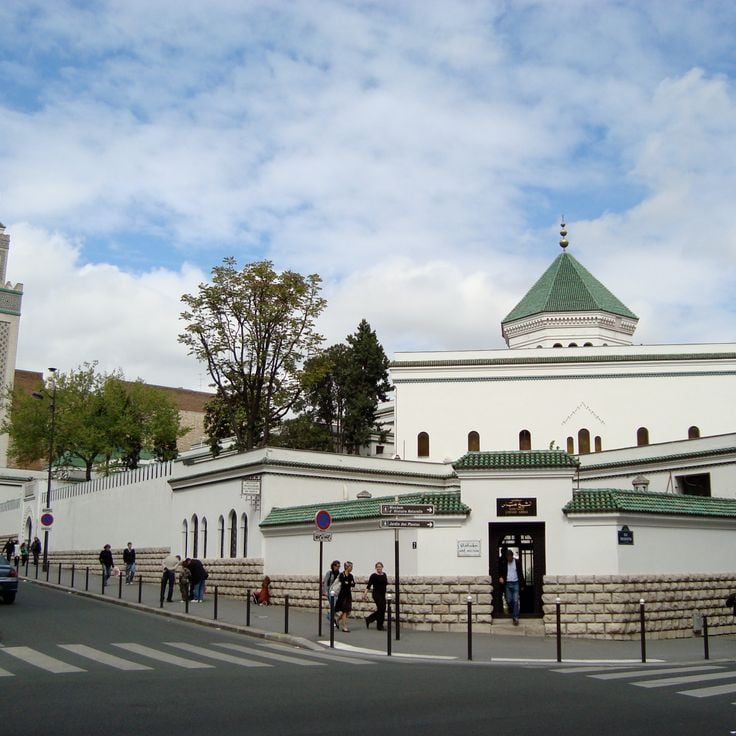
This mosque built in the 5th arrondissement in 1926 combines Andalusian Moorish architecture with North African elements. The minaret rises 108 feet (33 meters) above Rue Geoffroy-Saint-Hilaire, while the prayer hall features mosaics from Fès and a copper chandelier. The courtyard follows the model of the Alhambra's Court of the Lions with a central fountain and white marble arcades. The traditional hammam remains open to visitors, as does the salon de thé with its mint tea garden.
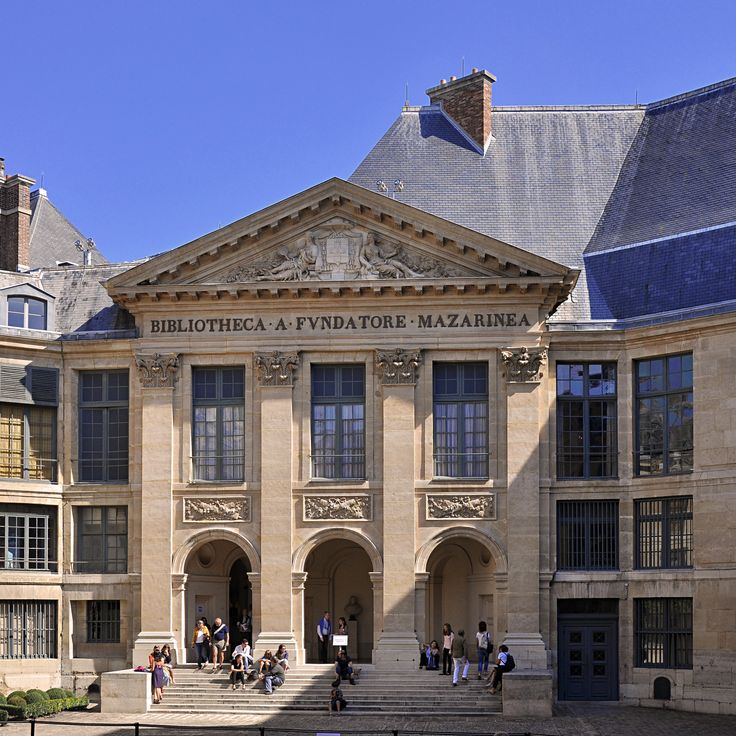
The Bibliothèque Mazarine opened in 1643 and stands as France's oldest public library. Its shelves hold over 600,000 volumes, including medieval manuscripts, 15th-century printed works and antique scientific instruments. The reading rooms occupy several floors of the Collège des Quatre-Nations along the Seine. Researchers and visitors consult documents on French history, theological texts and scientific treatises. The collection expanded through centuries of donations and targeted acquisitions. Vaulted ceilings and wooden shelving define the historic rooms.
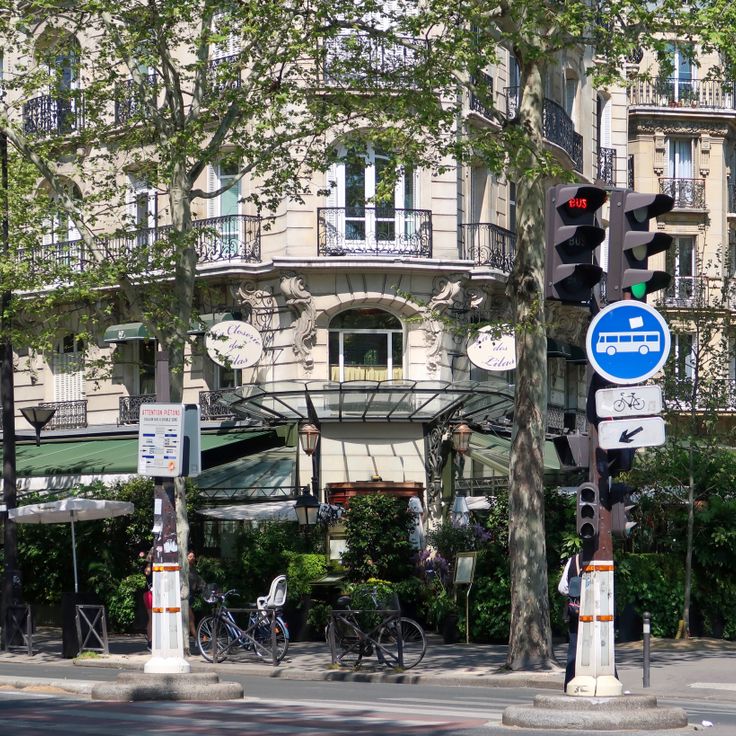
This brasserie opened in 1847 and drew artists including Picasso, Modigliani, Apollinaire and Hemingway during the early 20th century. Operations today cover a busy restaurant area serving French cuisine alongside a terrace facing Boulevard du Montparnasse. Nameplates at tables mark the regular seats of prominent patrons, and the interior maintains a setting with dark red leather banquettes and historical photographs on the walls.
This garden displays 38 sculptures from the 20th century along the Seine and hosts an open-air dance floor during summer for tango, salsa and other dance styles, connecting the artistic and social traditions of the Latin Quarter.
Built in 1828, this bridge connects the Île de la Cité to the Left Bank near Notre-Dame Cathedral. The structure provides direct access between the historic island core and the Latin Quarter, where academic institutions and remnants of the Roman settlement of Lutetia stand.
This first-century Roman amphitheater once held 15,000 spectators and ranks among the oldest surviving structures in Paris. The Arènes de Lutèce were rediscovered and restored in the 19th century after lying buried beneath later construction for centuries. Today the site serves as a public square where locals play pétanque and visitors can trace the Roman origins of the Latin Quarter among the ancient stone tiers.
This museum displays over 1,500 historical medical objects spanning from the Middle Ages to the 20th century, presented in the Paris Descartes University premises. Surgical tools, anatomical models and medical equipment document the development of medicine across five centuries. The collection occupies an 18th-century building in the Latin Quarter, where academic tradition meets medical history.
This 13th-century Gothic building originally served as a Cistercian college and features an impressive vaulted hall supported by rows of columns. The Collège des Bernardins now houses a cultural center that hosts exhibitions, concerts and conferences. The restored architecture reflects its monastic past while modern facilities accommodate contemporary cultural events.
The house served as the musician's residence from 1969 until his death in 1991. The exterior walls are covered with graffiti left by fans over decades. Inside, personal belongings, furniture and memorabilia from his life remain preserved. The building sits in the historic Latin Quarter, where Roman ruins meet academic institutions. The street itself has become a pilgrimage site for admirers of his music and artistic legacy.
The market runs along this medieval street, where vendors offer fresh produce, vegetables, cheese, wine and prepared dishes from morning until evening. The stalls line the narrow lane and maintain a trading tradition that has supplied the academic quarter for centuries.
This 16th-century church combines Gothic and Renaissance architecture and preserves a stone rood screen along with the relics of Saint Genevieve, the patron saint of Paris. It stands on the site of earlier religious structures and displays several construction phases visible in the facade and interior. The intricately carved choir stalls and historic stained glass windows are among the notable furnishings.
The Sorbonne combines medieval academic roots with later architectural additions. Founded in 1253, this campus evolved into the intellectual center of the Latin Quarter and contains a large lecture hall with wall frescoes and a 17th-century domed chapel, reflecting the architectural heritage of this historic university.
This public garden contains a black locust tree planted in 1601, stone benches and a fountain next to the church of Saint-Julien-le-Pauvre. Square René-Viviani offers views of Notre-Dame and preserves one of the oldest trees in Paris.
The museum displays scientific instruments, personal belongings and laboratories that belonged to Marie Curie, documenting her discoveries on radioactivity. The collection features original apparatus from her research work, which earned her the distinction of becoming the first woman to win a Nobel Prize. In the rooms of the former Radium Institute, visitors can trace how the scientist achieved groundbreaking results under modest working conditions.
The Montagne Sainte-Geneviève rises above the Latin Quarter and has served as the city's academic center since medieval times. The Panthéon stands at its summit, while the Sorbonne's buildings spread along its slopes. Various points on this historic hill offer views across the rooftops of Paris.
The Institut du Monde Arabe presents Arab art and culture in a modern building at the edge of the 5th arrondissement. The south facade by architect Jean Nouvel features metal screens with geometric patterns inspired by traditional mashrabiya that respond to changing light conditions. The museum presents rotating exhibitions covering history, crafts and contemporary art from Arab countries. Upper floors offer views across the Seine valley toward historic Paris to the north.
The museum occupies the 15th-century Hôtel de Cluny, built on the remains of Roman thermal baths in the Latin Quarter. The collection includes medieval sculptures, stained glass, goldwork and illuminated manuscripts from across Europe. The tapestry series "The Lady and the Unicorn" ranks among the museum's most significant holdings.
The Jardin des Plantes contains approximately ten thousand plant species, a natural history museum and four galleries holding scientific collections. This botanical garden links public green space with research facilities and illustrates the Latin Quarter's long academic tradition. Visitors find systematically arranged beds, glasshouses with tropical species and zoological displays that present evolution and biodiversity.
This 19th-century café preserves its original interior and served as a gathering place for artists and writers who shaped the intellectual life of the Latin Quarter. The wood paneling, brass lamps and marble tables convey the character of an era when the neighborhood's cafés functioned as centers of literary and artistic debate.
This neoclassical building housed the École Polytechnique from 1805 to 1976, one of France's most important engineering schools. The institution was founded in 1794 during the Revolution and moved to this location in the Latin Quarter, where generations of engineers, scientists and civil servants received their training. The facade with its columns and symmetrical proportions reflects the architectural ideals of the early 19th century. After the school relocated to Palaiseau, the premises now serve France's Ministry of Education.
This jazz club occupies a 16th-century vaulted cellar and ranks among the city's most recognized venues. The low stone arches and intimate setting create a space where jazz has been performed since the 1940s. Located in the heart of the Latin Quarter, the club has drawn generations of musicians and audiences. The historic architecture blends with the enduring jazz tradition of Paris.
The Parc de Sculptures de la Seine displays 20 metal sculptures by French and international artists created between 1950 and 1980. This open-air collection of modern art sits along the Seine riverbank in the Latin Quarter, adding a contemporary dimension to the area's historical legacy. The sculptures are distributed along the promenade, offering a contrast to the Roman ruins and medieval churches nearby.
This state secondary school from the 18th century occupies a former Benedictine monastery and took its current name during the French Revolution. The building combines elements from different periods, including the medieval Clovis Tower and neoclassical teaching spaces. The expansive inner courtyard with its gardens has served as the center of the academic community in the Latin Quarter for over two centuries.
Rue des Libraires is a cobbled medieval street lined with old and independent bookshops that has served as a center of the book trade since the 13th century. The street preserves its historic layout with narrow passages connecting the academic institutions of the Latin Quarter. Merchants have sold new and used books here for centuries to students, professors and collectors. The shops offer specialized collections across various fields, from theological texts to scientific treatises. Its location between universities makes it a meeting point for intellectual exchange.
The ruins of the Roman baths date from the 2nd century and include preserved vaults, friezes and a frigidarium room standing 46 feet (14 meters) high. The thermal complex demonstrates the architectural tradition of Roman bathing facilities with rooms for cold, warm and hot baths, heating systems and changing areas.
This monumental fountain from 1860 depicts Archangel Michael battling the devil. The structure rises 85 feet (26 meters) and marks the transition from Boulevard Saint-Michel into the Latin Quarter. Architect Gabriel Davioud designed the monument for Baron Haussmann during the extensive Paris renovation. Bronze and stone sculptures adorn the multi-tiered facade, with water flowing from the central basin into lower pools below.
This circular square in the Latin Quarter features a central fountain surrounded by restaurants. The Place de la Contrescarpe serves as a gathering point for students and locals who settle on the terraces or linger on the surrounding benches. The proximity to the Sorbonne makes this square a lively center of academic life, where university tradition blends with the daily rhythms of neighborhood residents.
The Bibliothèque Sainte-Geneviève opened in 1850 in the Latin Quarter and has served the academic tradition of the Sorbonne and Collège de France since its founding. Designed by Henri Labrouste, the main reading room extends 279 feet (85 meters) and features an exposed metal framework that was pioneering for its time. The library holds more than two million volumes and ranks among the notable historical institutions of the district.
The Medici Fountain, built in 1630, decorates the Jardin du Luxembourg with mythological stone figures. The long water basin reflects the architecture and depicts Polyphemus watching Acis and Galatea. This Italian-style grotto connects the academic history of the Quartier Latin with the gardens of the Palais du Luxembourg.
This Romanesque church from the 12th century ranks among the oldest in the Latin Quarter and retains essential structural elements from its founding period, including characteristic rounded arches and carved capitals in the choir. The building has served the Greek Orthodox community since 1889 and houses a wooden iconostasis along with liturgical artworks. Regular classical music concerts take advantage of the distinctive acoustics of the space.
This stone bridge connects the Île de la Cité to the Left Bank of the Seine, following the path of a crossing that existed in Roman Paris. The current structure dates from the 19th century and bears the name of a Paris archbishop, providing direct access from the medieval center of the city to the Latin Quarter. Pedestrians and vehicles cross the river here between historic neighborhoods.
This baroque church was built between 1645 and 1667 and displays French architecture with a large dome. The Val-de-Grâce stands among the significant religious buildings in the Latin Quarter and was commissioned by Queen Anne of Austria. The church combines classical French construction with baroque elements and sits beside a former convent that now houses a military hospital.
This museum displays around 100,000 minerals and 3,500 gems in historic wooden cases at the Mines ParisTech engineering school. The collection ranks among the most significant mineralogical holdings in Europe and includes specimens from all continents.
Le Procope opened in 1686 and became a gathering place for intellectuals, with Benjamin Franklin and Voltaire among its regular diners. The restaurant in the Latin Quarter ranks among the oldest continuously operating establishments in Paris, preserving its 17th and 18th century interior. Guests sit at the same tables where Enlightenment philosophers and later revolutionaries once debated. Today the establishment serves traditional French cuisine in a room lined with portraits and documents of historical figures.
This square takes its name from a medieval torture device and now hosts several cafés. Place de l'Estrapade sits in the heart of the Latin Quarter and serves as a quiet meeting point between the universities and historical sites of the neighborhood. Trees line the oval square, providing shade in summer, while the surrounding building facades from the 18th and 19th centuries display typical Parisian architecture. Residents and students gather here at the sidewalk cafés, which invite visitors to linger.
The Collège de France was founded in 1530 and offers public lectures in sciences, literature and the arts. This institution in the Latin Quarter continues the academic tradition of the neighborhood and complements the nearby Sorbonne as a center of scholarship. The lectures are open to all and require no enrollment, reflecting the humanist ideal of free access to knowledge. The building on Place Marcelin Berthelot houses several chairs held by leading researchers.
This mosque built in the 5th arrondissement in 1926 combines Andalusian Moorish architecture with North African elements. The minaret rises 108 feet (33 meters) above Rue Geoffroy-Saint-Hilaire, while the prayer hall features mosaics from Fès and a copper chandelier. The courtyard follows the model of the Alhambra's Court of the Lions with a central fountain and white marble arcades. The traditional hammam remains open to visitors, as does the salon de thé with its mint tea garden.
The Bibliothèque Mazarine opened in 1643 and stands as France's oldest public library. Its shelves hold over 600,000 volumes, including medieval manuscripts, 15th-century printed works and antique scientific instruments. The reading rooms occupy several floors of the Collège des Quatre-Nations along the Seine. Researchers and visitors consult documents on French history, theological texts and scientific treatises. The collection expanded through centuries of donations and targeted acquisitions. Vaulted ceilings and wooden shelving define the historic rooms.
This brasserie opened in 1847 and drew artists including Picasso, Modigliani, Apollinaire and Hemingway during the early 20th century. Operations today cover a busy restaurant area serving French cuisine alongside a terrace facing Boulevard du Montparnasse. Nameplates at tables mark the regular seats of prominent patrons, and the interior maintains a setting with dark red leather banquettes and historical photographs on the walls.
This garden displays 38 sculptures from the 20th century along the Seine and hosts an open-air dance floor during summer for tango, salsa and other dance styles, connecting the artistic and social traditions of the Latin Quarter.
Built in 1828, this bridge connects the Île de la Cité to the Left Bank near Notre-Dame Cathedral. The structure provides direct access between the historic island core and the Latin Quarter, where academic institutions and remnants of the Roman settlement of Lutetia stand.
This first-century Roman amphitheater once held 15,000 spectators and ranks among the oldest surviving structures in Paris. The Arènes de Lutèce were rediscovered and restored in the 19th century after lying buried beneath later construction for centuries. Today the site serves as a public square where locals play pétanque and visitors can trace the Roman origins of the Latin Quarter among the ancient stone tiers.
This museum displays over 1,500 historical medical objects spanning from the Middle Ages to the 20th century, presented in the Paris Descartes University premises. Surgical tools, anatomical models and medical equipment document the development of medicine across five centuries. The collection occupies an 18th-century building in the Latin Quarter, where academic tradition meets medical history.
This 13th-century Gothic building originally served as a Cistercian college and features an impressive vaulted hall supported by rows of columns. The Collège des Bernardins now houses a cultural center that hosts exhibitions, concerts and conferences. The restored architecture reflects its monastic past while modern facilities accommodate contemporary cultural events.
The house served as the musician's residence from 1969 until his death in 1991. The exterior walls are covered with graffiti left by fans over decades. Inside, personal belongings, furniture and memorabilia from his life remain preserved. The building sits in the historic Latin Quarter, where Roman ruins meet academic institutions. The street itself has become a pilgrimage site for admirers of his music and artistic legacy.
The market runs along this medieval street, where vendors offer fresh produce, vegetables, cheese, wine and prepared dishes from morning until evening. The stalls line the narrow lane and maintain a trading tradition that has supplied the academic quarter for centuries.
This 16th-century church combines Gothic and Renaissance architecture and preserves a stone rood screen along with the relics of Saint Genevieve, the patron saint of Paris. It stands on the site of earlier religious structures and displays several construction phases visible in the facade and interior. The intricately carved choir stalls and historic stained glass windows are among the notable furnishings.
The Sorbonne combines medieval academic roots with later architectural additions. Founded in 1253, this campus evolved into the intellectual center of the Latin Quarter and contains a large lecture hall with wall frescoes and a 17th-century domed chapel, reflecting the architectural heritage of this historic university.
This public garden contains a black locust tree planted in 1601, stone benches and a fountain next to the church of Saint-Julien-le-Pauvre. Square René-Viviani offers views of Notre-Dame and preserves one of the oldest trees in Paris.
The museum displays scientific instruments, personal belongings and laboratories that belonged to Marie Curie, documenting her discoveries on radioactivity. The collection features original apparatus from her research work, which earned her the distinction of becoming the first woman to win a Nobel Prize. In the rooms of the former Radium Institute, visitors can trace how the scientist achieved groundbreaking results under modest working conditions.
The Montagne Sainte-Geneviève rises above the Latin Quarter and has served as the city's academic center since medieval times. The Panthéon stands at its summit, while the Sorbonne's buildings spread along its slopes. Various points on this historic hill offer views across the rooftops of Paris.
The Institut du Monde Arabe presents Arab art and culture in a modern building at the edge of the 5th arrondissement. The south facade by architect Jean Nouvel features metal screens with geometric patterns inspired by traditional mashrabiya that respond to changing light conditions. The museum presents rotating exhibitions covering history, crafts and contemporary art from Arab countries. Upper floors offer views across the Seine valley toward historic Paris to the north.
The museum occupies the 15th-century Hôtel de Cluny, built on the remains of Roman thermal baths in the Latin Quarter. The collection includes medieval sculptures, stained glass, goldwork and illuminated manuscripts from across Europe. The tapestry series "The Lady and the Unicorn" ranks among the museum's most significant holdings.
The Jardin des Plantes contains approximately ten thousand plant species, a natural history museum and four galleries holding scientific collections. This botanical garden links public green space with research facilities and illustrates the Latin Quarter's long academic tradition. Visitors find systematically arranged beds, glasshouses with tropical species and zoological displays that present evolution and biodiversity.
This 19th-century café preserves its original interior and served as a gathering place for artists and writers who shaped the intellectual life of the Latin Quarter. The wood paneling, brass lamps and marble tables convey the character of an era when the neighborhood's cafés functioned as centers of literary and artistic debate.
This neoclassical building housed the École Polytechnique from 1805 to 1976, one of France's most important engineering schools. The institution was founded in 1794 during the Revolution and moved to this location in the Latin Quarter, where generations of engineers, scientists and civil servants received their training. The facade with its columns and symmetrical proportions reflects the architectural ideals of the early 19th century. After the school relocated to Palaiseau, the premises now serve France's Ministry of Education.
This jazz club occupies a 16th-century vaulted cellar and ranks among the city's most recognized venues. The low stone arches and intimate setting create a space where jazz has been performed since the 1940s. Located in the heart of the Latin Quarter, the club has drawn generations of musicians and audiences. The historic architecture blends with the enduring jazz tradition of Paris.
The Parc de Sculptures de la Seine displays 20 metal sculptures by French and international artists created between 1950 and 1980. This open-air collection of modern art sits along the Seine riverbank in the Latin Quarter, adding a contemporary dimension to the area's historical legacy. The sculptures are distributed along the promenade, offering a contrast to the Roman ruins and medieval churches nearby.
This state secondary school from the 18th century occupies a former Benedictine monastery and took its current name during the French Revolution. The building combines elements from different periods, including the medieval Clovis Tower and neoclassical teaching spaces. The expansive inner courtyard with its gardens has served as the center of the academic community in the Latin Quarter for over two centuries.
Rue des Libraires is a cobbled medieval street lined with old and independent bookshops that has served as a center of the book trade since the 13th century. The street preserves its historic layout with narrow passages connecting the academic institutions of the Latin Quarter. Merchants have sold new and used books here for centuries to students, professors and collectors. The shops offer specialized collections across various fields, from theological texts to scientific treatises. Its location between universities makes it a meeting point for intellectual exchange.
The ruins of the Roman baths date from the 2nd century and include preserved vaults, friezes and a frigidarium room standing 46 feet (14 meters) high. The thermal complex demonstrates the architectural tradition of Roman bathing facilities with rooms for cold, warm and hot baths, heating systems and changing areas.
This monumental fountain from 1860 depicts Archangel Michael battling the devil. The structure rises 85 feet (26 meters) and marks the transition from Boulevard Saint-Michel into the Latin Quarter. Architect Gabriel Davioud designed the monument for Baron Haussmann during the extensive Paris renovation. Bronze and stone sculptures adorn the multi-tiered facade, with water flowing from the central basin into lower pools below.
This circular square in the Latin Quarter features a central fountain surrounded by restaurants. The Place de la Contrescarpe serves as a gathering point for students and locals who settle on the terraces or linger on the surrounding benches. The proximity to the Sorbonne makes this square a lively center of academic life, where university tradition blends with the daily rhythms of neighborhood residents.
The Bibliothèque Sainte-Geneviève opened in 1850 in the Latin Quarter and has served the academic tradition of the Sorbonne and Collège de France since its founding. Designed by Henri Labrouste, the main reading room extends 279 feet (85 meters) and features an exposed metal framework that was pioneering for its time. The library holds more than two million volumes and ranks among the notable historical institutions of the district.
The Medici Fountain, built in 1630, decorates the Jardin du Luxembourg with mythological stone figures. The long water basin reflects the architecture and depicts Polyphemus watching Acis and Galatea. This Italian-style grotto connects the academic history of the Quartier Latin with the gardens of the Palais du Luxembourg.
This Romanesque church from the 12th century ranks among the oldest in the Latin Quarter and retains essential structural elements from its founding period, including characteristic rounded arches and carved capitals in the choir. The building has served the Greek Orthodox community since 1889 and houses a wooden iconostasis along with liturgical artworks. Regular classical music concerts take advantage of the distinctive acoustics of the space.
This stone bridge connects the Île de la Cité to the Left Bank of the Seine, following the path of a crossing that existed in Roman Paris. The current structure dates from the 19th century and bears the name of a Paris archbishop, providing direct access from the medieval center of the city to the Latin Quarter. Pedestrians and vehicles cross the river here between historic neighborhoods.
This baroque church was built between 1645 and 1667 and displays French architecture with a large dome. The Val-de-Grâce stands among the significant religious buildings in the Latin Quarter and was commissioned by Queen Anne of Austria. The church combines classical French construction with baroque elements and sits beside a former convent that now houses a military hospital.
This museum displays around 100,000 minerals and 3,500 gems in historic wooden cases at the Mines ParisTech engineering school. The collection ranks among the most significant mineralogical holdings in Europe and includes specimens from all continents.
Le Procope opened in 1686 and became a gathering place for intellectuals, with Benjamin Franklin and Voltaire among its regular diners. The restaurant in the Latin Quarter ranks among the oldest continuously operating establishments in Paris, preserving its 17th and 18th century interior. Guests sit at the same tables where Enlightenment philosophers and later revolutionaries once debated. Today the establishment serves traditional French cuisine in a room lined with portraits and documents of historical figures.
This square takes its name from a medieval torture device and now hosts several cafés. Place de l'Estrapade sits in the heart of the Latin Quarter and serves as a quiet meeting point between the universities and historical sites of the neighborhood. Trees line the oval square, providing shade in summer, while the surrounding building facades from the 18th and 19th centuries display typical Parisian architecture. Residents and students gather here at the sidewalk cafés, which invite visitors to linger.
The Collège de France was founded in 1530 and offers public lectures in sciences, literature and the arts. This institution in the Latin Quarter continues the academic tradition of the neighborhood and complements the nearby Sorbonne as a center of scholarship. The lectures are open to all and require no enrollment, reflecting the humanist ideal of free access to knowledge. The building on Place Marcelin Berthelot houses several chairs held by leading researchers.
This mosque built in the 5th arrondissement in 1926 combines Andalusian Moorish architecture with North African elements. The minaret rises 108 feet (33 meters) above Rue Geoffroy-Saint-Hilaire, while the prayer hall features mosaics from Fès and a copper chandelier. The courtyard follows the model of the Alhambra's Court of the Lions with a central fountain and white marble arcades. The traditional hammam remains open to visitors, as does the salon de thé with its mint tea garden.
The Bibliothèque Mazarine opened in 1643 and stands as France's oldest public library. Its shelves hold over 600,000 volumes, including medieval manuscripts, 15th-century printed works and antique scientific instruments. The reading rooms occupy several floors of the Collège des Quatre-Nations along the Seine. Researchers and visitors consult documents on French history, theological texts and scientific treatises. The collection expanded through centuries of donations and targeted acquisitions. Vaulted ceilings and wooden shelving define the historic rooms.
This brasserie opened in 1847 and drew artists including Picasso, Modigliani, Apollinaire and Hemingway during the early 20th century. Operations today cover a busy restaurant area serving French cuisine alongside a terrace facing Boulevard du Montparnasse. Nameplates at tables mark the regular seats of prominent patrons, and the interior maintains a setting with dark red leather banquettes and historical photographs on the walls.
This garden displays 38 sculptures from the 20th century along the Seine and hosts an open-air dance floor during summer for tango, salsa and other dance styles, connecting the artistic and social traditions of the Latin Quarter.
Built in 1828, this bridge connects the Île de la Cité to the Left Bank near Notre-Dame Cathedral. The structure provides direct access between the historic island core and the Latin Quarter, where academic institutions and remnants of the Roman settlement of Lutetia stand.