Saint-Julien-le-Pauvre, Romanesque and Gothic church in Latin Quarter, Paris, France
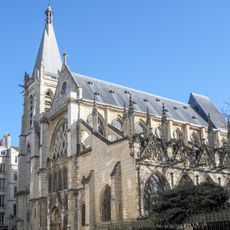
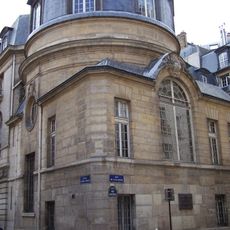
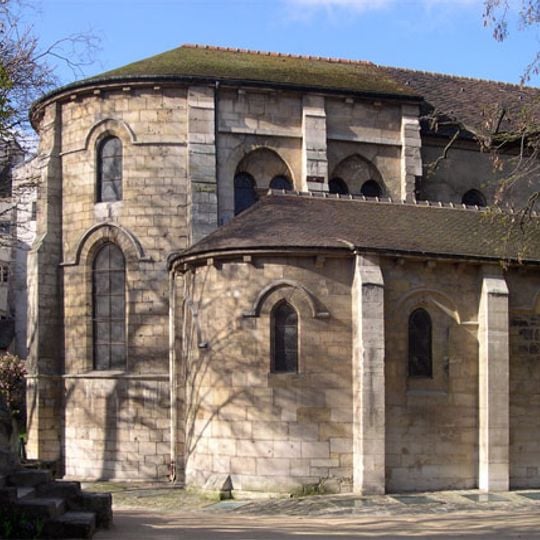
Saint-Julien-le-Pauvre is a church on the Left Bank in the 5th arrondissement, built from light tan ashlar. Its tall rounded apse has two stacked arched windows, and a lower rounded projection with a small arched window extends forward. Vertical buttresses divide the walls, and the main facade has a triangular gable with a stone cross and a central round window.
Construction began in 1160 under King Louis VII, replacing an older 6th-century building that once served as lodging for poor travelers. This shift from hospice to church reflects how the site's purpose transformed over centuries.
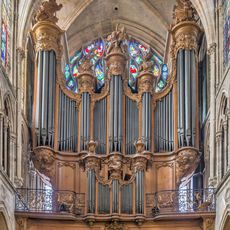
Since 1889 the church has been assigned to the Melkite Greek Catholic parish, which celebrates the Byzantine rite. An iconostasis now separates the choir from the nave, and icons were added to the medieval interior. The name 'le Pauvre' refers to the hospice for poor pilgrims once attached to the church, not to a saint.
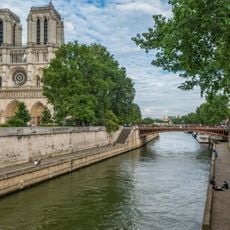
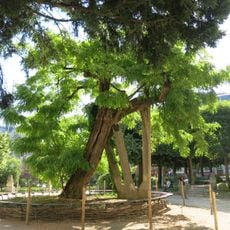
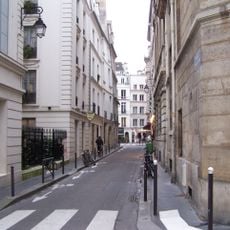
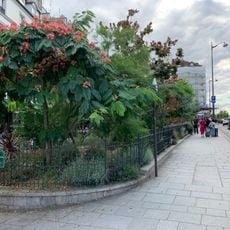
The church stands on rue Saint-Julien-le-Pauvre, sharing a block with the Square René-Viviani, about 500 metres from the Musée de Cluny and close to Maubert-Mutualité metro station. It is an active Melkite Greek Catholic parish, so visits are best timed outside the Byzantine-rite services; the interior is entered from the west facade.
From the 12th to 15th centuries, this church hosted lectures and important elections for the University of Paris, making it a center of academic life. The space functioned as a gathering place for scholars and administrators far beyond its role as a place of worship.
The community of curious travelers
AroundUs brings together thousands of curated places, local tips, and hidden gems, enriched daily by 93,450 contributors worldwide.