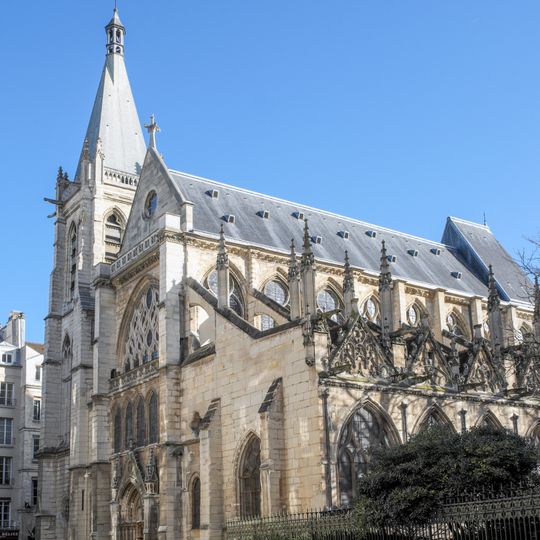
Saint-Séverin, Gothic church in Latin Quarter, Paris, France
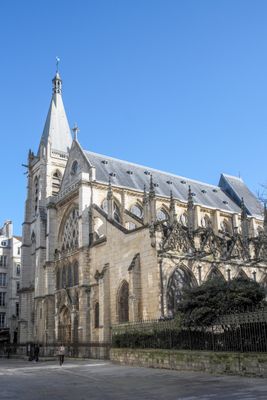
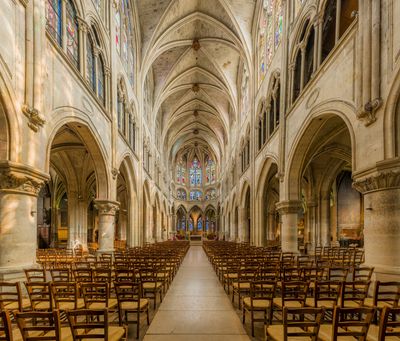
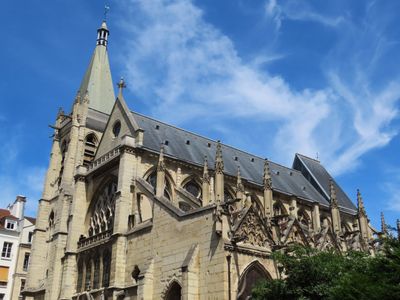
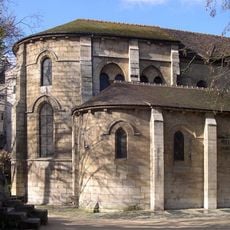
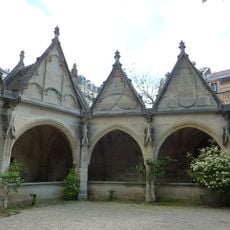
Saint-Séverin is a Flamboyant Gothic church whose nave mixes 13th-century cylindrical pillars with water-lily capitals and rounded arches with slender 15th-century columns and pointed arches. The choir forms a half-circle ringed by pointed arches and rib vaults, and the apse has a spiral central pillar. The 13th-century bell tower, originally separate, is now enclosed by the building.
A chapel was built on the site of the hermit Saint Séverin's cell after his death around 540, destroyed by the Normans in the 9th century and rebuilt in the 11th. Construction of the present church began around 1230, when it became the parish church of the University of Paris founded in 1215. After a fire in 1448, Guillaume d'Estouteville rebuilt it in Flamboyant Gothic style, completed by 1520.
The church takes its name from Saint Séverin, a 6th-century hermit who prayed on this site and died around 540. His pupil Clodoald, a Merovingian prince, became a monk and later a saint. The parish was also the church of the University of Paris from 1215, and students and teachers from across Europe attended services here.
The church welcomes visitors during regular opening hours and is accessible through its main entrance in the heart of the Latin Quarter. Plan your visit around service times to fully explore the interior without interruption.
The non-figurative windows in the apse were commissioned in 1966 by the parish priest Father Ponsar from painter Jean Bazaine and installed in 1970. The artist's name is Jean Bazaine, not Jean René Bazaine. Look for them behind the altar, where blue, red and yellow glass replaces the medieval figures.
The community of curious travelers
AroundUs brings together thousands of curated places, local tips, and hidden gems, enriched daily by 94,477 contributors worldwide.