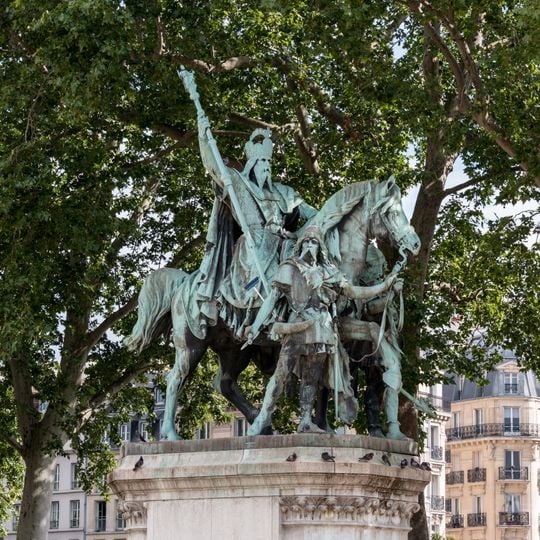
Charlemagne et ses Leudes, Sculpture in Paris, France
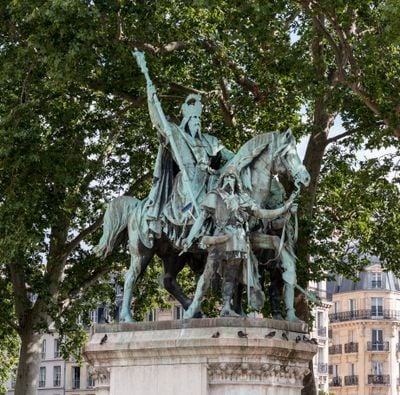
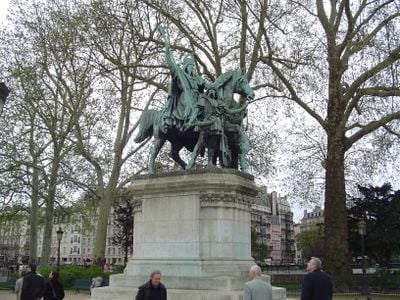
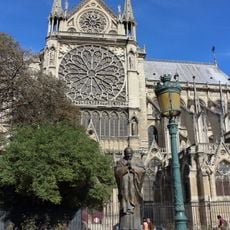
Charlemagne et ses Leudes is a large bronze sculpture on the square in front of Notre-Dame, showing the ruler on horseback with two armored followers and a small group of mounted companions. The surface has darkened over time, and from the stone base you can see the folds of the mantles, the horse’s legs, and the weapons carried by the standing warriors.
The brothers Louis and Charles Rochet began the project in the middle of the 19th century, first aiming to install it in Aachen, then showing a plaster model at the 1867 world fair before the bronze version became ready. Paris placed it on the parvis in January 1879 after the city accepted the offer, and it has remained there even though the spot was first called temporary.
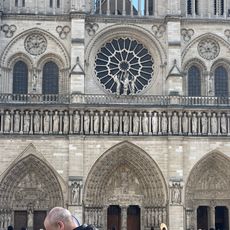
The word “leude” comes from an older Frankish term for men bound to a king by personal loyalty, and the two named companions here come from tales about Charlemagne’s court. Today people mostly see the sculpture as a backdrop for photos with the cathedral, and the mounted figures read immediately as a scene of leadership and armed service.
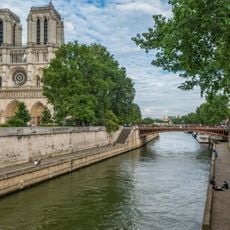
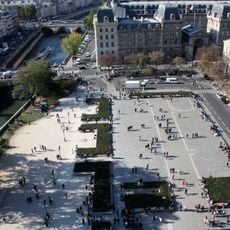
The monument is free to approach and stands in an open, paved area where people move between the cathedral and the river. It is easy to walk around the whole piece, and the slightly raised base lets you look closely at the figures from several sides without blocking other visitors.
During the German occupation of Paris in the Second World War, many bronze statues were taken to be melted down, but this one was left alone because Charlemagne carried a special symbolic value for the occupiers. Small historical mismatches in the sculpture, such as the ruler’s long beard and the presence of Roland, who is usually placed at Roncevaux before the imperial coronation, are easy to miss without a close look.
The community of curious travelers
AroundUs brings together thousands of curated places, local tips, and hidden gems, enriched daily by 90,798 contributors worldwide.