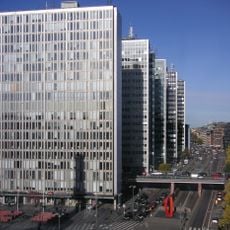
Hötorget, Pedestrian market square in central Stockholm, Sweden.
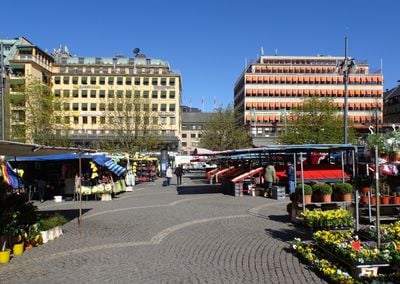
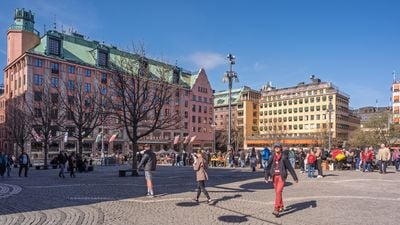
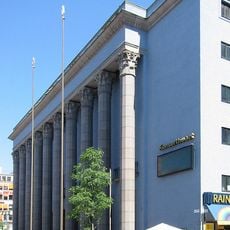
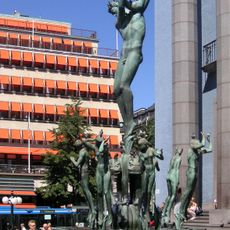
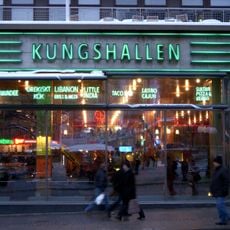
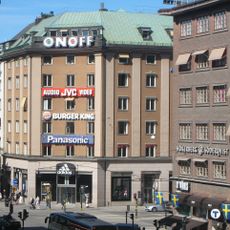
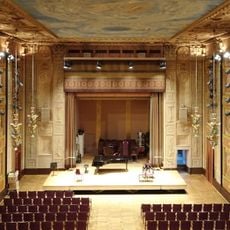
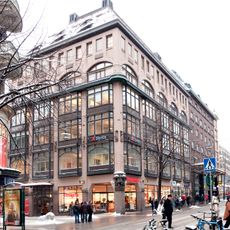
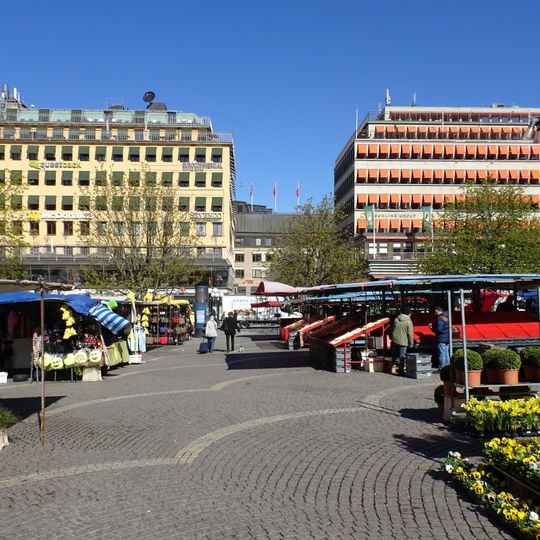
Hötorget is a cobblestone square on Norrmalm in central Stockholm, between Drottninggatan and Sveavägen along Kungsgatan. Its eastern side is dominated by the blue-facaded Stockholm Concert Hall, built 1923–1926 to designs by Ivar Tengbom, with Carl Milles's Orfeusgruppen sculpture in front. The south side opens onto Hötorgshallen, a food hall rebuilt in 1953 one level below ground.
The square began in the 17th century as a market where farmers sold hay and farm produce to Stockholm residents. Since then it has grown from a simple hay trading place into a mixed marketplace offering a wide range of goods and services.
The name Hötorget, "Haymarket", refers to the hay trade once held here. On Sundays the square hosts a flea market from 08:00 to 18:00. The term Hötorgskonst describes kitschy 20th-century Swedish art sold here directly by artists, bypassing galleries.
Hötorget metro station on the green line opens onto the square, and buses stop nearby. The outdoor market runs during the day except Sundays, when a flea market takes over from 08:00 to 18:00. The paving is flat and open, with a raised stone block on the left side that serves as a bench.
The Nobel banquet is not held at the Concert Hall beside the square: the ceremony and banquet take place at Stockholm City Hall. The Concert Hall, with Ivar Tengbom's blue classical colonnade facing the market square, is where the Nobel Prize in Literature is announced each October.
The community of curious travelers
AroundUs brings together thousands of curated places, local tips, and hidden gems, enriched daily by 93,150 contributors worldwide.