Kolizej Palace, Monument of local significance in Ljubljana, Slovenia
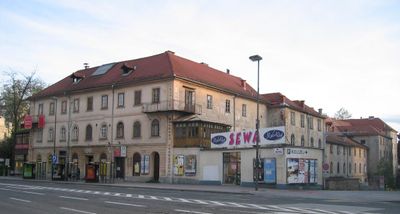
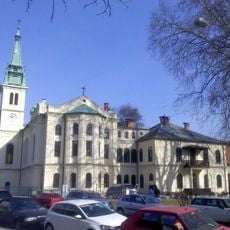
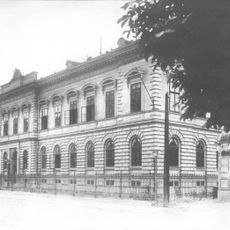
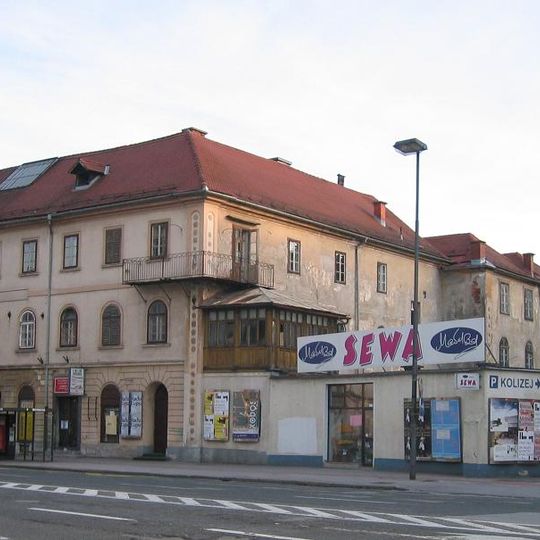
Kolizej Palace was a multi-storey, multi-purpose building at Gosposvetska cesta 13 in Ljubljana, combining neo-Gothic, neo-Renaissance and neoclassical elements. It measured 121.5 m by 28.9 m and had two storeys in the central wing and three in the side wings, with two large halls rising through all floors. It was demolished in 2011.
Josef Benedict Withalm, a Graz industrialist and architect, proposed the transit barracks in 1844 and had four foundation stones laid on 31 May 1845 on a former gravel pit outside Ljubljana. Construction ran to 1848; a fire on 20 December 1847 damaged the wooden interior, but the building reopened ten days later. After the 1895 earthquake required partial demolition, the building was nationalized from 1945, denationalized in 1993 and demolished in 2011.
The name comes from Vespasian's Roman Colosseum. In 1848 Josef Benedict Withalm rented out a café with two billiard rooms, two gaming rooms, a long glazed corridor and two terraces, each holding 1,500 people. The building later housed a driving school, a flour shop, a butcher and a wine shop.
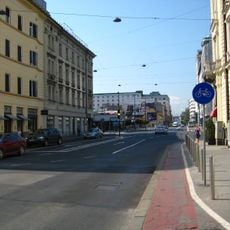
The palace stood at Gosposvetska cesta 13, on the site of a former gravel pit outside the city, in the cadastral municipality of Spodnja Šiška. It was demolished in 2011, so there is no building to visit; only the address and the plot remain. In 1849 Withalm ran an omnibus twice daily between the Kolizej and the Ljubljana railway station.
The palace was named after Vespasian's Roman Colosseum. Of four Kolizej buildings erected in the Austrian Empire in the first half of the 19th century, it was the last still standing when it was demolished in 2011. Its interior was painted by Adalbert Uetz, a graduate of the Vienna academy.
The community of curious travelers
AroundUs brings together thousands of curated places, local tips, and hidden gems, enriched daily by 94,349 contributors worldwide.