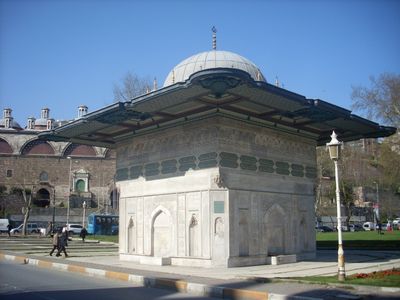
Tophane Fountain, Ottoman fountain in Tophane Square, Istanbul, Turkey
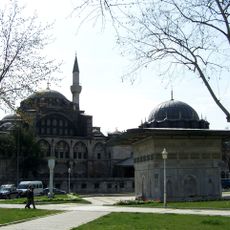
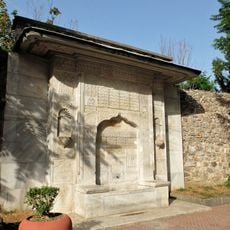
The Tophane Fountain is a square marble structure in the Tophane district of Istanbul, with pointed arches, wide overhanging eaves, and a central dome on each of its four facades. The dome features baroque ornamental carving, and the shift from the octagonal base to the square upper section is shaped by rows of carved muqarnas.
Sultan Mahmud I commissioned the fountain in 1732, during a period when many new public fountains were being built across Istanbul. The architect Mehmet Ağa led the construction, which reflects a moment when Western baroque influences were being absorbed into Ottoman building.
The fountain carries 48 verses by the Ottoman poet Nahifi carved into its upper walls, following a tradition of weaving poetry into public structures. These inscriptions were seen as a sign of the sponsor's learning and standing in society.
The fountain stands in an open square and can be walked around freely from all sides, which makes it easy to look at the carved details up close. No entry or prior arrangement is needed, and the site is accessible throughout the year.
Although the fountain looks like a standalone building, it was originally part of a group that included the nearby Tophane Mosque and a sebil, a small kiosk where water was handed out for free. These three structures formed a public gathering point built around the idea of providing water to the neighborhood.
The community of curious travelers
AroundUs brings together thousands of curated places, local tips, and hidden gems, enriched daily by 92,894 contributors worldwide.