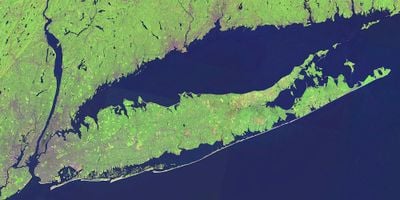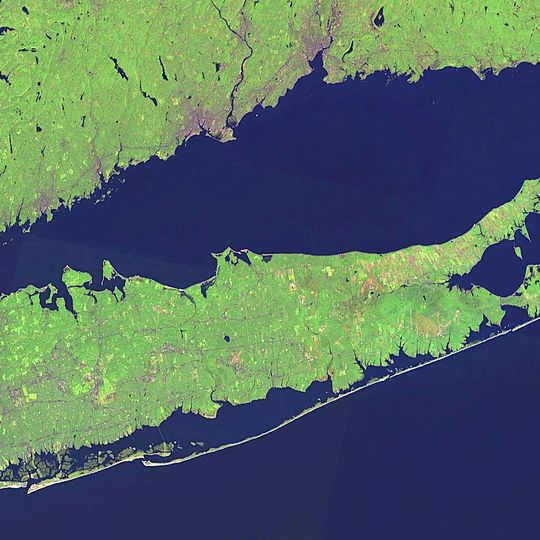
Long Island Sound, Marine estuary between Connecticut and Long Island, US
Long Island Sound is a tidal estuary that separates Connecticut to the north from Long Island to the south, blending river water with the Atlantic Ocean. Its shoreline alternates between rocky cliffs, sandy beaches, and developed harbors, while the width of the waterway varies from narrow passages to broader open expanses.
Adriaen Block sailed through these waters in 1614, becoming one of the first Europeans to chart this route and opening trade between Dutch settlers and native peoples. By the 19th century, the waterway became a major corridor for steamships carrying passengers and goods between New York and Boston.
The waterway serves as a natural boundary between New England and the Mid-Atlantic states, influencing regional identities and maritime traditions.
Ferries connect several ports on both shores, offering a direct alternative to long drives around the coast. Travelers near the shore should prepare for changing weather, as fog and wind can affect visibility and crossings.
More than a thousand invertebrate species live in the water and on the seafloor, including clams, crabs, and lobsters that support local fisheries. The mixing of fresh and salt water creates conditions that attract both ocean and river dwellers.
The community of curious travelers
AroundUs brings together thousands of curated places, local tips, and hidden gems, enriched daily by 90,807 contributors worldwide.