First Bank of the United States, Bank building in Independence National Historical Park, Philadelphia, United States
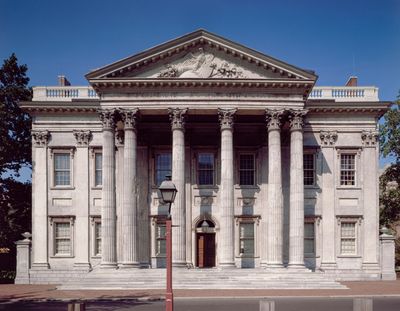
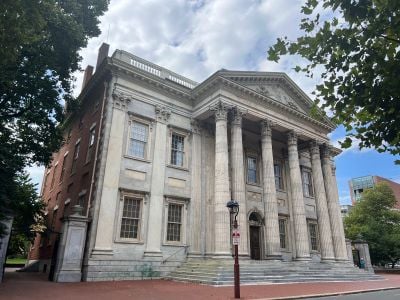
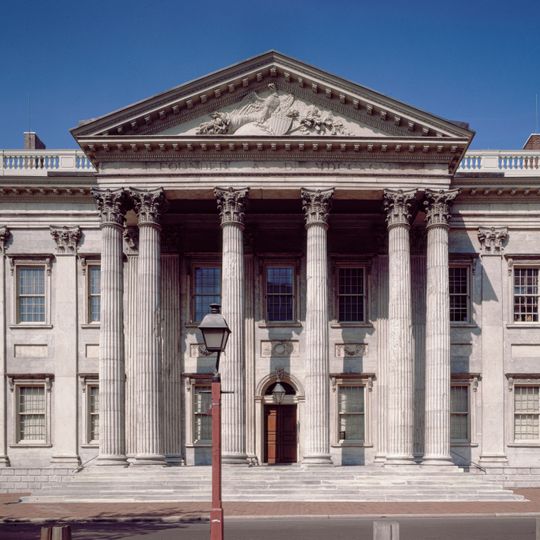
The First Bank of the United States is a light-colored stone building in Philadelphia, Pennsylvania, within Independence National Historical Park. Its central portico has eight fluted Corinthian columns carrying a triangular pediment with an eagle relief; the frieze reads "FOUNDED A.D. MDCCXCI". Tall rectangular windows and an arched doorway with dark double doors sit between the columns, above wide entrance steps.
Alexander Hamilton proposed the creation of the bank to consolidate the war debts from the Revolution, and construction began in 1794 under the supervision of Samuel Blodgett, who drew inspiration from ancient Greek models. When Congress declined to renew the charter in 1811, the bank ceased operations, and the building later changed hands several times before receiving landmark protection.
The name comes from the first nationwide institution created to organize banking in the young United States, when private and public finance had no clear separation. Today the building belongs to the National Park Service and usually remains closed to visitors, but it can be viewed from the outside and gives a sense of how architectural forms were meant to express political ideals.
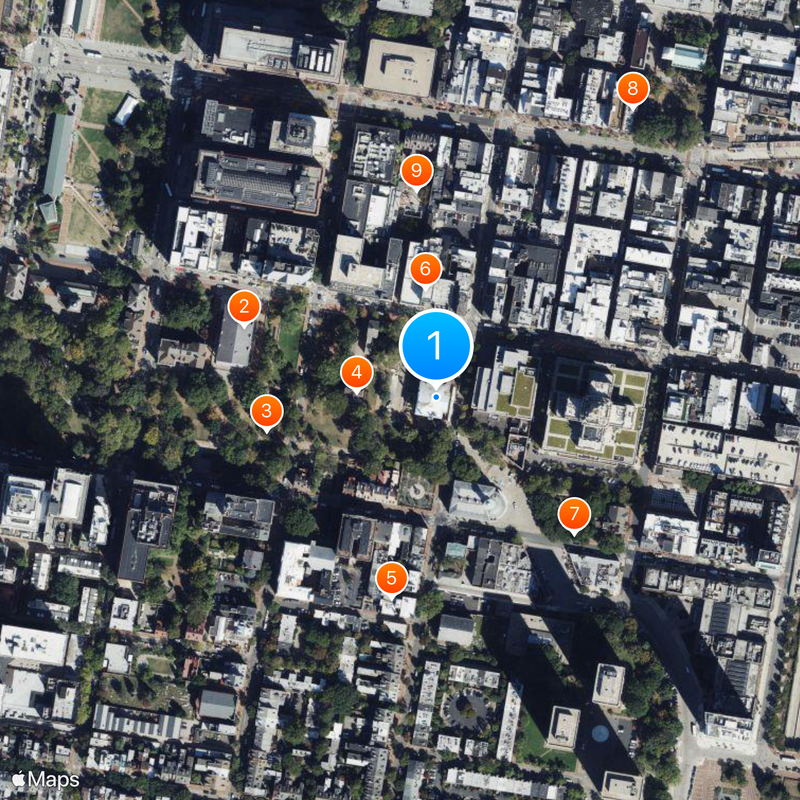
The building sits at the corner of Third Street and Chestnut Street in the historic district of Philadelphia, within a short walk of other founding-era landmarks. Since interior access is usually not available, walking around the perimeter allows you to view the facade and proportions from different angles.
Although the structure is often associated with Greek architecture, it was among the earliest applications of this form in North America and later influenced numerous public buildings across the country. The design was also meant to mark a clear departure from British models and make a new republican aesthetic visible.
The community of curious travelers
AroundUs brings together thousands of curated places, local tips, and hidden gems, enriched daily by 92,316 contributors worldwide.