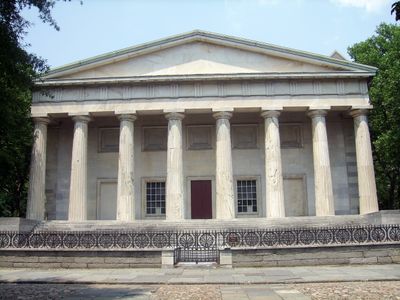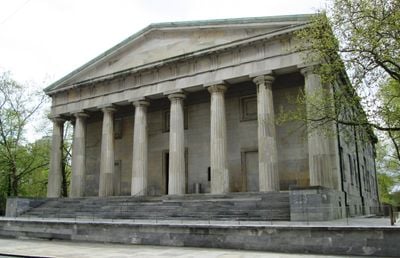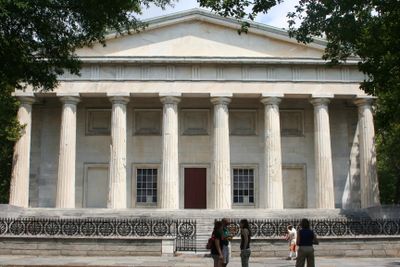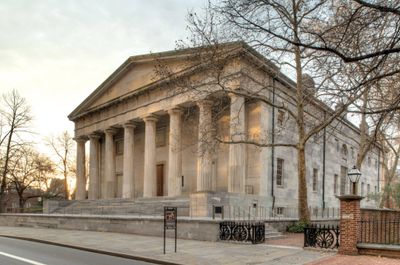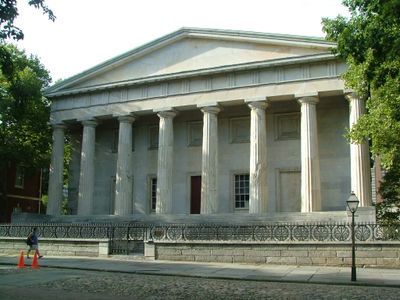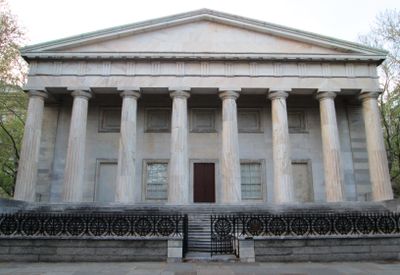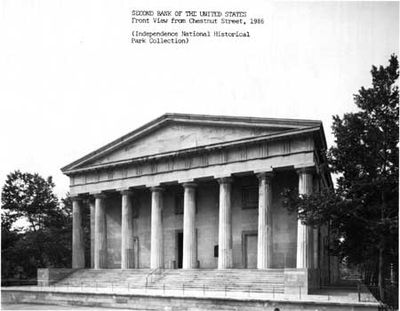
Second Bank of the United States, Greek Revival bank building in Philadelphia, United States.
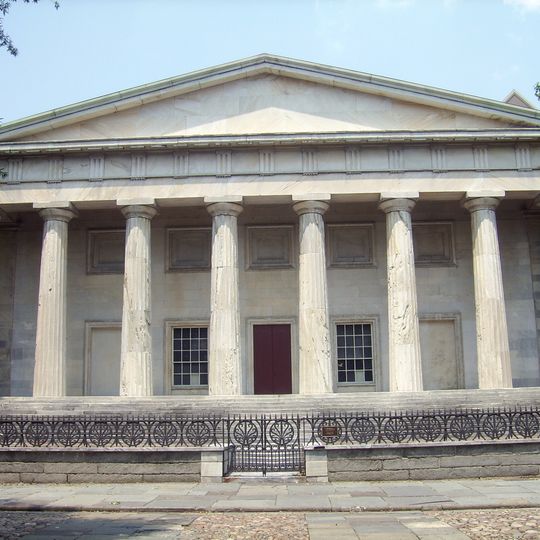
The Second Bank of the United States is a bank building in Philadelphia, Pennsylvania that now functions as a portrait gallery within Independence National Historical Park. The structure spans the entire street frontage with eight Doric columns crafted from blue marble, while the interior contains a central banking hall with side chambers and a second floor for administrative spaces.
The federal institution was established in 1816 to stabilize finances after the War of 1812 and received its charter for twenty years. When President Andrew Jackson vetoed the recharter bill in 1832, operations ended in 1836 and the structure was later adapted for other purposes.
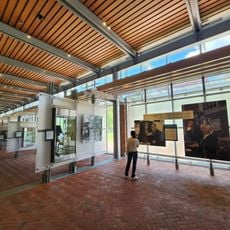
The building's name comes from its charter as the second federally authorized national bank, succeeding the First Bank closed in 1811. Its formal title under section 9 of the charter was "The President, Directors, and Company, of the Bank of the United States". Since 1841 the structure has housed other uses and now holds Charles Willson Peale's portraits of early Americans.
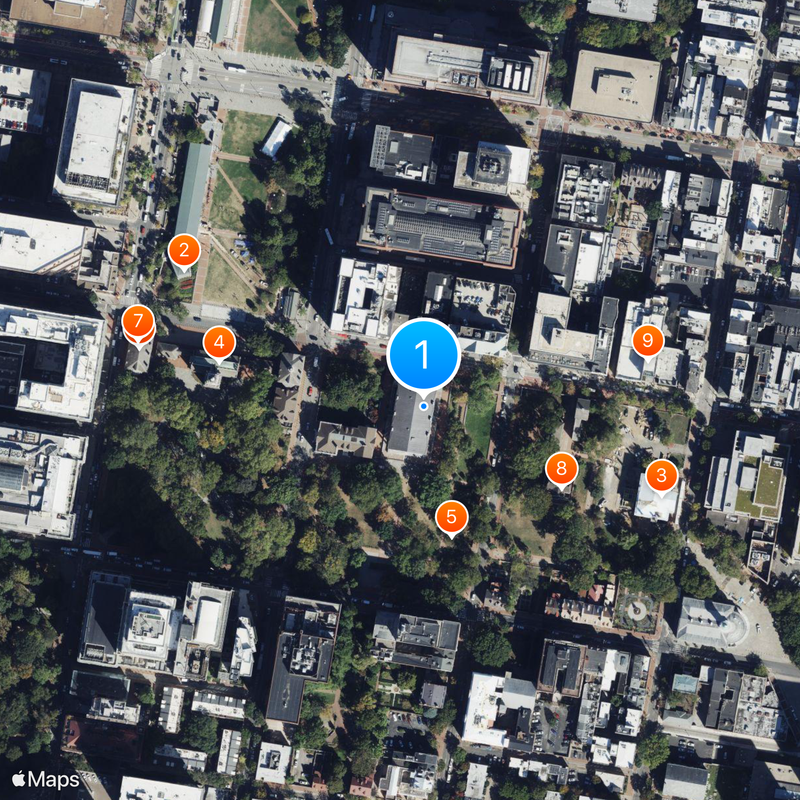
Access is through 420 Chestnut Street with free entry on Thursdays, Fridays and Saturdays during park hours. The gallery occupies the ground floor and is wheelchair accessible, with most paintings arranged in well-lit rooms around the former banking hall.
Architect William Strickland used the Parthenon in Athens as a direct model, creating one of the earliest examples of Greek Revival in American architecture. The structure influenced subsequent bank designs across the country as its classical form became associated with financial stability.
The community of curious travelers
AroundUs brings together thousands of curated places, local tips, and hidden gems, enriched daily by 92,267 contributors worldwide.