Liberty Bell, Bell in Independence National Historical Park, Philadelphia, United States
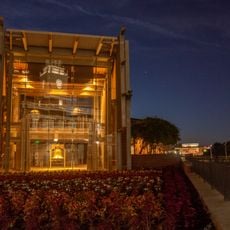
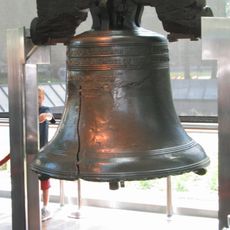
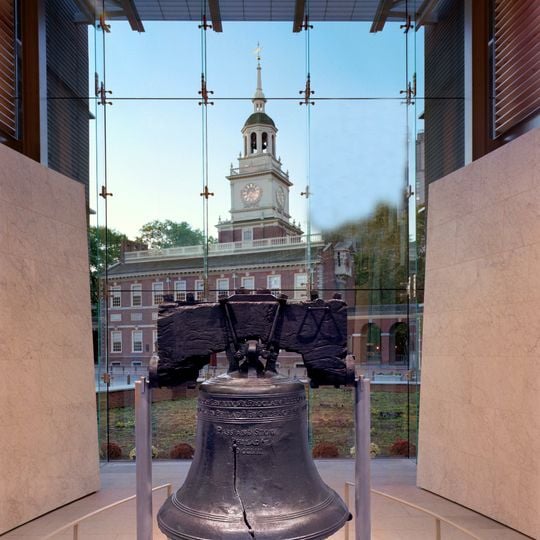
The Liberty Bell is a large bronze object displayed inside a modern glass pavilion near Independence Hall in central Philadelphia. It rests on a low platform, allowing visitors to walk around and see the vertical crack running through its body from several angles.
Commissioned in 1751 by the Pennsylvania Provincial Assembly and cast by Lester and Pack in London, the bell arrived in 1752 and cracked at its first test strike. Local founders John Pass and John Stow recast it twice, adding copper; the third bell was hung in the State House in June 1753. In September 1777 it was hidden in a church cellar in Northamptontown (now Allentown) until the British left Philadelphia in 1778.
Abolitionist societies adopted the bell in the 1830s and gave it the name it still carries; William Lloyd Garrison's Liberator printed a poem titled "The Liberty Bell" in 1839. The inscription quotes Leviticus 25:10, chosen to mark the 50th anniversary of William Penn's 1701 Charter of Privileges.
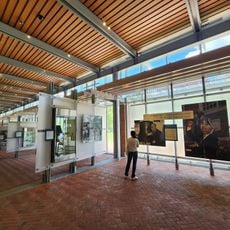
Entry to the pavilion is free and most visitors spend around 15 to 20 minutes inside, walking through the exhibit area and the main chamber. Lines can form during summer months and on weekends, so arriving early in the morning or later in the afternoon often means shorter waits.
An inscription from the Book of Leviticus runs around the top, proclaiming liberty throughout the land, though it was originally intended for Pennsylvania's charter rather than independence. The name itself only emerged in the 1830s when abolitionists adopted the object as a metaphor for their movement.
The community of curious travelers
AroundUs brings together thousands of curated places, local tips, and hidden gems, enriched daily by 92,127 contributors worldwide.