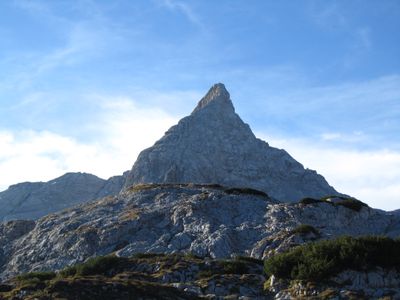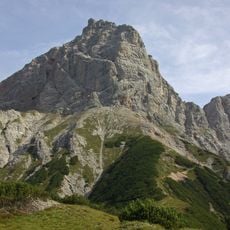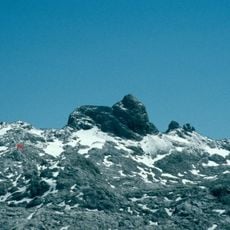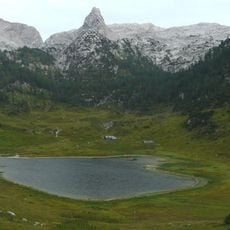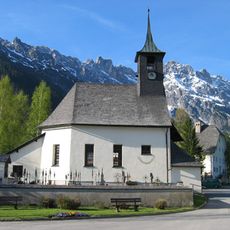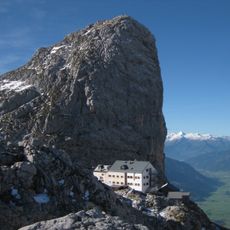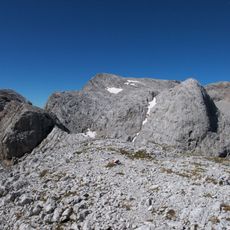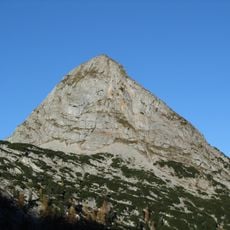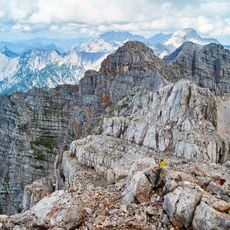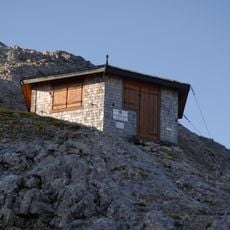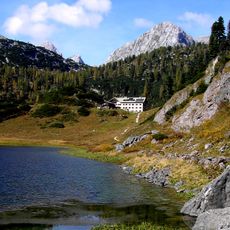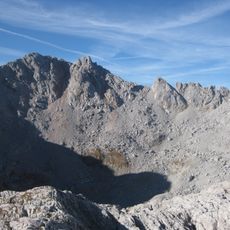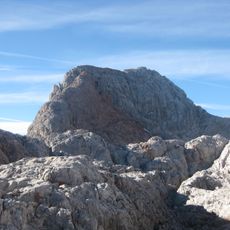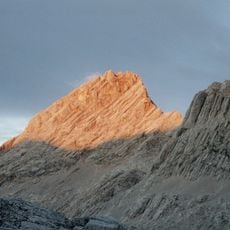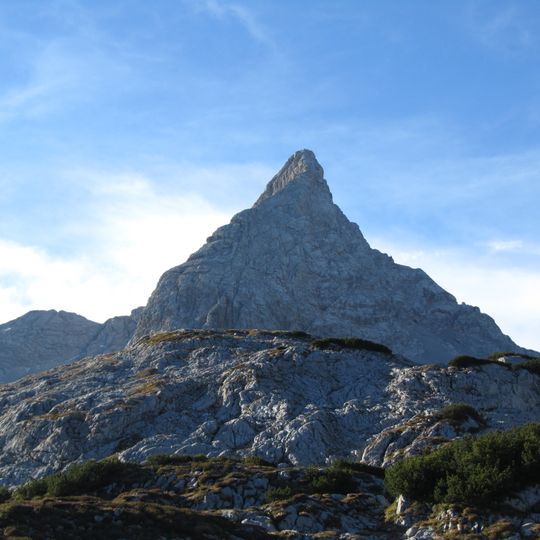
Schönfeldspitze, Alpine summit in Steinernes Meer, Austria.
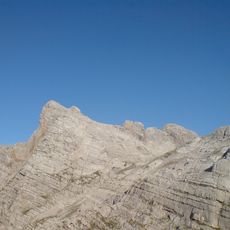
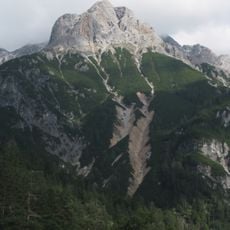
Schönfeldspitze is the second highest summit in the Steinernes Meer section of the Berchtesgaden Alps, rising to 2,653 meters. The peak consists of limestone and displays a jagged rock structure that defines the character of the surrounding mountain range.
The mountain was explored and developed during the early days of Alpine mountaineering in the Berchtesgaden region. Climbing routes established here contributed to the broader exploration of the Alps during the 1800s.
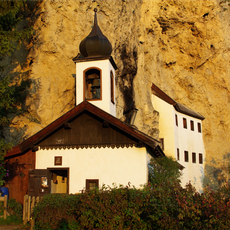
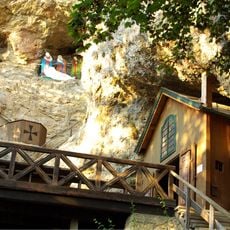
A religious monument depicting the Virgin Mary stands at the summit, reflecting the strong Catholic faith of the surrounding Salzburg region. This sacred marker draws many pilgrims alongside regular hikers who seek out the peak.
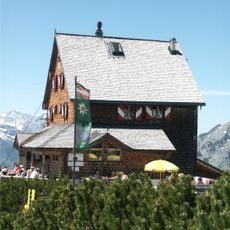
Multiple hiking routes access the mountain from starting points like Saalfelden or the Riemannhaus hut, with trail lengths ranging from 5 to 21 kilometers. The limestone terrain means water sources are scarce along the way, so carrying enough supplies is essential.
The mountain's limestone composition creates a karst landscape where water is exceptionally scarce, presenting an unexpected challenge for climbers accustomed to Alpine springs. This geological feature sets the summit apart from wetter mountain paths and requires careful planning.
The community of curious travelers
AroundUs brings together thousands of curated places, local tips, and hidden gems, enriched daily by 91,355 contributors worldwide.