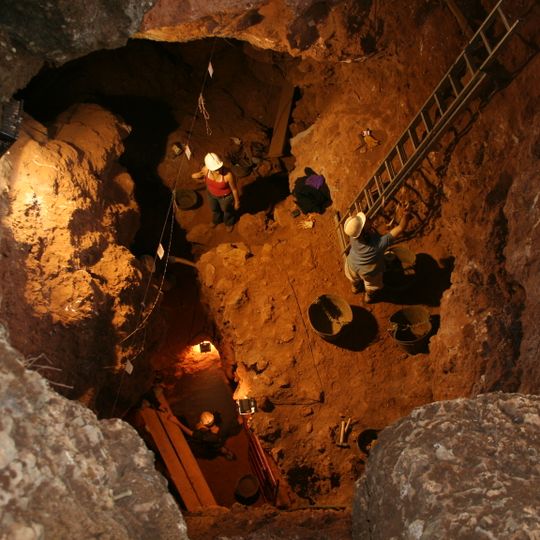
Cueva de Santa Ana, Archaeological and paleontological site in Cáceres Province, Spain.
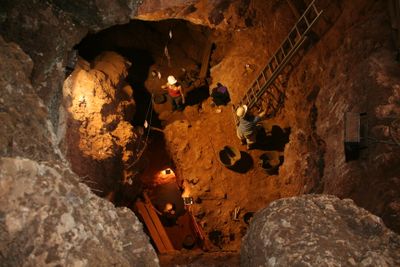
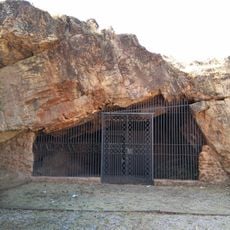
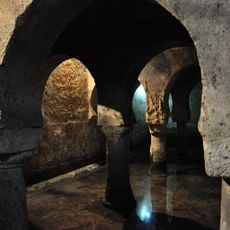
Cueva de Santa Ana is a cave in Caceres Province containing multiple chambers with mineral deposits and layers of sediment that preserve traces of human occupation and animal remains. The interior structure displays distinct geological formations that accumulated over hundreds of thousands of years.
The cave was inhabited during the Middle Pleistocene roughly one million years ago, evidenced by stone tools and animal bones. Systematic excavations starting in the early 2000s have documented this extended period of human use.
The site bears the name of a saint and occupies a location that drew people across many periods. The cave served as shelter, and this role is readable in the layers of deposits that accumulated inside.
The site lies within a military installation about 12 kilometers from Caceres city, toward the Merida road. Visitors should check beforehand about access, since it sits on military grounds.
Among the tools found were spheroid stone artifacts resembling those made in East Africa about 1.75 million years ago. This similarity suggests early human populations developed comparable techniques across distant continents.
The community of curious travelers
AroundUs brings together thousands of curated places, local tips, and hidden gems, enriched daily by 60,000 contributors worldwide.