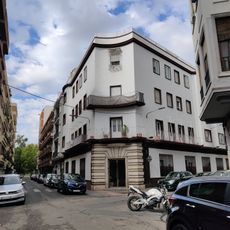
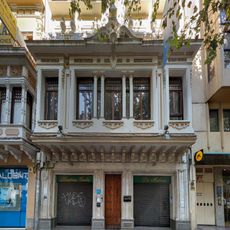
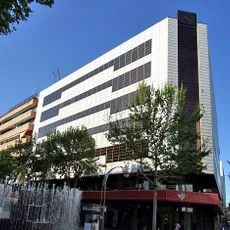
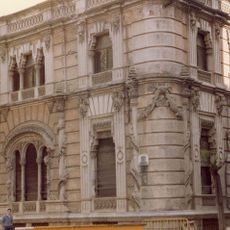
Palace of Maximian Herculius, Roman imperial palace ruins in Córdoba Province, Spain
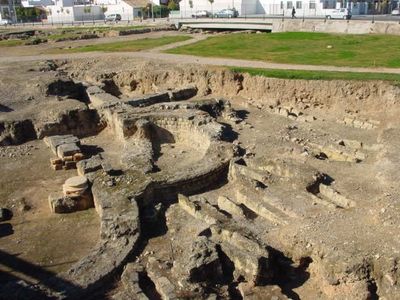
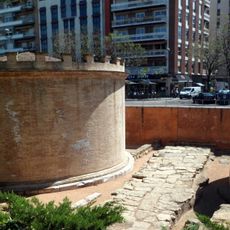
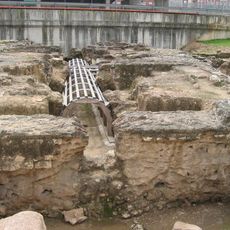
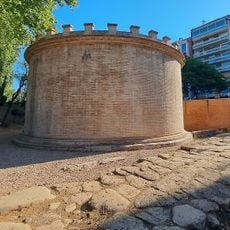
The Palace of Maximian Herculius was a sprawling Roman palace complex covering several hectares with columns, walls, and preserved mosaics still visible today. The archaeological site includes remains of baths and underground passages that reveal the scale and sophistication of the original structure.
Emperor Maximian Herculius ordered this palace built between 293 and 305 CE as the administrative center for governing Hispania and North Africa. The construction reflects the region's importance during the late Roman period when imperial power was divided among multiple rulers.
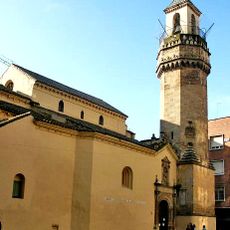
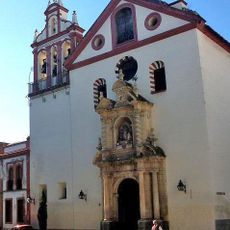
The complex served as a Christian worship space by the 6th century, with remains of cemeteries showing how the site was repurposed for new religious practices. This transformation reflects how the place changed meaning for different communities over time.
Access to different sections including the baths and underground passages depends on current maintenance conditions and requires checking in advance. It is advisable to verify conditions before visiting since parts of the site may not always be open to the public.
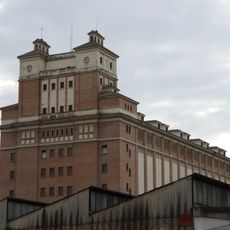
A large portion of the ruins was demolished in 1991 to build a high-speed train station, resulting in significant loss of the complex. This development shows how modern infrastructure projects can overwrite and destroy ancient remains.
The community of curious travelers
AroundUs brings together thousands of curated places, local tips, and hidden gems, enriched daily by 92,350 contributors worldwide.