Silo de Córdoba, Grain storage facility in Córdoba, Spain
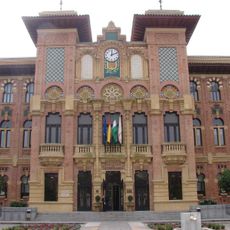
The Silo de Córdoba is a grain storage facility in the city featuring Neo-Mudéjar architecture with decorated brickwork and arches. The structure uses steel construction for long-term preservation of stored grains under controlled conditions.
The construction of the Silo de Córdoba began in 1943, following the creation of the National Wheat Service on 23 August 1937 in Burgos, as a measure against famine after the Civil War. It was designed by agricultural engineer Carlos Ynzenga Caramanzana and architect Ignacio Fiter Clavé. It was inaugurated on 6 June 1951 by Francisco Franco, being the first unit of the National Network of Silos to be officially opened.
The building displays Neo-Mudéjar style and now functions within the Archaeological Museum, connecting farming traditions with regional heritage. Visitors can observe how local architectural customs merged with modern industrial needs.
The interior maintains temperature-controlled conditions with specialized handling systems to protect stored grains from environmental damage. The facility is now primarily accessible as a cultural monument, so visitors should arrange a visit in advance.
The silo reaches 48 metres, making it Córdoba's tallest building after the Mezquita-cathedral bell tower. It was the first unit of the Red Nacional de Silos to be officially inaugurated, opened by Francisco Franco on 6 June 1951. Its private rail branch linked it to the railway network.
The community of curious travelers
AroundUs brings together thousands of curated places, local tips, and hidden gems, enriched daily by 93,470 contributors worldwide.