Archaeological site of Cercadilla, Archaeological site in Córdoba, Spain.
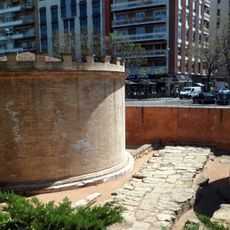
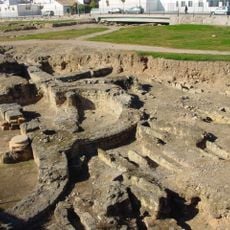
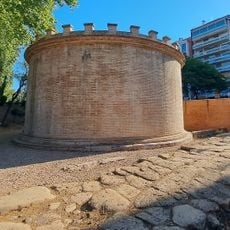
The Archaeological site of Cercadilla is a late-Roman palace complex in Córdoba, built between 293 and 305 and attributed to Emperor Maximian. Its best-preserved element is a 150-metre semicircular cryptoporticus with a barrel vault four metres high and 4.5 metres wide. Excavations also uncovered a villa with mosaic floors, marble slabs and a torso of Dionysus.
The palace was built between 293 and 305, attributed to Emperor Maximian, who ruled the West from 286 to 305. Two epigraphic finds support the dating: gilded bronze letters (litterae aureae) and a marble inscription naming the Caesars Constantius and Galerius. After Maximian was forced to abdicate in 305, the complex was converted to Christian use, with a triconch hall identified as the church of San Acisclo.
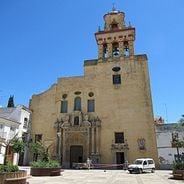
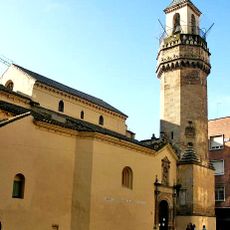
The triconque hall in the north has been linked to the church of San Acisclo, the main cult centre of late-antique and early-medieval Córdoba. Around it grew a necropolis used in late-antique and Mozarabic times, where the tombstone of Bishop Lampadio and the ring of Bishop Sansón were found. A tombstone also records a woman named Cristófora, who died in 983.
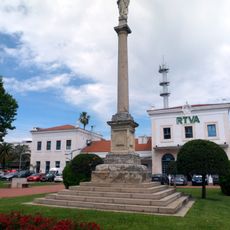
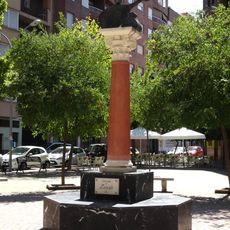
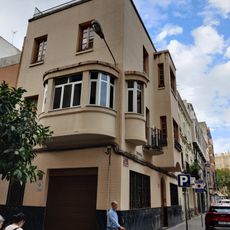
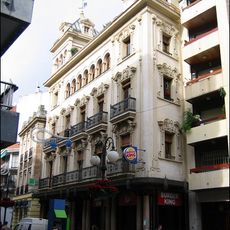
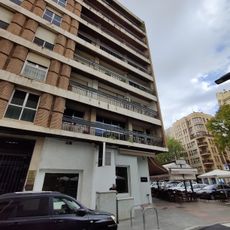
The site has been closed to the public since February 2015, after being open only between 2004 and that date, so visits must be arranged in advance rather than on impulse. Much of the complex lies under the AVE station, its platforms and tracks, and other parts beneath the surrounding streets and houses; only the excavated zone can be seen. The visible area is reached from the Cercadilla station surroundings in Córdoba.
Chemical analysis of the wall paintings reveals different construction methods across periods, with older layers containing ceramic fragments for added strength. These building details help researchers clearly distinguish the different phases of use and modification.
The community of curious travelers
AroundUs brings together thousands of curated places, local tips, and hidden gems, enriched daily by 93,712 contributors worldwide.