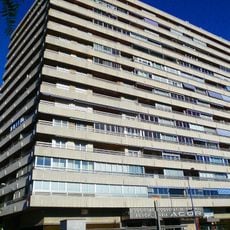
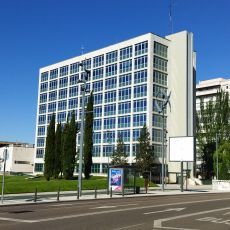
Paseo de Zorrilla, Valladolid, street in Valladolid
Paseo de Zorrilla runs from the plaza of the same name to the Carretera de Rueda, ending at the Puertas de Valladolid by Cristóbal Gabarrón. Along its route stand the Academia de Caballería, Campo Grande, the Hospital Militar, the Iglesia de la Inmaculada Concepción and the Plaza de Toros.
Originally a major trade route between Valladolid and Madrid, the street was transformed into a promenade in the 19th century as the city expanded southward. In 1893, it was given the name Paseo de Zorrilla to honor the poet José Zorrilla from the city.
The promenade was named on 23 January 1893 after the Valladolid-born writer José Zorrilla, replacing earlier names such as Acera de Sancti Spíritus and Camino Real de Madrid. Along its route stand the Academia de Caballería, the Campo Grande, the Hospital Militar, the Iglesia de la Inmaculada Concepción and the Plaza de Toros.
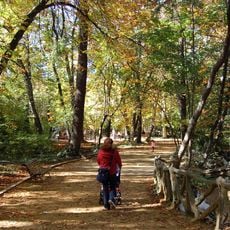
Paseo de Zorrilla is easy to reach from the city center and can be walked or cycled at a relaxed pace. The street is relatively flat with good sidewalks and plenty of tree shade, making it comfortable to visit in any season.
The promenade ends at the Puertas de Valladolid, a gateway made by the Valladolid-born artist Cristóbal Gabarrón, next to the road to Rueda. Before 23 January 1893 the avenue carried other names, among them Camino Real Nuevo de Madrid and Acera de Sancti Spíritus, when the city council renamed it after the writer José Zorrilla.
The community of curious travelers
AroundUs brings together thousands of curated places, local tips, and hidden gems, enriched daily by 94,001 contributors worldwide.