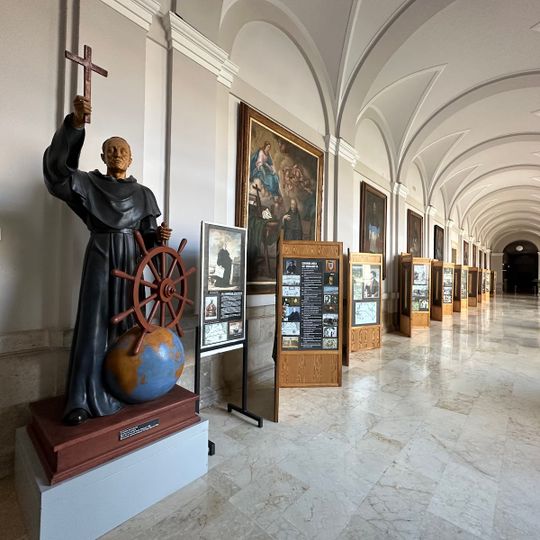
Museo Oriental de Valladolid, Asian art museum in the Augustinian convent, Valladolid, Spain
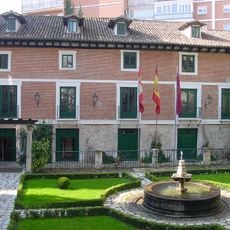
The Museo Oriental de Valladolid occupies the eastern wing of the Real Colegio de los Padres Agustinos, a neoclassical building begun in 1759 to plans by Ventura Rodríguez. Its 18 rooms display Chinese art from the 5th century BC to the 20th century, the most complete collection of Philippine art in Europe, and Japanese works from the Edo and Meiji periods.
The Real Colegio de Agustinos Filipinos, a neoclassical building begun in 1759 to designs by Ventura Rodríguez, was founded to train priests for the Philippines, China and Japan from 1565. Returning friars brought Asian objects that formed the teaching collection; in 1874 the eastern wing was set aside for it. The museum opened in 1980 and was renewed in 2006.
The Philippine rooms, five in all, form the most complete collection of their kind in Europe, ranging from Neolithic pottery to 19th-century pieces and ethnological material from Luzón, Mindanao and Joló. They also trace the Manila galleon trade and Spanish-Filipino art of the 17th to 19th centuries, with mementos of the 1898 war and the last Spanish soldiers in the Philippines.
The museum occupies 18 rooms in the east wing of the Real Colegio de los Agustinos Filipinos, entered from the convent building; the Chinese galleries come first, followed by the five Philippine rooms and the four Japanese rooms. Allow time for the dense display cases, and note that the collection was last rehung in 2006.
The museum is run entirely by Augustinian friars; its director since 1979, Blas Sierra de la Calle, received Japan's Order of the Rising Sun, Gold and Silver Rays, in 2008 for spreading Japanese culture in Spain. The Philippine rooms form the most complete such collection in Europe.
The community of curious travelers
AroundUs brings together thousands of curated places, local tips, and hidden gems, enriched daily by 94,179 contributors worldwide.