Güigüi, Protected beach reserve in La Aldea de San Nicolás, Spain
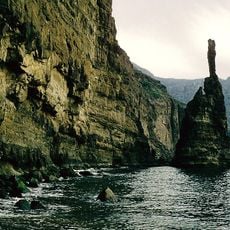
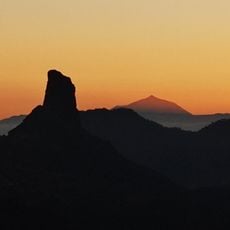
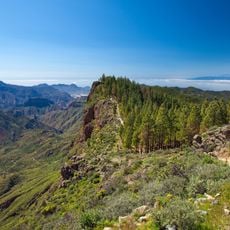
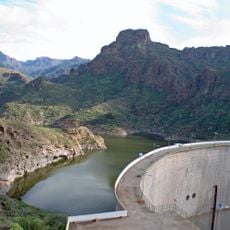
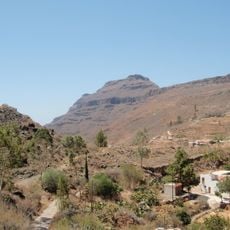
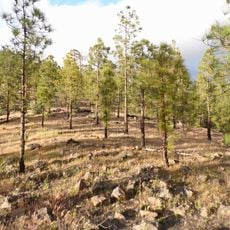
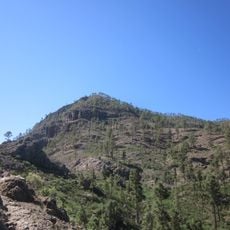
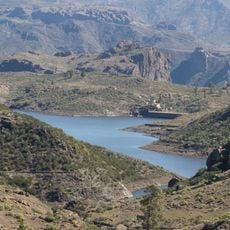
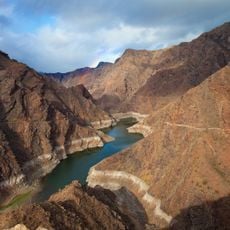
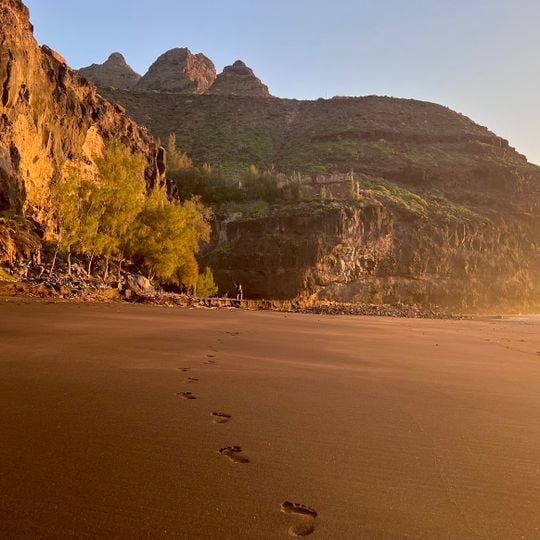
Güigüi is a massif of the central-western coast of Gran Canaria, in La Aldea de San Nicolás, protected as a special nature reserve and ecological sensitivity area covering 2,920.9 ha. A central crest, the Montaña de Hogarzales and the Montaña del Cedro, drops from about 1,000 m to the sea in under 5 km through deep, narrow ravines. Its cliffed coast opens at ravine mouths onto the dark-sand beaches of Güigüí Chico (350 m) and Güigüí Grande (360 m).
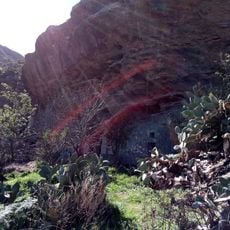
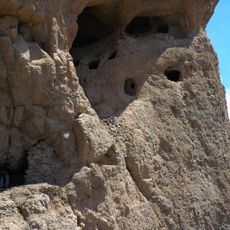
Güigüí's basalt formations belong to Gran Canaria's oldest volcanic cycle, the Paleocanaria shield volcano, and reach over 1,000 metres thick. The reserve holds Spain's oldest volcanic tube, 14.5 million years old, with cave-dwelling fauna. The mountain of Hogarzales, also called Fortaleza de Ajódar, has aboriginal Gran Canaria archaeological sites, and clashes took place here during the conquest of the island.
On the mountain of Hogarzales, also called Fortaleza de Ajódar, lie archaeological sites of the aboriginal Canarians, and Güigüí saw clashes during the conquest of the island. The reserve's name appears as Güigüí, Güi-Güi or Guguy. The beaches of Güigüí Chico and Güigüí Grande are reached on foot or by boat.
Access to the beaches happens either through a two-hour marked hiking trail or by boat from neighboring coastal areas. The hike requires good physical fitness and proper preparation for the rough terrain.
The reserve's oldest feature is a volcanic tube 14.5 million years old, the oldest known in Spain, holding cave-dwelling fauna found nowhere else. Its cliffs also shelter the corazoncillo de Andén Verde (Lotus callis-viridis), a plant named for the Andén Verde slope where it grows.
The community of curious travelers
AroundUs brings together thousands of curated places, local tips, and hidden gems, enriched daily by 94,072 contributors worldwide.