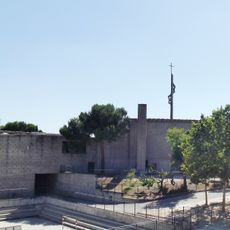
Felipe VI Park, Urban park in Valdebebas district, Madrid, Spain
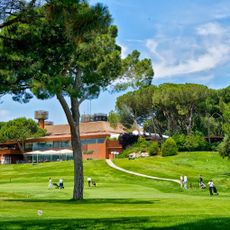
Felipe VI Park is a large urban green space in the Valdebebas district covering more than 340 hectares. The grounds feature five distinct ecosystem types that represent central Iberian vegetation, along with an extensive network of pathways and routes throughout the space.
The park was defined in Madrid's 1997 General Urban Development Plan and built on Las Cárcavas, the city's largest illegal dump in the 1990s. A first 340-hectare section opened in March 2015; the finished project covers 470 hectares. In 2015 the city council renamed it after King Felipe VI, and in September 2019, by agreement of all municipal groups, it regained the Valdebebas name alongside it.
The park's name has been contested: in 2015 the city council renamed it after Felipe VI, a 2017 non-binding referendum in Hortaleza favoured reverting to Valdebebas (65% on a 2% turnout), and in 2019 all municipal groups agreed to combine both names. The design reproduces five Iberian ecosystems, from Sistema Ibérico pine to La Mancha olive groves.
A bike lane runs around the park's perimeter, and a livestock route (vía pecuaria) crosses it north-south, linking to the regional network of royal drovers' roads. The park borders the R-2 and La Moraleja to the north, the M-11 and IFEMA to the south, and the M-40 to the west. Irrigation uses reclaimed water from three reservoirs holding 88,000 cubic metres.
An artificial river system flows through the grounds, connecting two lagoons with a wetland area that supports local wildlife. This hydrological system creates habitats for bird and amphibian species that are less common in urban settings.
The community of curious travelers
AroundUs brings together thousands of curated places, local tips, and hidden gems, enriched daily by 93,456 contributors worldwide.