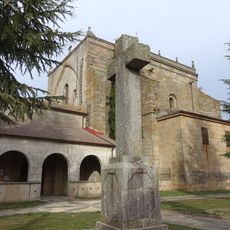
Campo de Robledo, Subcomarca in the Comarca de Ciudad Rodrigo, Salamanca province, Spain
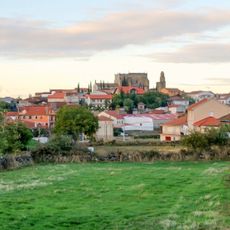
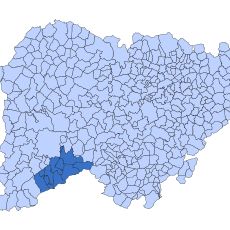
Campo de Robledo comprises five municipalities spread across agricultural and pastoral land in Salamanca province. The largest settlement is Fuenteguinaldo, while the other four villages are scattered across rolling farmland.
The subcomarca took shape after Fernando II of León founded the diocese of Ciudad Rodrigo in the 12th century, when the Tierra de Ciudad Rodrigo was divided into sexmos and Campo de Robledo was one of them. Most villages date from the medieval repopulation by the kings of León; La Encina is the exception, created in the Modern Age from a dehesa of Pastores. In 1833 the area was placed in the province of Salamanca.
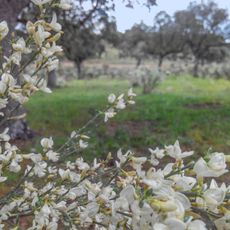
The name Campo de Robledo comes from the oak groves (robledo) that cover part of the territory. The subcomarca was one of the sexmos into which the Tierra de Ciudad Rodrigo was divided after Fernando II of León created the diocese of Ciudad Rodrigo in the 12th century. Ten municipalities belong to it, five of them within the El Rebollar subcomarca.
Roads connect the five municipalities, allowing visitors to explore the entire region by car. Plan for a vehicle as settlements are spread out and public transport is limited.
The Campo de Robledo lost two thirds of its population in fifty years: until the 1950s nearly every municipality had over 1,000 inhabitants, and after the rural exodus of the 1960s all except Fuenteguinaldo fell below 500. La Encina is the exception in origin, a dehesa of Pastores only founded in the Early Modern period.
The community of curious travelers
AroundUs brings together thousands of curated places, local tips, and hidden gems, enriched daily by 95,298 contributors worldwide.