Irueña Reservoir, Reservoir in the province of Salamanca, Spain
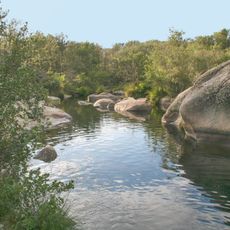
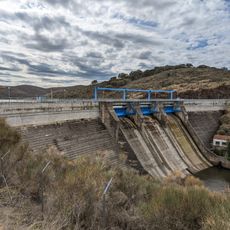
Irueña Reservoir is a concrete arch-gravity dam on the middle Águeda River in Salamanca province, built between 1997 and 2003. Its crest is 420 m long and 8 m thick, rising 68.5 m above the riverbed, with a spillway of five 13 m bays without gates. The reservoir stores up to 110 hm³ over 600 ha.
Construction of the dam began in 1997 and ended in 2003, designed by Isidro Lázaro Martín and built by Ferrovial-Agromán for 34,747,698.57 euros. Its main purpose was to regulate the Águeda River and prevent flooding in the Arrabal del Puente neighbourhood of Ciudad Rodrigo. Filling was completed on 14 March 2014, when water first spilled over the surface spillways after four phases set by the Ministry of Agriculture, Food and Environment.
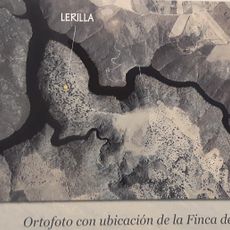
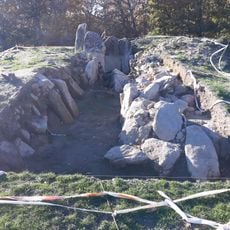
The ruins of an old Celtic fortress overlook the water from about 30 meters above the surface, marking where ancient people once lived. The reservoir takes its name from this fortress, connecting the present landscape to its past inhabitants.
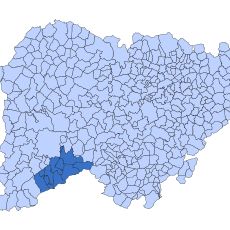
The dam stands in the municipalities of El Bodón and El Sahugo, and the reservoir also reaches Fuenteguinaldo and Robleda. Its crown is 420 m long and 8 m thick, with 1,250 m of internal galleries. The spillway has five 13 m bays without gates, so water flows over it when the reservoir reaches its normal maximum level of 772.5 m.
The reservoir's name comes from a Celtic hillfort standing 30 m above the water, after which the dam and reservoir were named. The dam itself is a concrete arch-gravity structure holding 325,000 m³ of concrete, with a 420 m crest and 1,250 m of internal galleries. Its ungated spillway has five 13 m bays.
The community of curious travelers
AroundUs brings together thousands of curated places, local tips, and hidden gems, enriched daily by 94,774 contributors worldwide.