Santa María la Real de las Huelgas, Cistercian monastery in Valladolid, Spain
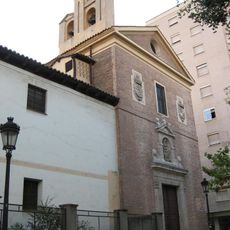
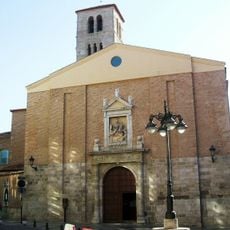
Santa María la Real de las Huelgas is a Cistercian monastery in Valladolid. Its church, built between 1579 and 1599 by Juan Ribero de Rada, Juan de Nates and Mateo de Elorriaga, has a single nave of three bays with a barrel vault pierced by lunettes and a dome over the crossing. The square cloister, begun in 1622 under Francisco de Praves, has a stone lower storey with round arches and a brick upper floor.
Queen María de Molina donated her palace in 1282 to establish this monastery for the Cistercian order to implement their ideals. The complex suffered damage during conflicts with King Alfonso XI in 1328.
The monastery keeps the name "las Huelgas", from the fallow land outside the walls where María de Molina's palace stood. The high altarpiece, designed by Francisco de Praves with sculptures by Gregorio Fernández around 1613, centres on Christ freeing himself from the cross to embrace Saint Bernard. The 1706 organ by Juan Casado Valdivieso was first placed in the choir.
An active community of Cistercian nuns maintains the monastery and continues their daily traditions within its walls. Visiting hours may vary due to the community's schedule, so it is best to check ahead before planning a trip.
The only Mudéjar structure left in Valladolid is a brick gateway with a pointed horseshoe arch, thought to have belonged to María de Molina's palace. In the 15th and 16th centuries it served as the bell tower of the nearby church of La Magdalena.
The community of curious travelers
AroundUs brings together thousands of curated places, local tips, and hidden gems, enriched daily by 94,990 contributors worldwide.