Plaza de toros de Campofrío, Historical bullring in Campofrío, Spain
The Plaza de toros de Campofrío is a circular bullring built in 1716. Its inner barrier wall is 53.70 m in diameter, 40 cm thick and 1.25 m high; a concentric outer wall forms a 1.2 m-wide, 1.60 m-high seating step, with a 2.05 m-wide callejón between them. The main entrance faces west, opposite the bull pens.
In 1716 the cofrades of the Cofradía de Santiago Apóstol and local residents, then dependent on Aracena, asked its Cabildo for permission to build a circular masonry bullring on the land known as Navalmentiño, and work began that same summer. Campofrío became a villa in its own right only in 1753, by royal privilege of Fernando VI. The ring has been a Bien de Interés Cultural since July 2016 and belongs to the Unión de Plazas de Toros Históricas since 2001.
The brotherhood of Santiago Apóstol, which had organized bullfighting in the village for nearly a century, built the ring in 1716; its history is inseparable from that of the cofradía. Since 2001 the arena has belonged to the Unión de Plazas de Toros Históricas, and in July 2016 it was entered in the Catálogo General del Patrimonio Histórico Andaluz as a Bien de Interés Cultural.
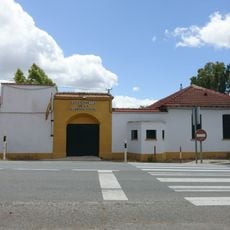
The ring stands free on all sides, with its main entrance facing west and the presidential box directly opposite the bull pens. A 2.05 m wide callejón separates the barrier wall from the seating ring and serves as the way in and out. The site lies on the edge of the village, on the land once called Navalmentiño.
The bullring appeared on a National Lottery ticket for the draw of 18 March 1971, number 9, when the lottery series illustrated monuments; the arena was chosen for its age. Since then the ring has hosted clay-pigeon shooting championships, a tennis court, concerts and astronomy sessions.
The community of curious travelers
AroundUs brings together thousands of curated places, local tips, and hidden gems, enriched daily by 95,351 contributors worldwide.