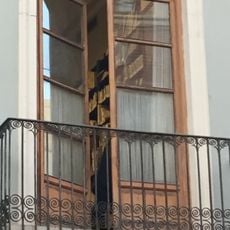
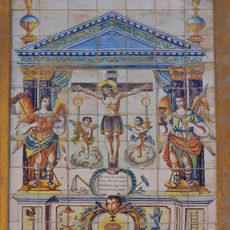
Palau Arquebisbal de València, Archbishop's palace in La Seu, Valencia, Spain
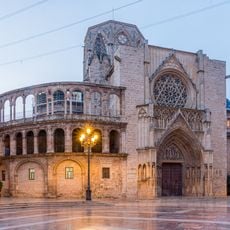
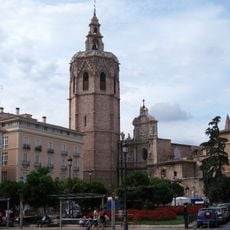
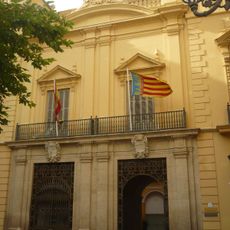
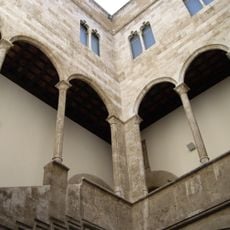
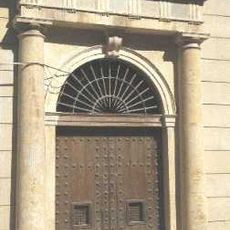
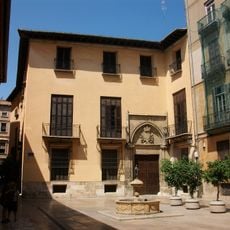
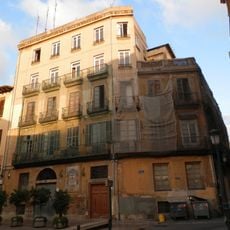
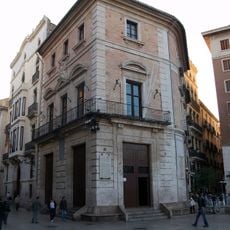
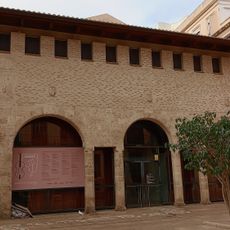
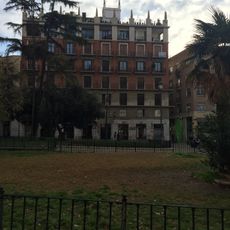
Palau Arquebisbal de València is an archbishop's residence next to Valencia Cathedral featuring pink brick facades over stone bases and molded balconies. The building displays a central section with stone railings and includes a distinctive corner tower with semicircular openings on each side.
The palace began with about nine houses that James I of Aragon sold opposite the church of Santa María, later the cathedral. On 15 June 1360 Peter the Ceremonious allowed Bishop Vidal to buy adjoining buildings, and Bishop Hugo de Fenollet built the arch linking palace and cathedral, consented by the city jurors on 2 May 1357. Archbishop Mayoral and Fabián y Fuero reformed it in the 18th century; after the 1936 fire it was demolished in 1940 and rebuilt 1941–1946 by Vicente Traver.
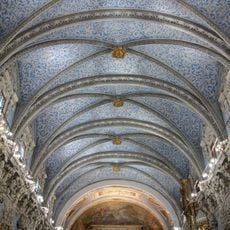
The 1820–1825 academic-style chapel survives from the earlier palace, with a barrel vault, a dome on a drum lit by eight windows, and a marble balustrade before the presbytery. Eight low reliefs show scenes of the Virgin, and frescoes by Francisco Llàcer depict the transfer of the House of Loreto.
The palace sits on Palau Street adjacent to the cathedral square and operates as an active residence and administrative center with limited public access. Visitors should understand this is a functioning ecclesiastical building and viewing may be restricted to specific times or require special permission.
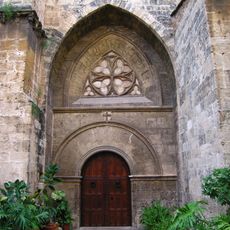
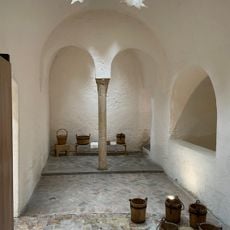
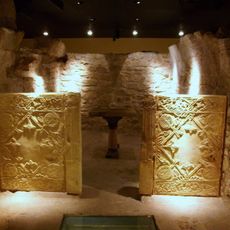
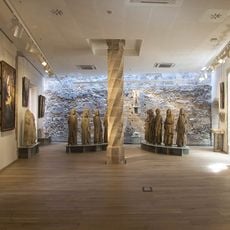
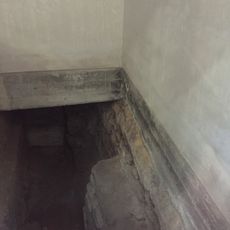
The palace preserves pointed 13th-century arches, an octagonal-based pillar and a Gothic capital, reused as building elements in the new meeting room after the 1941-1946 reconstruction. The neoclassical chapel structure was also partly respected.
The community of curious travelers
AroundUs brings together thousands of curated places, local tips, and hidden gems, enriched daily by 93,500 contributors worldwide.