Cova des Pirata, Limestone cave in Manacor, Spain
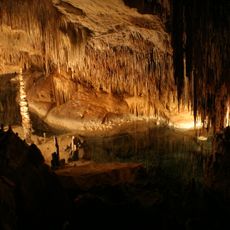
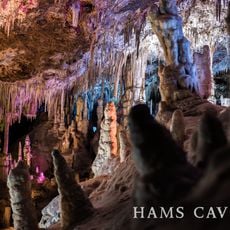
Cova des Pirata is a limestone cave near Manacor containing multiple chambers where stalactites and stalagmites have formed in intricate patterns along the passages. The interior reveals the different shapes that water has carved into the stone over time.
The cave was formed by karst dissolution of limestone. Its oldest graffito is dated 1614, similar to one in the Coves d'Artà, possibly by the same hand. In 1897 it was opened as a show cave for Manacor's agricultural exhibition and fairs, with a stepped circuit and benches at the entrance that still stand; it later closed after a change of owner. In 1901 Édouard Alfred Martel visited and published sketches in 1903, naming its lakes Lac des Sylphes and Lac des Ondines.
The cave represents an important part of Mallorca's geological heritage and shows how underground water systems have shaped the island over time. Visitors can see these natural processes directly in the chambers and passages.
The ground can be slippery, so shoes with good grip are important and a light source helps in the darker sections. The paths wind through narrow passages that require careful movement.
The cave's lakes were named Lac des Sylphes and Lac des Ondines by the French cave explorer Édouard Alfred Martel, who visited in 1901 and published sketches in 1903. A first dive into the large lake followed in 1972, and in 1989 divers found a flooded gallery linking the cave with the Cova des Pont.
The community of curious travelers
AroundUs brings together thousands of curated places, local tips, and hidden gems, enriched daily by 94,243 contributors worldwide.