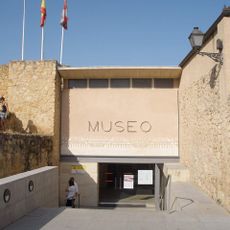
Museo Zuloaga, Art museum in Segovia, Spain
The Museo Zuloaga occupies the former Church of San Juan de los Caballeros, a rectangular building with three semicircular apses and two rectangular side naves, raised over a Visigothic structure and enlarged between the 10th and 13th centuries. It houses about 150 ceramic pieces made by Daniel Zuloaga and paintings by his nephew Ignacio Zuloaga.
The building stands on a Visigothic-era structure, with side walls and new apses added between the 10th and 13th centuries. Abandoned at the end of the 19th century, it served as a lumber warehouse and garage until Daniel Zuloaga bought it in 1905 and converted it into a workshop and office. The building was declared a historic-artistic monument in 1931, and the museum itself received the same designation in 1962.
The museum bears the name of Daniel Zuloaga, the ceramicist and painter who bought the former church in 1905 and set up his workshop and office there. In the kilns he installed on the building's north side, early 20th-century Spanish ceramics were fired; about 150 pieces are on display, alongside paintings by his nephew Ignacio Zuloaga.
The museum stands at plaza de Colmenares in Segovia's old town, in the former church of San Juan de los Caballeros, reachable on foot through the historic centre. The building has a rectangular plan with three semicircular apses and two rectangular side naves, so expect changes of level and uneven floors. About 150 ceramic pieces are on display, with the collection still being catalogued.
Daniel Zuloaga installed his kilns on the north side of the former church, and ceramics fired there in the early 20th century are now partly kept in the museum, which displays about 150 pieces alongside paintings by his nephew Ignacio Zuloaga.
The community of curious travelers
AroundUs brings together thousands of curated places, local tips, and hidden gems, enriched daily by 94,696 contributors worldwide.