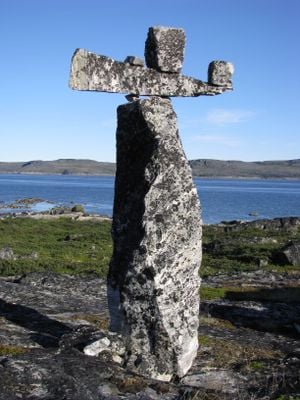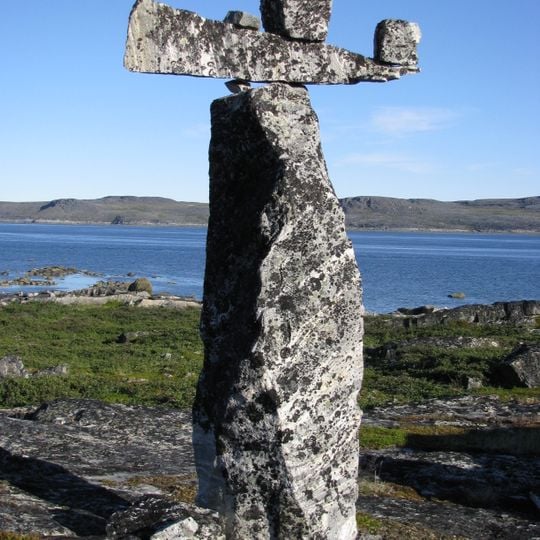
Hammer of Thor, Archaeological site along Arnaud River, Ungava Peninsula, Canada
The Hammer of Thor is a stone formation on the Ungava Peninsula consisting of three stacked rocks arranged in a distinctive T-shape. The structure stands as a carefully balanced composition of vertical and horizontal elements positioned along the Arnaud River.
The structure was discovered in 1964 by anthropologist Thomas Lee during an Arctic expedition. Lee initially theorized a connection to medieval Norse activity in the region.
This stone formation resembles traditional Inuit stone cairns, though local Inuit communities suggest the monument predates their settlement in the area. The shape and arrangement indicate it may have been created by earlier inhabitants or visitors to this Arctic region.
You need boat or aircraft transport to reach the remote village of Kangirsuk. From there, reaching the site requires hiking through tundra terrain and following the river course.
The true origin and purpose of the monument remain a mystery, as Inuit communities report it predates their documented presence in the area. This unsolved riddle makes it one of the Arctic's most puzzling archaeological questions.
The community of curious travelers
AroundUs brings together thousands of curated places, local tips, and hidden gems, enriched daily by 91,906 contributors worldwide.