Sutra Pillar of the Ksitigarbha Temple, Buddhist religious pillar in Kunming, China
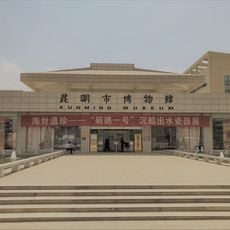
The Sutra Pillar of the Ksitigarbha Temple is a seven-storey, eight-sided column of red sandstone, 6.5 metres tall, now standing in the central hall of the Kunming Museum. It tapers upward from a 1.1-metre base and is carved with 300 Buddhist figures, including guardian deities, Buddhas, and bodhisattvas, arranged as a three-dimensional mandala.
The pillar was carved during the Dali Kingdom (937–1253) inside the Ksitigarbha Temple. Its inscription names the Dali official Yuan Douguang as donor, who commissioned it to praise the hereditary Shanchan prefect Gao Mingsheng and to show his own service to the young lord Gao Shengshi. Buried for centuries, it was rediscovered in 1919 and excavated in 1923; in 1982 it became a National Key Cultural Relic.
The pillar honors Ksitigarbha, a bodhisattva revered in Chinese Buddhism as a protector of the deceased. Visitors can observe this veneration expressed through the carvings and layout of the temple grounds.
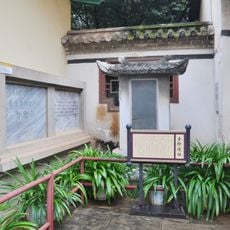
The pillar stands within a temple complex and is best visited as part of exploring the surrounding religious site. Take time to examine the carvings and inscriptions on the stone surface closely.
The inscriptions on the pillar contain actual Buddhist sutras carved directly into the stone as sacred texts. This made the monument function simultaneously as a memorial and as a physical record of religious teachings.
The community of curious travelers
AroundUs brings together thousands of curated places, local tips, and hidden gems, enriched daily by 93,186 contributors worldwide.