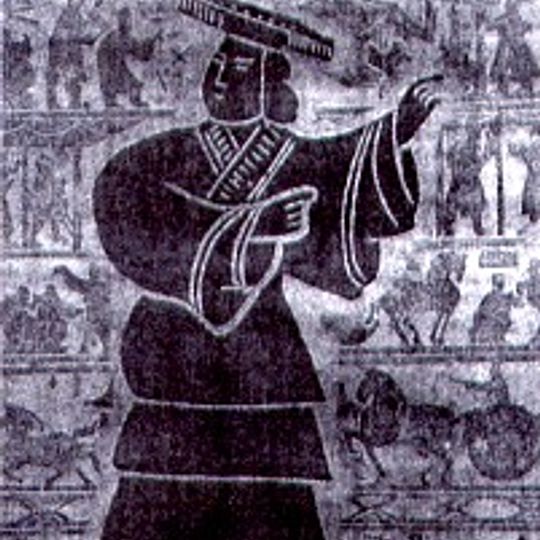
Wu Family Shrines, Archaeological site in Jiaxiang County, Shandong, China.
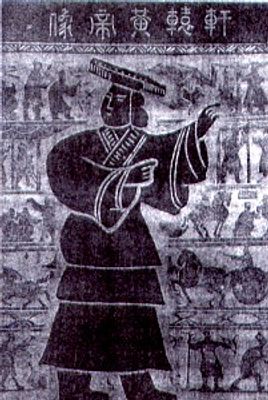
The Wu Family Shrines are an archaeological site in Jiaxiang County, Shandong province, made up of several stone burial chambers and memorial structures from the Eastern Han period. The flat stone slabs covering these structures are carved on most surfaces, showing figures, animals, and narrative scenes arranged in horizontal bands.
The tomb structures were built in the 2nd century AD for members of the Wu family, including the Wu Liang Shrine completed in 151 AD. After the structures were destroyed sometime during the 11th century, the carved stones lay buried and forgotten for hundreds of years.
The carvings show scenes from everyday life in the Han period: sons serving their fathers, officials carrying out their duties, and figures from Chinese mythology. Looking closely at the stone panels gives a clear sense of what people considered natural and right at the time.
The site is in Jiaxiang County and can be seen in half a day, though more time lets you study the carvings at a comfortable pace. Some areas are covered and others are in the open, so it is worth checking the weather before you go.
When a private scholar came across the stones in the mid-1700s, many had already shifted far from their original positions and were scattered across the area. Figuring out which slab belonged to which structure became one of the biggest challenges for later researchers.
The community of curious travelers
AroundUs brings together thousands of curated places, local tips, and hidden gems, enriched daily by 90,898 contributors worldwide.