Shou Qiu, Ancient imperial tomb and monument site in Qufu, China
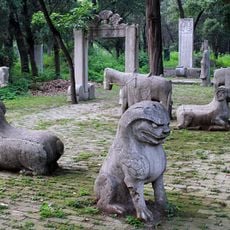
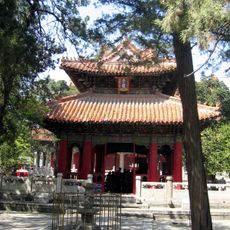
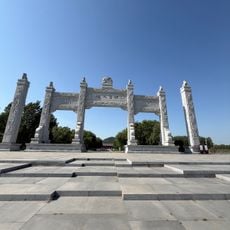
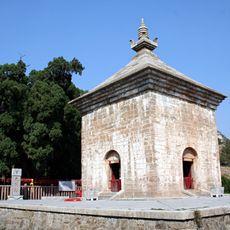
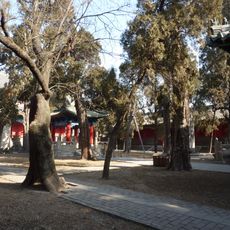
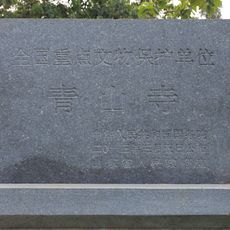
Shou Qiu is a historical site on the eastern outskirts of Qufu, Shandong, China, marked by a stone-clad step pyramid from the 12th century that represents the legendary hill. At its top is a small pavilion housing a statue now identified as Shaohao. The site is part of the same complex as Shaohao's tomb, which stands just behind the pyramid. Two giant turtle-borne steles, remnants of a Song-dynasty shrine to the Yellow Emperor, stand near the monument with a small lake between them.
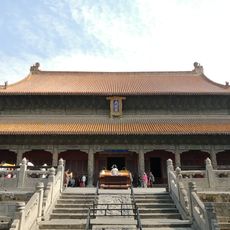
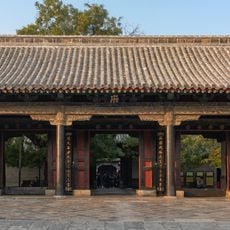
In 1012, Emperor Zhenzong of the Song dynasty had the Jingling Palace built at Shou Qiu to honour the Yellow Emperor, whom the Song claimed as their ancestor. The complex included government offices, a shrine and two giant turtle-borne steles, but the steles were left unfinished when the Jurchens took the region. The palace decayed and was destroyed by the end of the Yuan; only the two steles survive.
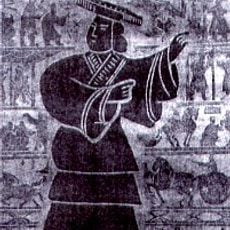
The site is regarded as the legendary birthplace of the Yellow Emperor and as the burial place of Emperor Shaohao, giving it deep roots in Chinese mythology. Visitors today can walk around the pyramid-shaped burial mound and observe the stone steles resting on turtle bases, a form traditionally associated with longevity and imperial power.
The site is open and easy to walk through, but it is large enough to take a good hour to see properly. Morning light falls well on the stone surfaces and the lake, making early visits rewarding.
The eastern stele, Wan Ren Chou, is 16.95 m tall including its turtle base and dragon crown, 3.75 m wide and 1.14 m thick, and weighs 250 tons. Its name, "Sorrow of Ten Thousand," is said to recall the many people needed to move it. It is often called the largest blank stele in China.
The community of curious travelers
AroundUs brings together thousands of curated places, local tips, and hidden gems, enriched daily by 93,458 contributors worldwide.