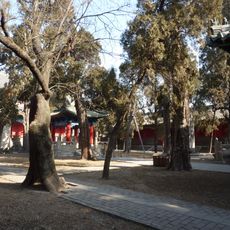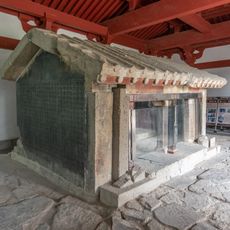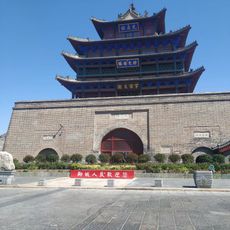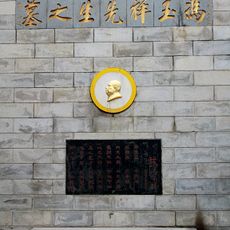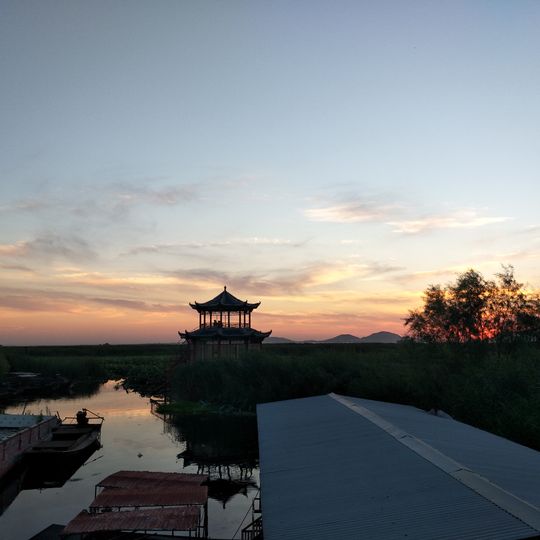
须昌故城, Archaeological site in Shandong Province, China
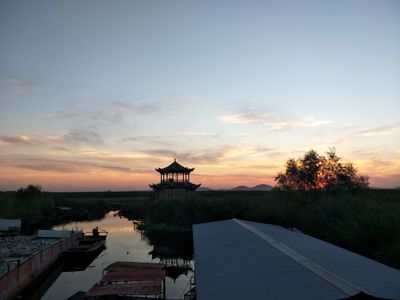
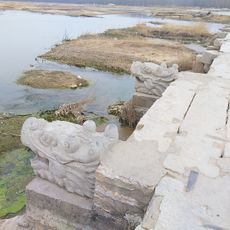
Xuchang Ancient City, also called Xucheng, lies submerged in Dongping Lake in western Dongping County, Shandong, southeast of Jinshan and between the former Tudao Island and Buzi village sites. Founded in the Spring and Autumn period as the capital of the ancient Xuju state, it later served as seat of Dongping Commandery and Yunzhou. Its layout is unknown; the nearby Qingshui stone bridge and the Suyuan Pavilion ruins are its surviving monuments.
Xuchang began in the Spring and Autumn period as the capital of the Xuju state, which fell to Zhu in 639 BC and was retaken by Lu the following year. In 634 AD the seat of Yunzhou moved there, making it a political and economic centre; it was renamed Xucheng in 923. In 1000 AD a Yellow River breach at Wangling flooded the city, which was abandoned and later submerged beneath Dongping Lake.
The name Xuchang was changed to Xucheng in 923 during the Later Tang to avoid a naming taboo. In the local Dongping dialect 'Su' and 'Xu' sound alike, so since the Qing dynasty the old town of Sucheng has often been miswritten as Xucheng; the district only reverted to Sucheng in 1988. Fishermen on Dongping Lake still haul up copper coins and other relics near the submerged site.
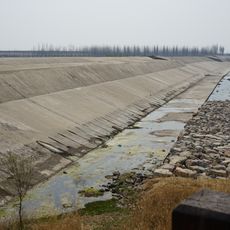
The site lies underwater in Dongping Lake, west of Dongping County, southeast of Jinshan and east of the former Tuzi village; the lake surface there is administered by Laohu Town. It can only be examined by diving, and the lake is shallow but its silt layer is very deep, which made the 2015 underwater survey by the national underwater heritage centre and Shandong authorities difficult. Fishermen have recovered copper coins and other objects from the water near the ruins.
The site lies entirely underwater in Dongping Lake, and in spring 2015 the Chinese Academy of Cultural Heritage's underwater centre and Shandong authorities made it the first inland underwater archaeology project in China. The lake is shallow but its silt is deep, which made the survey difficult. Local fishermen have pulled copper coins and other objects from the water near the ruins.
The community of curious travelers
AroundUs brings together thousands of curated places, local tips, and hidden gems, enriched daily by 93,548 contributors worldwide.