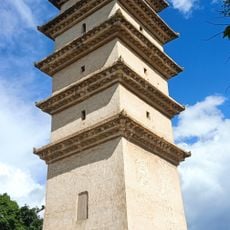
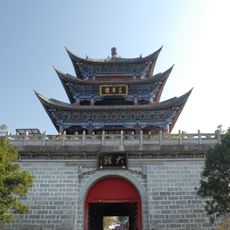
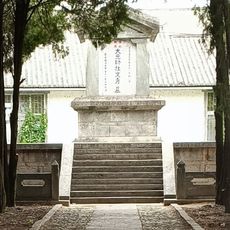
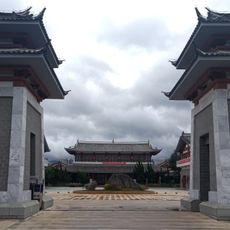
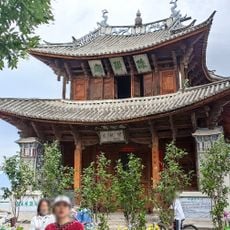
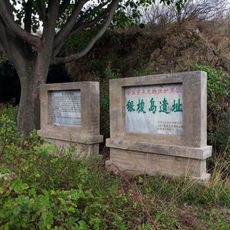
Taihe City, Archaeological site in Dali Bai Autonomous Prefecture, China.
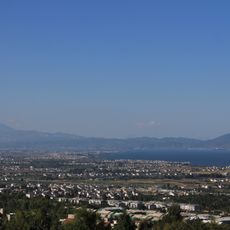
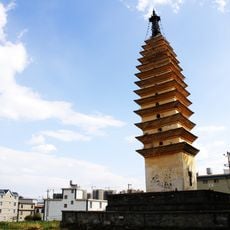
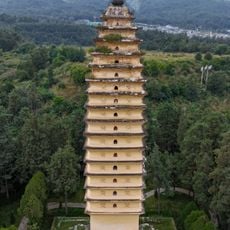
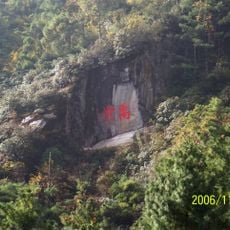
Taihe City is a ruined Nanzhao capital at the western foot of Foding Mountain, its rammed-earth north and south walls running east toward Erhai Lake. The south wall survives for 3,350 m and the north for 3,225 m, up to about 3 m high; the west and east walls are gone and no buildings remain above ground.
The city was established during the Nanzhao Kingdom and remained an important center for several centuries. In the 20th century, the site gained status as a nationally protected historical and cultural monument.
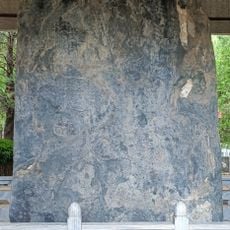
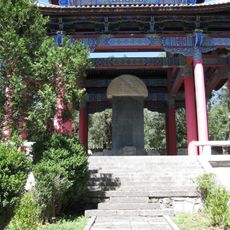
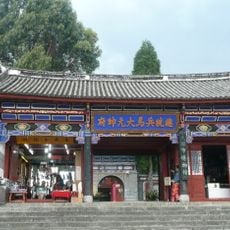
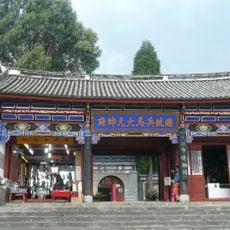
The name Taihe comes from the city's position on a large mountain slope. The site is also the findspot of the Nanzhao Dehua Stele, whose text records the unification of the Six Zhao, the three Tang campaigns against Nanzhao, and the submission to Tubo. The stele was rediscovered in 1788 by the epigrapher Wang Chang, and a protective pavilion was built in 1798.
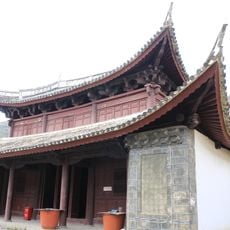
The site lies west of Taihe Village, in Qiliqiao Township, at the western foot of Heding Peak, with the north and south rammed-earth walls running east toward Erhai Lake. The ground inside the walls shows no standing buildings, only pottery shards and inscribed tiles, so wear sturdy shoes. The Nanzhao Dehua Stele stands in the southwest of Taihe Village, protected by a pavilion built in 1798.
The Nanzhao Dehua Stele, 3.02 m high and 2.2 m wide, was erected in 766 by King Geluofeng. Its 40-line inscription of over 3,800 characters records early Nanzhao history and relations with Tang China and Tubo. It was rediscovered in 1788 by the epigrapher Wang Chang, and a protective pavilion was built in 1798.
The community of curious travelers
AroundUs brings together thousands of curated places, local tips, and hidden gems, enriched daily by 93,261 contributors worldwide.