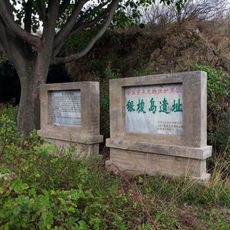
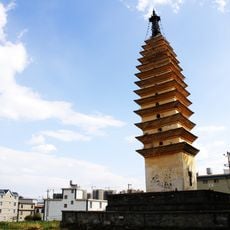
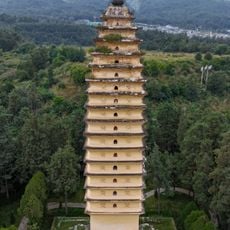
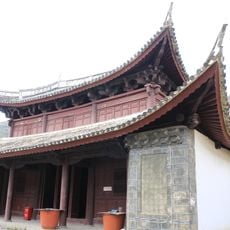
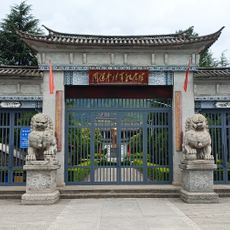
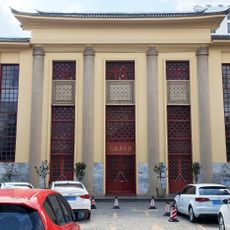
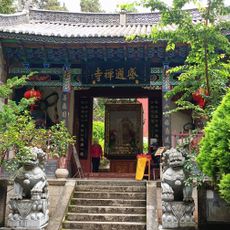
Stele of Kublai Khan occupied Yunnan, National heritage monument in Dali Town, China
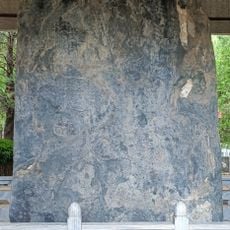
The Stele of Kublai Khan is a stone monument inscribed with records of Yuan Dynasty administrative expansion and control methods in the Yunnan region. The carved text describes how the Mongol-led government organized and maintained order across the territory.
The stele was erected in 1304 under Yuan Chengzong, when Yunnan's chief administrator Yesudar proposed it and Hanlin scholar Cheng Wenhai wrote the text. It recounts how Mongke ordered his brother Kublai and general Uriyangkhadai to conquer the Dali Kingdom in 1252, which was subdued the following year. Its inscription is dated "second year of Yuanxian", a reign name that never existed, so the date remains debated.
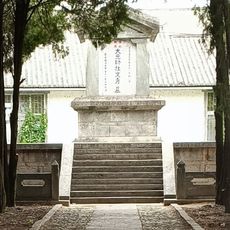
The stele stands in the Sanyue Street market ground of Dali, where it was erected in 1304 at the request of Yunnan governor Yesudar. Its text was composed by Cheng Wenhai of the Hanlin Academy, and the reverse face records the titles of the officials who sponsored it. The upper block recounts the conquest, the lower praises Kublai Khan's merits.
The monument is accessible throughout the year and located in a central spot within Dali Town that is easy to reach on foot. Local guides and tourism information offices can provide explanations of the inscriptions and their historical significance.
The stele's date is disputed: its inscription ends with the era name "Yuanxian 2", which no Yuan emperor ever used, so the founding year is debated. During the Cultural Revolution students toppled it in 1966 and chiselled away 196 characters; it was re-erected and reinforced in 1975.
The community of curious travelers
AroundUs brings together thousands of curated places, local tips, and hidden gems, enriched daily by 94,069 contributors worldwide.