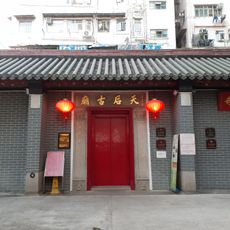
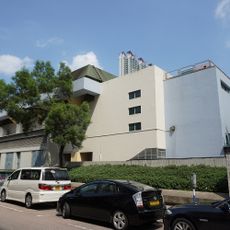
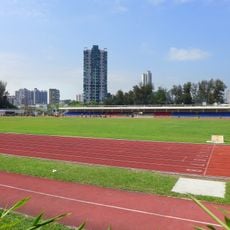
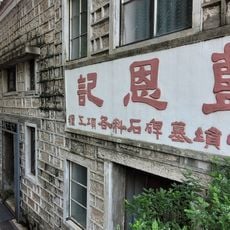
Sheung Tai Temple, Chinese temple in Kowloon City District, Hong Kong.
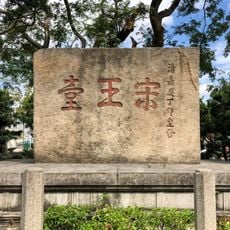
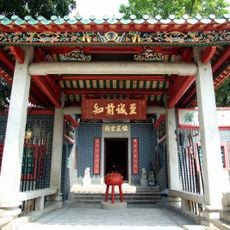
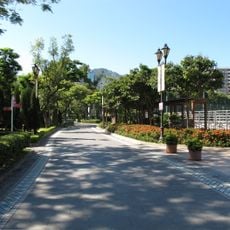
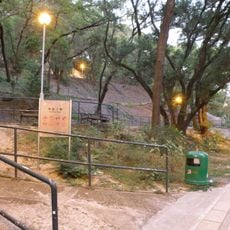
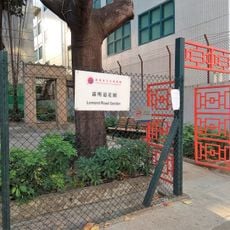
Sheung Tai Temple survives only as a stone gate standing in Lai Ming Road Park in Kowloon City, beside the former Ma Tau Wai village (also called Gujinwei). The gate carries a couplet reading "True righteousness endures for a thousand years, a brilliant presence; martial merit surpasses all ages, a resounding name." A memorial plaque erected by the Hong Kong government on 1 September 1962, with text by Rao Zongyi, records the site.
The temple stood beside the old village of Ma Tau Wai, also called Gujinwei, and was dedicated to the Northern Emperor, known as Pak Tai. A stone tablet recorded a restoration funded by villagers' donations in the winter of 1896, during the Guangxu reign; that tablet, like the temple's other fittings, has disappeared. Only the stone gate with its couplet survives, and in September 1962 the Hong Kong government erected a memorial inscription composed by Rao Zongyi at the site.
The temple was dedicated to the North God, also called Beiji Xuantian Shangdi, shortened to Sheung Tai, which gives the site its name. Only the stone gate with its couplet survives, so the name now marks a ruin rather than an active place of worship.
The site is the stone gate of the former Sheung Tai Temple, now standing in Lai Ming Road Park in Kowloon City. Only the gate and couplets survive, so there is no interior to walk through; look for the stone door frame and the 1962 memorial tablet nearby.
Only the stone gate of the temple survives, standing in Lai Ming Road Park. Its couplet reads: "True righteousness endures for a thousand years, a brilliant presence; martial deeds surpass all ages, a resounding name." A memorial stone erected by the Hong Kong government on 1 September 1962, with text by Rao Zongyi, records the site.
The community of curious travelers
AroundUs brings together thousands of curated places, local tips, and hidden gems, enriched daily by 93,317 contributors worldwide.