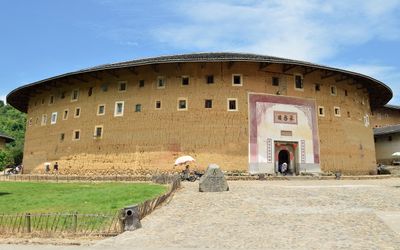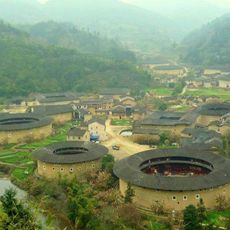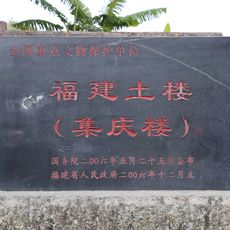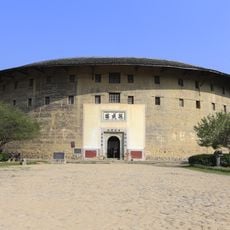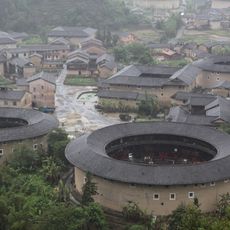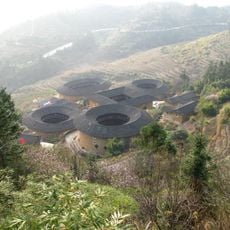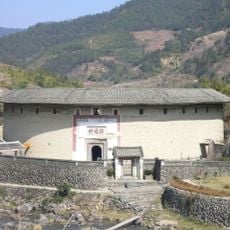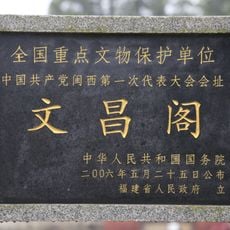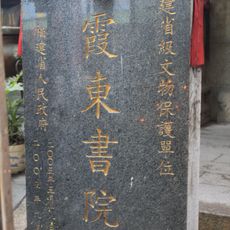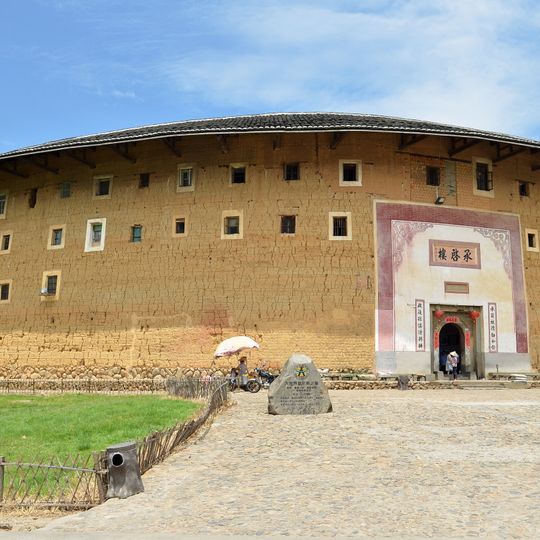
Chengqi Tulou, Traditional communal residence in Yongding County, China.
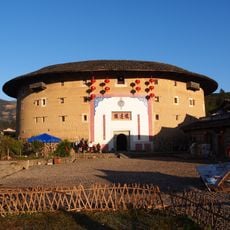
Chengqi Tulou is a massive round earthen dwelling featuring four concentric rings arranged around a central ancestral hall at its core. The structure holds 288 rooms distributed across multiple stories, all built from rammed earth, stone, and bamboo reinforcement.
This earth dwelling was completed in 1709 during the Qing Dynasty as the Hakka sought better protection from external dangers. The thick-walled earthen construction provided both safety and insulation suitable for the mountainous climate of the region.
The circular layout grew from the Hakka need to live together as an extended family while preserving their customs and mutual support. Shared cooking facilities and storage areas throughout the building show how families depended on each other for daily survival.
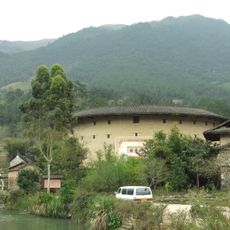
The site sits in Yongding County and is reachable by bus from Xiamen or Longyan, followed by local transportation to reach the tulou cluster. Walking from the outer rings inward toward the central hall helps visitors grasp the building's layout and how families occupied different levels.
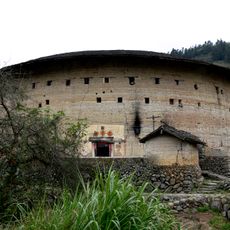
The walls are made from compacted earth mixed with stone and bamboo, representing an unusual building technique used in this region for centuries. These materials naturally store and release heat, keeping the building cool in summer and warm in winter, which partly explains why it has lasted so long.
The community of curious travelers
AroundUs brings together thousands of curated places, local tips, and hidden gems, enriched daily by 90,767 contributors worldwide.