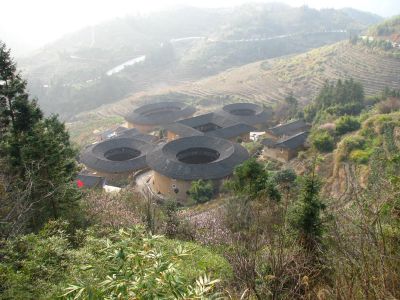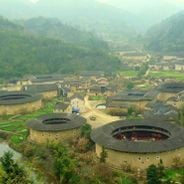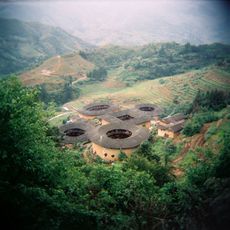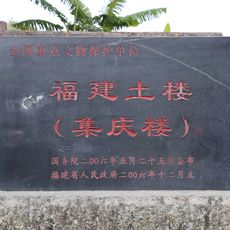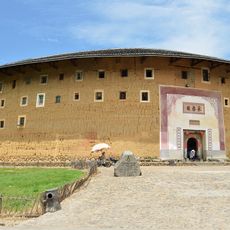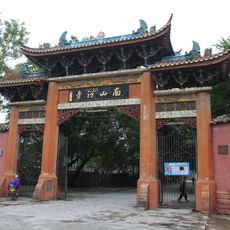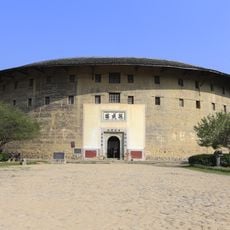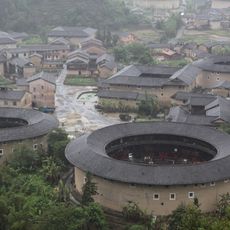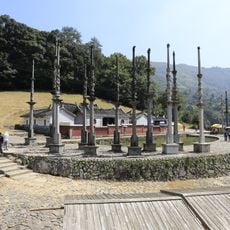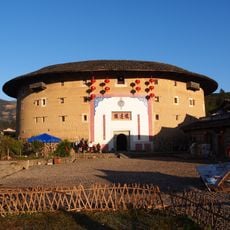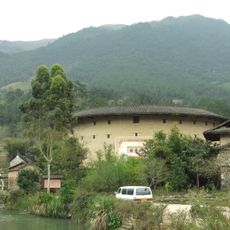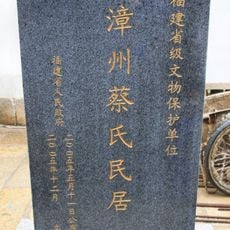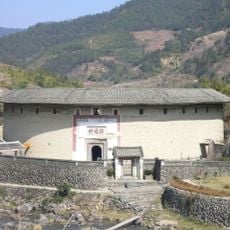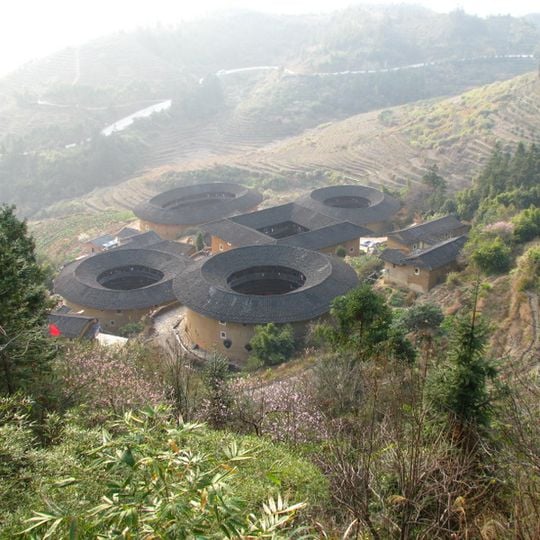
Hongkeng Tulou Cluster, Earth fortresses in Hongkeng Village, China
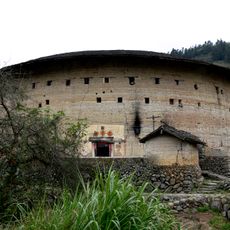
The Hongkeng Tulou Cluster consists of several circular and rectangular earthen buildings with thick walls made of stone, bamboo, and wood. These structures showcase traditional construction techniques passed down through generations, featuring complex interior layouts with multiple stories.
These buildings originated as residences for Hakka families starting in the 12th century and provided protection against outside threats in southeastern China. They developed over several centuries into significant settlements and remained inhabited into the 20th century.
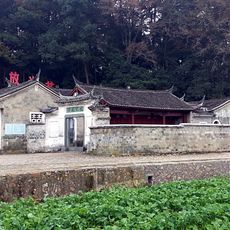
These structures embody the daily life of Hakka communities, with private rooms arranged around a central courtyard where families gathered for shared activities. The layout demonstrates the importance of collective living within the architectural design itself.
The site is accessible during daylight hours, with the best conditions for exploring in the morning when the sun is low and photography is easier. Interior areas may have narrow stairs and uneven floors, so comfortable footwear is essential.
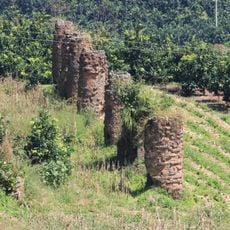
Some of the buildings feature unexpected architectural elements such as Western columns mixed into traditional design, showing how outside influences shaped local construction practices. This blend is not immediately obvious and is often overlooked when first viewing the structures.
The community of curious travelers
AroundUs brings together thousands of curated places, local tips, and hidden gems, enriched daily by 92,350 contributors worldwide.