Hekeng village tulou cluster, Historical residential complex in Fujian Province, China.
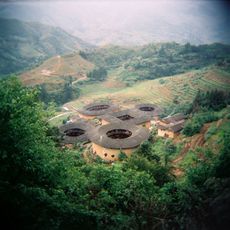
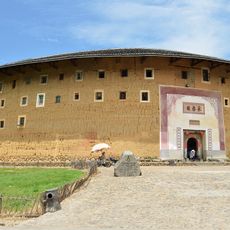
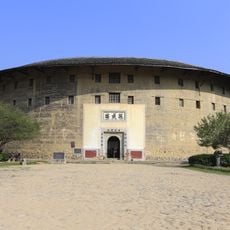
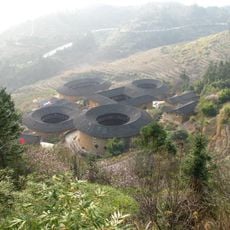
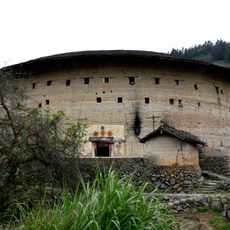
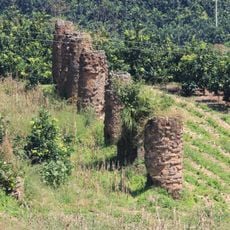
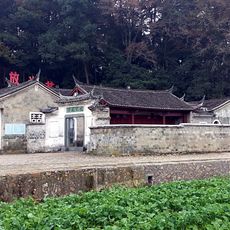
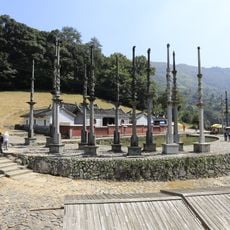
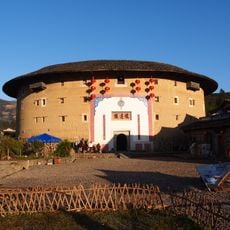
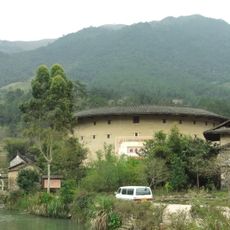
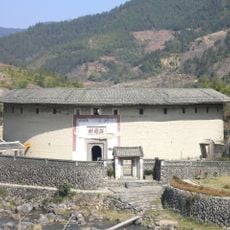
Hekeng village comprises multiple circular and rectangular earthen buildings with thick walls, central courtyards, and multi-story residential units clustered closely together. These structures are organized in a compact arrangement that follows the natural landscape of the mountainous terrain.
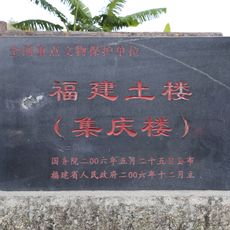
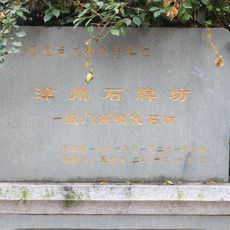
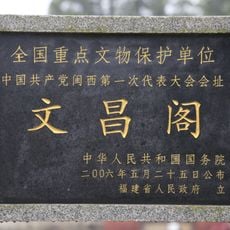
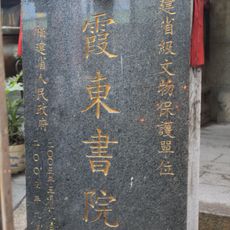
The 13 earthen buildings of Hekeng were raised between the Jiajing era of the Ming dynasty (1522–1566) and the 1960s, a span of more than 400 years, as the settlement of the Zhang clan. The cluster was inscribed as a World Heritage Site in 2008 as a representative example of Fujian Tulou, listed among Fujian's protected cultural relics in 2009 and as a national key cultural relic in 2013.
Hekeng is the settlement of the Zhang clan, which built and lived in the thirteen tulou from the Ming Jiajing era (1522–1566) into the 1960s. The buildings are named individually, such as Chaoshui Lou, Yusheng Lou and Nanxun Lou, and the five-sided Nanxun Lou is the only one of its shape in the cluster.
The site is located about three hours from Xiamen city and is accessible by public transportation. Local guides are available to lead tours through the buildings and explain the architectural features and daily life practices.
The buildings use rammed earth construction with wooden and bamboo framing, which provides natural temperature regulation. This ancient building method keeps the interior cool in summer and retains warmth in winter without modern technology.
The community of curious travelers
AroundUs brings together thousands of curated places, local tips, and hidden gems, enriched daily by 93,830 contributors worldwide.