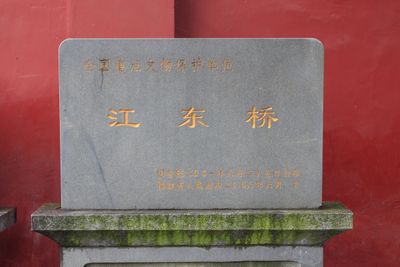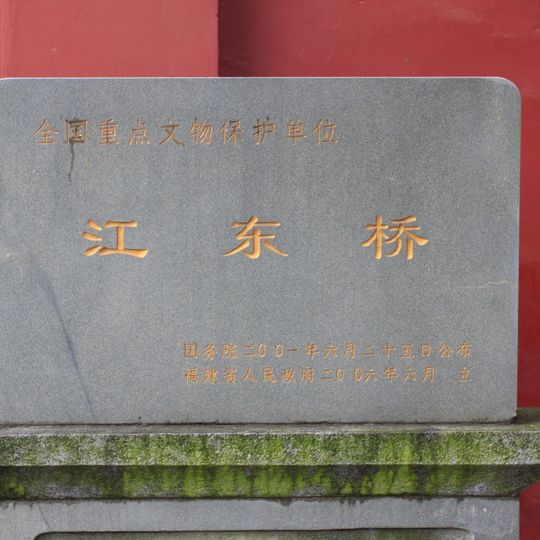
Jiangdong Bridge, Stone beam bridge in Longwen District, Zhangzhou, China
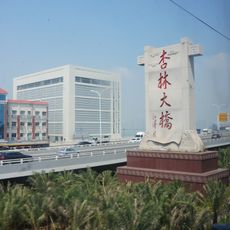
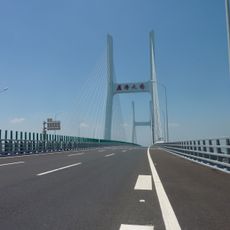
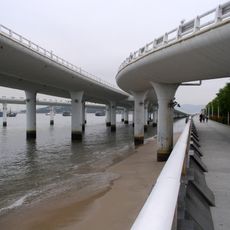
Jiangdong Bridge spans 284 meters across the Beixi waterway, connecting multiple areas through its stone arches and modern concrete sections. The structure forms part of the region's main road network and carries daily traffic.
A floating bridge was first built here in 1190. In 1210, prefect Zhuang Xia had stone piers laid and a wooden bridge erected, named Tongji Bridge. After fire destroyed the wood in 1237, prefect Li Shao donated 500,000 cash to rebuild it in stone; legend says a tiger leaping across the river on submerged rocks gave it the name Hudu Bridge.
Locals call it the Tiger Crossing Bridge, after a legend that a tiger leapt across the river on submerged rocks while the stone bridge was being built. The name survives in the alternative form Hudu Qiao, and the bridge is also known as Tongji Qiao.
The bridge carries National Road 324 over the lower Beixi of the Jiulong River in Longwen District, Zhangzhou. The five surviving original piers and two stone deck slabs stand beside the modern concrete span. The 2007 flood scoured the west bank and broke the first arch, so the riverbank near the old piers is not a safe footing.
The two surviving original deck slabs are each 23 metres long, 1.4 metres wide and 1.4 metres thick. How such blocks were lifted onto the piers remains unexplained. The bridge is called the world's largest stone-beam bridge; Joseph Needham wrote that nothing comparable exists elsewhere in China or abroad.
The community of curious travelers
AroundUs brings together thousands of curated places, local tips, and hidden gems, enriched daily by 93,970 contributors worldwide.