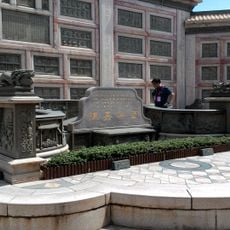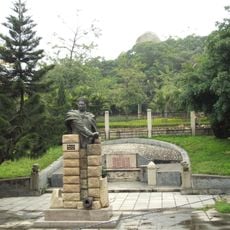
City wall of Xiamen, Ming Dynasty fortification in Xiamen, China.
The City Wall of Xiamen, also known as Zhongzuo Suo City, was a circular Ming fortification with a circumference of about 1,360 metres and a height of about 6 metres. Its walls had a rammed earth core faced with granite blocks, four gates (Qiming, Huaiyin, Qiade, Huangshu), 22 guard posts and 496 battlements. Only two fragments remain on Chumiyan Hill: a 120-metre north section and a 1.5-metre northeast section.
Constructed in the 14th century as protection for the urban core, the wall was later expanded and strengthened to withstand military threats. It witnessed shifts in China's coastal defense strategies across several centuries.
The wall served as protection for merchants and residents moving in and out of the city daily. It reflects how people organized and defended their settlement in that era.
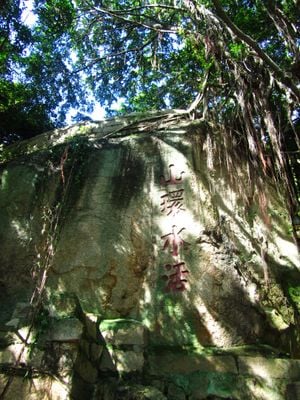
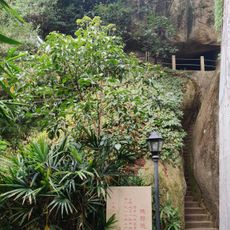
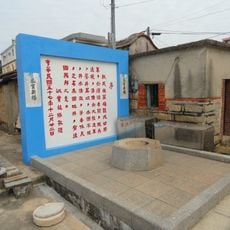
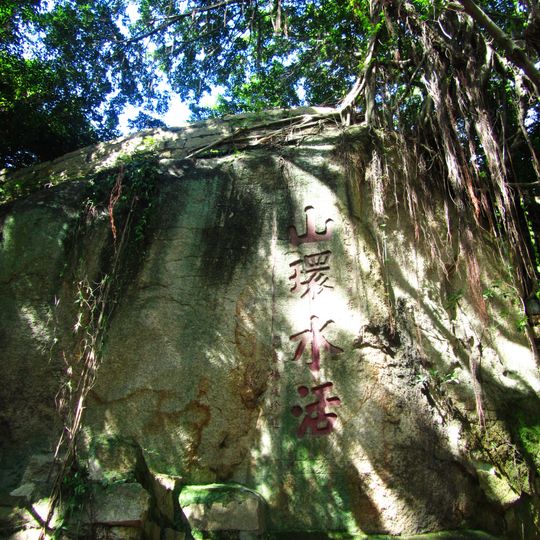
Only fragments of the wall remain on Chumiyan Hill north of the Xiamen Public Security Bureau: a 120 m stretch of the north wall, 1.5–4.5 m high and 3.5 m wide at the top, plus a 1.5 m piece of the northeast wall. Look for the cliff inscriptions "Zhanyun" and "Shan Huan Shui Huo" on the stone. A 64 m section was rebuilt in 1994.
Original stones at certain sections still show craftsmen's marks, providing insight into ancient construction techniques. These details are often overlooked by visitors despite offering clues about building methods from that period.
The community of curious travelers
AroundUs brings together thousands of curated places, local tips, and hidden gems, enriched daily by 93,216 contributors worldwide.