Zhangzhou Confucian Temple, Ancient Confucian temple in Zhangzhou, China
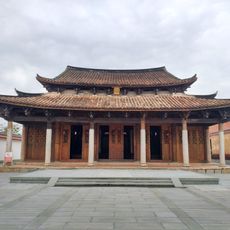
Zhangzhou Confucian Temple, founded in 1139 and rebuilt in 1482, faces south and covers 2,600 square metres. Its surviving structures include the Yi Gate, Dacheng Gate, two side corridors, the Danchi terrace, the altar and the Dacheng Hall. The hall has five bays across and six deep, with a double-eaved hip-and-gable roof typical of early southern Fujian architecture.
Zhangzhou Confucian Temple was first built in 1139, in the ninth year of the Shaoxing era of the Southern Song. It was rebuilt in 1482, the eighteenth year of the Chenghua era of the Ming dynasty. The complex was listed as a National Key Cultural Relic Protection Unit in 2001.
The temple is dedicated to Confucius, and its name in Chinese is Zhangzhou Fu Wenmiao, the Confucian temple of Zhangzhou prefecture. The grounds are laid out along a north–south axis, with the Yi Gate, Dacheng Gate, side corridors, an offering platform and altar leading to the Dacheng Hall. The hall's double-eaved hip-and-gable roof shows early southern Fujian building traits.
The complex faces south on 2,600 square metres in Xiangcheng District, Zhangzhou, Fujian. Enter through the Yi Gate, then the Dacheng Gate, and cross the two side corridors to the raised altar platform and Dacheng Hall. The hall is five bays wide and six deep under a double-eaved hip-and-gable roof.
The temple was inscribed on China's national cultural heritage list in 2001 as part of the fifth batch of Major Historical and Cultural Sites Protected at the National Level. Its Great Hall (Dacheng Hall) is five bays wide and six deep, with a double-eaved hip-and-gable roof showing early Minnan building traits.
The community of curious travelers
AroundUs brings together thousands of curated places, local tips, and hidden gems, enriched daily by 93,917 contributors worldwide.