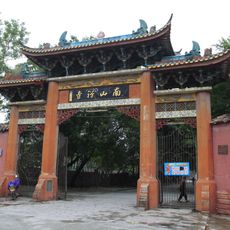
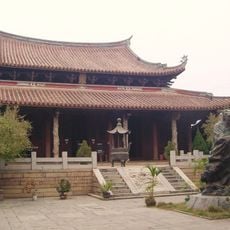
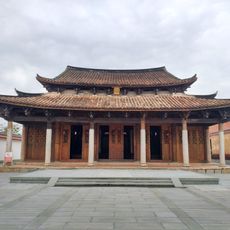
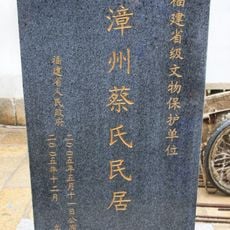
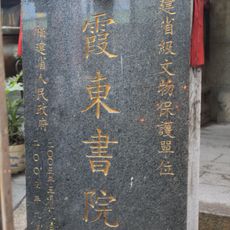
Zhongjiabao Fortress, Historic fortress in Huxi She Ethnic Township, Zhangpu County, China.
Zhongjiabao, also called Zhaojiabao, is a fortified residential complex in Zhaojiacheng village, Huxi She Ethnic Township, Zhangpu County, Fujian. Its perimeter wall averages five metres high. Zhao Fan, a 1571 jinshi and tenth-generation descendant of the Song prince Zhao Ruohe, built it in 1600; his son Zhao Yi enlarged it in 1634. Its plan imitates the Song capital Bianjing, and the Bianpai Bridge inside is said to copy the Qingming Shanghe Tu.
Zhaojiabao was built in 1600 by Zhao Fan, a Ming official of 1571 and tenth-generation descendant of Zhao Ruohe, a Southern Song prince. His son Zhao Yi enlarged it in 1634. The walls average five metres high. Old gazetteers called officially built walls a cheng and privately built ones a bao, hence the name.
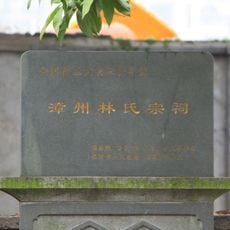
The name distinguishes it from walled cities: old gazetteers called official foundations cheng and privately built ones bao, hence Zhaojiabao. Its residents are more than 700 descendants of the Song imperial Zhao family, who trace their line to Zhao Ruohe, Prince of Minchong, a late Southern Song royal.
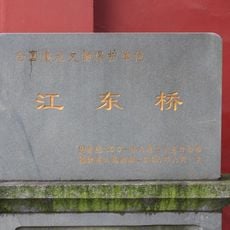
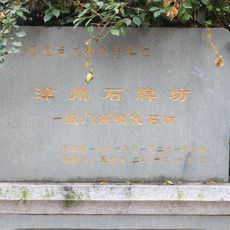
The complex lies in Zhaojiaocheng village, Huxi She Ethnic Township, Zhangpu County, about 1 km from Yianbao. Its walls average 5 m in height, and the "Bianpai Bridge" inside is said to copy the Qingming Shanghe Tu. The site is a national key cultural relic protected since 2001; visitors should keep to marked paths.
The name distinguishes it from a walled city: old gazetteers called officially built walls cheng and privately built ones bao, hence Zhongjiabao. Its bridge, the Bianpai Bridge, is said to copy the one in the Song painting Along the River During the Qingming Festival.
The community of curious travelers
AroundUs brings together thousands of curated places, local tips, and hidden gems, enriched daily by 94,670 contributors worldwide.