Barbarossa Cave, Natural anhydrite cave and museum in Kyffhäuserland, Germany
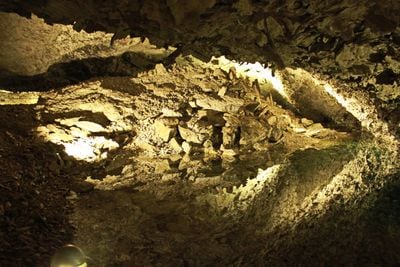
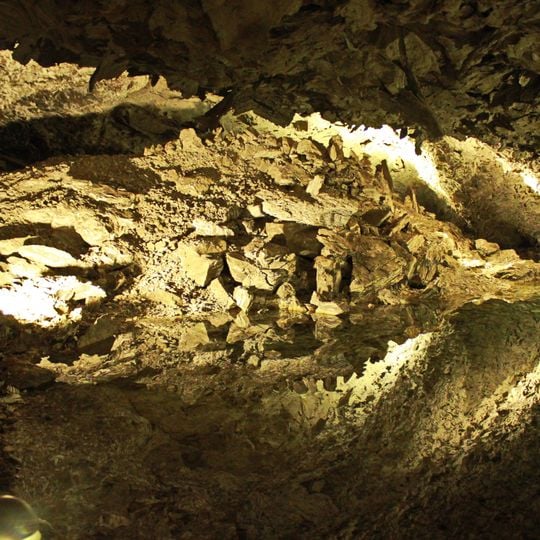
The Barbarossa Cave is a show cave and museum in Kyffhäuserland, Germany, that runs through 600 meters of walkable passages filled with underground lakes. The water appears greenish because of dissolved gypsum, which gives the pools their unusual color and creates soft light throughout the tunnels.
Miners working on copper slate found the cave system in 1865 and opened it to visitors the following year as Falkenburger Höhle. The name later changed to honor the Barbarossa legend, which ties closely to the Kyffhäuser area.
Visitors hear about Emperor Frederick Barbarossa during guided walks, as local tradition says he rests somewhere beneath these hills until his country calls him. The name connects the cave to this old tale, which people in the region still tell today.
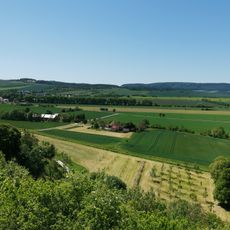
The air inside stays at 10 °C and the water at 8.5 °C, so bring warm clothing even in summer. The cave is reached near Rottleben in the Kyffhäuser Hills and lies on the Karst Trail; there is a hydraulic connection to the Arensbrunnen.
The cave's humidity turns the anhydrite rock into gypsum at the surface, and the mineral expands as it does so. The resulting gypsum layers peel away from the bedrock and hang from ceilings and walls like falling wallpaper; these are called gypsum flaps. The air stays at 10 °C and the water at 8.5 °C, and the cave is hydraulically connected to the Arensbrunnen spring.
The community of curious travelers
AroundUs brings together thousands of curated places, local tips, and hidden gems, enriched daily by 93,119 contributors worldwide.