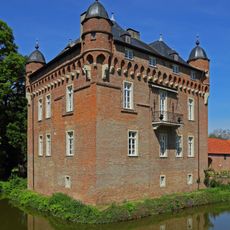
Bottenbroich Abbey, Cistercian monastery in Rhein-Erft District, Germany.
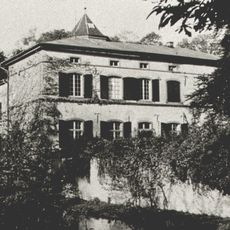
Bottenbroich Abbey was a Cistercian nunnery founded in the 13th century near Kerpen, later a priory of monks from Kamp Abbey. Its church, consecrated in 1484 with support from the von Hemmersbach family, stood until 1951, when the village and all monastic remains were demolished for the Frechen brown coal strip mine. The site is now the re-cultivated Marienfeld, marked by a sundial bearing the arms of Morimond Abbey.
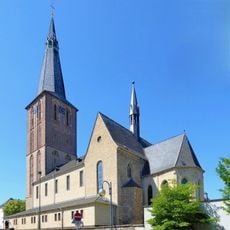
Bottenbroich was founded as a Cistercian nunnery by Provost Gottfried of Münstereifel in 1231 or 1234, under the supervision of Kamp Abbey. In 1448 financial distress led Kamp to resettle it as a priory of monks, who restored its finances. With the von Hemmersbach family, who chose it as their burial place, a new church was consecrated in 1484. Dissolved by consular decree on 9 June 1802, the monastic church became a parish church until the village was demolished in 1951 for the Frechen open-cast mine.
The site became known for devotion to Mary, especially through a carved devotional image from the 15th century that drew pilgrims from the surrounding region. Visitors came to pray before this religious artwork and express their faith.
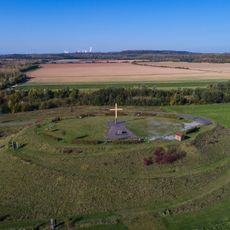
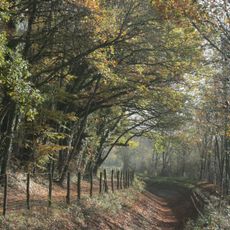
The site is known today as Marienfeld and can be visited, with a memorial sundial from 2006 marking its history. The remaining elements allow visitors to understand what monastic life here was like.
The Marienfeld meadow, named in 2004, was chosen as the venue for the closing Mass of World Youth Day 2005. A sundial placed there in September 2006 bears the arms of Morimond Abbey, mother house of Kamp, and monks from Bochum-Stiepel attended its installation. Arrow signs on the memorial point pilgrims toward the two linked monasteries.
The community of curious travelers
AroundUs brings together thousands of curated places, local tips, and hidden gems, enriched daily by 93,905 contributors worldwide.